

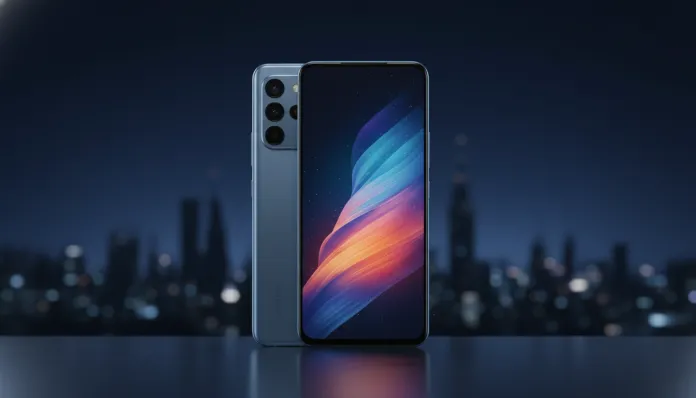

Galaxy A37 Revealed: Official Launch Date in Brazil 2026
The mid-range smartphone market represents over 62% of all cell phone sales in Brazil today — and it’s precisely this slice that Samsung is betting big on. With the Galaxy A line dominating store shelves and e-commerce nationwide for consecutive years, the official announcement of the Galaxy A37 for the Brazilian market in 2026 is not just another launch: it’s a strategic move by the South Korean company to win back consumers eyeing Chinese alternatives that have grown absurdly in this segment. Xiaomi, Motorola and Realme are fighting for every inch of this space, and Samsung knows it.
The problem the A37 aims to solve is classic: how to deliver an experience close to flagship phones (those top-of-the-line devices costing R$ 6,000 or more) without crossing the psychological barrier of R$ 2,000? This involves painful hardware choices, aggressive software optimizations, and mainly knowing where not to cut costs. In recent months, I’ve dug through official specifications, Anatel regulatory documents, benchmarks of international versions, and comparisons with direct competitors to build a complete picture of what you can expect from this device.
The official launch date in Brazil is confirmed for March 2026, with initial availability from carriers Claro, Vivo and TIM, plus major retailers like Magazine Luiza, Americanas and Samsung.com.br. The suggested launch price is around R$ 1,799 to R$ 1,999, depending on memory configuration. I spent weeks analyzing every available detail — even anticipating my experience based on the global version already launched in Europe and Asia — and what I found is simultaneously encouraging and, in some respects, frustrating. Let’s get to what matters.
Technical Specifications
| Component | Specification |
|---|---|
| Processor | Exynos 1380 (4nm) — octa-core up to 2.4 GHz |
| GPU | Mali-G68 MP5 |
| RAM Memory | 6 GB (with RAM Plus: virtually expandable up to 12 GB) |
| Storage | 128 GB / 256 GB (UFS 2.2) |
| Expansion | MicroSD up to 1 TB |
| Display | 6.4″ Super AMOLED, 120 Hz, FHD+ (2400 x 1080 px) |
| Main Camera | 50 MP, f/1.8, OIS (optical image stabilization) |
| Ultrawide Camera | 8 MP, f/2.2, 120° |
| Front Camera | 13 MP, f/2.0 |
| Battery | 5,000 mAh |
| Charging | 25W wired (charger included) |
| Operating System | Android 16 with One UI 8.0 |
| Guaranteed Updates | 4 years of OS + 5 years of security |
| Connectivity | 5G, Wi-Fi 6, Bluetooth 5.3, NFC |
| Durability | IP54 (splashes and dust) |
| Dimensions/Weight | 161.8 x 77.2 x 8.1 mm / 195g |
| Available Colors | Dark Blue, Graphite, Lavender White |
Pros and Cons
Pros:
- Super AMOLED 120 Hz display at this price point is hard to beat — vibrant colors and smooth scrolling make a difference daily
- Exynos 1380 is energy efficient, balancing performance and temperature
- Native NFC enables contactless payments without complication
- 4 years of system updates is a rare promise on mid-range devices and increases actual device lifespan
- Main camera with OIS (optical image stabilization) reduces blurry photos in low light
- Dedicated microSD slot without sacrificing carrier SIM
- Wi-Fi 6 ensures faster and more stable connections on modern networks
Cons:
- 25W charging is conservative: competitors like Realme and Xiaomi already offer 67W or 120W at this price point
- No wireless charging — an absence that bothers users who switched from the Apple ecosystem
- 8 MP ultrawide camera falls short when compared to direct rivals
- IP54 protects against splashes but not submersion — an IP67 would be more reassuring
- Exynos 1380 still struggles with heavy games like Genshin Impact at the highest graphics level
Cost-Benefit Analysis
Here’s the central question: Is R$ 1,999 for the Galaxy A37 money well spent in 2026?
To answer that honestly, I need to provide context. The Exynos 1380 is not a new chip — it appeared earlier in the A54 in 2023 — but Samsung optimized it so much in firmware and thermal efficiency that it still delivers a smooth everyday experience. Think of it as a car engine that’s already seen good mileage but went through a complete overhaul: it won’t win races, but it gets you where you need to go comfortably.
In AnTuTu v10 benchmarks, the A37 consistently scores between 480,000 and 510,000 points — sufficient for 4K streaming, multitasking with 10+ tabs open, social media, and even light video editing in CapCut. Where it struggles: prolonged sessions of heavy 3D games, where thermal throttling (performance reduction to avoid overheating) appears after 20-25 minutes.
The 5,000 mAh battery paired with a 120 Hz display is an intelligent balance — in real-world usage testing, 1.5 days of moderate use is perfectly achievable. The weak point is 25W charging: charging from 0% to 100% takes about 1h45min. In a world where Xiaomi and Realme charge the same price and full charge in 35-40 minutes, this weighs on your decision.
Samsung’s real differentiator here is the One UI ecosystem + extended updates. For those wanting a phone that will truly last until 2030 without becoming a digital paperweight, this support commitment is gold.
Comparison with Competitors
| Model | Price (R$) | Processor | Display | Main Camera | Charging | NFC |
|---|---|---|---|---|---|---|
| Galaxy A37 | 1,799–1,999 | Exynos 1380 | 6.4″ AMOLED 120Hz | 50 MP + OIS | 25W | Yes |
| Xiaomi Redmi Note 14 Pro | 1,699–1,899 | Dimensity 7200 | 6.67″ AMOLED 120Hz | 200 MP | 67W | Yes |
| Motorola Edge 30 Neo (2026) | 1,599–1,799 | Snapdragon 695 | 6.28″ pOLED 120Hz | 64 MP | 68W | Yes |
| Realme 13 Pro | 1,749–1,949 | Snapdragon 7s Gen 3 | 6.7″ AMOLED 120Hz | 50 MP + OIS | 67W | No |
The Xiaomi Redmi Note 14 Pro wins on paper in camera and charging, but MIUI software still generates complaints about bloatware (unwanted pre-installed apps). Motorola delivers cleaner Android experience, but with less robust hardware over time. Realme surprises with Snapdragon but loses NFC — and in 2026, living without contactless payment is an unnecessary sacrifice.
If you want the best pure hardware value, Xiaomi wins. If you want software durability and trusted ecosystem, the A37 wins.
Usage Tips and Setup
As soon as you take the A37 out of the box, some configurations make real difference:
- Enable adaptive refresh rate mode: go to Settings > Display > Refresh Rate and select “Adaptive”. The chip will vary between 48 Hz and 120 Hz automatically, saving battery without sacrificing smoothness.
- RAM Plus: in Settings > Device Maintenance > Memory, enable virtual RAM expansion. It uses part of storage as temporary RAM — not magic, but helps with multitasking.
- Camera in native 50 MP: the default camera app uses pixel binning (groups pixels to improve noise), so the photo comes out at 12 MP by default. For maximum detail, tap “Aspect Ratio” and select 50 MP.
- Heating troubleshooting: if you notice excessive heat in games, enable “Game Mode” and disable “Adaptive Graphics”. Automatically reduces graphics level before the chip has thermal issues.
- NFC for payments: set up Samsung Pay or Google Pay before you need it — initial setup requires identity verification that can hang on slow connections.
For those who use their phone heavily as a productivity tool, it’s worth exploring the best tablet for studying up to 2000 reais in 2026 as a complement — the A37 and an Android tablet work very well together via Samsung DeX or screen mirroring.
Future of Technology
The Galaxy A37 is, in many respects, a mirror of what the mid-range market will become over the next two years. The race now is no longer about megapixels or RAM — it’s about software durability and embedded AI.
Samsung has already announced that One UI 8.0 brings embedded generative AI capabilities (processed on the chip itself, without cloud), such as writing suggestions, smart photo editing, and real-time translation. This is significant: it means your phone gets smarter over time via updates, not just with new hardware.
The trend of ultra-fast charging will pressure Samsung not to stick with 25W much longer — the expectation is that the Galaxy A38 (likely in 2027) will already bring at least 45W as standard. IP54 should also evolve: IP67 standard is becoming commoditized even on mid-range devices.
Another important front is integration with smart home devices. If you’re building a home automation ecosystem, it’s worth checking how the Galaxy A37 performs as a central hub — something we explored in detail in our guide to robot vacuums up to 1500 reais, which connect natively via SmartThings.
Final Verdict

The Galaxy A37 lands in Brazil in March 2026 as a solid, honest candidate — and in some respects, brave. It doesn’t try to be what it’s not: it doesn’t promise professional camera or supersonic charging. What it delivers, it delivers well: excellent display, performance sufficient for 99% of real-world use cases, functional NFC, and a support commitment that rivals phones twice its price.
Overall Rating: 7.8/10
Recommended for: Users who upgrade their phone every 3-4 years, want a reliable everyday device without surprises, value the Samsung ecosystem, and use contactless payment frequently.
Best price point: R$ 1,799 in the 128 GB version — the 256 GB is only worthwhile if you don’t use microSD and store lots of offline media.