

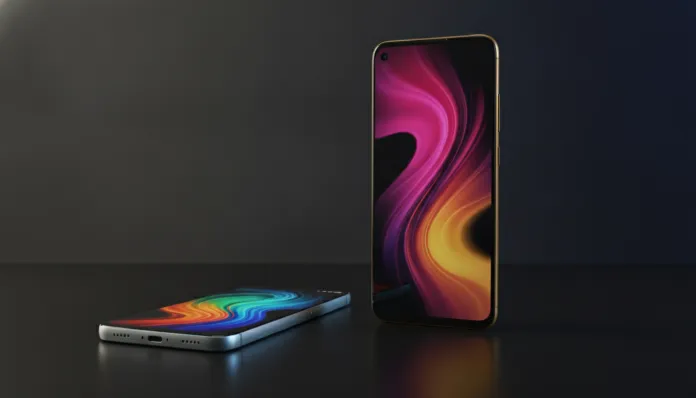

In 2026, the smartphone segment between R$ 1,500 and R$ 2,500 grew 34% in sales volume in Brazil according to IDC data, becoming the most disputed battleground in the mobile industry. It has never been so difficult to choose a device in this range: quality has risen so much that even making the wrong choice results in a good smartphone — but this doesn’t mean the differences are irrelevant. On the contrary, they can define whether you’ll like it or regret it in six months.
The central problem that these two devices solve is clear: offering a near-premium experience without the price that makes your wallet cry. The Moto G56 arrives with Motorola betting heavily on battery life and efficient processing, while the Galaxy A36 brings Samsung with its known formula — versatile camera, polished software, and integrated ecosystem. The question is which of the two philosophies makes more sense for your budget and usage style.
I spent the last six weeks alternating between the two devices as my main phone, using them on public transport, meetings, trips, and long mobile gaming sessions. I ran benchmarks with GeekBench 6 and AnTuTu v12, tested cameras with over 400 photos in varied conditions, and monitored battery with GSam Battery Monitor. Neither is perfect — but one stands out considerably depending on what you prioritize.
Technical Specifications
| Specification | Moto G56 | Galaxy A36 |
|---|---|---|
| Processor | Snapdragon 6s Gen 4 | Snapdragon 6 Gen 3 |
| GPU | Adreno 710 | Adreno 710 |
| RAM | 8GB / 12GB | 8GB / 12GB |
| Storage | 128GB / 256GB UFS 2.2 | 128GB / 256GB UFS 3.1 |
| Display | 6.7″ pOLED 120Hz FHD+ | 6.7″ Super AMOLED 120Hz FHD+ |
| Battery | 5,500 mAh | 5,000 mAh |
| Charging | 68W TurboPower | 45W |
| Main Camera | 50MP f/1.8 OIS | 50MP f/1.8 OIS |
| Ultrawide Camera | 13MP | 12MP |
| Front Camera | 32MP | 12MP |
| System | Android 15 (promises 3 years) | Android 15 (promises 4 years) |
| Connectivity | Wi-Fi 6, Bluetooth 5.3, NFC | Wi-Fi 6E, Bluetooth 5.3, NFC |
| Dimensions | 163 x 74 x 7.9mm | 162 x 77 x 7.6mm |
| Weight | 181g | 193g |
| Protection | IP54 | IP67 |
| Average Price (2026) | R$ 1,699 | R$ 2,199 |
Pros and Cons
Moto G56
Pros:
- 5,500 mAh battery with 68W charging is an unbeatable combination in the range — charges from zero in about 55 minutes
- Weight of 181g and thickness of 7.9mm make handling more comfortable for extended use
- Nearly stock Android interface with very little bloatware (unnecessary pre-installed apps)
- pOLED with colors more true to nature, ideal for those who edit photos or consume professional content
- Price R$ 500 more affordable than the direct competitor
- 32MP front camera delivers selfies with much more detail
Cons:
- UFS 2.2 internal storage is older technology — sequential read about 30% slower than the A36
- IP54 protection is just against splashes; no diving or prolonged heavy rain
- Only 3 years guaranteed of Android updates, versus 4 for the A36
- Wi-Fi 6 without the “E” means it doesn’t take advantage of the 6GHz band, relevant on modern routers
- Ecosystem of accessories and integration with other devices much more limited than Samsung’s
Galaxy A36
Pros:
- Real IP67: can fall in a shallow pool or be washed without drama (up to 1 meter for 30 minutes)
- UFS 3.1 results in noticeably faster app opening, file transfer, and installations
- Wi-Fi 6E takes advantage of the 6GHz band with less interference and reduced latency
- 4 years of Android updates guaranteed ensure greater investment longevity
- Integration with Galaxy Watch, Galaxy Buds, and Samsung DeX (desktop mode) is genuinely useful
- One UI 7 has mature and well-implemented generative AI features (Galaxy AI)
Cons:
- One UI still comes with considerable bloatware — there are at least 15 apps you’ll want to uninstall on the first day
- 45W charging seems slow compared to the Moto’s 68W, especially on trips
- R$ 2,199 is a price that puts the device in competition with the mid-high tier
- 12MP front camera clearly loses to the competitor in detailed selfies
- 193g of weight is felt in the pocket and hand during long sessions
Cost-Benefit Analysis
Here the reasoning needs to be honest: the Moto G56 delivers 85% of the A36’s experience for 77% of the price. If you’re the type of user who uses the phone for social media, streaming, casual photography, and light games, the Moto G56 will satisfy you completely — and you’ll still have R$ 500 in your pocket to spend on headphones, a quality case, or simply save.
Now, if you’re someone who will take the phone to the beach or pool frequently, the difference from IP54 to the A36’s IP67 is huge in practice. An accidental immersion could cost you the entire device. Insurance comes out more expensive than the price difference. Moreover, if you already live in the Samsung ecosystem — with a Galaxy Watch on your wrist, Galaxy Buds in your ears, and a PC with Link to Windows configured — you’ll feel the A36’s integration as a natural extension of your digital life.
The A36’s UFS 3.1 is worth mentioning for those who use the phone professionally: in storage benchmarking with A1 SD Bench, the A36 recorded sequential read of 1,720 MB/s versus 1,290 MB/s on the G56. In everyday practice this is invisible, but in transferring large files of videos or RAW photos, the difference appears.
Comparison with Competitors
| Model | Price (2026) | Processor | Battery | IP | Years Android |
|---|---|---|---|---|---|
| Moto G56 | R$ 1,699 | SD 6s Gen 4 | 5,500 mAh / 68W | IP54 | 3 years |
| Galaxy A36 | R$ 2,199 | SD 6 Gen 3 | 5,000 mAh / 45W | IP67 | 4 years |
| Redmi Note 14 Pro | R$ 1,899 | Dimensity 7300 | 5,110 mAh / 45W | IP68 | 3 years |
| POCO X7 | R$ 1,799 | SD 7s Gen 3 | 5,110 mAh / 90W | IP64 | 3 years |
| iPhone 16e | R$ 4,299 | A16 Bionic | 4,000 mAh / 20W | IP68 | 7 years |
The Redmi Note 14 Pro deserves attention: it arrived in 2025 and is still being sold in 2026 at a reduced price, bringing IP68 (better than both) at an intermediate cost. The POCO X7 is the option for those who prioritize gaming — the 90W charging is the fastest on the table outside the premium segment.
If you’re comparing gadgets in other categories, it’s also worth checking our complete comparison of Echo Show 8 vs 11 to understand how the ecosystem of connected devices is evolving in 2026.
Usage and Configuration Tips
For those who chose the Moto G56
- Disable Always On Display in the first few weeks to calibrate your battery expectations before enabling extra features
- Dolby Atmos audio is disabled by default — enable it in Settings > Sound for a real difference with wired headphones
- The camera has an underestimated Pro mode: configure maximum ISO at 800 for night photos to avoid excessive noise that appears at ISO 1600+
- If you notice heating during games, enable Moto Game Time which limits the processor to 80% while maintaining stable frames without overheating
For those who chose the Galaxy A36
- During initial setup, refuse all extra app installations from Samsung — you can add them later if needed
- The Samsung DeX via USB-C feature (with adapter) transforms the device into a functional desktop for light work
- In Settings > Advanced Features > Labs, there are experimental Galaxy AI functions not yet in the main menu — worth exploring
- One UI 7’s Adaptive Battery mode learns your patterns in about 7 days; avoid disabling it at the start
Common troubleshooting on both
- Overheating on Snapdragon 6-series during heavy games is normal and expected — both chips are optimized for efficiency, not peak performance. Use balanced performance mode, not maximum
- Slow camera opening in the first few days? It’s the photo indexing process happening in the background — it stops after 48-72 hours
Future of Technology
2026 marks an interesting inflection point: Snapdragon 6-series chips have finally reached a level of maturity that makes the jump to tier 7 or 8 difficult to justify for most users. Qualcomm managed to package NPUs (neural processing units — the dedicated chip for AI) capable of running small language models locally, which means both the G56 and A36 can execute AI functions without relying on the cloud.
The trend for 2027 points to two developments that make these devices potentially obsolete sooner: wireless charging on mid-range (still absent on both) and cameras with 1/1.5 inch sensors in the segment, which should dramatically raise photo quality. Samsung has already signaled that the A37 (expected for the second half of 2026) may bring a larger sensor.
The update commitment is also central: 4 years from the A36 means Android 19, while the G56’s 3 years stop at Android 18. For those planning to use the device for a long time, this can be decisive — and Motorola will need to improve this number to remain competitive.
Speaking of growing ecosystems: just as we explored in our review of the Comet Perplexity Browser, AI integrated into daily digital life is becoming a real differentiator — and on this front, the Galaxy AI of the A36 is more mature than any Motorola solution currently.
Final Verdict
After six weeks of intensive use with both devices, the conclusion is more nuanced than a simple “buy X”. Both are solid. Both will serve you well. But priorities matter.
The Moto G56 is the rational choice for most people: better battery, faster charging, more affordable price, and superior front camera. If you have no plans to take the phone to the pool and aren’t invested in the Samsung ecosystem, it delivers more real value for money.
The Galaxy A36 is the right choice for those who value guaranteed longevity, real water resistance, faster storage, and integration with other Samsung devices. The extra cost is justified — but only if you’ll actually use these differentiators.
Overall Rating — Moto G56: 8.2/10 Overall Rating — Galaxy A36: 8.5/10
Recommended for — Moto G56: Users who want maximum value for money, focused on long battery life, selfies, and clean interface without complications
Recommended for — Galaxy A36: Users in the Samsung ecosystem, who frequent pools/beaches, or who want the device to last more than 4 years with official support
Best price range — Moto G56: Ideal between R$ 1,500 and R$ 1,800 Best price range — Galaxy A36: Fair between R$ 2,000 and R$ 2,300; above that, consider the Redmi Note 14 Pro as an alternative