

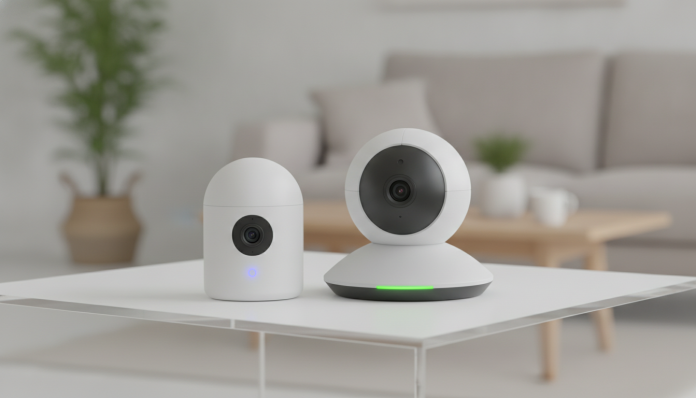

Intelbras IM5 vs Tapo C200: two paths to protect your home
You want to install a security camera at home, you’re researching the best-selling options in Brazil and you always stumble upon these two names: Intelbras IM5 and Tapo C200. They are internal cameras, with Full HD resolution, motion tracking and affordable price. On paper, they seem like twins. In practice, they serve quite different user profiles.
The short answer: if you prioritize Portuguese support, hassle-free warranty and integration with an ecosystem designed for the Brazilian market, the Intelbras IM5 tends to be the safer choice. If you already use or plan to use devices from the TP-Link Tapo ecosystem, don’t mind English menus in some settings, and want to pay a little less, the Tapo C200 delivers a lot for the price.
The next sections detail the points that really make a difference when mounting the camera on the wall.
Comparative technical sheet
| Specification | Intelbras IM5 | Tapo C200 |
|---|---|---|
| Resolution | 1080p Full HD | 1080p Full HD |
| Field of view | Up to 360° (pan) / 115° (tilt) | 360° (pan) / 114° (tilt) |
| Night vision | Up to 10 m (infrared) | Up to 9 m (infrared) |
| Motion detection | Yes, with alerts | Yes, with alerts and configurable zones |
| Audio | Two-way | Two-way |
| Storage | MicroSD (up to 128 GB) / cloud | MicroSD (up to 128 GB) / cloud (paid) |
| Connectivity | Wi-Fi 2.4 GHz | Wi-Fi 2.4 GHz |
| App | iM.Cloud / Intelbras | Tapo (TP-Link) |
| Anatel approval | Yes | Yes |
| Voltage | Dual voltage (100-240 V) | Dual voltage (100-240 V) |
| Warranty in Brazil | 1 year (Intelbras) | 1 year (TP-Link Brazil) |
| Price range (2026) | R$ 200 to R$ 280 | R$ 140 to R$ 200 |
Prices collected from Brazilian retail sources in 2026 and may vary by store and period.
Image and video quality: what the specs don’t tell you
Both record in 1080p Full HD (1920 x 1080 pixels), which is sufficient to identify faces and objects in well-lit indoor environments. The difference begins when the light decreases.
According to Intelbras specifications, the IM5 reaches up to 10 meters with infrared LEDs, while the Tapo C200 claims up to 9 meters. One meter less seems little, but in larger rooms or long corridors it can make a difference. Neither has a wide aperture sensor (like f/1.6 or smaller), so in very low light environments without infrared assistance, the result tends to be grainy on both cameras. If you need a camera for outdoor areas with low light, neither of these is the ideal choice.
The pan/tilt field of view (term for the motorized horizontal and vertical movement of the camera, like a head turning sideways and up and down) is practically identical on both: 360° on the horizontal axis and just over 110° on the vertical axis. This means that with a single camera, you can cover an entire room without any blind spots.
App and setup experience
This is the criterion that most separates the two products in daily use.
TP-Link’s Tapo app is consistently highly rated in app stores and offers features like motion detection zones (you draw on screen which area should be monitored), person detection via artificial intelligence (available on some plans) and integration with Amazon Alexa, Google Assistant and Apple HomeKit. The interface is clean, but some advanced menus still appear in English depending on the firmware version, which can confuse less experienced users.
Intelbras’s app, called iM.Cloud, is developed with a focus on the Brazilian audience. Language support is entirely in Portuguese, customer support is national and there is a network of technical assistants spread across the country. For those who don’t want to rely on translation or international forums to solve a problem, this is invaluable. In terms of features, the app covers the basics very well: live viewing, recording to microSD card, event history and motion alerts.
If you already have other smart devices in your home (outlets, lamps, TP-Link routers), the native integration of the Tapo ecosystem can be a real differentiator. The camera communicates with other devices from the same brand without workarounds.
Storage: microSD card or cloud
Both cameras record locally on microSD cards up to 128 GB, which you purchase separately. With a camera recording continuously at 1080p, a 64 GB card typically stores between 3 and 5 days of video, depending on compression and scene movement. For most homes, this is sufficient.
Cloud is the point of divergence. Tapo offers cloud storage plans with different retention periods (check current prices directly in the Tapo app, as prices are adjusted frequently). Intelbras has the iM.Cloud service, also by subscription, focused on support and local infrastructure.
If you don’t want to pay a monthly fee and prefer to record only to the card, both cameras work well. If you want remote access to history without depending on the card working, then the cost of a cloud plan comes into play.
Data security and privacy
With cameras connected to the internet, the question of where data is stored is legitimate. TP-Link, manufacturer of Tapo, faced scrutiny from U.S. agencies in 2024 and 2025 due to investigations into vulnerabilities in its routers. The company released statements explaining the security measures adopted. If privacy is a central concern for you, it’s worth monitoring official TP-Link communications and configuring the camera on a separate Wi-Fi network (VLAN or guest network), a practice recommended for any connected camera, regardless of brand.
Intelbras, being a Brazilian company, is subject to the LGPD (General Data Protection Law) more directly and transparently for the national consumer, with customer service channels in Portuguese for privacy issues.
Which to choose
The decision depends on your profile, not on one camera being objectively better than the other.
Choose the Intelbras IM5 if:
- You value Portuguese support and a national technical assistance network
- You prefer a Brazilian company subject to LGPD more directly
- You don’t use other TP-Link Tapo ecosystem devices
- You want to pay a fair price without needing to research much about configuration
Choose the Tapo C200 if:
- You already have or plan to have other Tapo devices at home
- You want integration with Alexa, Google Assistant or HomeKit without extra setup
- You’re looking for the lowest possible entry price for a Full HD pan/tilt camera
- You don’t mind consulting English documentation if needed
For those building a broader home security system and thinking about outdoor cameras, door sensors and other devices, choosing a cohesive ecosystem from the start (whether Intelbras or Tapo) avoids future headaches. The same logic of thinking about device integration applies to other segments: if you’re researching equipment to monitor elderly family members at home, for example, the article on smart wristband for elderly with fall detection: how to choose can help you put this set together.
Competitors and alternatives in Brazil
If neither convinces you, there are other options available in the Brazilian market in 2026:
| Model | Strong point | Price range |
|---|---|---|
| Xiaomi Mi 360° 1080p | Consolidated Mi Home ecosystem | R$ 150 to R$ 220 |
| Positivo Smart Camera | National brand, local support | R$ 180 to R$ 250 |
| Multilaser IV300 | Very low cost, basic | R$ 100 to R$ 150 |
| Ezviz C6N | Advanced AI features | R$ 250 to R$ 350 |
Before importing any camera on your own, check if the model has Anatel approval, which is required for equipment with radio frequency transmission (like Wi-Fi) in Brazil. Cameras without approval can be held by customs and have no legal warranty in the country.
Frequently asked questions about indoor security cameras
Do I need internet to use these cameras?
You need Wi-Fi to configure the cameras and to access the image remotely from your phone. If the internet goes down, the camera continues to record on the microSD card, but you lose remote access and real-time alerts. Local recording works independently.
Which microSD card should I buy for these cameras?
Both manufacturers recommend Class 10 or higher cards, which are the most common nowadays. Cards of 32 GB to 64 GB are already sufficient for most home uses. Avoid cards from unknown brands, as card failures are one of the most common causes of recording loss.
Can I use these cameras outdoors?
Neither the Intelbras IM5 nor the Tapo C200 are designed for outdoor use. They do not have adequate water resistance rating (IP) for rain or intense humidity. For outdoor areas, look for models with IP65 rating or higher.
Does the camera work on 5 GHz Wi-Fi network?
No. Both cameras operate only on the 2.4 GHz frequency. If your router transmits only on 5 GHz (or if the 2.4 GHz signal is disabled), you’ll need to enable that frequency in the router settings before installing the camera.
What to expect in 2026 in this segment
The affordable indoor camera market in Brazil is stable in terms of hardware: Full HD with pan/tilt has become a commodity. The battle now happens in software, privacy and integration with home automation. Both Intelbras and TP-Link have been updating their apps regularly, so it’s worth checking the update notes before purchasing to know if features you need are already available.
If you’re building a more complete smart home and already spend hours researching gadgets, the Tapo ecosystem tends to grow with you. If you want a camera that works well, has nearby support and doesn’t require you to become a network expert to set it up, the Intelbras IM5 is the less risky choice for the Brazilian context.
Price range: R$ 140 to R$ 280 depending on the model and store
Recommended for: anyone who wants to monitor indoor environments with a controlled budget; the choice between the two depends more on the ecosystem and desired support than on image quality itself.