

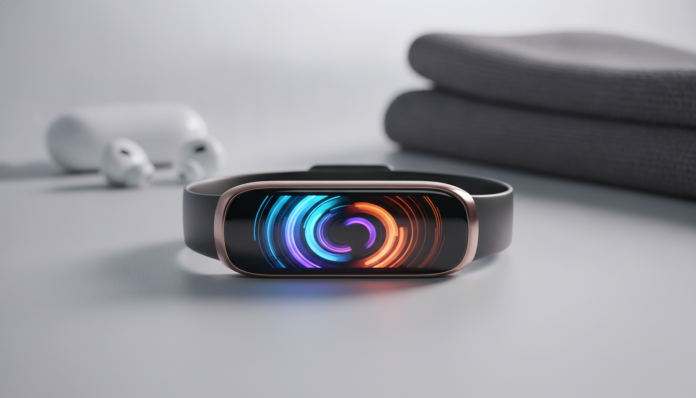

Is Xiaomi Smart Band 10 Worth It in 2026?
The Xiaomi Smart Band 10 arrived as the direct evolution of one of the world’s best-selling smart band lines. With a larger AMOLED screen, expanded health monitoring, and a battery promising to last several days on a single charge, it remains one of the most affordable options in the wearables market. The question that remains is whether it still makes sense in 2026, in a scenario where competitors have evolved and Xiaomi itself has launched more sophisticated alternatives.
The short answer: yes, it’s worth it, but with caveats. If you want a functional, lightweight, and cheap band to monitor physical activity, sleep, and heart rate on a daily basis, the Smart Band 10 delivers on its promises. However, if you expect native GPS, contactless payments (NFC for payments), or an experience close to a smartwatch, you’ll need to look at another product category.
Before any details, a heads-up about availability: the Smart Band 10 was launched globally in 2024. In 2026, it’s no longer new, but still circulates widely in Brazil through imports and in some stores that have stock. It’s worth checking if the device has Anatel approval (the Brazilian regulatory agency that approves radiofrequency devices for legal sale in the country) before buying, as units without the seal may have warranty issues and even Bluetooth performance problems.
Xiaomi Smart Band 10 Technical Specifications
| Specification | Details |
|---|---|
| Display | AMOLED 1.62 in., resolution 192 x 490 px |
| Materials | Polycarbonate case, silicone band |
| Sensors | Optical heart rate, SpO2, accelerometer, gyroscope |
| Sport Modes | Over 150, according to the manufacturer |
| GPS | Connected (uses the paired smartphone’s GPS) |
| Water Resistance | 5 ATM (equivalent to 50 meters depth) |
| Battery | 232 mAh |
| Declared Battery Life | Up to 15 days in typical use, according to Xiaomi |
| Charging | Proprietary magnetic |
| Connectivity | Bluetooth 5.3 |
| Compatibility | Android 8.0+ / iOS 15.0+ via Mi Fitness app |
| Weight | Approximately 27 g (with band) |
| Case Dimensions | 46.5 x 21.5 x 10.2 mm |
Specifications based on Xiaomi’s official technical datasheet. Confirm on the product page before buying, as regional variations may exist.
Display and Daily User Experience
The 1.62-inch AMOLED display is one of the Smart Band 10’s highlights. AMOLED is a panel technology where each pixel emits its own light, resulting in deeper blacks, vibrant colors, and lower consumption when the background is dark. In practice, this means that watch faces look beautiful, with good readability even in bright environments.
Navigation happens via touch and a side button. The interface of Xiaomi’s proprietary operating system is simple and straightforward: you swipe between health metrics screens, shortcuts, and notifications. It’s not the most customization-rich system on the market, but it fulfills its role well for those who want simplicity.
The absence of an always-on display activated by default (a screen that stays on) is a choice that positively affects battery life. You can enable raise-to-wake mode, where the screen turns on when you lift your arm. It works well in most situations, but can fail with quick movements or unconventional angles, which is common in this product category.
Health Monitoring and Sports
The heart of the product, literally, is the optical heart rate sensor. It monitors beats continuously and also measures SpO2, which is blood oxygen saturation. Think of SpO2 as a meter that estimates how much oxygen is circulating through your body, a relevant metric especially for those who exercise at altitude or are interested in monitoring sleep quality.
With over 150 declared sports modes, the Smart Band 10 covers everything from running and cycling to yoga and rowing. The important caveat here is GPS: it’s connected type, meaning the band uses your phone’s location to map routes. This means you need to have your smartphone in your pocket during training to have accurate distance and map data. For those who run with their phone, nothing changes. For those who prefer to go out without it, it’s a real limitation.
Sleep monitoring records light, deep, and REM (rapid eye movement sleep, associated with dreams and cognitive recovery) phases. The quality of sleep readings on bands in this price range is acceptable for getting a general sense of your patterns, but it doesn’t replace a polysomnography exam if you have clinical complaints about sleep disorders.
Battery: Real Autonomy and Charging
Xiaomi declares up to 15 days of battery life in typical use. This number considers specific usage scenarios, usually with continuous heart rate monitoring, moderate notifications, and no GPS active. In real life, with connected GPS, many notifications, and frequent screen wake-ups, expect around 7 to 10 days. Still, it’s comfortable autonomy that puts the Smart Band 10 well above most conventional smartwatches.
Charging is done via a proprietary magnetic cable, which is a negative point. If you lose the cable, you’ll need to buy one specific to the model. There’s no direct USB-C compatibility on the device. Complete charging time, according to the datasheet, is around two hours.
Pros and Cons
Pros:
- High-quality AMOLED display for the price category
- Competitive battery autonomy (up to 15 days declared)
- Lightweight and comfortable for 24-hour wear
- Water resistance 5 ATM, suitable for swimming and water sports
- Over 150 sports modes with automatic recognition in some cases
- Simple interface with small learning curve
- Affordable price in the segment
Cons:
- No native GPS (depends on phone for route tracking)
- No NFC for contactless payments
- Proprietary charging cable, difficult to find separately in Brazil
- Mi Fitness app with more limited features than competitors like Garmin Connect or Fitbit
- Anatel approval may be absent in informally imported units
- No always-on display active by default (consumes extra battery if enabled)
Competitors and Alternatives Available in Brazil
| Product | Approximate Price (BRL) | Native GPS | NFC | Declared Battery Life |
|---|---|---|---|---|
| Xiaomi Smart Band 10 | R$ 180 to R$ 280 | No | No | Up to 15 days |
| Redmi Smart Band 2 | R$ 150 to R$ 220 | No | No | Up to 14 days |
| Huawei Band 9 | R$ 200 to R$ 300 | No | No | Up to 14 days |
| Samsung Galaxy Fit 3 | R$ 300 to R$ 400 | No | No | Up to 13 days |
| Amazfit Band 7 | R$ 200 to R$ 280 | No | No | Up to 18 days |
| Garmin Vivosmart 5 | R$ 700 to R$ 900 | No | Yes (payments) | Up to 7 days |
Prices checked from open sources and subject to variation according to store, exchange rate, and promotions.
The Huawei Band 9 is the most direct competitor in terms of proposal. If you want native GPS without leaving the band category, you need to move up to a higher category and price, entering the territory of smartwatches like the POCO X8 Pro worth it in Brazil by price? which shows this type of cost-benefit dilemma well in other products from the same manufacturer.
Brazilian Context: Imports, Warranty, and Approval
In Brazil, the Smart Band 10 doesn’t have structured official distribution by Xiaomi in the same way as markets like China and Europe. You’ll find it mainly in import stores, marketplaces like Mercado Livre and Shopee, and in some physical electronics stores.
The critical point is Anatel approval. Devices without an approval number registered on Anatel’s website are technically irregular for sale in Brazil. This doesn’t mean they stop working, but it implies that warranty can be complicated to claim and that you assume the risk of a product without local technical support. Always ask the seller for the approval number and verify it on Anatel’s official website.
Warranty on parallel imports is usually the responsibility of the seller, not Xiaomi Brazil. Buying from a seller who offers their own warranty of at least 90 days is the minimum recommended. Stores specialized in imports usually offer 6 to 12 months of their own warranty, which is more comfortable.
Frequently Asked Questions About Xiaomi Smart Band 10
Does the Smart Band 10 work with iPhone?
Yes, according to Xiaomi, the Smart Band 10 is compatible with iOS 15.0 or higher via the Mi Fitness application. The experience is functional, but tends to be more integrated with Android, especially in notifications and quick responses to messages.
Can I use the Smart Band 10 in the pool?
Yes. 5 ATM resistance means the device supports pressure equivalent to 50 meters depth in static conditions, which covers recreational swimming and gym swimming without problems. Xiaomi even lists swimming as one of the sports modes recognized by the device.
Does the Smart Band 9 charger work with Smart Band 10?
Xiaomi maintains the proprietary magnetic connector across several generations, but the design may change between models. Check the official datasheet and user forums to confirm compatibility before assuming that the cable from an earlier version works on the other.
Is it worth importing from the US or buying in Brazil?
The launch price in the US was around US$ 40 to US$ 50. With current exchange rates, import duties, and possible Postal Service fees, the financial advantage may disappear. Buying from a national seller who offers warranty and has Anatel approval is usually safer even if the price is slightly higher.
Is It Worth It?

The Xiaomi Smart Band 10 continues to be a solid choice in 2026 for those who want to enter the wearables universe without spending much. It delivers decent health monitoring, excellent battery autonomy, a pleasant display, and lightness that few competitors in the price range can match.
That said, if native GPS is a priority for your workouts, you’ll need a different product, and then the investment rises considerably. The same applies to NFC payments or deeper integration with ecosystems like Google Fit or Apple Health. For those evaluating gadgets in different price ranges before deciding, the exercise of comparing cost-benefit works well, as you can see in analyses like the POCO X8 Pro worth it in Brazil by price?, where the same logic applies to the smartphone segment.
Recommended for: those seeking their first smart band, users who prioritize battery autonomy and lightness, people who train with their phone and don’t need standalone GPS, and those who want basic sleep and health monitoring without spending much.
Price range: R$ 180 to R$ 280 in import stores and national marketplaces in 2026, with variation according to exchange rate and availability. Confirm Anatel approval before finalizing your purchase.