

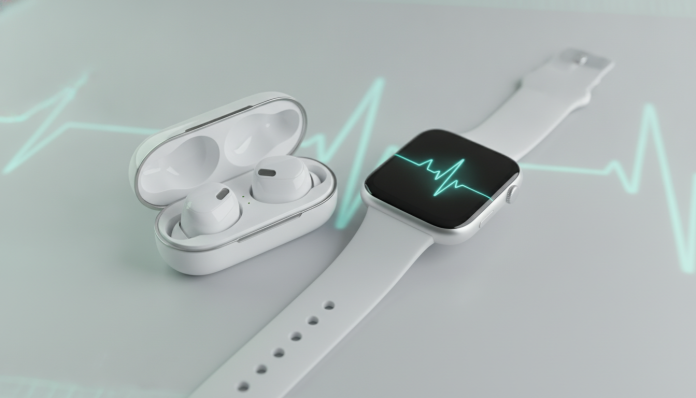

AirPods Pro 3 arrive with integrated heart monitoring — and it changes the game
Apple announced the AirPods Pro 3 with one of the most talked-about additions in wireless earbud history: the ability to measure heart rate directly from your ear. No Apple Watch needed, no finger on any sensor. The earbud listens to your pulse through the ear canal — a region rich in blood vessels — and delivers data straight to your iPhone Health app. It’s a genuine game-changer for anyone wanting health monitoring without wearing a watch.
The short answer for anyone in doubt: if you already use AirPods Pro 2 and don’t have an Apple Watch, the Pro 3 becomes the most justifiable upgrade in years. But if you already have the Watch on your wrist and you’re satisfied with the previous generation’s noise cancellation, the leap is smaller than it seems.
AirPods Pro 3 Specifications
| Specification | AirPods Pro 3 |
|---|---|
| Chip | Apple H2 (updated generation, confirm on official specs) |
| Active Noise Cancellation | Yes, enhanced second generation |
| Heart Rate Monitoring | Heart rate via ear photoplethysmography |
| Hearing Loss Detection | Yes (continues from Pro 2) |
| Clinical Hearing Test | Yes |
| Spatial Audio | Yes, with head tracking |
| Water Resistance | Confirm IP rating on official specs |
| Battery Life (earbud) | Confirm on official specs |
| Battery Life (with case) | Confirm on official specs |
| Connectivity | Bluetooth 5.3 (confirm exact version) |
| Charging | USB-C + MagSafe + Qi2 |
| Minimum Compatibility | iPhone with latest iOS (verify exact requirement) |
| Launch Price (USA) | US$ 249 (launch price, subject to change) |
| Estimated Price in Brazil | Starting from R$ 2,200 to R$ 2,600 (varies by retailer and exchange rate) |
> Attention: as the product is new, I recommend checking the complete specs sheet directly on Apple’s website before purchasing. Some battery and Bluetooth version details may vary from pre-launch materials.
How heart rate measurement through the ear works
This is the most interesting part of the product and deserves a proper explanation. The technology used is called ear photoplethysmography — a complicated name for something relatively simple: the earbud emits infrared light inside the ear canal and captures the reflection of that light on blood vessels. Since blood volume changes with each heartbeat, the sensor can calculate the frequency based on that variation. It’s the same principle as the Apple Watch pulse sensor, just applied to the ear.
This isn’t an Apple invention from scratch. Academic research on ear monitoring has existed for years, and competitors like Samsung and Jabra have already experimented with ear sensors for use during exercise. The difference is that Apple integrates everything into the iPhone health ecosystem, with history, trends, and alerts in the Health app, turning raw data into something actionable for the user.
According to Apple, the reading can happen during normal use, without you needing to stop what you’re doing or start a specific session. The earbud identifies when it’s well-positioned in the ear canal and collects data passively, similarly to how the Apple Watch does it on your wrist throughout the day.
What this sensor means in practice — and what it doesn’t do
It’s important to separate enthusiasm from reality. Heart rate monitoring (how many times your heart beats per minute) is different from an electrocardiogram (ECG), which maps your heart’s electrical rhythm and can detect arrhythmias like atrial fibrillation. Apple Watch Series 4 and later have ECG. The AirPods Pro 3, from what Apple has publicly disclosed, measure heart rate — not ECG.
This doesn’t diminish usefulness for most people. Knowing your resting heart rate, heart rate during a walk, or heart rate right after waking up is valuable health information. Anyone who exercises and uses earbuds will appreciate not needing to check their pulse on their Watch screen while running. The data is automatically recorded in the timeline of the Health app.
For anyone with heart conditions monitored by a doctor, the earbud doesn’t replace the Watch or certified medical devices. Use it as a wellness tool, not a diagnostic device. Apple itself typically makes this disclaimer clear in the documentation of its health products.
Noise cancellation and audio quality: where the Pro 3 stand out
Active noise cancellation (ANC) on AirPods Pro was already a market reference in the Pro 2. Generation 3 brings adjustments that, according to Apple, improve performance in environments with varied frequency noise — like subways, airplanes, and open offices. The technology processes external sounds in real time and generates inverse sound waves to cancel them before they reach your ear, like two wave peaks that cancel each other out when they meet.
The audio quality itself maintains the profile that already made Pro popular: balanced sound with well-controlled bass, present mids, and non-aggressive highs. It’s not a earbud aimed at those wanting exaggerated beats — it’s for those wanting to hear music, podcasts, and calls with fidelity. The personalized spatial audio, which maps your ear shape via iPhone camera to create a three-dimensional sound field, is also present.
AirPods Pro 3 in Brazil: Approval, Warranty & Where to Buy
This is where Brazilians need to pay attention. Apple operates in Brazil through its own store (apple.com/br) and authorized resellers like iPlace, Fast Shop, Magazine Luiza, and others. Products sold through these channels arrive with Anatel approval (mandatory certification for wireless communication devices in the country) and one-year manufacturer warranty, with extension option via AppleCare+.
Buying via import from sites like Amazon USA or while traveling may be cheaper on your card, but you lose warranty coverage in Brazil and may have issues if the product needs technical service. With current exchange rates and import taxes, real savings tend to be smaller than they appear in the quote. Always verify the total value with taxes before finalizing.
The estimated price range in Brazil hovers around R$ 2,200 to R$ 2,600 at launch, but can vary based on promotions, exchange rates, and retailer. Confirm the updated price directly at the store before buying.
Pros and Cons
Pros:
- Heart rate monitoring without needing an Apple Watch
- Native integration with iPhone Health app
- Enhanced active noise cancellation over previous generation
- Charging via USB-C, MagSafe, and Qi2
- Consolidated Apple ecosystem with constant software updates
- Hearing loss detection and clinical hearing test (unique features in the category)
Cons:
- Doesn’t perform ECG; heart rate doesn’t equal complete heart monitoring
- Fully functional only with iPhone (Android users left out)
- High price in Brazil, especially without promotion
- Importing may complicate warranty
- AirPods Pro 2 users with Apple Watch may not feel enough difference to justify upgrading
Competitors and Alternatives in Brazil
| Product | Health Monitoring | ANC | Estimated Price in Brazil |
|---|---|---|---|
| AirPods Pro 3 | Heart rate | Yes, advanced | R$ 2,200 to R$ 2,600 |
| Sony WF-1000XM5 | None | Yes, Android reference | R$ 1,500 to R$ 1,900 |
| Samsung Galaxy Buds 3 Pro | Heart rate (Galaxy ecosystem) | Yes | R$ 1,200 to R$ 1,600 |
| Bose QuietComfort Earbuds II | None | Yes, strong | R$ 1,600 to R$ 2,000 |
| Jabra Evolve2 Buds | Limited | Yes | Verify availability |
The Samsung Galaxy Buds 3 Pro is the most direct competitor in the health department, but heart rate monitoring works more completely integrated with Galaxy Watch and Samsung smartphones. For anyone using Android outside the Galaxy ecosystem, none of these earbuds deliver as cohesive integration as AirPods Pro 3 do for iPhone users.
Frequently Asked Questions About AirPods Pro 3
Do AirPods Pro 3 work with Android?
They function as a regular Bluetooth earbud with basic controls. But features like app configuration, personalized spatial audio, health monitoring, and Health app integration require iPhone. If you use Android, the product loses much of its value.
Is heart rate measurement accurate enough to use during exercise?
According to information released by Apple, the reading works during normal use, including during physical activity. For clinical or high-performance sports use, compare with a reference monitor and speak with your doctor. No consumer wearable replaces certified medical equipment.
Is it worth upgrading from AirPods Pro 2 to Pro 3?
If you don’t have an Apple Watch and want heart rate monitoring, yes. If you already have the Watch and are satisfied with the Pro 2’s ANC, the upgrade is harder to justify by price. Wait to read in-depth comparative performance reviews before deciding.
Do AirPods Pro 3 have warranty in Brazil?
Yes, when purchased at official Apple store or authorized reseller in the country. Standard warranty is one year, with optional extension via AppleCare+. Products imported privately don’t have Apple technical support coverage in Brazil.
Who Should Buy — and Who Can Wait
The AirPods Pro 3 are the right earbud for the iPhone user who wants to centralize health, music, and communication in a single device without relying on Apple Watch. Passive heart rate measurement, integrated into Apple’s health ecosystem, is genuinely useful for anyone doing physical activity, wanting to track pulse variation throughout the day, or simply preferring not to wear a watch.
Anyone already combining AirPods Pro 2 with Apple Watch has most of these benefits covered. And Android users can look at Samsung Galaxy Buds 3 Pro or Sony WF-1000XM5 with more cost-benefit rationality. Apple’s closed ecosystem is both the product’s greatest strength and greatest limitation.
If you’re building a complete tech setup and want comparisons of other high-performance products to decide where to put your money in 2026, it’s worth checking analyses of other segments — like the best graphics card up to R$ 3,000 for 1080p in 2026 — to get a view of the technology market as a whole before making any purchase.
Recommended for: iPhone users who don’t use Apple Watch and want passive heart rate monitoring, plus top-tier noise cancellation.
Price range: R$ 2,200 to R$ 2,600 in Brazil (confirm updated price at store before buying); US$ 249 at launch price in the USA.