

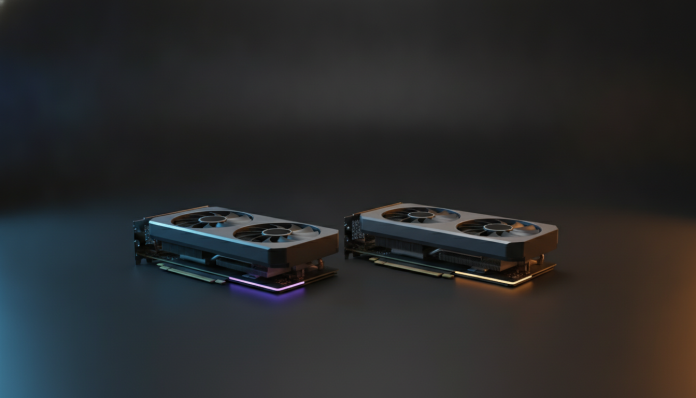

RTX 5070 vs RX 9070 XT: Which GPU Offers Better Value for Money
If you’re building or upgrading a gaming PC in 2026, the choice between NVIDIA’s RTX 5070 and AMD’s RX 9070 XT is probably the most debated right now. Both target the same audience: those who want solid performance at 1440p and even 4K without needing a top-tier card. The launch price for both fell in the US$ 599 to US$ 649 range in the USA, which translates to quite different values in Brazil depending on where you buy.
The short answer: if you use exclusive NVIDIA ecosystem technologies like DLSS 4 with multi-frame generation or are interested in local AI applications, the RTX 5070 delivers real advantages. If your focus is pure rasterized performance, lower price, and you have no commitment to any ecosystem, the RX 9070 XT is hard to ignore. But the decision goes beyond specs: it involves availability in Brazil, warranty, and which driver ecosystem you prefer to deal with.
This comparison focuses on criteria that actually decide the purchase: performance, power consumption, exclusive features, support, and real cost in Brazil.
Comparative Specifications
| Specification | RTX 5070 | RX 9070 XT |
|---|---|---|
| Architecture | Blackwell (GB205) | RDNA 4 (Navi 48) |
| Manufacturing Process | TSMC 4N | TSMC N4P |
| Shaders / Stream Processors | 6,144 CUDA Cores | 4,096 Stream Processors |
| VRAM | 12 GB GDDR7 | 16 GB GDDR6 |
| Memory Bus | 192 bits | 256 bits |
| Memory Bandwidth | ~672 GB/s | ~644 GB/s |
| TDP (Nominal Power) | ~250 W | ~304 W |
| Power Connector | 1x 16-pin (600 W) | 2x 8-pin |
| Launch Price (USA) | US$ 649 | US$ 599 |
| Price Range in Brazil (2026) | R$ 5,500 to R$ 7,500 | R$ 4,800 to R$ 6,800 |
| Ray Tracing | Yes (4th generation) | Yes (improved vs RDNA 3) |
| Upscaling | DLSS 4 | FSR 4 |
| Frame Generation | Multi Frame Generation | Fluid Motion Frames 2 |
| Average Load Power | ~230 W | ~290 W |
Prices in Brazilian reals vary by store, exchange rate, and availability. Always check before buying.
Gaming Performance: Where Each Excels
Rasterized performance, which is traditional rendering without ray tracing tricks, is where the two cards engage in the most interesting competition. According to spec sheets and data published by manufacturers, the RX 9070 XT delivers superior memory bandwidth and VRAM quantity: 16 GB versus the RTX 5070’s 12 GB. In games that demand lots of VRAM, like 4K titles with high-resolution textures, this can make a noticeable difference.
The RTX 5070, on the other hand, has significantly lower power consumption for similar performance, which is an important argument for those with a more modest power supply or concerned about electricity costs. NVIDIA’s Blackwell architecture brings efficiency improvements that the company highlights in its official materials.
Ray Tracing and Global Illumination
Ray tracing is a technique that simulates the real behavior of light in real-time, making reflections, shadows, and lighting more realistic. Think of it as the difference between a photo taken with cheap flash and one with professional studio lighting. The RTX 5070 historically has an advantage in this mode over AMD GPUs of the same generation, and with RDNA 4, AMD narrowed that gap, but according to technical analyses published by specialized portals, NVIDIA still maintains a lead in heavy ray tracing loads.
If you play titles like Cyberpunk 2077 with Path Tracing (which traces every light ray individually), the RTX 5070 tends to perform better. If you play with moderate ray tracing or disabled, NVIDIA’s advantage in this area stops mattering.
DLSS 4 vs FSR 4: The Real Impact on Your Games
Upscaling is the technology that renders the game at lower resolution and then intelligently increases the image, saving performance without significant visual loss. It’s like a camera that takes a photo at lower resolution and uses artificial intelligence to enlarge without blurring. Both DLSS 4 and FSR 4 do this, but with different approaches.
NVIDIA’s DLSS 4 uses a neural network specifically trained for this and, in this generation, includes Multi Frame Generation: the ability to generate up to three synthetic frames for each truly rendered frame. The result in FPS (frames per second) can look impressive on paper, but latency (the time between you pressing a button and seeing the response on screen) can increase. For competitive games, this matters; for cinematic experiences, it matters less.
AMD’s FSR 4 is based on machine learning and represents a big leap from FSR 3, with considerably improved image quality according to AMD. Its major advantage: it works on any GPU, including NVIDIA’s. But the RX 9070 XT has access to Fluid Motion Frames 2, which is AMD’s answer to NVIDIA’s frame generation. FSR 4 compatibility is still growing in 2026, and it’s worth checking which of your library’s games support each technology before deciding.
Power Consumption, Temperature, and Impact on Your Electric Bill
The RTX 5070 has a nominal TDP of 250 W, while the RX 9070 XT reaches 304 W. This difference of about 54 W may seem small, but in long gaming sessions it accumulates. In eight hours of daily use, the difference reaches over 150 Wh per day, which over a month represents additional consumption depending on your region’s electricity rate.
For the RTX 5070, NVIDIA adopts the 16-pin connector (called 12VHPWR or 16+4 pin), which requires a compatible power supply or an adapter. If your power supply is older, check compatibility before buying. The RX 9070 XT uses two 8-pin connectors, a standard that most modern power supplies already have. Neither requires a power supply above 750 W to work well, but AMD recommends power supplies with good load regulation.
Real Cost in Brazil: Import, Warranty, and Anatel
Here’s the point that most affects Brazilian buyers. Both cards don’t have equivalent local warranty to the American standard when imported on your own. When buying from national stores like Kabum, Pichau, or Terabyte, you have importer warranty (usually 12 months), invoice, and no risk of customs seizure.
GPUs don’t need Anatel approval to operate, as they’re not radiocommunication devices, unlike routers and smartphones. But direct import is taxed and the risk of shipping damage is the buyer’s. Buying from a national store, even paying more, guarantees legal backing and Portuguese-language support.
The RX 9070 XT has arrived in Brazil with prices starting at R$ 4,800 at specialized stores, while the RTX 5070 usually starts above R$ 5,500. This difference of up to R$ 700 or more is a real argument for those on a tight budget. Remember that, just as happens in comparisons of other devices, like in the case of Nintendo Switch 2 or Steam Deck OLED: which to buy, local prices frequently change the equation compared to what international reviews suggest.
Frequently Asked Questions About RTX 5070 and RX 9070 XT
Does the RTX 5070 run games comfortably at 4K?
According to NVIDIA’s official specifications and the company’s positioning, the RTX 5070 is primarily aimed at 1440p with high performance and 4K with DLSS usage. For native 4K without upscaling in demanding games, it may find limitations compared to top-tier GPUs. Check benchmarks published by specialized portals for the specific titles you play.
Does the RX 9070 XT’s 16 GB of VRAM make a difference today?
In current games at 1440p, 12 GB is still sufficient in most cases. The RX 9070 XT’s 16 GB provides a more comfortable reserve for 4K with ultra textures or for those using the GPU in content creation and local AI. It’s a real advantage, but you may not feel it depending on your usage.
Which card is easier to find in Brazil?
In 2026, both have national distribution through importers, but availability varies widely between stores and periods. Check stock on sites like Kabum, Pichau, and Terabyte regularly. Partner models like ASUS, Gigabyte, MSI, and PowerColor usually have more units than reference versions.
Can I use DLSS 4 on an RX 9070 XT?
No. DLSS 4 is exclusive to NVIDIA GPUs and requires specific hardware from Blackwell architecture. The RX 9070 XT uses FSR 4, which is open technology and works on NVIDIA cards too. You’ll have access to FSR 4 regardless of chosen GPU, but DLSS 4 is hardware-locked.
Which to Choose: Recommendation by Profile and Budget
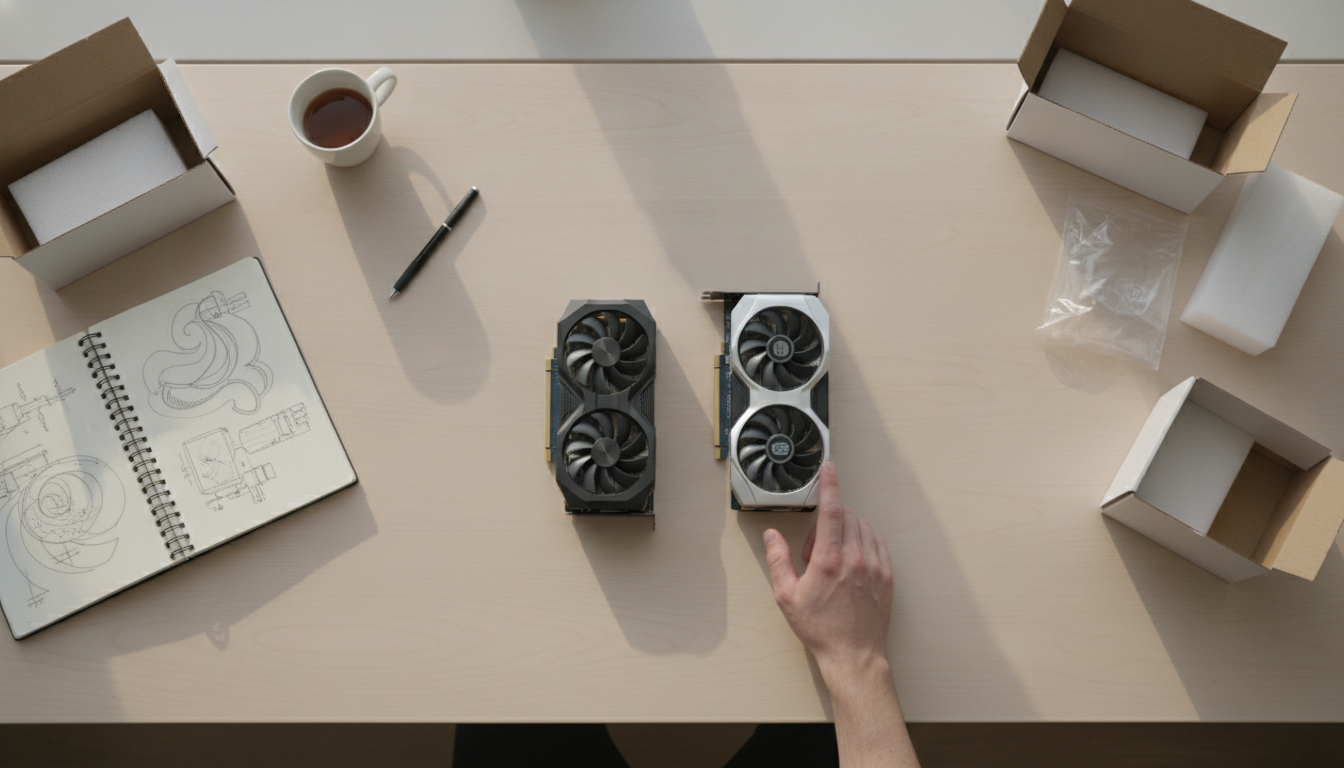
If your budget is tighter and you primarily play 1440p titles without intense ray tracing, the RX 9070 XT delivers more VRAM, a lower entry price in Brazil, and acceptable power consumption for the performance offered. It’s a more rational purchase in this context.
If you already have a power supply with a 16-pin connector, play titles with heavy ray tracing, use local AI applications (where NVIDIA’s Tensor Cores make a difference), or want the best upscaling support on the market today, the RTX 5070 justifies the additional cost. Lower power consumption is also a point to consider long-term.
Recommended for RTX 5070: 1440p and 4K gamers who value the NVIDIA ecosystem, use ray tracing frequently, or work with AI and content creation on the same machine.
Recommended for RX 9070 XT: gamers focused on rasterization, who want more VRAM for the lowest price and don’t depend on exclusive NVIDIA technologies.
Price Range in Brazil: RTX 5070 starting at R$ 5,500; RX 9070 XT starting at R$ 4,800. Prices vary with exchange rate and stock, check national stores before finalizing your purchase.