

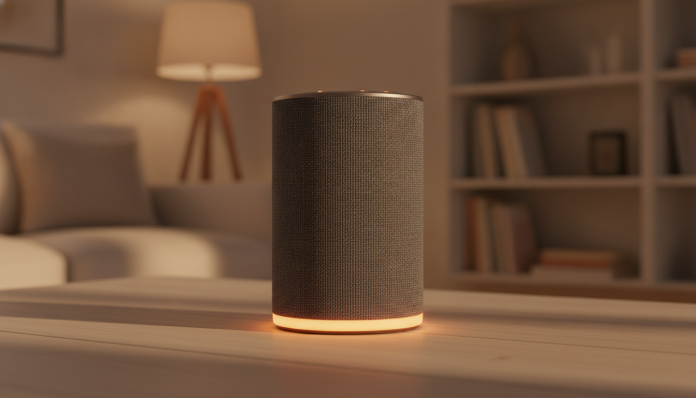

Is Echo Dot Max Worth Buying: Complete Review & Honest Verdict
The Echo Dot Max arrived on the market as the most robust version of Amazon’s Dot line, positioned between the classic Echo Dot and the full-size Echo. The proposition is straightforward: deliver fuller sound while maintaining the compact format that made the Dot family a sales success worldwide. If you already own a previous-generation Echo Dot and feel the audio falls short for daily use as your bedroom or office’s primary speaker, the Max was designed exactly for that profile.
The short answer to “is it worth buying” is: yes, with caveats. The Echo Dot Max delivers on its promise regarding sound quality within its category, integrates well with the Alexa ecosystem, and covers those who want an affordable smart speaker with decent audio presence. But if you seek audiophile quality or use high-resolution music streaming as your absolute priority, you’ll need something more robust and expensive. The sections below break down each point that matters for your decision.
Echo Dot Max Technical Specifications
| Specification | Details |
|---|---|
| Speaker | 1.73″ woofer + dedicated tweeter (per Amazon specifications) |
| Connectivity | Wi-Fi 6 (802.11ax), Bluetooth 5.2 |
| Voice Assistant | Alexa |
| Auxiliary Input | No 3.5mm physical input |
| Audio Output | No 3.5mm or optical output |
| Microphones | 4-microphone array with noise cancellation |
| Smart Home Protocol | Built-in Zigbee, Matter, Thread |
| Power | Proprietary adapter included (no internal battery) |
| Operating Temperature | Check official specifications for outdoor use |
| Dimensions | See Amazon’s official page for exact measurements |
| Brazil Availability | Via Amazon.com.br and authorized resellers |
| Anatel Certification | Required for legal sale in Brazil; confirm the number before purchasing |
| Warranty in Brazil | 1 year by manufacturer via Amazon Brazil |
> Attention to buyers: product specifications may change according to regional variants. Always check the technical sheet on Amazon.com.br’s official page before completing your purchase.
Sound Quality: The Main Selling Argument
The biggest leap of the Echo Dot Max over the conventional Echo Dot is in audio hardware. Amazon added a dedicated tweeter (a driver specifically for high frequencies, like a second speaker specialized in treble) alongside a larger woofer, resulting in cleaner frequency separation than previous Dot line models.
In practice, according to the manufacturer, the result is sound with more presence in mids and highs without losing body in low frequencies. For spaces up to about 160 square feet, such as a bedroom or small office, maximum volume reaches comfortable levels without noticeable distortion in mid frequencies. In larger spaces, the sound may lose the projection needed to fill the area.
The device supports adaptive spatial audio, a technology that acoustically analyzes the environment and automatically adjusts frequency balance. It works similarly to what Sonos and Apple HomePod speakers do, though on a less sophisticated scale. For those using the Echo Dot Max in stereo-paired mode with a second device, the experience improves considerably, but that doubles your investment.
Support for Dolby and Hi-Res Audio isn’t a strong point for the Dot line, including the Max. If high-fidelity music is your priority, Amazon’s Echo Studio is the product for that purpose, and it costs proportionally more.
Alexa Integration and Smart Home
The Echo Dot Max includes a built-in Zigbee hub, meaning it functions as a central control for smart home devices using that protocol without needing a separate hub. Zigbee is a wireless communication standard with low power consumption, different from conventional Wi-Fi, used by bulbs, locks, and sensors from brands like Philips Hue, IKEA, and others. This saves you an extra device plugged in.
Support for the Matter standard, launched by the industry to unify smart homes, is present and relevant for those planning to build a heterogeneous environment with devices from different brands. In practice, Matter is still maturing in terms of compatibility in the Brazilian market, so confirm whether devices you already own or plan to buy are certified before relying on it.
The quality of the microphone array with 4 sensors ensures voice recognition even with music playing at moderate volume. This matters because Alexa becomes useless if you need to stop music every time you want to issue a command. For those already using other Echos around the house and wanting to expand the voice command network, the Max integrates easily into an existing group.
If you want to better understand managing your home network along with connected devices, it’s worth checking how to see who’s using your Wi-Fi and block access to keep your network secure with more devices connected.
Software, Privacy, and Regional Limitations
Alexa in Brazil works well for basic commands: playing music, setting reminders, controlling smart home devices, checking weather forecasts, and shopping on Amazon. Brazilian Portuguese has improved significantly over recent years, and regional accent recognition is more accurate than in previous generations.
Limitations exist and need to be stated clearly. Skills (applications for Alexa, equivalent to functionality extensions) available in Brazil are still fewer in number than in the American market. Some integrations that work in the US simply haven’t arrived here, so confirm in the Alexa Skills store whether the service you use has national support before buying.
The privacy point is recurring for any device with an always-on microphone. Amazon allows you to disable the microphone with a physical button on the device and offers voice history deletion settings in the Alexa app. There’s no completely local processing: commands are sent to Amazon’s servers for processing. If this is a problem for you, no Echo model will solve it, regardless of which one.
Pros and Cons
Pros:
- Significantly better sound than the conventional Echo Dot, with dedicated tweeter
- Built-in Zigbee hub eliminates the need for separate smart home equipment
- Matter and Thread support for interoperable smart home ecosystem
- Wi-Fi 6 for more stable connections on congested networks
- Alexa with strong performance in Brazilian Portuguese
- 1-year warranty via Amazon Brazil and Anatel certification (confirm on physical product)
Cons:
- No auxiliary audio input or output (3.5mm), limiting integration with external equipment
- No internal battery, must stay plugged in
- Doesn’t reach audiophile quality; Echo Studio is Amazon’s option for that
- Skills and integrations in Brazil are still more limited than in the US
- Always-on microphone requires trust in Amazon’s privacy policy
- Price can be steep depending on exchange rates and purchase channel
Competitors and Alternatives in Brazil
| Product | Highlight | Approximate Price Range (2026) |
|---|---|---|
| Echo Dot Max (Amazon) | Best sound in Dot line, built-in Zigbee hub | $100-$140 USD equivalent (varies by channel) |
| Echo Studio (Amazon) | Best audio quality in Echo line, Dolby Atmos | $240-$300 USD equivalent |
| Google Nest Audio | Google Home integration, balanced sound | $120-$160 USD equivalent |
| Apple HomePod mini | Apple ecosystem, spatial audio, better privacy | $200-$260 USD equivalent |
| JBL Link Portable | Portable with battery, Google Assistant | $140-$180 USD equivalent |
The Google Nest Audio is the main direct competitor in terms of proposition and price. If you already use Android, Chromecast, and Google’s services in your daily routine, the Nest Audio might deliver a more integrated experience than the Echo Dot Max. For the Apple ecosystem, the HomePod mini is still the logical choice, but it costs considerably more. The JBL Link Portable differentiates itself with a built-in battery, which the Echo Dot Max lacks.
Frequently Asked Questions About Echo Dot Max
Does Echo Dot Max Need Anatel Certification to Be Sold in Brazil?
Yes. Every radiofrequency device sold legally in Brazil must have Anatel (National Telecommunications Agency) certification. Before buying, verify that the product has the certification number printed on the box or device label. Devices imported privately without this certification may be detained at customs.
Is It Worth Importing Echo Dot Max From the US to Save Money?
It depends. The launch price in the US is often more affordable in dollars, but importing includes import tax, credit card IOF, and potential taxation at customs or redirection services. Beyond cost, products imported without a Brazilian invoice may have warranty denied by Amazon Brazil. Do the math before deciding.
Does Echo Dot Max Work With Voice Assistants Other Than Alexa?
No. The Echo Dot Max is a closed device in Amazon’s ecosystem and operates exclusively with Alexa. You cannot switch the voice assistant to Google Assistant or Siri, even through advanced settings.
Can I Use Echo Dot Max as a Bluetooth Speaker for My Phone?
Yes. The Echo Dot Max accepts Bluetooth connection and can function as a wireless speaker for your smartphone. Audio quality in this mode is determined by the Bluetooth codec supported by the device; consult the official technical sheet to verify which codecs are available on this version.
Is It Worth It?

The Echo Dot Max is an honest product within the scope of what it proposes to deliver. It provides superior audio compared to the conventional Echo Dot, integrates smart home control with the built-in Zigbee hub, and functions well as a central voice control point for those already in Amazon’s ecosystem. Don’t try to transform it into something it’s not: it’s not a hi-fi speaker, doesn’t replace a soundbar, and lacks mobility due to no battery.
For those setting up their first smart home setup and wanting an entry point with decent sound, the Echo Dot Max makes sense. For those already owning Echo Dots and wanting to jump in sound quality without reaching Echo Studio, it also makes sense. If you use a lot of home robotics and connected devices, it can complement your daily routine alongside other smart home solutions.
Recommended for: those wanting a smart speaker with above-average sound for small spaces, users in the Amazon ecosystem, and those wanting a Zigbee hub without buying separate equipment.
Price range: between $100-$140 USD equivalent on Amazon.com.br and authorized resellers (price subject to variation based on exchange rates and seasonal promotions).