

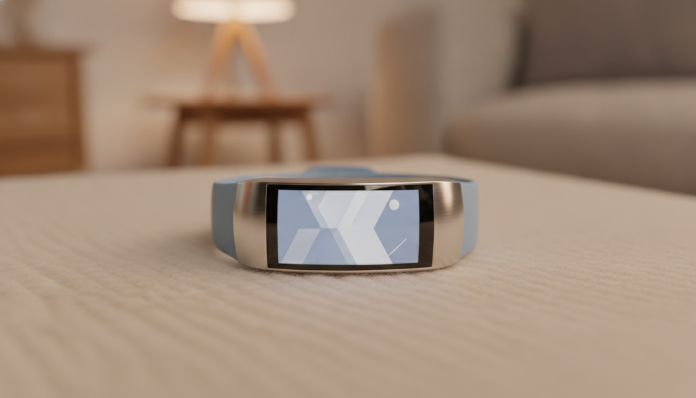

Why a fall detection bracelet could be the most important gift you give an elderly family member
Falls are the leading cause of serious injuries in people over 65 in Brazil, according to data from the Ministry of Health. The problem isn’t just the impact itself: it’s the time the elderly person lies on the ground without help when living alone or when no one is nearby. A smart bracelet with automatic fall detection solves exactly that critical window, triggering an alert to family members or emergency services without the person needing to press any button.
The market for this type of device has grown significantly between 2024 and 2026, and today you can find everything from simple panic button options to bracelets with integrated GPS, heart rate monitoring, and cell connection independent of a smartphone. The difference between models matters greatly for the user’s actual safety, and it’s easy to overpay for features that don’t work well in practice, or save money incorrectly and end up without minimum necessary protection.
This guide was made for those who want to buy with awareness. We’ll go through the technical criteria that really determine product effectiveness, available models in Brazil in 2026, the Anatel approval issue, and everything you need to check before finalizing your purchase.
How fall detection works in smart bracelets
Fall detection uses a combination of an accelerometer (sensor that measures acceleration on three axes) and gyroscope (sensor that measures orientation and rotation) to identify the movement pattern associated with a fall. Think of it this way: when a person falls, the device detects sudden acceleration followed by an abrupt stop, a pattern different from any common voluntary movement.
After identifying the event, the bracelet activates an alarm sound and a countdown, generally from 15 to 60 seconds depending on the model. If the user doesn’t cancel the alert (which would indicate they’re fine and the fall was false), the device sends an automatic notification to registered contacts. More advanced models call directly to an emergency number or to a 24-hour monitoring center.
The quality of the detection algorithm varies greatly between manufacturers. Devices with less sophisticated algorithms generate false positives (unnecessary alerts, like when the elderly person sits down abruptly or lies down quickly) or false negatives (real falls that aren’t detected). Unfortunately, manufacturers rarely publish accuracy rates under controlled conditions; what you can do is look for user reports and check if the company offers a trial period or return policy.
The criteria that really determine product effectiveness
Connection method: Wi-Fi, Bluetooth, or dedicated cellular network
This is the most critical and most overlooked point in price comparisons. A bracelet that depends on Bluetooth needs to stay close to the elderly person’s smartphone all the time, which rarely happens. If the phone is in another room, the alert won’t arrive.
Bracelets with integrated Wi-Fi work at home without depending on the phone, but lose coverage when the elderly person leaves. The most complete level are models with dedicated 4G/LTE chip, which work anywhere with carrier signal. These devices require a data plan, usually contracted separately or included in the monitoring service fee.
GPS and location tracking
GPS is essential for elderly people who leave home alone, tend to get lost, or show some degree of cognitive decline. Without GPS, the family only knows that a fall occurred, but not where. With GPS, the app shows the exact location on the map.
Pay attention to the precision declared by the manufacturer and battery consumption: GPS is the feature that drains power the most. Check in the technical specifications whether the device uses assisted GPS (A-GPS) or pure GPS only; A-GPS uses cell towers to estimate the initial position faster, which is important in emergency situations.
Battery: real autonomy versus marketing autonomy
The autonomy declared by manufacturers is usually measured with GPS and heart rate monitoring disabled. With all sensors active, expect 30% to 50% less than the advertised number. A device that promises 5 days might deliver 2 to 3 days in real use with all functions enabled.
For elderly people who forget to charge, look for models with a low battery alert in the family member’s app, and prefer devices with simple magnetic charging, which is easier to connect than common USB connectors.
Integrated health monitoring
Many devices in this segment already include continuous heart rate, pulse oximetry (SpO2, which measures blood oxygen saturation), and even detection of irregular heart rhythms via simplified ECG. These features have real clinical value for elderly people with cardiovascular conditions, but require that data be monitored and not just collected.
If the goal is more complete health monitoring, consider pairing the bracelet with an app that organizes the history and allows sharing with the doctor. Check if the manufacturer offers data export in open format or if the data is locked in the proprietary ecosystem.
Models available in Brazil in 2026 and price ranges
The Brazilian market in 2026 is dominated by a mix of imported products (especially from Chinese and American brands) and some national solutions focused on monitoring plans. The table below presents representative categories, without inventing specifications I can’t verify with precision:
| Category | Product example | Price range (R$) | Main strength | Primary limitation |
|---|---|---|---|---|
| Basic (panic button + Bluetooth) | Generic imported models | R$ 150 to R$ 400 | Low cost | Depends on nearby phone |
| Intermediate (Wi-Fi + automatic detection) | Products from brands like iLife or similar | R$ 500 to R$ 1,200 | Works at home without phone | No GPS |
| Advanced (4G + GPS + heart rate monitoring) | Apple Watch SE (with cellular plan) | From R$ 2,500 | Complete ecosystem | High cost; requires iPhone |
| Advanced independent | Models like Doro, Lively or similar | R$ 1,500 to R$ 3,500 | Doesn’t depend on smartphone | Limited availability in Brazil |
| National monitoring service | Brazilian telehealth companies | Monthly R$ 80 to R$ 250 | Local support and 24-hour center | Recurring cost |
Prices vary according to exchange rates, store, and availability. Always check the current price at major retailers (Mercado Livre, Amazon Brasil, Magazine Luiza) before buying.
Anatel approval and import: what you need to know
Any device with radio (Wi-Fi, Bluetooth, 4G) sold or imported for use in Brazil needs to have Anatel approval. This isn’t a bureaucratic detail: without the seal, the product can be seized at customs, have no legal guarantee, and present interference with Brazilian networks.
For products purchased in Brazil, the responsibility for checking approval is the store’s. For personal imports (sites like AliExpress or Amazon USA), you need to check the approval number on Anatel’s own website before buying. Many models sold in the US simply don’t have Brazilian approval.
If you import a device without approval and it’s held at the post office or by Customs, there’s no guarantee of product return. The financial risk is yours. For such an important gift, the recommendation is clear: buy from authorized resellers in Brazil, even if the price is higher.
The Brazilian legal warranty is 90 days for used products and 12 months for new products, according to the Consumer Protection Code. Physical stores and national retailers are required to comply with this; international sellers are not.
What to check before finalizing your purchase
- Device size and weight: heavy or large bracelets are uncomfortable for the elderly person, who may simply stop wearing it. Prefer models under 40 g.
- Water resistance: look for at least IP67 certification (resistant to immersion for up to 30 minutes at 1 meter depth). Elderly people wear the device while bathing, and bathroom falls are one of the most common scenarios.
- Ease of use for the elderly person: does the device require minimum setup by the user? Is the interface readable and is the emergency button physical and easy to press?
- Family app: test the app before buying. Check compatibility with your operating system (Android or iOS) and read recent reviews in the app store.
- Portuguese support: English-only customer service is a real obstacle for Brazilian families in emergency situations.
If you’re evaluating wearables for other family members and want to understand more about the tablet and connected device ecosystem, the guide on the best tablet with included S Pen to buy in 2026 shows how to evaluate technical specifications with the same rigor applied here.
Frequently asked questions about fall detection bracelets for elderly people
Does fall detection work if the elderly person is sleeping and falls out of bed?
It depends on the model and algorithm. A bed fall tends to be slower than a fall from standing, which makes detection difficult for some devices. Consult the manufacturer’s documentation and look for user reports specifically about this scenario before buying.
Does the elderly person need to have a smartphone to use the bracelet?
Not necessarily. Models with integrated 4G work independently; the smartphone stays with the family member who receives the alerts, not necessarily the elderly person. Confirm this point in the technical specifications of your chosen product.
Can you use the bracelet while bathing?
Only if it has adequate water resistance certification. Look for at least IP67 or IP68 in the technical specifications. Avoid products that only mention “splash resistant” (IPX4), as this protection level doesn’t cover shower immersion.
Are monitoring service subscriptions worth it?
For elderly people living alone or with untrained caregivers in first aid, the answer is usually yes. A 24-hour center with SAMU activation protocol represents an extra safety layer that a common family app doesn’t offer, especially if the family isn’t available full-time. Evaluate the cost-benefit based on your specific situation.
How to choose the right model for your case
The decision comes down to three practical questions: does the elderly person leave home alone frequently? Live alone? Have any health condition that justifies continuous monitoring of vital signs?
If all three answers are yes, go straight to a model with 4G, GPS, and heart rate monitoring, preferably linked to a national monitoring service. The monthly cost is real, but the coverage is much greater than any single-use solution.
If the elderly person stays mainly at home and has someone nearby most of the time, an intermediate model with Wi-Fi and automatic detection already works well, with significantly lower cost. In this case, focus should be on the quality of the detection algorithm and ease of use, not on GPS or cellular connectivity.
Avoid the temptation to buy the cheapest option just to “have something.” A bracelet that the elderly person doesn’t wear because it’s uncomfortable, or that depends on a phone always nearby, offers a false sense of security. The device that works is the one that stays on the wrist every day, charged, connected, and comfortable.