

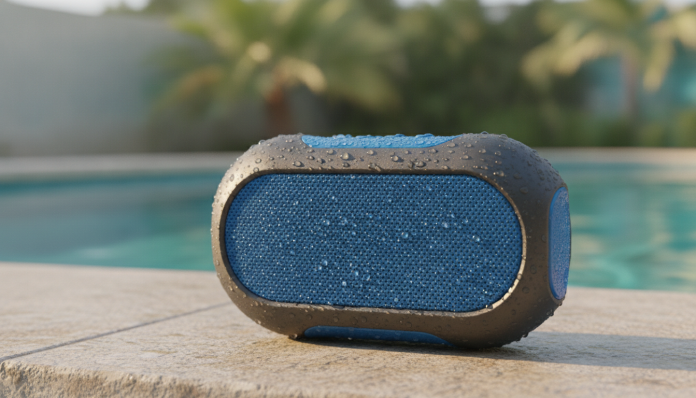

Waterproof Bluetooth Speakers Under R$ 300: Which One to Buy in 2026
You want a small Bluetooth speaker for the pool, beach or shower, but you don’t want to spend a fortune or regret the purchase. The good news is that in 2026, the range below R$ 300 already offers options with real water resistance, decent battery life and sound that doesn’t embarrass. The bad news: the market is full of products with ambiguous specifications, fake certifications or performance that only appears in advertisement photos.
This guide compares the main options available in Brazil in this price range, explains what you should check before buying and clearly states which one works for each type of use. If you only want to wet the speaker in the shower from time to time, the requirement is different from someone who will take the product to the coast for an entire week.
The short answer: for light home use, any model with IPX5 certification already does the job. For pool, beach or prolonged exposure, you need IPX7 or higher, and this filter already eliminates much of the options below R$ 200. Understanding the difference between these ratings is the first step to avoid frustration.
What IPX5, IPX6 and IPX7 Mean (and Why This Decides Everything)
The acronym IP comes from “Ingress Protection” (protection against particle and liquid entry), and the numbers after it indicate the level of resistance. The “X” in the dust position means that criterion was not evaluated by the manufacturer. The number that matters for speakers is the second digit, referring to water.
- IPX5: resists water jets in any direction. Good for rain and splashes, but not for immersion.
- IPX6: withstands high-pressure water jets. One level above IPX5, but still without immersion.
- IPX7: supports immersion up to 1 meter deep for up to 30 minutes. This is the minimum for pool or seaside use.
- IPX8: immersion at greater depths, specified by the manufacturer. Rare at this price point.
One important detail: IP certification covers the product condition when new, with all caps closed. Salt, chlorine and physical impacts can compromise the seal over time. Don’t treat IPX7 as “can stay submerged forever.”
Comparison: Main Options Up to R$ 300 in Brazil
The models below are frequently found in national retailers such as Americanas, Magalu, Amazon Brasil and Mercado Livre. Prices fluctuate greatly by region and period; the ranges indicated reflect the market in 2026, but confirm before buying.
| Model | Certification | Battery Life (Stated) | Bluetooth | Price Range (BR) | Anatel Approval |
|---|---|---|---|---|---|
| JBL Clip 5 | IP67 | Up to 12h | 5.3 | R$ 250 to R$ 300 | Yes |
| JBL Go 4 | IP67 | Up to 7h | 5.3 | R$ 160 to R$ 220 | Yes |
| Sony SRS-XB100 | IP67 | Up to 16h | 5.3 | R$ 200 to R$ 260 | Yes |
| Anker Soundcore Mini 3 Pro | IPX7 | Up to 15h | 5.0 | R$ 180 to R$ 240 | Check |
| Multilaser Pulse SP299 | IPX6 | Up to 8h | 5.0 | R$ 80 to R$ 130 | Yes |
Important about the Anatel column: products approved by Anatel have gone through the Brazilian regulatory process and can be legally sold in the country. This guarantees that the transmission frequency is within the national standard. Imported models without approval may have difficult warranty and can theoretically be seized at customs. Always check the approval number on the Anatel website before finalizing a purchase on a marketplace.
JBL Clip 5 and JBL Go 4: The Weight of Brand on Value for Money
JBL has consolidated presence in Brazil, technical support and 1-year warranty more easily honored than smaller brands. The JBL Clip 5 arrived with launch price in the US in the range of US$ 60 and positions itself as the most complete option from the brand in this compact segment. According to the manufacturer, the certification is IP67, which means dust resistance and immersion up to 1 meter for 30 minutes.
The integrated carabiner is a real differential: you can clip the speaker to your backpack, beach bag or tent strap without needing extra accessories. The declared 12-hour battery life is competitive for the size, although high volume and equalization use reduce this number in practice. For those who want something small, reliable and with local support, the Clip 5 is the safest choice in this range.
The JBL Go 4 is more affordable and delivers the same IP67, but offers less battery life (7 hours stated) and lower sound power. It works well for bedroom, bathroom or balcony use, but may disappoint in larger spaces or outdoors with surrounding noise.
Sony SRS-XB100: Battery Life as Main Argument
Sony entered this segment with the SRS-XB100 promising up to 16 hours of battery life, according to official specs, which is quite impressive for a compact speaker. IP67 certification guarantees the same protection level as the JBL models mentioned. The launch price in the US was around US$ 60.
Sony’s sound profile tends to prioritize bass, which appeals to funk, pagode or electronic music listeners, but may sound excessive for those preferring something more neutral. The design is cylindrical and without the carabiner of the Clip 5, so you’ll need a pocket or flat surface to rest it. For those spending the day at the beach without access to outlets, the long battery life may be the deciding factor.
Anker Soundcore Mini 3 Pro and Multilaser SP299: The Challengers
The Anker Soundcore Mini 3 Pro is imported and doesn’t always appear with Anatel approval in Brazilian marketplaces. Before buying, check if the specific listing brings the approval number. When regularized, it’s a competitive option: IPX7, Bluetooth 5.0 and declared battery life of up to 15 hours. The price varies considerably depending on the import source.
The Multilaser SP299 is the cheapest national option on the list and serves a very specific profile: occasional home use, without intense water exposure. IPX6 doesn’t allow immersion, so beach and pool are out of scope. Warranty and technical support are positives for being a company with consolidated operation in Brazil, but audio performance and material durability are proportional to the price.
What to Check Before Clicking “Buy”
Some points that separate a good purchase from a headache:
- Anatel Approval: the number should be visible on the packaging or product sheet. Check on the official Anatel portal.
- Real IP Certification: look for the certificate on the manufacturer’s website, not just in the seller’s ad.
- Warranty: manufacturers with presence in Brazil offer direct warranty; smaller importers depend on the seller.
- Audio Codec: most of these models use SBC (the standard Bluetooth codec). If your phone supports aptX or AAC and the speaker does too, you can have higher quality audio. Check both specifications.
- Charging: check if the model uses USB-C, which is the current standard. Some older models still use Micro-USB.
Which to Choose Based on Your Use
If you mainly use the speaker in the bathroom or on the house balcony, without real immersion, the JBL Go 4 delivers enough for the lowest investment among reliable models. JBL’s warranty and technical support availability in Brazil make a difference long-term.
For beach, pool and trips, where the speaker can fall in water or be exposed for hours, the JBL Clip 5 or Sony SRS-XB100 are most recommended. Clip 5 has an advantage if you need to attach the speaker somewhere; SRS-XB100 wins if battery life is priority. If budget is tight and you don’t mind checking Anatel approval, Soundcore Mini 3 Pro can be a valid alternative, but requires more research before buying.
The Multilaser SP299 only makes sense if budget is really limited and use is internal, away from pools and beaches. For that specific profile, it fulfills the role without great pretensions.
Keeping your phone charged while using Bluetooth is also a valid concern on long outdoor days; if that bothers you, it’s worth checking how to increase Android battery with practical adjustments to extract more autonomy from your smartphone during use.
Frequently Asked Questions About Waterproof Bluetooth Speakers
Can I Use an IPX5 Speaker in the Pool?
Not safely. IPX5 resists water jets but not immersion. If the speaker falls in the pool or gets completely wet for more than a few seconds, the risk of damage is real. For pool use, the minimum recommended is IPX7.
Does IP Certification Cover Damage from Salt Water or Chlorine?
No. Most certification tests use clean fresh water. Salt water and chlorine can deteriorate seals and internal components over time. Rinse the speaker with fresh water after using at the beach or pool.
Is It Worth Buying from Abroad to Save Money?
Sometimes the price is lower, but you assume the risk of paying import tax, receiving a product without Anatel approval and having difficulty with warranty. If the product comes without a Brazilian invoice, the manufacturer’s warranty in Brazil may not be honored. Weigh this risk before saving R$ 50.
What’s the Difference Between IP67 and IPX7?
The first digit indicates dust protection: “6” means fully protected against dust. The “X” in that position means the manufacturer didn’t test that criterion. For beach use, IP67 is technically more complete, as sand won’t enter either. Pay attention to this difference in the spec sheet.
The Verdict by Profile and Budget
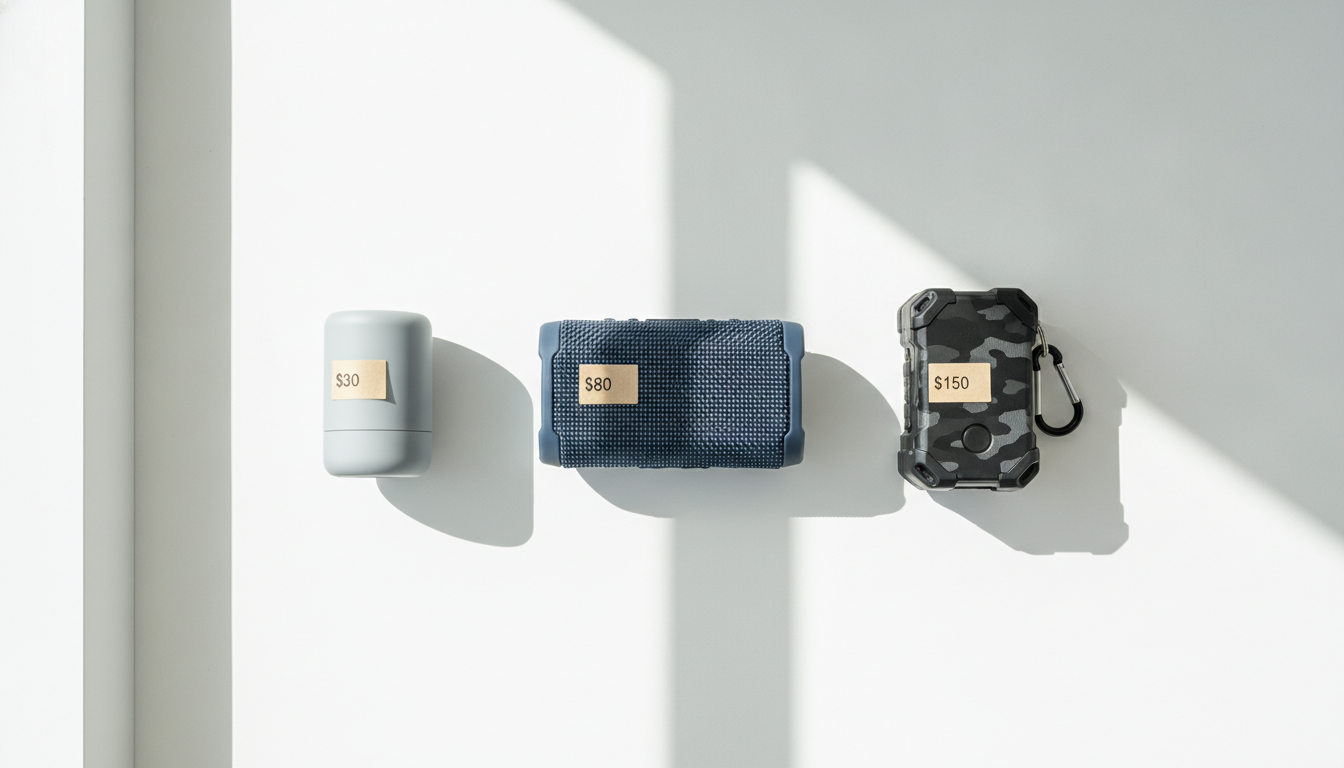
The right choice depends on where you’ll use it, not which brand has more social media followers. Models with IP67, national warranty and manufacturer support are worth the slightly higher price within this range. Saving R$ 80 on a speaker that breaks on your first beach trip is not saving at all.
Light home use (shower, balcony): JBL Go 4, between R$ 160 and R$ 220. Beach, pool and trips: JBL Clip 5 or Sony SRS-XB100, between R$ 200 and R$ 300. Tight budget with indoor use: Multilaser SP299, from R$ 80, knowing the limitations.