


Built-in GPS Smartwatch Worth It in 2026?
The short answer is: it depends on what you do outside the house. If you run, cycle, hike, or practice any outdoor activity regularly, a smartwatch with integrated GPS (meaning the positioning chip is inside the watch, without depending on your phone) is one of the most practical additions you can make to your setup. Now, if you use the watch mainly for notifications, music control, and sleep monitoring, integrated GPS will increase the price without delivering real daily benefit.
The smartwatch market in 2026 is more mature than ever. Competition is no longer just between Apple and Samsung but includes competitors like Garmin, Google (with Pixel Watch), Amazfit, and Xiaomi with more affordable models. This is great for the Brazilian consumer because it created a very competitive mid-price range with devices homologated by Anatel (the regulatory agency that certifies devices can operate legally in Brazil) reaching shelves more frequently. The problem is that variety also confuses: simple satellite GPS, multifrequency, GNSS multi-system… each manufacturer uses a different term for things that can mean very different things.
This article will break down what each GPS technology does in practice, which models really deserve the asking price in Brazil, and finally, clearly state for whom it makes sense and for whom it doesn’t make sense to buy a smartwatch with integrated GPS right now.
What Differentiates Integrated GPS from Assisted GPS
Before looking at any spec sheet, you need to understand this distinction. A smartwatch with assisted GPS (also called “connected GPS”) uses your smartphone’s positioning via Bluetooth to know where you are. It works, but has serious limitations: if you leave without your phone, the watch doesn’t record your route. For those who run on a treadmill or use the watch only in the office, this doesn’t matter. For those who go hiking or cycle far from home, it’s a real problem.
Integrated GPS, on the other hand, has the positioning chip inside the watch itself. You leave home without your phone and the watch records distance, speed, altitude, and map route with accuracy. Most modern models go beyond American GPS and support multiple satellite navigation systems, like GLONASS (Russian), Galileo (European), and BeiDou (Chinese). This is important because the more systems the watch can capture at the same time, the faster it acquires signal and the more precise it becomes in obstructed locations, like dense forests or dense urban centers.
In 2026, intermediate and premium models already bring support for dual-frequency GNSS (L1 + L5). Without excessive jargon: imagine that the satellite signal reaches the watch through two different “roads” at the same time. Even if one of them suffers interference from buildings or foliage, the other still carries the correct information. The practical result is a more faithful trajectory on the map, especially in cities with skyscrapers.
Reference Spec Sheet: What to Compare Before Buying
The table below brings together the key specifications you should check when evaluating any smartwatch with GPS. The values cited are based on public spec sheets from manufacturers referenced below.
| Specification | What to Watch For | Why It Matters |
|---|---|---|
| Satellite System | GPS, GLONASS, Galileo, BeiDou, QZSS | More systems = faster and more stable signal |
| GPS Frequency | Single (L1) or dual (L1+L5) | Dual frequency is more accurate in urban environments |
| Altimetric Barometer | Present or Absent | Measures altitude by air pressure, more accurate than GPS alone |
| Battery Life with GPS Active | Hours declared by manufacturer | Drops significantly with GPS on; compare GPS mode, not “smartwatch mode” |
| Water Resistance | ATM or meters (ISO 22810:2010) | For swimming, requires 5 ATM or more with specific certification |
| Anatel Homologation | Homologation Number | Mandatory for legal use and warranty in Brazil |
| Processor/Memory | Check in spec sheet | Affects smoothness of offline maps |
| Offline Maps | Yes/No | Essential for trails without cellular signal |
Battery Autonomy: The Achilles Heel of GPS
No other specification drops in real-world use as much as battery life with active GPS. A smartwatch that lasts five days on your wrist can last less than ten hours with continuous GPS enabled. This is not manufacturer dishonesty; it’s physics: the positioning chip consumes energy constantly to ping satellites.
According to official spec sheets released by manufacturers, entry-level Amazfit and Xiaomi models typically declare between 20 and 30 hours of continuous GPS. Intermediate Samsung and Google Pixel Watch models fall in the 20 to 24 hours range with active GPS, according to public brand information. Garmin models aimed at endurance sports, like the Fenix and Forerunner lines, are designed for long-duration activities and declare significantly higher autonomies in their specific economy modes, but you should check the autonomy table on the official Garmin page for the exact model you’re evaluating, as numbers vary greatly between versions.
The practical point: if you do ultramarathons or multi-day treks, Garmin is practically irreplaceable in this regard. For runs up to 20 km or urban cycling, any intermediate smartwatch with integrated GPS will suffice.
GPS Accuracy in Real Life: What Spec Sheets Don’t Show
Manufacturers reveal support for satellite systems but rarely publish error margins in meters. What can be stated based on public information and technical documentation from brands is that barometric altimetric sensors make concrete difference in altitude measurement and elevation gain, especially for trails. If a model doesn’t have a barometer, it estimates altitude only from GPS data, which is less accurate.
Models with dual-frequency GPS (L1+L5), like those from the Apple Watch Ultra 2 line, Garmin Fenix 8, and some recent Samsung Galaxy Watch models, are designed to offer greater accuracy in challenging environments, according to manufacturers. For users who run in the park or on the bike path, the difference between simple L1 and L1+L5 is practically imperceptible. For those who hike in dense forest, the dual frequency begins to make a noticeable difference in route fidelity.
Anatel Homologation and Import: Be Careful With What You Buy
This point is critical and many people ignore it. In Brazil, every telecommunications device, including smartwatches with Bluetooth, Wi-Fi, or cellular connectivity, needs Anatel homologation to be sold and used legally. Buying an imported model without this seal not only prevents official warranty in the country but can also cause problems at customs.
Brands like Apple, Samsung, Garmin, Amazfit, and Google already bring homologated versions to the Brazilian market. The Anatel homologation number should appear on the packaging and can be checked directly on the Anatel website. When buying on marketplaces, always filter by “sold by” and prefer the product sold by the official importer or the brand itself. Importing via international shipment may seem cheaper, but warranty will be with the manufacturer in the country of origin, Portuguese support may not exist, and there’s the risk of Anatel seizing the product.
A parallel point: the homologation issue is not exclusive to smartwatches. If you follow the connected devices market, you know this also affects other gadgets like Android TV boxes, where the difference between a homologated product and an imported one without certification can determine whether the device works correctly or gets seized.
Competitors and Alternatives Available in Brazil
The table below presents the main models with integrated GPS available in the Brazilian market in 2026, with approximate price ranges. Prices vary by store, promotions, and exchange rates, so treat the values as reference, not as final prices.
| Model | GPS | Highlight | Range in Brazil (approx.) | USA Release (ref.) |
|---|---|---|---|---|
| Apple Watch Ultra 2 | Dual freq. L1+L5 | Autonomy, accuracy, iOS ecosystem | Starting at R$ 7,000 | USD 799 |
| Samsung Galaxy Watch 7 / Ultra | L1+L5 (Ultra) | Android/Samsung Integration | R$ 2,500 to R$ 5,000 | Starting from USD 299 |
| Garmin Forerunner 265 | Multi-GNSS | Running focus, long battery | R$ 3,000 to R$ 4,000 | USD 449 (launch) |
| Garmin Fenix 8 | Dual freq. | Trails, multisport, robustness | Starting at R$ 7,000 | Starting from USD 899 |
| Amazfit GTR 4 / Balance | Multi-GNSS | Value for money, long battery | R$ 900 to R$ 1,500 | Starting from USD 139 |
| Google Pixel Watch 3 | Multi-GNSS | Pure Android integration, Wear OS | R$ 2,500 to R$ 3,500 | Starting from USD 349 |
| Xiaomi Smart Band 9 Pro | Integrated GPS | Entry-level price, band form factor | R$ 500 to R$ 800 | Variable by market |
Prices verified based on market averages and announcements from national retailers. Always check current price before buying.
Pros and Cons of Integrated GPS on Smartwatches
Pros:
- Records route, distance, and speed without depending on the phone
- Multifrequency GNSS models offer superior accuracy in urban and forest environments
- Integrated barometer improves altitude and elevation gain measurement
- Allows you to go out training with just the watch, especially useful for runners
- App ecosystem (Garmin Connect, Strava, Google Fit) uses GPS data for performance analysis
Cons:
- Battery with active GPS is significantly less than in standby mode
- Dual-frequency GPS raises device price considerably
- In trails with very dense tree cover, even the best GPS can lose accuracy
- Models without Anatel homologation may have warranty and import issues
- The accuracy difference between simple L1 and L1+L5 is irrelevant for most casual users
Frequently Asked Questions About GPS Smartwatches
Does a GPS Smartwatch Work Without a Phone Nearby?
Yes, that’s exactly the central point of integrated GPS. The positioning chip is in the watch itself, so you record route, speed, and distance without the smartphone. To synchronize data with apps like Strava or Garmin Connect, you’ll need the phone afterward, but during the activity it’s completely independent.
Is It Worth Buying Garmin or Apple Watch for Street Running?
For street running in cities, any intermediate model with integrated GPS works well. The Garmin Forerunner 265 and Apple Watch Series with GPS have more than sufficient accuracy for this use. The Garmin Fenix and Apple Watch Ultra make more sense for those practicing ultramarathons, triathlons, or long-duration activities outside urban areas.
Does Integrated GPS Consume a Lot of Battery?
It does, quite perceptibly. A watch that lasts three to five days in normal smartwatch mode can last between 15 and 30 hours with continuous GPS activated, depending on the model. Always check the autonomy table in the manufacturer’s spec sheet, paying attention to the specific GPS mode you’ll use.
Can I Buy an Imported Smartwatch Without Anatel Homologation?
Technically you can, but there are risks. The product may be seized at customs, the warranty is not valid in Brazil, and in case of problems, support will be with the manufacturer abroad. For safe use and national warranty coverage, prefer Anatel-homologated models sold by official importers.
Is It Worth Buying a GPS Smartwatch in 2026?
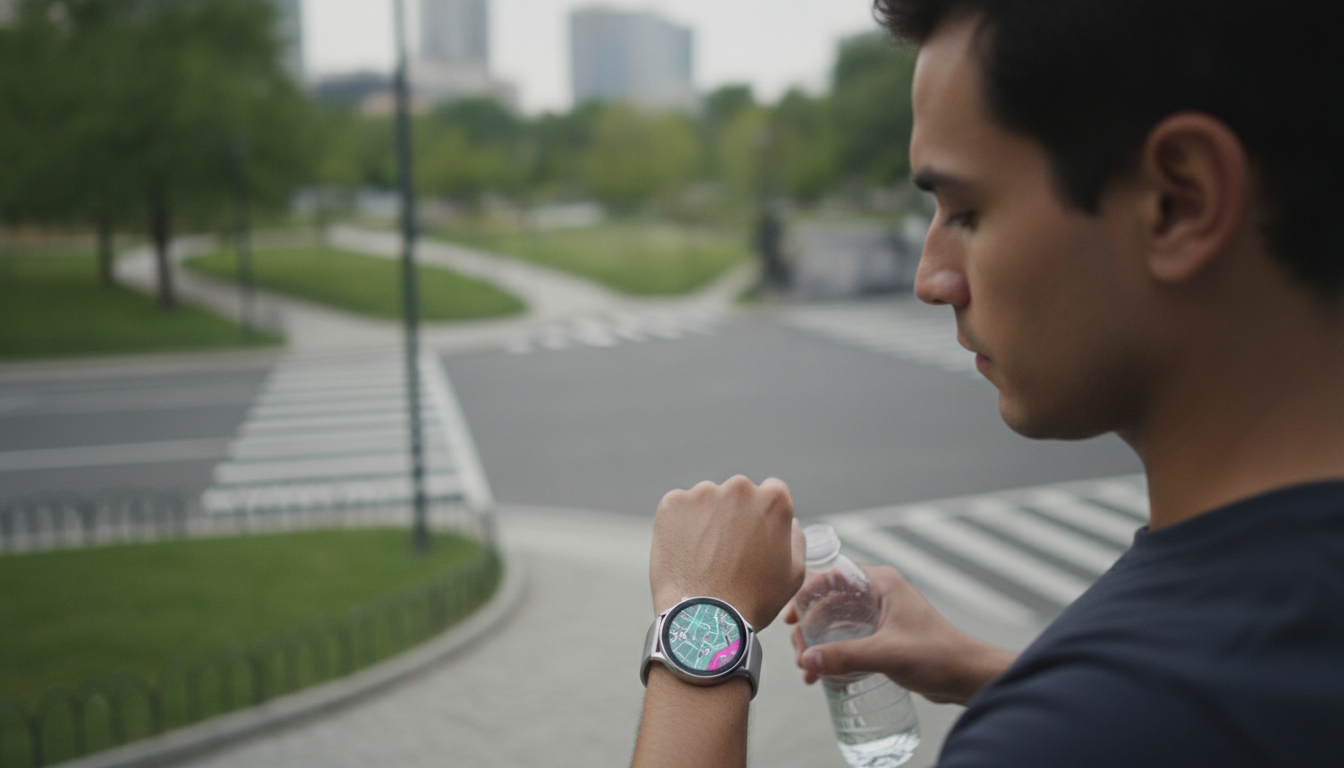
The market has never been so well-stocked with real options. There are models with integrated GPS for practically every budget, from the Xiaomi Smart Band 9 Pro in the R$ 600 range to the Garmin Fenix 8 above R$ 7,000. The technology is mature, Anatel homologation is more common in major brands, and training analysis apps have evolved significantly.
The question is not whether integrated GPS is worth it in absolute terms. It’s whether it’s worth it for your use. If you practice any outdoor activity regularly, even just a long walk on weekends, integrated GPS will change your relationship with training. You get real data on route, distance, and pace without depending on the phone in your pocket. For this profile, the investment is justified.
Now, if your use is basically checking notifications, controlling music, and monitoring sleep and heart rate, a smartwatch without integrated GPS, or with assisted GPS, will deliver everything you need at a lower price. There’s no reason to pay more for a feature you won’t use.
Just like choosing a good headphone with noise cancellation depends on context of use, as we explained in our guide on headphones with ANC under R$ 500, the decision here is about aligning specification with actual habit. Buying integrated GPS for treadmill use is wasteful. Buying assisted GPS for trails is frustration.
Recommended for: runners, cyclists, hikers, or anyone who does regular physical activities outdoors and wants accurate route and performance data without depending on a smartphone.
Price range: from R$ 500 (entry, Amazfit and Xiaomi models) to R$ 7,000 or more (Garmin Fenix, Apple Watch Ultra 2). The sweet spot for value in 2026 is between R$ 1,200 and R$ 3,500, where you’ll already find multifrequency GPS, barometer, and decent autonomy in most usage scenarios.