


Smartwatch vs Fitness Tracker: Which Device Is Right for You
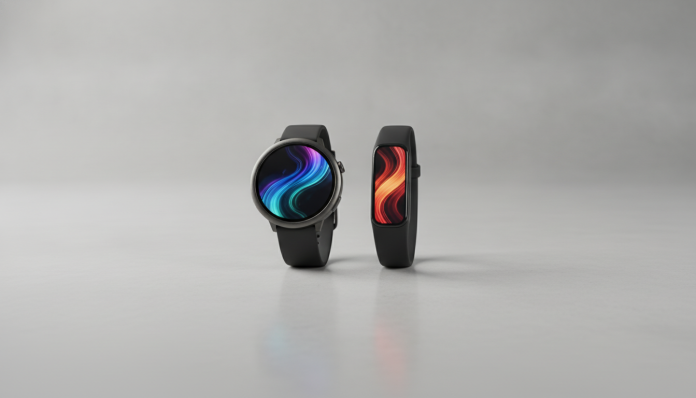
The short answer is: it depends on what you want to monitor and how much wrist space you’re willing to give up. Smartwatches are full computers with screens, apps, and often integrated GPS and contactless payments. Fitness trackers are devices focused on health and physical activity, thinner, lighter, and generally with batteries that last much longer. Both track steps, heart rate, and sleep, but that’s where the similarities end.
If you’re looking at this category in 2026, you’ll notice the market has become both more mature and more fragmented at the same time. Samsung launched the Galaxy Watch 8 line, Apple reached the Watch Series 11 (plus the Ultra 3), Xiaomi and Huawei continue competing in the value-for-money segment, and brands like Fitbit, Garmin, and Amazfit remain strong with a focus on performance and health. The choice has become more difficult, but the decision criteria remain the same as always: primary use, wrist size, battery life, and budget.
General Comparison: Smartwatch vs Fitness Tracker
| Feature | Smartwatch | Fitness Tracker |
|---|---|---|
| Typical screen size | 1.4″ to 1.9″ | 0.9″ to 1.6″ |
| Battery life | 1 to 3 days (active GPS) / up to 7 days (normal use) | 7 to 21 days typical |
| Built-in GPS | Yes (most premium models) | Depends on model |
| Third-party apps | Yes (Wear OS, watchOS, Tizen) | No or very limited |
| Contactless payment | Yes (premium models) | Rarely |
| Health monitoring | Complete (ECG, SpO2, temperature) | Basic to advanced, depending on model |
| Average weight | 30 g to 60 g | 20 g to 35 g |
| Price range (Brazil, 2026) | R$ 500 to R$ 6,000+ | R$ 200 to R$ 1,200 |
What Each Device Really Does
Smartwatch: A Computer on Your Wrist
A smartwatch runs its own operating system: Wear OS (from Google, used by Samsung, Fossil, and others), watchOS (from Apple, exclusive to iPhone) or proprietary systems like Huawei’s. This means you can install apps, reply to messages with voice or keyboard on the screen, pay with the watch on public transport or at the supermarket, and navigate running or cycling routes with built-in GPS, without needing your phone nearby.
The larger screen makes it easier to read notifications and use complications, which are small blocks of information displayed on the watch face, such as temperature, heart rate, and next meeting. On the downside, you’ll charge the watch almost every day. Models like the Galaxy Watch 8 promise up to 40 hours with moderate use, according to Samsung, while the Apple Watch Series 11 reached 36 hours according to Apple, with low-power mode potentially doubling that number.
Fitness Tracker: Lightness with a Focus on Data
The fitness tracker, also called a fitness tracker, was designed to get out of the way. It records steps, calories, heart rate, sleep quality, and on newer models, SpO2 (blood oxygen saturation) and skin temperature. What it doesn’t do is run apps or display maps. The interface is minimal by design, which explains batteries that last 10, 14, or even 21 days depending on the model and active functions.
Trackers like the Xiaomi Smart Band 9, launched in 2024 and still widely available in Brazil in 2026, or the Huawei Band 9 offer an experience that’s almost invisible in daily life. You put it on and forget it, except when it’s time to charge, which is much less frequent. For those who wear an analog watch and want only health data without giving up the classic look on their main wrist, a fitness tracker on the other wrist is quite a practical solution.
Health and Monitoring: Who Goes Deeper
In 2026, health sensors on both device types are much more sophisticated than they were three or four years ago. Premium smartwatches come with ECG (electrocardiogram, which records the heart’s electrical activity), atrial fibrillation detection, skin temperature measurement, and in some cases, blood pressure monitoring, although the latter still requires frequent calibration with a traditional device according to manufacturers’ technical specifications.
Entry-level fitness trackers stick to the basics: continuous heart rate, SpO2, and steps. But mid-range models, like those in the Fitbit Inspire line, already include heart rate variability (HRV), which is an indicator of muscle recovery and stress. If your goal is to have actionable data for training or to monitor a specific health condition, evaluate which sensors are truly necessary and check the complete technical specifications before buying.
An important point: none of these devices replace medical diagnosis. They provide trend indicators, not reports.
GPS, Sports, and Outdoor Use
For those who run, bike, or hike, built-in GPS changes everything. With it, you don’t need to carry your phone to record the route and pace. Most premium smartwatches already have dual-frequency GPS or even support for multiple satellite systems (GPS, GLONASS, Galileo), which increases accuracy in areas with obstruction, such as cities with tall buildings.
Fitness trackers with built-in GPS exist, but they’re a minority and tend to have shorter battery life when GPS is active. Models that rely on your phone for location, called assisted GPS, work well if you always train with your phone in your pocket, but aren’t ideal for those who want independence. If GPS is a decisive criterion for you, it’s worth reading the analysis on smartwatch with integrated GPS: is it worth buying in 2026? before closing the purchase.
Compatibility with Android and iPhone
Here’s a point that many people ignore and regret later. The Apple Watch only works with iPhone, with no exceptions. You won’t be able to pair it with Android, period. Smartwatches with Wear OS work well with Android and have limited compatibility with iPhone (notifications arrive, but features like payments and advanced apps don’t work).
If you use iPhone and are evaluating non-Apple models, reading about smartwatch without iPhone: which one to choose and why it’s worth it can prevent a frustrated purchase. Fitness trackers, in general, are more agnostic: most work with both Android and iOS via the manufacturer’s app.
Brazilian Context: Anatel, Imports, and Warranty
In Brazil, any wireless communication device must be approved by Anatel to be sold legally. This includes smartwatches and fitness trackers with Bluetooth, Wi-Fi, or cellular connectivity. When buying from authorized national stores like Amazon Brasil, Magazine Luiza, Americanas, or directly from manufacturers’ stores, the product already comes approved. The problem appears when you import from sites like AliExpress or Shopee without checking if the model has certification for Brazil.
Importing without approval is not a crime for personal use, but it can cause customs issues, a 20% import tax on products over US$ 50 (personal purchases by individuals in the simplified regime), and the absence of local warranty. Brazilian legal warranty is 90 days for imported products purchased abroad, but brands with official presence in Brazil usually offer 12 months. Always check if the model you want has authorized technical service in the country before importing.
Frequently Asked Questions About Smartwatches and Fitness Trackers
Does a Fitness Tracker Measure Heart Rate with the Same Accuracy as a Smartwatch?
It depends on the sensors of each specific model, not the type of device. Some mid-range fitness trackers use the same type of optical wrist sensor as premium smartwatches. For high-intensity activities, heart rate data from any wrist sensor (tracker or watch) tends to be less accurate than data from chest monitors. Check the sensor details in the product’s technical specifications.
Can I Use a Smartwatch Without Having My Phone Nearby All the Time?
Yes, as long as the model has its own cellular connectivity (LTE or eSIM version). In those cases, you can make calls, listen to music, and receive notifications directly on the watch, without your phone. Smartwatches without cellular connectivity need your phone via Bluetooth for most advanced features.
Is a Fitness Tracker Good for Swimming?
Many models are water-resistant with 5 ATM certification (resistant to 50 meters depth by standard definition) or higher, which covers pool swimming. Scuba diving is another story. Always check the water resistance level in the official specification of the product you’re considering.
Which Lasts Longer, Smartwatch or Fitness Tracker?
Fitness trackers have, on average, much superior battery life. A typical smartwatch lasts 1 to 3 days with normal use and active GPS, while fitness trackers stay between 7 and 21 days. Exceptions exist in smartwatches with ultra-battery-saving mode, but in those modes the functions are quite limited.
Which One to Choose, After All
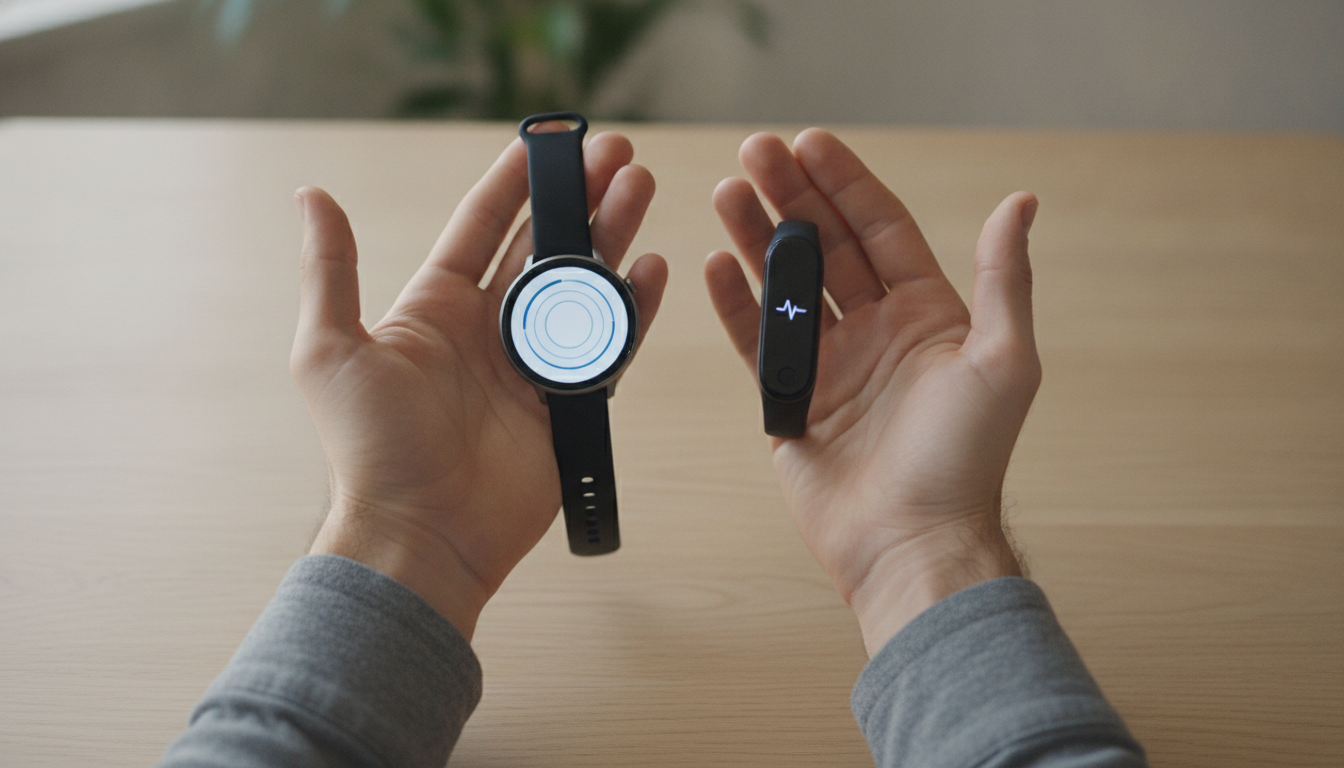
If you want complete notifications, apps, payments, and GPS for sports, the smartwatch is the right choice. Accept charging the device daily as part of your routine, just as you do with your phone. iPhone users who want a more integrated ecosystem will lean toward the Apple Watch; Android users have good options with Galaxy Watch or Wear OS models from other brands.
If what you want is to monitor health, sleep, and physical activity without worrying about charging, the fitness tracker delivers that with less friction. It’s ideal for those who wear an analog watch daily and want health data without replacing their main accessory. It’s also the best option for children and elderly people who don’t need complexity, just discreet monitoring.
Recommended for smartwatch: professionals who receive many messages, athletes who train without their phone, users who want contactless payment, and people willing to charge the device daily.
Recommended for fitness tracker: those who prioritize long battery life, prefer discreet devices, are starting to monitor their health, or have a tighter budget.
Price range (Brazil, 2026): trackers starting from R$ 200 to R$ 250 for basic models like Xiaomi Smart Band; intermediate smartwatches between R$ 800 and R$ 2,000; premium models like Galaxy Watch 8 and Apple Watch Series 11 above R$ 3,000, with prices varying considerably depending on exchange rate and store.