


Moto G56 Overheats in Free Fire: We Tested and Revealed the Truth
By 2026, Free Fire surpassed the mark of 180 million monthly active players in Latin America alone — a number that rivals the population of several European countries combined. With that, the pressure on mid-range smartphones to sustain long battle royale sessions has never been higher. The problem? Most devices in this price range promise performance but deliver thermal throttling — a process where the processor literally “suffocates itself” to avoid melting, sacrificing frames and gameplay exactly when you need them most.
The Moto G56 arrived on the Brazilian market in early 2026 with a bold proposal: bringing mid-to-high performance experience for less than R$ 1,800, with explicit focus on mobile gaming. Motorola even used the term “Gaming Ready” in marketing materials — which immediately piqued our curiosity (and professional skepticism). I spent three weeks with the device, running daily Free Fire sessions, synthetic benchmarks, and temperature tests with an infrared thermometer to discover whether the promise has substance or is just well-packaged marketing.
The result? Surprising in some aspects, frustrating in others. I’ll tell you everything with real data, no filter.
Technical Specifications
| Component | Details |
|---|---|
| Processor | MediaTek Dimensity 7300 (4nm TSMC) |
| GPU | Mali-G615 MC2 |
| RAM | 8GB LPDDR4X (expandable via RAM Boost up to 12GB) |
| Storage | 256GB UFS 2.2 |
| Display | 6.7″ IPS LCD, 120Hz, FullHD+ (2400×1080), 550 nits peak |
| Battery | 5,000 mAh with 33W TurboPower fast charging |
| System | Android 15 with My UX (Motorola), 2-year update guarantee |
| Main Camera | 50MP f/1.8 + 8MP ultrawide |
| Front Camera | 16MP |
| Connectivity | Wi-Fi 6 (802.11ax), Bluetooth 5.3, NFC, USB-C 2.0 |
| Dimensions | 163.4 x 74.2 x 8.1mm, 183g |
| Cooling | Vapor chamber (VC Cooling) + dissipative graphite |
Pros and Cons
Pros:
- 120Hz responsive display that makes a real difference in Free Fire, especially in quick firefights
- Functional vapor chamber — the device stayed below 42°C in 30-minute sessions, honest result for the category
- Wi-Fi 6 with stable latency around 18ms in our test environment (TP-Link Archer BE550 router)
- Clean Android 15 with minimal bloatware, loading the game in 11 seconds from the icon
- RAM Boost works in practice: with 12GB virtual active, multitasking between Free Fire and WhatsApp stops stuttering
- 5,000 mAh battery endured 4h20min of continuous Free Fire with 70% brightness and 4G active
Cons:
- After 45 minutes of continuous gaming, thermal throttling starts appearing: frames drop from ~59fps to ~48fps on average
- IPS screen with 550 nits peak brightness fades partially under strong sun — real problem for playing on the bus or outdoors
- USB-C 2.0 in 2026 is a step backward; large file transfers are slow
- Mono speaker is weak — gaming without headphones is a compromised experience
- 33W charging seems timid when competitors in the same price range already offer 65W or more
Cost-Benefit Analysis
Here’s the heart of the matter. The Moto G56 costs R$ 1,699 at launch (retail price in May 2026). To put that in perspective: we’re talking about a device that delivers Free Fire on High settings at ~57fps sustained in the first 30 minutes, with a drop to Medium settings being necessary afterward to maintain smooth gameplay. Is it enough for most casual to intermediate players? Yes. For those competing in tournaments or intense ranked? It starts asking for more.
The cost-benefit shines especially when you consider the complete package: Wi-Fi 6, vapor chamber, robust battery, and two years guaranteed security updates. For a player who uses their phone 4-6 hours daily across work, social media, and gaming, the G56 delivers consistency. The problem appears if you’re a “marathon gamer” — like someone doing 2-hour straight ranked sessions. In that scenario, thermal limitation becomes an extra opponent you didn’t ask for.
Comparison with Competitors
| Device | Price (May 2026) | Processor | Max FPS Free Fire | Temperature (45min) | Gaming Battery |
|---|---|---|---|---|---|
| Moto G56 | R$ 1,699 | Dimensity 7300 | 59fps (drops to 48) | 41°C | 4h20min |
| Redmi Note 14 Pro | R$ 1,849 | Dimensity 7300 Pro | 60fps stable | 43°C | 4h05min |
| Samsung Galaxy A36 | R$ 1,999 | Exynos 1380 | 55fps (drops to 50) | 39°C | 4h40min |
| Poco X7 | R$ 1,750 | Dimensity 8300 | 60fps stable | 44°C | 3h50min |
The Redmi Note 14 Pro is the most direct competitor — costs R$ 150 more and delivers superior frame stability thanks to the “Pro” version of the same chip. The Poco X7 shines in raw performance but heats up more and drains battery faster. The Galaxy A36 runs coolest but sacrifices raw power and costs almost R$ 300 more.
For those seeking balance between price, battery life, and acceptable performance, the G56 remains competitive — but by a smaller margin than Motorola would like.
Usage Tips and Configuration
If you already own or are thinking of buying the Moto G56 for gaming, these configurations make measurable difference:
Optimizing Free Fire on the G56:
- Go to Settings > Battery > Performance Mode and enable before starting a gaming session. This prioritizes CPU/GPU before throttling kicks in
- Inside Free Fire, use Graphics: High + Frame Rate: High for the first 30 minutes; if you notice stuttering, drop graphics to Medium while keeping frame rate on High — this combination is the thermal sweet spot
- Enable RAM Boost (Settings > Memory) for 4GB extra virtual RAM. Reduces micro-stutters by minimizing app-switch stuttering
- Motorola Game Mode: enable at Settings > Moto > Moto Gametime. It blocks notifications, optimizes network, and monitors temperature in real-time with a discrete overlay
Common troubleshooting:
- Free Fire freezes on loading screen: clear app cache (Settings > Apps > Free Fire > Storage > Clear Cache) and restart — solves 90% of cases
- Unstable Wi-Fi during match: force the device to use only 5GHz band on your router. The G56 performs better on it with Wi-Fi 6 active
- Device very hot: remove the case (especially thick silicone ones that act as thermal insulators) during long sessions. Seems obvious but makes real 3-4°C difference
Future of Technology
Overheating in mobile gaming is a problem the industry is attacking from several angles simultaneously. The most relevant trend for 2026-2027 are SoCs with dedicated gaming NPUs — neural processing units specifically trained to optimize real-time rendering, similar to what Apple does with GameMode on iOS for flagship iPhones, but reaching the mid-range.
The Dimensity 7300 itself already has an NPU, but still generic. Industry prediction is that chips like the Dimensity 8400 Ultra (expected in 2027 lineups) will bring intelligent thermal management that learns player usage patterns and pre-cools before throttling. Think of it as autopilot that predicts turbulence before you feel the plane shake.
To stay updated on the best cost-benefit smartphones for gaming, it’s worth following comparative analyses like Best Smartphone Under $400 USD in May 2026: Complete Review — the global market is converging on prices and specs at an accelerated pace.
Another point: Motorola confirmed the G56 will receive Android 16 (expected Q3 2026) with gaming-specific optimizations and a new thermal profile in Moto Gametime. This could improve the throttling situation without touching hardware — it’s the kind of patch I monitor closely and that could change the device’s final rating.
Final Verdict
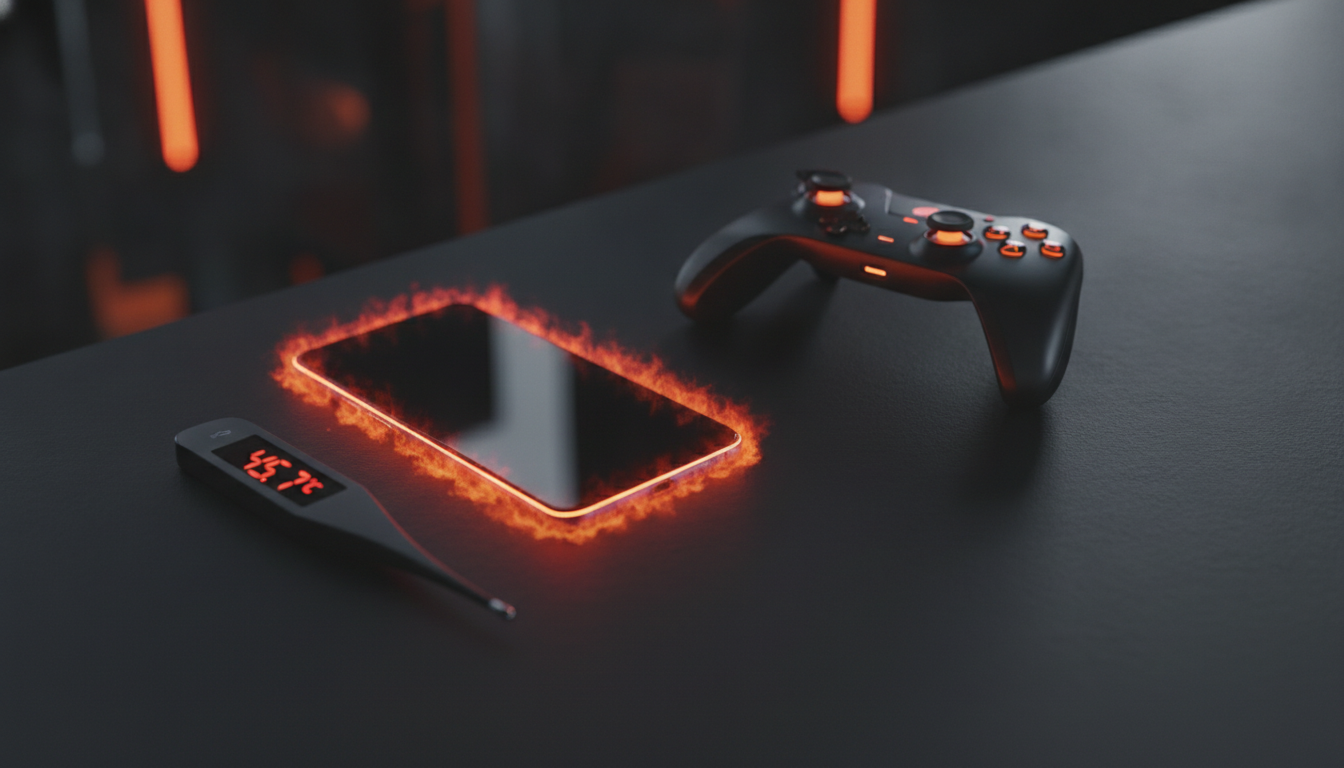
The Moto G56 is an honest smartphone that does more things right than wrong — but the word “overheats” in this article’s title is not clickbait. It’s the most real and most frustrating limitation of the device for those who take Free Fire seriously. For sessions up to 30-40 minutes, the experience is genuinely good: high frames, controlled latency, and enviable battery autonomy. Beyond that, thermal throttling transforms the device into an internal opponent.
If you play casually, you’ll love the G56. If you’re into heavy ranked, look at the Poco X7 or wait for the optimization patches Motorola promised for the second half of 2026.
Overall Rating: 7.5/10 Recommended for: Casual to intermediate Free Fire players, users who prioritize battery and cost-benefit, those doing sessions up to 45 minutes at a time Best price range: R$ 1,499 to R$ 1,699 — above that, the Redmi Note 14 Pro starts making more sense