

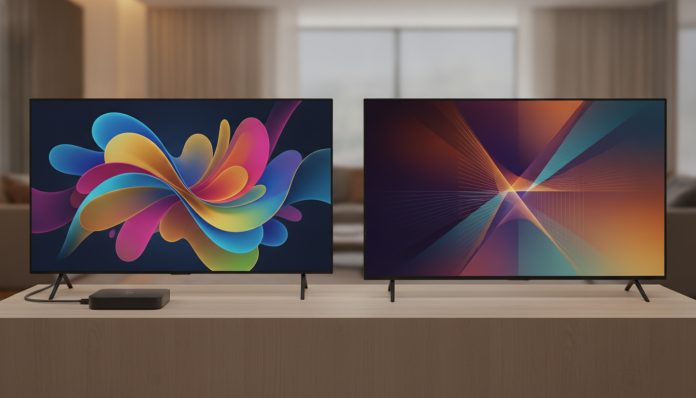

TV Box or Smart TV: The Right Choice Depends on Your Current Situation
You have a television that works perfectly, but you can’t access Netflix, YouTube, or any other streaming service directly on it. Or perhaps you’re setting up a room from scratch and need to decide whether to buy a Smart TV or a cheaper standard TV with an external device. In both cases, the question is the same: is it worth investing in a Smart TV or a TV Box?
The short answer is: it depends on your current television and your budget. If you already have a quality TV and it’s just not smart, a TV Box solves the problem for a fraction of the cost. If you’re buying everything from scratch or your TV is already more than eight years old, it probably makes more sense to go directly to a modern Smart TV. The reasoning seems simple, but the details make all the difference when using the product day to day.
This comparison will help you understand the real differences between the two paths: processing, image quality, operating systems, support, warranty, and the Brazilian context of imports and certification. No vague promises; just what you need to know to decide without regrets.
What Each One Is and How They Work in Practice
A Smart TV is a television with integrated hardware and software. The panel, processor, RAM, operating system, and applications all live within the same cabinet. You plug in a power cable, connect to Wi-Fi, and that’s it: the system is already there, factory-updated.
A TV Box (also called a streaming box or media player) is an external device, about the size of a small router or smaller, that connects to your TV’s HDMI input. It carries its own operating system, applications, and processor. Your television becomes just the monitor; the smart work is done by the TV Box. The concept is similar to a video game console, but solely focused on streaming and media.
The most immediate practical difference is flexibility: the TV Box follows you from TV to TV, can be updated or replaced independently, and usually brings more current and customizable systems. A Smart TV, on the other hand, is a unified solution, with manufacturer support and generally better integration between the system and the image panel.
Direct Comparison: TV Box vs Smart TV
| Criterion | TV Box | Smart TV |
|---|---|---|
| Average Cost (Brazil, 2026) | R$ 150 to R$ 800 | R$ 1,500 to R$ 8,000+ |
| Operating System | Android TV, Google TV, Roku OS, Fire TV OS | Tizen (Samsung), webOS (LG), Google TV, VIDAA |
| Software Updates | Depends on box manufacturer | Depends on TV manufacturer |
| Portability | High (follows you) | None |
| Panel Integration | None (uses HDMI signal) | Total (HDR, Dolby Vision, native calibration) |
| Processing | Varies greatly by model | Varies by price range |
| Anatel Certification | Mandatory; verify before purchasing | Mandatory; TVs sold in Brazil already included |
| Warranty in Brazil | Depends on sales channel | 1 year minimum by law (Consumer Code) |
| Local Technical Support | Limited on imported brands | Usually available from brands present in Brazil |
Performance and Operating System: Where TV Box Can Surprise
The heart of any streaming device is the processor and amount of RAM. Entry-level Smart TVs, especially those costing between R$ 1,500 and R$ 2,500, often use less powerful chips to reduce costs, resulting in slow menus, app crashes, and delays in loading platform catalogs. You’ve probably already heard someone complaining that “the Smart TV is slow.”
A good quality TV Box, like the Apple TV 4K (second generation or later, with A15 Bionic chip according to Apple) or the NVIDIA Shield TV (with Tegra X1+ processor, according to NVIDIA), delivers much better performance than mid-range Smart TVs. The Chromecast with Google TV, in HD or 4K version, and the Amazon Fire TV Stick 4K Max are also good cost-benefit options, running updated systems and receiving active support. All of these models run systems like Google TV or Fire TV OS, which are optimized versions of Android designed for televisions.
The point of attention here is Anatel certification (National Telecommunications Agency). In Brazil, any device with wireless communication, including Wi-Fi and Bluetooth, needs certification. TV Boxes imported directly from China without this seal can be seized at customs, have no post-sales support, and technically cannot be sold. Before buying any TV Box, check the Anatel website to verify if the model is certified.
Image Quality: Smart TV Has a Real Advantage Here
This is where the Smart TV truly shines. Integration between the manufacturer’s image processor and the panel allows resources like HDR (High Dynamic Range, which expands the difference between the brightest and darkest parts of the image), Dolby Vision, and HDMI 2.1 (necessary for 4K at 120 Hz, important for those using the TV with a console) to work in a coordinated and calibrated manner.
A TV Box connected via HDMI depends on the quality of the cable, the capacity of your TV’s HDMI input, and compatibility between the HDR formats of the box and the panel. In some cases, the Dolby Vision from a TV Box simply isn’t recognized by the panel of a Smart TV from another brand. This isn’t a crash or defect; it’s a lack of compatibility between different implementations of the same standard.
If you have a quality OLED, QLED, or Mini LED panel, getting the most out of these resources via a TV Box requires careful verification of the specifications on both sides. The TV Box datasheet should indicate which HDR formats it supports on the HDMI output, and the TV’s datasheet should indicate what each HDMI input accepts.
Brazilian Context: Warranty, Import, and What’s Available Here
In Brazil, the TV Box scene is divided into two very distinct groups. On one side, you have brands with official presence, such as Amazon (Fire TV Stick), Google (Chromecast with Google TV), and Apple (Apple TV 4K), which sell certified products with warranty and local support or through an authorized representative. On the other side, there’s a huge market for generic TV Boxes, often called “Android Boxes,” imported directly from China, without Anatel certification and without real warranty.
Generic versions are tempting for their price, which can be below R$ 150, but most run old versions of Android (sometimes Android 9 or 10 in 2026), receive no security updates, and may have a limited or missing app store. Some can’t even install Netflix officially because the platform requires Widevine L1 certification (a content protection protocol at maximum resolution) that many cheap chips don’t have. Result: you watch Netflix in low definition or simply can’t install the app.
For those thinking of setting up a complete home theater and wanting maximum control over devices, understanding how to configure remote controls for different equipment can be useful; the guide How to Configure a Universal Remote for Any TV explains the process with practical details.
For Whom Each Solution Makes Sense
TV Box makes sense for you if:
- You already have a good quality TV, but it’s not smart or has an outdated system
- You want flexibility to change the operating system without changing the TV
- You travel frequently and want to take the device with you
- You have a limited budget and already invest in the panel
- You want to run applications that your TV brand’s Smart TV doesn’t support
Smart TV makes sense for you if:
- You’re buying everything from scratch and want simplicity
- You prefer to have fewer cables and devices in your room
- You want to maximize the panel’s features, such as HDMI 2.1 and native Dolby Vision
- You value local technical support and clear warranty
- You don’t want to worry about compatibility between devices
Frequently Asked Questions About TV Box and Smart TV
Does a TV Box turn any television into a Smart TV?
Yes, in practice. As long as your TV has an available HDMI input, which includes most models manufactured since 2010. The box assumes the role of the smart system and uses the panel only as a screen. The television itself doesn’t need any special features beyond HDMI.
Is it worth buying a generic TV Box imported from China?
For most people, no. Beyond the risk of customs seizure, these devices usually run outdated systems, without Widevine L1 support (necessary for maximum quality streaming), and have no real warranty. The cost may seem attractive, but the user experience often disappoints within a few months.
Do Smart TVs get slow over time? Is this inevitable?
It depends on the chip and amount of RAM. Entry-level Smart TVs with 1 GB of RAM and weak chips tend to slow down as applications update and become heavier. Mid-range and high-end models with more RAM and more robust processors resist aging better. Check the datasheet before buying.
Is the Apple TV 4K worth the price in Brazil?
Apple TV 4K is the most expensive among popular TV Boxes, with a launch price in the US of $129 (Wi-Fi version) according to Apple, and reaches Brazil in the range of R$ 700 to R$ 900 depending on the sales channel. For those using iPhone, iPad, or Mac, integration with the Apple ecosystem is real and works well. For those outside this ecosystem, Google TV or Fire TV deliver a very similar experience for less.
Which One to Choose: The Final Decision by Profile
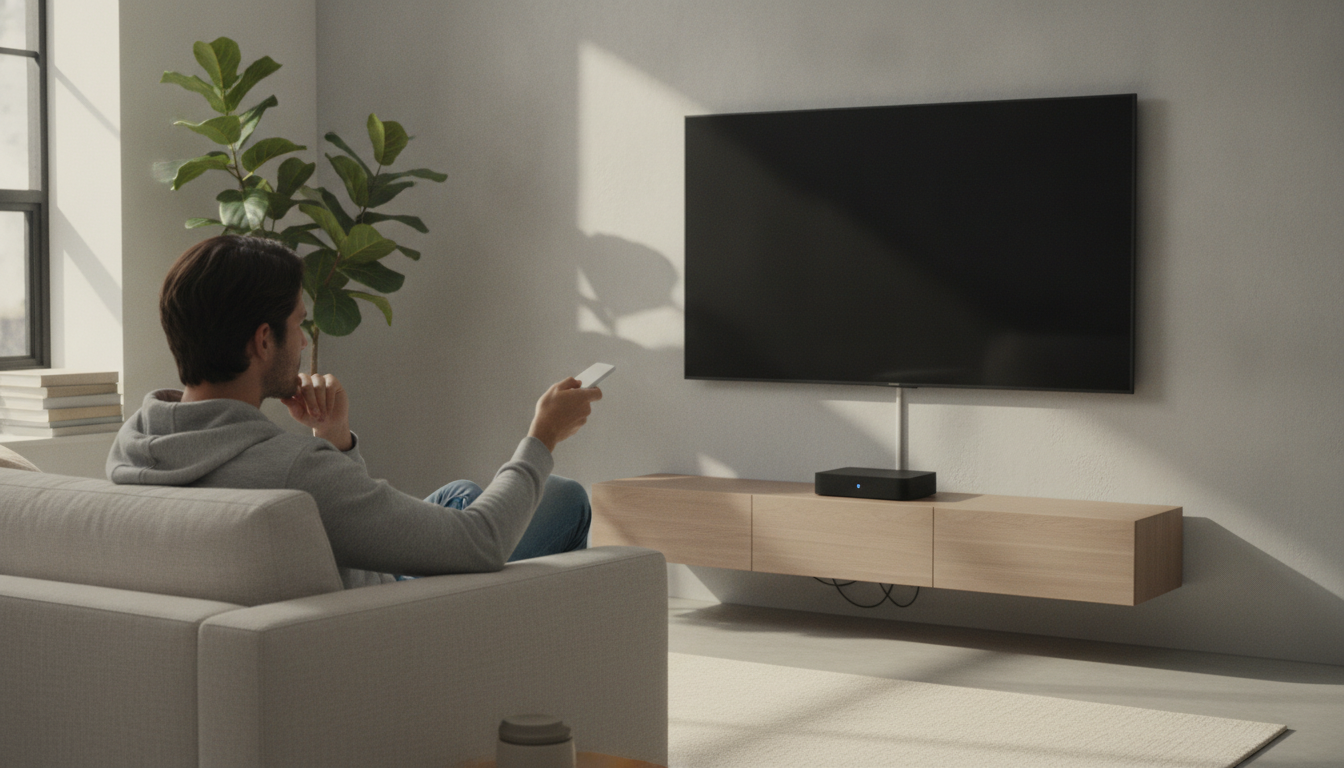
If you have a good TV and only need streaming, buy a certified TV Box from a well-known brand. Chromecast with Google TV and Fire TV Stick 4K Max are solid options with accessible prices and active support in 2026. If you have a larger budget and want the best in performance, Apple TV 4K or NVIDIA Shield TV deliver a superior experience, especially for those using the device as a local media center as well.
If you’re buying a new TV, evaluate the Smart TV system carefully before closing the deal. Samsung with Tizen and LG with webOS are solid references in 2026. Models with built-in Google TV are also good options, especially if you already use Google services. If the chosen TV has a weak system or limited support, already consider including a quality TV Box in your budget so you won’t regret it.
The technology market has other buying decisions similar to this one, where the right device depends more on your context than a universal answer. If you’re evaluating other equipment for your home office or studies, the guide Which notebook up to R$ 3,000 is worth it for studying follows the same practical logic to help with the decision.
In the end, TV Box and Smart TV are not rivals; they are different tools for different contexts. Identify your scenario, check the specifications carefully, and buy with confidence.