


Echo Dot Max: what changed and who it’s for
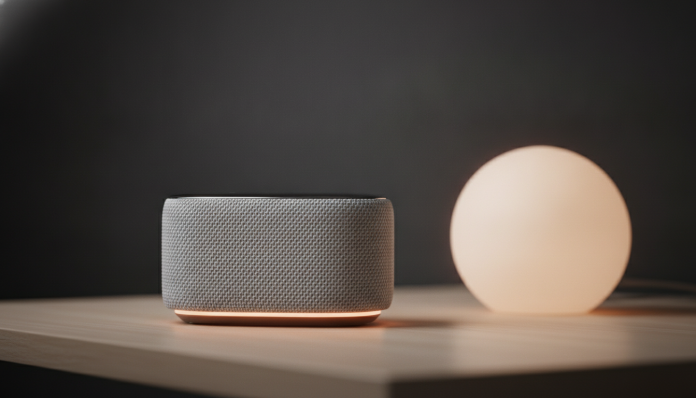
Amazon doesn’t launch products just for the sake of it. When the Echo Dot line got a “Max” version, the proposal was clear: take the compact format loved by millions of homes around the world and push audio to a level that justifies a higher price. The result is a smart speaker aimed at those who want real sound in their home without giving up the practicality of the Alexa ecosystem.
The short answer to “is it worth it?” is: it depends on what you already have. If you use a previous generation Echo Dot just to listen to music with mediocre quality, the audio jump from Max is noticeable and real, according to Amazon itself. But if you already own an Echo Studio or a dedicated sound system, the proposal quickly loses strength.
This review brings together official specifications, public information, and context for those who need to buy and use the product in Brazil, with everything that involves: price in reais, warranty, Anatel approval, and available alternatives here.
Echo Dot Max technical specifications
| Specification | Detail |
|---|---|
| Speaker | 2.2-inch woofer + tweeter |
| Connectivity | Wi-Fi 6 (802.11ax), Bluetooth 5.2 |
| Input | Power source (no internal battery) |
| Microphones | 4-microphone array with noise suppression |
| Voice Assistant | Alexa (with partial local processing) |
| Physical Controls | Volume, microphone, and action buttons on top |
| Port | USB-C (power) |
| Dimensions and Weight | Confirm in Amazon’s official specifications |
| Approval | Check Anatel approval before purchasing |
| Compatibility | Matter, Zigbee (integrated hub), eero (network extension) |
> Note: the Echo Dot Max is a recent product. Confirm exact dimensions, weight, and power specifications (RMS) directly from Amazon’s official page or the printed spec sheet in the box, as these numbers may vary by region.
Audio quality: the central point of the purchase
The main selling point of the Echo Dot Max is the enhanced audio system compared to the standard Echo Dot. According to the manufacturer, the combination of a 2.2-inch woofer with a dedicated tweeter delivers more controlled bass and more defined mids than any previous Echo Dot.
In practice, what does this mean? A standard smart speaker reproduces the entire frequency spectrum with a single driver, which creates distortion at higher volumes. The separation between woofer (responsible for bass and mids) and tweeter (high frequencies) is the same logic used in home theater speakers, applied in a compact format. The result, according to Amazon, is that the Max can acoustically fill medium-sized rooms without losing clarity.
For listening to podcasts, audiobooks, and music in streaming quality (Spotify, Amazon Music Unlimited), the device delivers a clearly superior experience to the base model. For those who want to replace a portable Bluetooth speaker that sits on the kitchen counter or in a medium room, it makes sense. For a home theater or large room, the Echo Studio is still the reference within Amazon’s own ecosystem.
Alexa in 2026: has the assistant evolved?
Alexa has undergone significant overhaul in the past two years, with greater ability to understand context in long conversations and more natural responses. The Echo Dot Max runs the latest version of Alexa firmware, with partial local processing for basic commands (play music, turn on lights, set alarms) without fully relying on the cloud.
This matters in the Brazilian context because internet connection instability is a reality in many regions. Local commands respond faster and work even with slow connections. That said, more complex functions, such as checking calendar, making purchases, or triggering elaborate routines, still depend on stable internet.
Integration with the Matter standard is a relevant point for those building a smart home now. Matter is a communication protocol for home automation devices that works across different brands, such as Google, Apple, and Amazon, without depending on a single ecosystem. The Echo Dot Max functions as a Matter hub and also as a Zigbee hub (a low-power communication standard used in smart lights, sensors, and locks), which eliminates the need to buy a separate hub, which can cost between R$ 150 and R$ 350 in Brazil.
Echo Dot Max as the center of the smart home
Using the Echo Dot Max as a central automation hub is one of the device’s most practical features. It controls Zigbee devices directly (without needing each product manufacturer’s app), manages routines through Alexa, and can extend the Wi-Fi network if you already use Amazon’s eero system.
If you’re evaluating wearables and other connected devices to complement your ecosystem, see how products from different brands compare in features and compatibility, like in this comparison of Galaxy Fit 3 vs Xiaomi Smart Band 10: which smartband to buy, which shows well how each manufacturer’s ecosystem influences overall user experience.
For home automation, the device controls:
- Smart lights (Zigbee, Wi-Fi, and Matter)
- Smart plugs and outlets
- Locks, door and window sensors
- Ring cameras and other security devices
- Compatible thermostats
The limitation is clear: you’re within Amazon’s ecosystem. Those who use Google Home as their main platform will face friction. Alexa doesn’t natively control Google Nest devices, for example, except through third-party integrations that depend on manual configuration.
Brazilian context: price, warranty, and availability
The Echo Dot Max has a launch price in the United States in the range of US$ 69.99 to US$ 79.99 (check the current value on Amazon.com’s site, as it may have changed). In Brazil, when sold directly by Amazon.com.br, the price usually falls between R$ 499 and R$ 649, depending on promotions like Prime Day and Black Friday.
If you import from the US on your own, you need to consider:
- Import tax (currently 20% on product value for purchases above current exemption)
- IOF on international card transactions
- Risk of not having Anatel approval (mandatory for devices using radiofrequency in Brazil)
- Limited or nonexistent warranty for informal channels
Anatel approval ensures that the device operates on frequencies allowed in the country and passed interference tests. Devices without this seal may be seized by the Federal Revenue upon import. Buying through Amazon.com.br or authorized resellers guarantees the product has already undergone this process.
The warranty offered by Amazon in Brazil is 12 months for manufacturing defects, aligned with the Consumer Protection Code. Support can be accessed through the Alexa app itself or Amazon’s website.
Pros and cons
Pros:
- Audio clearly superior to standard Echo Dot for medium-sized rooms
- Integrated Zigbee and Matter hub, eliminating need for additional hardware
- Matter standard compatibility expands automation options
- Alexa’s partial local processing reduces internet dependence for basic commands
- Officially available in Brazil with warranty and approval
Cons:
- No internal battery, must stay plugged in all the time
- Closed ecosystem: those using Google Home will face limitations
- For large rooms, Echo Studio delivers noticeably superior audio
- Price in Brazil can be high depending on exchange rate fluctuations
- Alexa still lags behind Google Assistant in Portuguese responses in some question categories
Competitors and alternatives in Brazil
| Product | Approximate Price (BR) | Differentiator |
|---|---|---|
| Echo Dot (current generation) | R$ 299 to R$ 399 | Cheaper, same ecosystem, inferior audio |
| Echo Studio | R$ 999 to R$ 1,299 | Premium audio, Dolby Atmos, for large rooms |
| Google Nest Audio | R$ 599 to R$ 749 | Google ecosystem, great for Android users |
| Apple HomePod mini | R$ 799 to R$ 999 | Best for Apple users, Siri in Portuguese |
| JBL Link 20 / Link 300 | R$ 499 to R$ 799 | Bluetooth speakers with Google Assistant, portable |
For those comparing mid-range devices in other segments to decide where to invest your technology budget, analyses like iPhone 17e or Galaxy A56: which mid-range to buy show well how to evaluate cost-benefit in different categories before closing the purchase.
Frequently asked questions about the Echo Dot Max
Does the Echo Dot Max work without internet?
It works in a limited way. Basic commands like playing locally stored music, triggering already-configured devices, and setting alarms operate with local processing. Functions that depend on external data, such as queries, purchases, and streaming, require active connection.
Do you need an Amazon Prime account to use it?
It’s not required. You can use the Echo Dot Max with a free Amazon account. Prime is only necessary to access the complete Amazon Music catalog and other subscription service benefits.
Does the Echo Dot Max replace a portable Bluetooth speaker?
It depends on usage. For fixed environments, like bedroom or kitchen, it delivers more audio quality than most Bluetooth speakers in the same price range, with the bonus of integrated Alexa. But it has no internal battery, so it won’t go with you to the beach or gym.
Is the integrated Zigbee hub compatible with which devices?
According to Amazon, the Echo Dot Max’s Zigbee hub is compatible with most Zigbee 3.0 devices on the market, including Philips Hue lights (without Philips bridge), Aqara sensors, and other accessories from partner brands. Check the updated compatibility list on Amazon’s site before purchasing specific devices.
Is it worth it?
The Echo Dot Max solves a real problem: delivering reasonable sound quality with integrated home automation in a single compact device. It’s not the best-sounding smart speaker on the market in absolute terms, but it’s the most competent balance point within Amazon’s ecosystem for those living in medium-sized apartments or homes.
Recommended for: those who already use or want to enter the Alexa ecosystem and need a device that combines decent audio with a home automation hub; users who want to control Zigbee devices without buying a separate hub; those living in medium-sized environments and use music streaming daily.
Not recommended for those using Google Home as their main platform, for those needing portability, or for those who already own an Echo Studio and are looking for just an audio upgrade.
Price range: R$ 499 to R$ 649 in Brazil (Amazon.com.br); US$ 69.99 to US$ 79.99 in the US. Prices vary by exchange rate and promotions.