


Redmi Watch 5 Active or Band 10: which Xiaomi wearable makes more sense for you?
Xiaomi has the habit of launching two products that seem to compete with each other, but serve very different profiles. The Redmi Watch 5 Active and Mi Smart Band 10 (called Band 10 here) are a clear example: both are affordable wearables from the Xiaomi/Redmi family, both monitor health and physical activity, and both fit in the pocket of someone who doesn’t want to spend much. The difference lies in the format, the proposal, and some specification details that significantly change the everyday experience.
The short answer is: if you want a larger screen, smartwatch visuals, and more visible health features, the Watch 5 Active is the way. If you prefer something ultra-lightweight, discreet on your wrist, with a focus on continuous monitoring and battery that lasts weeks without drama, the Band 10 delivers more within its proposal. Neither replaces a premium smartwatch, but both deliver on what they promise within the price range.
Specifications side by side
| Specification | Redmi Watch 5 Active | Xiaomi Smart Band 10 |
|---|---|---|
| Screen type | LCD, 2.07 inches | AMOLED, 1.62 inches |
| Resolution | 422 x 484 px | 192 x 490 px |
| Format | Square smartwatch | Band/fitness tracker |
| Case material | Polycarbonate | Polycarbonate |
| Water resistance | 5 ATM | 5 ATM |
| Battery (official capacity) | 470 mAh | 233 mAh |
| Declared battery life | Up to 18 days | Up to 21 days |
| GPS | Yes (built-in) | No (assisted GPS via phone) |
| SpO2 monitoring | Yes | Yes |
| Heart rate | Continuous | Continuous |
| NFC | No (global version) | No (global version) |
| Compatibility | Android and iOS | Android and iOS |
| Approximate weight | About 39 g (with band) | About 27 g (with band) |
| Launch price (USA) | Around US$ 40 | Around US$ 30 to US$ 35 |
| Price range in Brazil | To be confirmed; check retailers | To be confirmed; check retailers |
Prices in Brazil vary greatly depending on the sales channel, import tax, and exchange rate. Always check Xiaomi’s official stores in Brazil or marketplaces like Magalu, Americanas, and Amazon.com.br for updated prices.
Screen and visual experience: large LCD versus compact AMOLED
This is probably the most immediate difference between the two. The Redmi Watch 5 Active brings a 2.07-inch LCD screen, which is generous for a device in this price category. LCD works well in outdoor environments with good lighting, but doesn’t have the same contrast or deep blacks that an AMOLED screen delivers.
The Band 10, on the other hand, uses a 1.62-inch AMOLED panel. AMOLED (Active Matrix Organic Light Emitting Diode) is technology where each pixel emits its own light, without needing backlighting. The practical result: more vivid colors, true black, and lower battery consumption when the interface background is dark. Anyone who’s used an AMOLED phone knows exactly what to expect.
For those spending a lot of time in the sun, the Watch 5 Active’s LCD can be more readable depending on the maximum brightness level of each unit, but this is something worth checking in reviews with concrete measurements before deciding. The Band 10’s AMOLED tends to display well in everyday situations.
GPS and activity monitoring: when the difference really matters
The Redmi Watch 5 Active has built-in GPS, which means it records the route and distance of your workouts without needing to carry your phone along. For running, long walks, or cycling, this is a real and concrete advantage.
The Band 10 doesn’t have built-in GPS. It uses what the industry calls assisted GPS or connected GPS: it uses your smartphone’s GPS signal to calculate distance and route. It works well when you take your phone along, but if the idea is to leave without the device, workout data becomes incomplete or imprecise.
In terms of sports modes, both offer a reasonable list of activities according to Xiaomi’s official specification sheets. The Watch 5 Active tends to list more modes since the larger screen allows for a richer interface. For gym, yoga, indoor cycling, and activities that don’t depend on GPS, the two are quite equivalent.
Battery and autonomy: who really lasts longer?
The numbers seem to contradict the size: the Watch 5 Active has a 470 mAh battery and promises up to 18 days of battery life, while the Band 10 has 233 mAh and promises up to 21 days. How is this possible?
The larger LCD screen in the Watch 5 Active consumes more energy than the smaller and more efficient AMOLED in the Band 10. AMOLED technology, combined with a compact form factor and a smaller screen to power, makes the Band 10 proportionally more efficient. The actual battery life of any wearable depends on GPS usage, notification frequency, screen brightness, and continuous heart rate monitoring activation, so treat these numbers as reference, not guarantee.
In practice, both have comfortable autonomy for daily use without charging every night. The Band 10 is the best candidate if you travel a lot and want minimal charging concerns.
Software, app, and experience in Brazil
Both devices work with the Zepp Life app (formerly Mi Fit) or the Xiaomi Fitness app, depending on firmware version and region. The experience in Brazil with these apps is functional, but not as polished as a Galaxy Watch with Samsung Health or an Apple Watch with iOS’s native app.
The app displays sleep history, heart rate, SpO2 (blood oxygen saturation, useful for monitoring recovery and general health), step count, and workout data. Synchronization with your smartphone is done via Bluetooth and works on both Android and iOS.
A point of attention: the availability of notifications and the functionality of features like music control can vary depending on the firmware version available in your region. Always verify that the device you’re purchasing has the correct firmware for use with Brazilian apps and Portuguese language support.
Anatel approval and purchasing in Brazil
Xiaomi has an official presence in Brazil with its own store and authorized distributors. For any wearable purchased here, it’s ideal to check if the product has the Anatel approval seal (National Telecommunications Agency), mandatory for wireless communication devices sold legally in the country.
Products purchased through parallel imports, AliExpress, or international sites may not have this seal and may have warranty and support issues. Xiaomi warranty in Brazil is typically 12 months for products sold through official channels, but this can vary. Always confirm with the seller before finalizing your purchase.
For those considering a cost-benefit comparison with devices from different ecosystems, it’s worth reading comparisons like AirPods Pro 3 vs AirPods 4 ANC: which is worth it more, which follows the same logic of analyzing two products that seem similar but serve different profiles.
Pros and cons of each
Redmi Watch 5 Active
Pros:
- Larger screen, more immersive, good for smartwatch users
- Built-in GPS, ideal for workouts without a phone
- Interface with more space for information on screen
- Smartwatch visual, more versatile in terms of aesthetics
Cons:
- LCD screen loses to AMOLED in contrast and color vibrancy
- Slightly lower battery life when using GPS actively
- Larger format may be uncomfortable on thinner wrists
- Slightly higher cost within the accessible Xiaomi family
Xiaomi Smart Band 10
Pros:
- AMOLED screen with superior visual quality for the size
- Ultra-lightweight, ideal for 24-hour wear including during sleep
- Excellent battery life, less charging worry
- Discreet on the wrist, works with formal and informal environments
Cons:
- No built-in GPS, limits workout data without phone nearby
- Smaller screen can frustrate those wanting to easily read notifications
- Band format divides aesthetic opinions
- Fewer sports modes with detailed data without GPS
Alternatives in Brazil to consider
| Product | Highlight | Estimated price range in Brazil |
|---|---|---|
| Amazfit Band 7 | Good battery life, AMOLED, no GPS | Check retailers |
| Xiaomi Smart Band 9 | Previous version, may be found for less | Check retailers |
| Samsung Galaxy Fit 3 | Samsung ecosystem, AMOLED, slim design | Check retailers |
| Garmin Vivosmart 5 | GPS, health-focused, more robust | Higher price range |
Frequently asked questions about Redmi Watch 5 Active and Band 10
Does the Redmi Watch 5 Active work with iPhone?
Yes, according to the manufacturer, both devices are compatible with iOS and Android. Notification functionality and data synchronization work on both operating systems, although some features may have limitations on iOS compared to Android, especially for message responses.
Is the Band 10 suitable for swimming?
Both have water resistance of 5 ATM, which means they support dives of up to 50 meters under controlled conditions, according to official specifications. This makes them suitable for pool swimming. For diving or more intense water sports, the manufacturer recommends checking specific limitations in the product documentation.
Is it worth importing or waiting for the national version?
It depends on urgency and budget. The national version offers warranty, Portuguese support, and Anatel certification, which provides more purchase security. Importing can be cheaper, but you assume the risks of customs, lack of local warranty, and possible firmware incompatibility.
Do both have sleep monitoring?
Yes, both offer sleep monitoring according to official specification sheets, including light sleep, deep sleep, and REM detection. The Band 10, being lighter and thinner, tends to be more comfortable to wear during the night for extended periods.
Which one to choose based on your profile
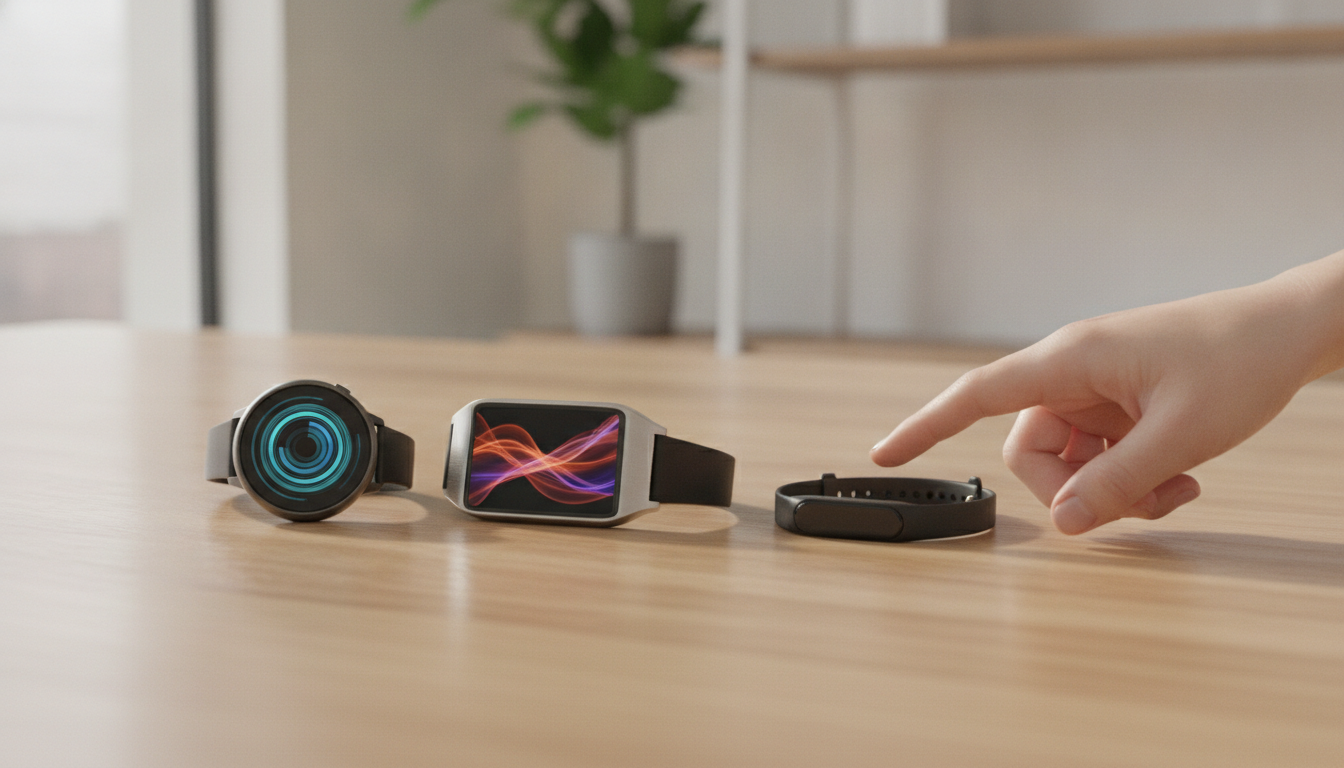
The Redmi Watch 5 Active is the right choice for those who want an entry-level smartwatch with real GPS, large screen, and robust visuals. If you run, cycle, or walk without your phone and want the route data recorded on your wrist, it delivers that at an accessible price that’s rarely found with direct competition.
The Xiaomi Smart Band 10 is for those who want the most transparent wearable possible: something you put on and forget about on your wrist for weeks, that monitors sleep without bothering you, that doesn’t draw attention, and that has the best screen in the category for the smallest physical space. For daily use, gym with phone nearby, and general health monitoring, it’s hard to beat at the price point.
Recommended for Watch 5 Active: outdoor sports practitioners, those wanting to replace a basic smartwatch without spending much, and anyone preferring a large screen to easily read notifications.
Recommended for Band 10: those with previous fitness band experience, prioritizing lightness and nighttime comfort, and those who won’t compromise on screen quality even in a compact format.
Price range: Watch 5 Active starts around US$ 40 in the USA; Band 10 falls in the US$ 30 to US$ 35 range. In Brazil, both vary by exchange rate and sales channel, so always compare prices at least three stores before buying.