

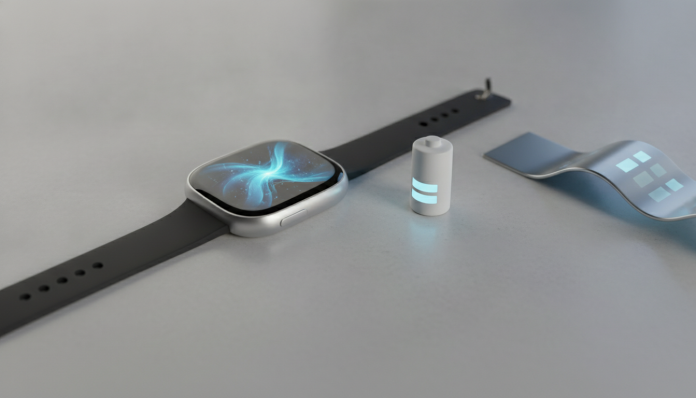

What to Expect from Galaxy Watch 8 Battery in Daily Use
The Galaxy Watch 8 arrived in 2025 as Samsung’s bet to solidify its smartwatch line in the global market, and it remains one of the segment’s references in 2026. But among all the questions that appear in comments and Brazilian forums, one repeats more than any other: how long does the battery really last beyond the specs? Samsung’s official answer is one thing. What you’ll face day-to-day is another.
The battery life of any smartwatch depends heavily on how you use the device. GPS running all the time, continuous heart rate monitoring, always-on display — each of these features consumes a significant slice of the battery. According to the manufacturer, the 44 mm Galaxy Watch 8 delivers up to 40 hours of battery life under normal usage conditions. The 40 mm model falls slightly below that, given it carries a smaller battery. These numbers are the ceiling, not the average.
The short answer for those wondering if you can go through the day without recharging: yes, comfortably. For those who sleep with the watch to monitor sleep and don’t want to take it off until the end of the next day: it depends on your usage profile. The article below details each scenario so you can make an informed decision.
Galaxy Watch 8 Specifications
| Specification | Galaxy Watch 8 (40 mm) | Galaxy Watch 8 (44 mm) |
|---|---|---|
| Battery Capacity | 300 mAh | 425 mAh |
| Declared Autonomy (Samsung) | Up to 30 hours | Up to 40 hours |
| Wireless Charging | Yes (WPC) | Yes (WPC) |
| Charging Time (0 to 100%) | Approximately 1h30 | Approximately 1h30 |
| Processor | Exynos W1000 | Exynos W1000 |
| Operating System | Wear OS 5 with One UI Watch 7 | Wear OS 5 with One UI Watch 7 |
| Water Resistance | 5 ATM + IP68 | 5 ATM + IP68 |
| Health Monitoring | ECG, blood pressure, SpO2, heart rate | ECG, blood pressure, SpO2, heart rate |
| Anatel Certification | Yes (check seal on device) | Yes (check seal on device) |
Prices and availability vary. Check the full technical specifications on the official Samsung Brasil website.
How Battery Performs in Real-World Usage Scenarios
Understanding a smartwatch battery requires separating usage modes. Think of three distinct profiles: the casual user, the intermediate user, and the intensive user.
The casual user uses the watch primarily to see notifications, check the time, take a quick look at heart rate occasionally, and record the odd walk. In this profile, without always-on display (the AOD — Always On Display, which keeps information visible even at rest) and with GPS activated rarely, the 44 mm model’s battery tends to sustain comfortably two full days before asking for a recharge, according to public user reports in forums like Reddit and Samsung communities.
The intermediate user enables continuous heart rate monitoring, uses GPS in running or cycling workouts a few times a week, and keeps the AOD on. In this scenario, according to consolidated public information from users, autonomy drops to something around one and a half days — which can still fit a nightly charging routine.
The intensive user is the athlete or health enthusiast who leaves GPS active during long workouts, uses SpO2 monitoring (blood oxygen saturation) during sleep, maintains AOD, and still receives dozens of notifications throughout the day. In this case, the 44 mm model may not get through 24 hours without needing a recharge. The 40 mm model, with its smaller battery, faces this bottleneck more frequently.
What Drains Galaxy Watch 8 Battery Fastest
Some features consume disproportionately more energy than they appear to. Knowing which ones helps you balance autonomy and functionality without giving up what matters to you.
- Continuous GPS: it’s the biggest culprit. One hour of workout with GPS active can consume between 15% and 20% of the battery, depending on signal strength and duration. This number is not official from Samsung — it’s an estimate widely cited in public technical analyses, and it’s worth checking in practice with your usage profile.
- Always On Display (AOD): keeping the screen with information visible all the time represents constant consumption. Turning off this feature is one of the most efficient ways to gain hours of battery life.
- Continuous SpO2 monitoring: unlike heart rate, which uses low-power optical sensors, SpO2 requires more processing. Leaving it active throughout the night impacts the next morning.
- Excessive notifications: each vibration and screen wake-up adds up. Filtering which apps send notifications to the watch is simple and effective optimization.
- Power saving mode: Wear OS 5 with One UI Watch 7 offers power saving modes that disable non-essential features. Activating it when battery drops below 15% can guarantee a few more hours of basic use.
Charging: Speed and Practicality in Brazil
The Galaxy Watch 8 uses wireless charging via magnetic induction (the charger snaps to the back of the watch without physical connectors). According to Samsung, the full charge cycle takes approximately 1h30 for the 44 mm model — which is reasonable, but not impressive compared to competitors that promise faster charges.
An important point for the Brazilian context: the charger that comes with the watch in the national version is compatible with local voltage (dual voltage), but you’ll need an adapter for standard ABNT NBR 14136 outlets if the cable comes with a different plug. Check the box contents at purchase. The watch can also be charged by compatible Samsung smartphone wireless chargers — a feature called PowerShare that eliminates the need to carry an extra accessory in your bag.
For those who travel frequently or have a routine outside the home, the compact size of the magnetic charger is a real advantage. It weighs little and fits in any backpack pocket.
Autonomy Comparison with Competitors in Brazil
| Smartwatch | Declared Battery | Intermediate Profile (Public Estimate) | Launch Price (USA) | Range in Brazil |
|---|---|---|---|---|
| Galaxy Watch 8 (44 mm) | Up to 40h | ~30 to 36h | US$ 299 | R$ 1,800 to R$ 2,200 |
| Apple Watch Series 10 | Up to 18h | ~14 to 16h | US$ 399 | R$ 3,000 to R$ 3,800 |
| Garmin Forerunner 165 | Up to 11 days | Several days | US$ 249 | R$ 1,600 to R$ 1,900 |
| Xiaomi Watch S4 | Up to 15 days | ~7 to 9 days | Varies | R$ 700 to R$ 900 |
Approximate prices, subject to variation. Check availability and official warranty before purchasing.
The comparison makes it clear that the Galaxy Watch 8 is not the battery autonomy champion in the segment. The Apple Watch Series 10 falls behind in battery life, but the Galaxy surpasses it by far. Compared to Garmin watches focused on sports or the Xiaomi Watch S4, Samsung’s battery autonomy loses badly. The Galaxy Watch 8’s differentiator lies in the Android ecosystem, advanced health sensors, and integration with Samsung smartphones — not the battery.
If you want to deepen comparisons between Samsung devices and competitors before deciding, the article about iPad 11 vs Galaxy Tab S10 FE: which tablet to buy shows how Samsung positions itself in another product segment, which helps understand the brand’s philosophy regarding value for money.
Pros and Cons
Pros:
- Battery life sufficient for two days in casual use, without effort
- Practical and compact magnetic wireless charging
- Compatible with reverse charging via Samsung smartphones
- One UI Watch 7 offers configurable power saving modes
- Certified by Anatel, with official Samsung Brasil warranty
Cons:
- Battery nowhere near competitors focused on sports or extreme autonomy
- Active GPS drains quickly, limiting long workouts without recharging
- 40 mm model has noticeably lower autonomy than the 44 mm
- AOD and continuous health monitoring together compromise autonomy to less than 24h
Frequently Asked Questions About Galaxy Watch 8 Battery
Can the Galaxy Watch 8 last a week without charging?
No, in no conventional usage scenario. According to Samsung, the maximum declared is 40 hours on the 44 mm model with normal use. To achieve a week of battery life, you’d need a watch with a different focus, like those from the Garmin line.
Can I use the Galaxy Watch 8 to monitor sleep without sacrificing battery the next day?
Yes, but with caveats. Basic sleep monitoring (movement and heart rate) has less impact. Activating continuous SpO2 during the night will consume more, and you may start the day with less than 50% charge depending on your sleep time. The most practical solution is to charge the watch while you shower in the morning.
Does the Galaxy Watch 8 have official warranty in Brazil?
Yes. Samsung Brasil offers one-year warranty for products purchased through authorized channels. Check the Anatel seal on the device and the seller’s CNPJ before completing purchase, especially on marketplaces.
Is it worth importing the Galaxy Watch 8 from the USA to save money?
The price difference may seem attractive, but importing brings risks: the product may not have valid Anatel certification for use in Brazil, warranty doesn’t cover local support, and you may pay import taxes that eliminate savings. The ideal is to buy from authorized Samsung resellers in Brazil.
Is the Galaxy Watch 8 Worth Buying Considering Battery Life?
The Galaxy Watch 8 delivers honest battery life for most smartwatch users. Those using Android — especially Samsung — and want a complete watch with advanced health sensors, ecosystem integration, and refined design will find a competent product. The battery won’t let you down on a regular day.
The problem appears when you compare with specialized devices. If you run marathons, hike long trails, or simply hate charging anything frequently, the Galaxy Watch 8 isn’t the right watch. In that case, the Garmin line or other sports-focused watches make more sense, even if they forgo the most elaborate health features.
Recommended for: Samsung or Android smartphone users who want a complete smartwatch with advanced health and app integration, and who accept charging the watch every one or two days as part of their routine.
Price range: between R$ 1,800 and R$ 2,200 in Brazil through authorized channels (launch price in USA was US$ 299). Check for promotions on dates like Black Friday, when Samsung typically offers relevant discounts on the Watch line.