

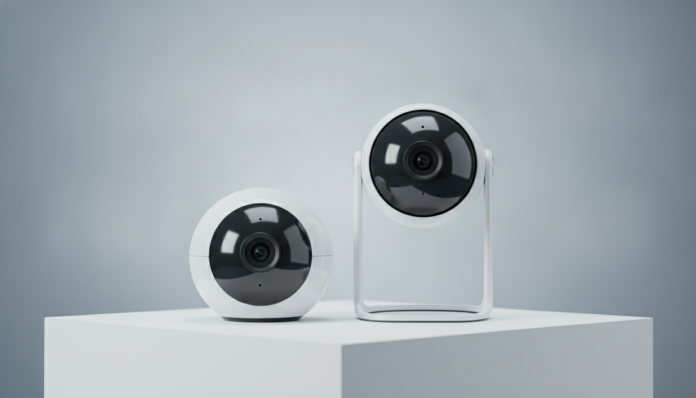

Intelbras IM5 vs Tapo C200: indoor security cameras that look similar but aren’t
You’re setting up a home security system and you’ve come across two cameras that appear in practically every cost-benefit comparison in Brazil: the Intelbras IM5 and the Tapo C200, from TP-Link. Both are internal IP cameras with motorized pan/tilt, Full HD resolution, and affordable pricing. At first glance, it seems like it doesn’t matter which one you choose. But the details of daily use, support, and ecosystem make a real difference depending on what you need.
The short answer: if you want easy national support, hassle-free warranty, and integration with an Intelbras DVR or NVR system you already have at home, the IM5 is the natural choice. If you prefer a more polished app, extra features like automatic motion tracking, and aren’t attached to a specific ecosystem, the Tapo C200 delivers more functionality for the same money or less. Neither is bad; what changes is the use context.
Comparative technical specifications
| Specification | Intelbras IM5 | Tapo C200 |
|---|---|---|
| Resolution | 1080p (2 MP) | 1080p (2 MP) |
| Viewing angle | 110° horizontal | 114° horizontal |
| Pan/Tilt (rotation) | Pan 355°, Tilt 90° | Pan 360°, Tilt 114° |
| Night vision | Up to 8 m (IR) | Up to 9 m (IR) |
| Audio | Two-way | Two-way |
| Storage | MicroSD card (up to 128 GB) | MicroSD card (up to 128 GB) |
| Connectivity | Wi-Fi 802.11 b/g/n 2.4 GHz | Wi-Fi 802.11 b/g/n 2.4 GHz |
| Motion detection | Yes | Yes, with automatic tracking |
| NVR/DVR integration | Yes (Intelbras ONVIF) | Limited ONVIF |
| Anatel approval | Yes | Yes |
| Power supply | USB cable (adapter included) | USB cable (adapter included) |
| App | iSafe | Tapo |
| Warranty in Brazil | 1 year (Official Intelbras) | 1 year (TP-Link Brazil) |
| Price range (2026) | R$ 150 to R$ 220 | R$ 110 to R$ 180 |
Prices based on Brazilian online retailers in 2026 and subject to variation.
Image quality and night vision in real-world use
Both cameras use a 2-megapixel sensor with 1080p resolution, which is the minimum acceptable standard for recognizing faces and details in indoor environments. According to both manufacturers’ datasheets, the frame rate is 20 fps for the IM5 and 15 fps for the C200, which means that the Intelbras image tends to be slightly more fluid in scenes with rapid movement.
In night vision, both use infrared (IR) illumination, a technology that allows you to see in the dark by emitting light invisible to the human eye and capturing it with the camera’s sensor. The Tapo C200 claims a range of up to 9 meters compared to 8 meters for the IM5. In practice, this 1-meter difference is rarely decisive for typical indoor environments, such as a living room or bedroom. What might make more of a difference is the quality of image processing from each model, something you can verify better in real user videos on retail platforms.
Neither offers color night vision (which uses weak visible light to colorize the image in the dark), a feature found on higher-end cameras. If this is a priority for you, it’s worth looking at models like the Tapo C220 or Intelbras IM7, which are in a higher price range.
Motorized movement and automatic tracking
Here’s a concrete difference. The Tapo C200 has automatic motion tracking, a function that makes the camera rotate on its own to follow a person in the scene. For those who want to monitor children or pets without manually controlling the camera, this is useful. The IM5 doesn’t have this feature; it rotates by manual command through the app, without automatically following the object.
The C200’s rotation range is also slightly greater on the vertical axis (tilt of 114° compared to 90° for the IM5), which can help in installations where the camera is mounted higher up. For most home installations on top of a shelf or monitor, the difference is small, but it’s worth considering if your space has high ceilings.
App, cloud, and local storage
The iSafe application from Intelbras is functional and focused on the Brazilian market. It integrates with the brand’s product ecosystem, which means that if you already have an NVR (network recorder, equipment that centralizes recordings from multiple IP cameras) from Intelbras at home, the IM5 connects more directly and stably via ONVIF, an open protocol for communication between cameras and recorders.
The Tapo app from TP-Link is widely praised by users for its modern interface and for offering more advanced alert settings and detection zones within the free app itself. TP-Link also offers paid cloud storage plans, but basic microSD card recording works without a subscription on both cameras. For those who don’t want to rely on a monthly fee, both deliver local recording with microSD cards up to 128 GB.
If your focus is to set up a more robust setup with multiple cameras and centralized storage, it’s also worth researching NAS (network storage server) solutions for your home. A good NAS combined with ONVIF cameras transforms your home into a professional surveillance system. Also, if you’re thinking about investing in storage for this type of project, it may be helpful to check the Best 1TB NVMe SSD for cost-benefit in 2026 to understand the best options for fast and economical storage currently available on the market.
Brazilian context: Anatel, warranty, and support
Both cameras have Anatel approval, which means they were approved by the Brazilian regulatory agency for use in the country. This is not a minor detail: imported cameras without approval can be seized by the Post Office and you lose the product without reimbursement.
Intelbras is a company from Santa Catarina with technical support in Brazil, an authorized technical service network, and customer service in Portuguese. For those who have experienced cameras that fail and need RMA (the return process for repair or replacement under warranty), having support in the country is a real relief. TP-Link has official operations in Brazil with the Tapo brand and also offers local support, but the service network is less widespread than Intelbras’s.
If you buy the Tapo C200 from an unauthorized reseller or parallel importer, you’re out of official warranty. Always check if the product comes with a Brazilian invoice and if the seller is an authorized TP-Link Brazil reseller.
Which one to choose according to your profile
If you’re setting up your first home security system with a single camera, want convenience in setup, and value an app with more features at no extra cost, the Tapo C200 delivers more for the money. Automatic tracking and the Tapo app are the points that tip the scales for this profile.
If you already have or plan to have other Intelbras products at home, if you need technical support with the ability to claim warranty easily at an authorized service center, or if you’ll be integrating the camera into an Intelbras NVR, the IM5 makes more sense. Intelbras’s cohesive ecosystem is worth quite a bit for those who want a system growing in an organized way.
For use in a small office or retail space, the IM5 with NVR integration is the most robust choice. For simple home use with a smartphone as the control center, the C200 performs very well.
Frequently asked questions about Intelbras IM5 and Tapo C200
Do I need to pay for a cloud subscription to use these cameras?
No. Both cameras work with microSD card recording without any monthly subscription. The cloud plans from manufacturers are optional and provide remote access to previous recordings stored on their servers.
Do these cameras work without Wi-Fi?
Not in the conventional way. Both depend on Wi-Fi network to transmit the image to the app and to access it remotely on your phone. They can record locally to the microSD card even without internet, but you can only access what was recorded when you’re on the same local network or when the connection is restored.
Does the Tapo C200 work with Alexa and Google Home?
According to TP-Link, the Tapo C200 is compatible with Amazon Alexa and Google Home to display the image on screen-enabled devices, such as the Echo Show. The IM5 also supports integration with voice assistants through the iSafe app, but check the current version of the app to confirm the availability of this feature at the time of purchase.
What’s the difference between an IP camera and an analog camera?
An IP camera transmits the image in digital format over Wi-Fi or network cable, which allows remote access via your phone and superior quality. An analog camera sends video signal via coaxial cable and needs a DVR to record. The two cameras in this article are IP, therefore more modern and flexible.
Where to buy and what to check before confirming your order
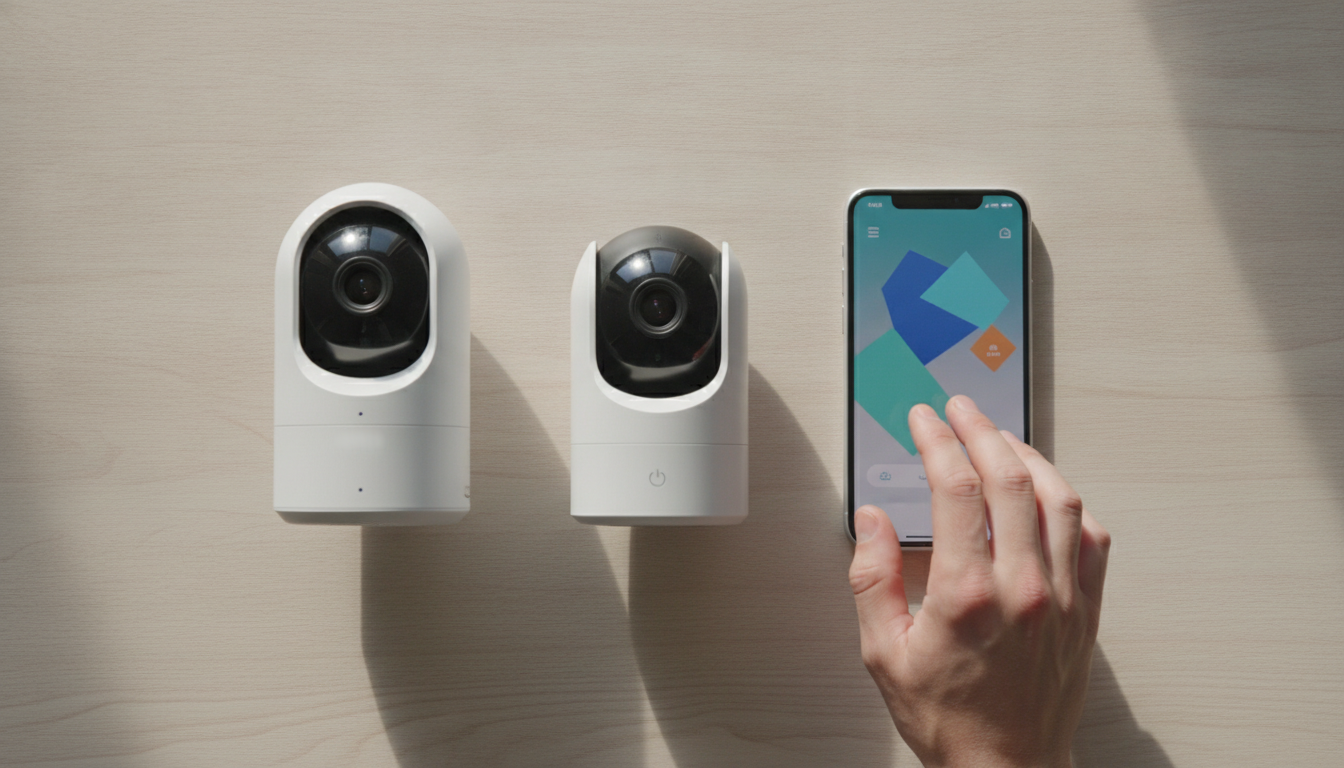
Both cameras are available at major Brazilian online stores, including Mercado Livre, Americanas, Magalu, and Amazon Brasil. Always prefer to buy from sellers with invoices and who explicitly confirm the manufacturer’s warranty in Brazil.
Before confirming the purchase, check if the store delivers with an invoice in the name of the manufacturer or an authorized distributor. This makes all the difference when claiming warranty. The current price range is around R$ 110 to R$ 180 for the Tapo C200 and R$ 150 to R$ 220 for the IM5, but occasional promotions can reverse this difference, so it’s worth monitoring prices for a few days before buying.