

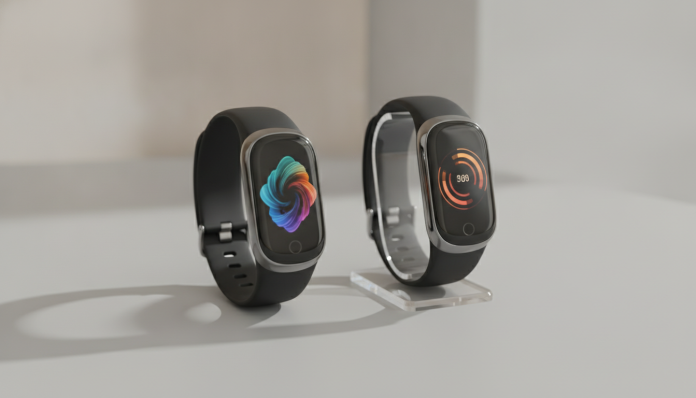

Galaxy Fit 3 vs Xiaomi Smart Band 10: selection criteria beyond price
When you place the Samsung Galaxy Fit 3 and Xiaomi Smart Band 10 side by side, the price difference seems to settle everything right away. But it’s not quite that simple. These two fitness trackers compete in similar price ranges in the Brazilian market, have comparable designs, and cover similar features on paper. What really changes is in the details: heart rate sensor quality, integration with your phone’s ecosystem, real-world battery durability, and how much each manufacturer cares about software after launch.
The Galaxy Fit 3 was launched by Samsung in early 2024, positioned as a more affordable option within the Galaxy Wearable line. The Smart Band 10 is the latest generation of Xiaomi’s Mi Band line, also announced in 2024, consolidating a series that practically defined the entry-level fitness tracker segment in Brazil. If you use Android from any brand, both work. If you use iPhone, the situation changes, and we’ll get to that point.
The quick answer: if you have a Samsung Galaxy, the Fit 3 delivers a more integrated experience and justifies the slightly higher price. If you want maximum battery life at minimum cost, the Smart Band 10 is hard to beat. The rest of the article is for those who need more than a quick answer.
Specifications side by side
| Specification | Samsung Galaxy Fit 3 | Xiaomi Smart Band 10 |
|---|---|---|
| Display | AMOLED 1.6″, 256 x 402 px | AMOLED 1.62″, 192 x 490 px |
| Case | Aluminum | Aluminum |
| Water resistance | 5 ATM | 5 ATM |
| Battery | 208 mAh | 233 mAh |
| Battery life (manufacturer claim) | Up to 13 days | Up to 21 days |
| Heart rate monitoring | Yes, continuous | Yes, continuous |
| SpO2 (blood oxygen) | Yes | Yes |
| GPS | Connected (uses phone’s GPS) | Connected (uses phone’s GPS) |
| NFC / payments | No | No (standard version) |
| Compatibility | Android 5.0+ / iOS 16+ | Android 6.0+ / iOS 16+ |
| App | Samsung Health | Zepp (formerly Mi Fit) |
| Anatel approval | Yes | Yes (official Brazil version) |
| Weight (with strap) | 36.4 g | Approximately 27 g |
| Launch price (USA) | US$ 59.99 | US$ 44.99 (approx.) |
| Price range in Brazil | R$ 250 to R$ 350 | R$ 180 to R$ 280 |
Prices subject to variation by store, promotion, and exchange rates. Always check current prices before buying.
Display and design: Fit 3 takes the lead in usability
The Galaxy Fit 3 has one of the largest displays ever placed on a fitness tracker in this category. With a 1.6-inch AMOLED screen and 256 x 402 pixel resolution, the panel delivers readable text and colors with satisfactory contrast for quick wrist reading. Samsung chose a more rectangular design with less rounded corners, giving it an appearance closer to a small smartwatch than a fitness band.
The Smart Band 10 responds with a slightly larger diagonal display at 1.62 inches, but with different resolution (192 x 490 px), optimized for the band’s narrower, elongated format. The result is a tall, thin display, good for scrolling notifications, but it may seem less comfortable for those who prefer seeing more information at once. Xiaomi maintained the classic Mi Band design, which already has loyal fans precisely because it’s discreet and lightweight.
For gym or running use, both are practical. But if you wear the tracker at work and receive many notifications, the Fit 3 tends to be easier to read quickly without raising your wrist for long. The Smart Band 10, meanwhile, practically disappears on the wrist of someone with larger wrists, which is an advantage in terms of prolonged comfort.
Battery: the Smart Band 10’s clearest advantage
Samsung’s declared battery autonomy for the Galaxy Fit 3 is up to 13 days. Xiaomi promises up to 21 days with the Smart Band 10, according to official specifications. These numbers are always measured under controlled conditions, with reduced brightness and heart monitoring at spaced intervals. In real daily use with active notifications, connected GPS, and continuous heart sensor, actual values fall below this for both, but the proportion tends to be maintained.
If you frequently forget to charge devices, the Smart Band 10 will give you more margin for error. It’s the difference between charging once a week or once every ten days, roughly speaking. For those who take long trips or have intense routines without easy charger access, this advantage is concrete.
The Fit 3 charges via proprietary magnetic cable (the same as the Galaxy Watch series), while the Smart Band 10 uses the standard magnetic charger from Xiaomi’s line. Both have specific chargers that aren’t interchangeable with anything else, so be careful not to lose the cable.
Health monitoring and sensors
Both trackers offer continuous heart rate monitoring, SpO2 (which measures blood oxygen saturation, useful for detecting situations like sleep apnea), and sleep monitoring with phase identification. Samsung also includes body composition analysis via bioimpedance on the Galaxy Watch, but not on the Fit 3. This feature is reserved for the more expensive line.
What differentiates the two in daily use is less about which sensors exist and more about how the software interprets the data. Samsung Health has a huge user base in Brazil, integrates directly with apps like Google Health, and offers quite a complete data dashboard. Zepp, from Xiaomi, has improved significantly in recent years, but is still considered more basic by some users regarding historical data visualization and personalized suggestions.
If you already use Samsung Health because of a Galaxy phone and have accumulated data history, switching to the Xiaomi ecosystem means losing that history, which is no small thing after months of sleep and activity records. For those starting from scratch, both are equally viable. For comparisons of how ecosystem integration works on other Samsung devices, it’s worth seeing how Samsung Health behaves on different device types when switching platforms.
iPhone and Android compatibility
Both work with Android and iOS, but with iPhone limitations worth mentioning. Neither the Fit 3 nor the Smart Band 10 delivers the same iPhone experience as Android. Notifications arrive, but quick responses and deeper interactions depend on the Android system. Samsung Health on iOS is functional, but integration is more superficial than on Galaxy.
If you use iPhone and want a simple fitness tracker to monitor steps, sleep, and heart rate, the Smart Band 10 works well and costs less. If you need more advanced features on iPhone, the honest recommendation would be to look at the Apple Watch SE, which is in a different price range but solves the integration issue.
Brazilian context: imports, Anatel, and warranty
This is something many people overlook in the rush to buy from AliExpress at a lower price. Both the Galaxy Fit 3 and Smart Band 10 have versions approved by Anatel and sold officially in Brazil. The approved version ensures the device can legally operate in the country, and more importantly: you have legal warranty rights of 90 days (non-durable goods) or 12 months under consumer law for products purchased from authorized resellers.
Imported versions without Anatel approval may have customs issues, may not receive software updates suitable for the Brazilian market, and are left without warranty. The risk isn’t worth the price difference, especially for a product you’ll use every day on your wrist.
Samsung has technical assistance in state capitals and mid-sized cities in Brazil. Xiaomi has expanded its service network, but is still geographically more limited. If you live in a small city, consider this before buying: sending for repair may involve higher shipping costs and longer timeframes with Xiaomi.
Which to choose: recommendation by profile
You have a Samsung Galaxy and already use Samsung Health: the Fit 3 is the obvious choice. Native integration with the ecosystem, more complete notifications, and the larger screen make the experience more cohesive. The extra cost compared to the Smart Band 10 is justified.
You want maximum battery life at the lowest price: the Smart Band 10 wins this criterion by a landslide. Longer battery life, lower entry price, and discreet design make it the best value for money in the segment.
You use iPhone: neither is the ideal choice, but the Smart Band 10 handles basic functions for less money. If you want something more integrated with iPhone, the Apple Watch SE or a basic Garmin come into view.
You have a tight budget and want basic health features: the Smart Band 10 delivers the essentials without complication. Sleep, heart rate, SpO2, and steps work well without any advanced configuration.
Frequently asked questions about Galaxy Fit 3 and Xiaomi Smart Band 10
Does the Galaxy Fit 3 work without a Samsung phone?
Yes. The Fit 3 is compatible with any Android 5.0 or higher, plus iOS 16 and later. You install Samsung Health and Galaxy Wearable from the Play Store and pair normally. Integration is deeper on Samsung phones, but works on other Android models without critical issues.
Does the Smart Band 10 have its own GPS?
No. The Smart Band 10 uses what the industry calls connected GPS, meaning it uses your smartphone’s location signal via Bluetooth. This means that to record running or walking routes with accuracy, you need to have your phone with you. If you want standalone GPS on your wrist, you’ll need higher categories, like the Xiaomi Watch S3 or Galaxy Watch.
Which of the two is more durable for sports use?
Both have 5 ATM water resistance, meaning they support immersion in up to 50 meters depth according to testing standards, making them suitable for pool swimming. The aluminum case on both offers good resistance to everyday impacts. Neither is certified for diving or prolonged use in salt water, so confirm the technical specifications of the version you plan to buy.
Is it worth buying imported to save money?
The risk is real. Versions without Anatel approval may be held up in customs, and even if they get through, you’re left without manufacturer warranty in Brazil. The price difference rarely compensates when you consider international shipping costs, risk of retention, and lack of local support. Buy from the official store or authorized resellers with receipts.