


Smartwatch without iPhone: what really changes
You’re looking at an Apple Watch in the store and thinking “but I use Android”. Or you’re considering buying any smartwatch and want to know if you need a smartphone to function, and which platform makes the most sense for your budget and routine. The short answer: smartwatch without iPhone is totally viable, but the Apple Watch specifically is not an option for Android users, and trying to work around this results in a product that barely passes for an expensive watch. For Android users, the Wear OS ecosystem and Samsung wearables have matured quite a bit and deliver very satisfactory user experience in 2026.
The central question of this guide is not “what is the best smartwatch in the world”, but rather “which smartwatch works well outside the Apple ecosystem”. This distinction matters because much of the wearables marketing in Brazil revolves around the Apple Watch, and many people get confused about what they lose or gain by choosing another path. Let’s clear up this confusion.
Why Apple Watch doesn’t work without iPhone
The Apple Watch requires an iPhone for initial setup and for most connected functions, such as notifications, App Store, health sync, and Bluetooth calls. This is not accidental technical limitation: it’s an Apple design decision to keep users within their ecosystem. According to Apple, the Apple Watch is designed exclusively to work with iPhone, and there is no official Android support.
In practice, this means you can use an Apple Watch without having an iPhone nearby all the time, as long as you’ve already set it up with the iPhone. But installing apps, updating the system, activating the watch from scratch, all of this requires the iPhone. There are unofficial apps that promise to pair the Apple Watch with Android, but they offer very limited functionality and have no support, so it’s not something worth recommending for everyday use.
The Android ecosystem and smartwatches that really work
For Android users, the scenario has improved significantly. Wear OS, Google’s operating system for smartwatches, underwent a significant overhaul in partnership with Samsung starting in 2021 and has evolved consistently since then. In 2026, the platform is mature, with reasonable integration to Google Assistant, Google Maps, Google Pay (in supported countries) and native sync with Android health apps.
Samsung uses One UI Watch on top of Wear OS in its Galaxy Watch models, which adds its own features, such as deeper integration with Samsung phones via the Galaxy Wearable app. If you use a Samsung Galaxy, the experience becomes even more cohesive: app switching between screen and wrist, call continuity and health data sync with Samsung Health work in a well-integrated way.
For those using Android from other brands, such as Motorola, Xiaomi or Google Pixel, any watch with Wear OS works without problems. The practical recommendation is to verify that the watch’s app is available in your device’s Google Play Store and that it’s compatible with the Android version you use, typically Android 8.0 or higher is the minimum requirement for most current models.
Smartwatches available in Brazil in 2026: overview
The Brazilian market has options in different price ranges. The table below brings together the main models with national distribution or easily found in online retail, with approximate prices practiced in Brazil (prices vary according to store and promotion).
| Model | System | Compatibility | Price Range (BR) | Anatel Approved |
|---|---|---|---|---|
| Apple Watch Series 10 | watchOS | iPhone only | R$ 3,800 to R$ 5,500 | Yes (national versions) |
| Samsung Galaxy Watch 7 | One UI Watch / Wear OS | Android (better with Samsung) | R$ 1,800 to R$ 2,800 | Yes |
| Google Pixel Watch 3 | Wear OS | Android (better with Pixel) | R$ 2,200 to R$ 3,200 | Check availability |
| Motorola Moto Watch | Wear OS | Android | R$ 700 to R$ 1,200 | Yes (national models) |
| Amazfit Balance / GTR 4 | Zepp OS | Android and iOS | R$ 800 to R$ 1,500 | Check by model |
| Xiaomi Smart Band 9 Pro | MIUI Watch | Android and iOS | R$ 400 to R$ 700 | Check by model |
Note on homologation: Anatel homologation is mandatory for legal sale in Brazil and guarantees that the device has been tested for use on local networks. Imported models without homologation may have LTE connectivity issues and are not covered by legal warranty under the Consumer Protection Code. Always check the Anatel homologation number before buying, especially for parallel imports.
What you lose and what you gain outside of Apple Watch
Being honest here is important. The Apple Watch still has real advantages in some specific areas:
- Integration with Apple health apps (especially electrocardiogram and oxygenation data) is very well implemented
- watchOS has more quality third-party apps in certain categories
- Apple Watch Series 10 construction is solid, with LTPO screen that automatically adjusts refresh rate to save battery
On the other hand, Android smartwatches offer advantages that many people ignore:
- Open compatibility: works with any Android, doesn’t lock you into a specific ecosystem
- Price variety: there are decent options below R$ 1,000, something non-existent in the Apple Watch world
- Battery autonomy: several Amazfit and Xiaomi models deliver 10 to 14 days of use on one charge, while Apple Watch is around 18 to 36 hours according to Apple’s spec sheet
- Brand-independent functionality: if you change phones, the smartwatch continues to work
The real weak point of Wear OS compared to watchOS is still the volume and quality of third-party apps, but for everyday use (notifications, timer, payments, GPS, health monitoring), the difference is no longer as dramatic as it was three or four years ago.
Health and sensors: what to check before buying
Health monitoring is one of the main reasons for smartwatch purchase in 2026. The most common sensors you’ll find in technical specifications are:
- PPG (photoplethysmography): heart rate sensor by light. Present in almost all models, including the cheapest ones.
- ECG (electrocardiogram): more accurate sensor for heart rhythm. Available on Apple Watch, Samsung Galaxy Watch and Google Pixel Watch, but activation depends on regulatory approval by country. In Brazil, verify that the function is active in the national version of the device.
- SpO2: blood oxygenation. Very common, but accuracy varies greatly between models. For clinical use, it never replaces a certified oximeter.
- GPS: essential for those who run or cycle without carrying their phone. Cheaper models sometimes omit built-in GPS and depend on phone GPS.
If health is a priority, avoid buying by brand name and read the complete technical sheet, paying special attention to which sensors are present in the version sold in Brazil.
Smartwatch with LTE: is the extra cost worth it?
Some models offer an LTE version, meaning the watch has its own chip and can make calls, receive messages and use data even without the phone nearby. In Brazil, this still has some practical obstacles: carriers need to support eSIM service for wearables, and not all local carriers offer this easily in 2026. Claro and Vivo have made progress on this front, but check directly with your carrier before paying extra for the LTE model.
For most people, the non-LTE version is sufficient. The watch stays connected via Bluetooth to the phone, which stays in a pocket or bag, and works well for everyday use.
Frequently asked questions about smartwatch without iPhone
Can I use any smartwatch with my Android?
Technically yes, but the experience varies. Smartwatches with Wear OS work well with any modern Android. Samsung Galaxy Watch models work with other Androids, but some advanced features require a Samsung phone. Amazfit and Xiaomi usually work with Android and iOS via their own app (Zepp and Mi Fitness, respectively). Before buying, download the corresponding app from the Play Store and verify it’s compatible with your phone.
Does Apple Watch work with Samsung or other Android?
Not officially. Apple doesn’t offer Android support, and initial setup requires an iPhone. Third-party apps that promise to work around this deliver very limited experience and can stop working with any watchOS update. If you use Android, ignore the Apple Watch and look at alternatives.
Is cheap smartwatch worth it or should I save for a better one?
It depends on what you want. A Xiaomi Smart Band or entry-level Amazfit delivers notifications, sleep monitoring, heart rate and step counting satisfactorily for less than R$ 700. If you want built-in GPS, ECG, NFC payments and third-party apps, then you need to move up to the R$ 1,500 to R$ 2,500 range. There’s no point in paying extra for features you won’t use.
Does imported smartwatch without Anatel homologation have risks?
Yes. In addition to not having legal warranty in Brazil, the device may have usage restrictions on local networks (especially the LTE version), may be held at customs with taxation, and you will have no authorized technical support in case of defect. For higher-value purchases, the cost of a potential problem outweighs the savings on imports.
Which to choose according to your profile
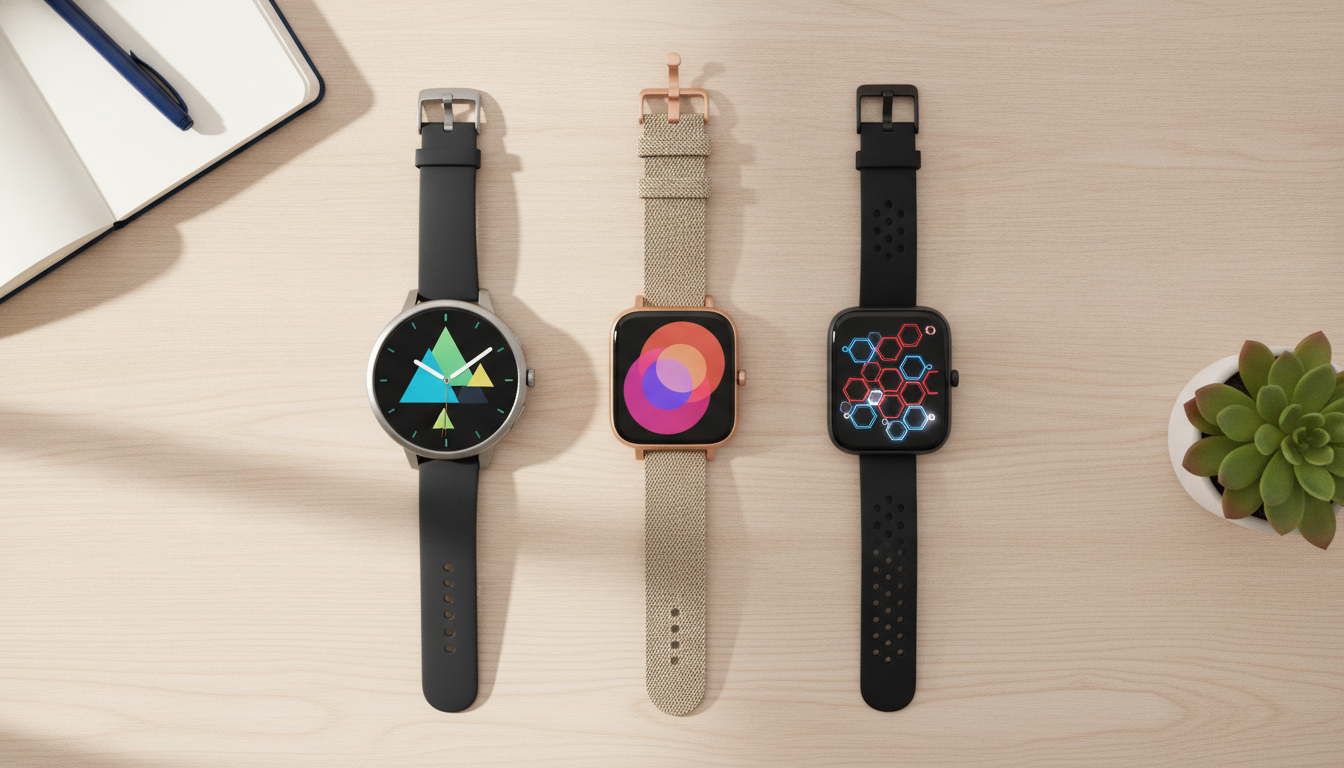
To wrap up practically: if you use iPhone and want the best smartwatch integrated into the Apple ecosystem, Apple Watch is the natural choice, but it’s outside the scope of this guide. For Android users, the recommendation varies like this:
Best overall value for money: Samsung Galaxy Watch 7, which offers good Android integration, complete sensors including ECG and Anatel homologation, in the R$ 1,800 to R$ 2,800 range.
Best for those who prioritize battery life: Amazfit GTR 4 or Balance, with several days of autonomy according to the manufacturer, good for those who don’t want to charge the watch every day.
Best for those wanting to spend little: Xiaomi Smart Band 9 Pro or entry-level Amazfit, with well-implemented basic features below R$ 700.
Best for Pixel users: Google Pixel Watch 3, with native integration to the Google ecosystem and built-in Fitbit, but verify availability and homologation in Brazil before buying.
If you’re building a complete setup for working from home and want to spend wisely, it’s also worth looking at other gadgets that make sense in daily life, such as covered in the Guide to cheap peripherals for home office in 2026, where you’ll find keyboard, mouse and headset options without compromising your budget. Smartwatch is just another item in the equation, not the only one.
The final decision depends on how much you use your phone for health and productivity and how much you want the watch to expand that experience. For most Android users in Brazil in 2026, a good Wear OS or Galaxy Watch solves things very well, without needing to switch platforms to have a wearable that actually works.