

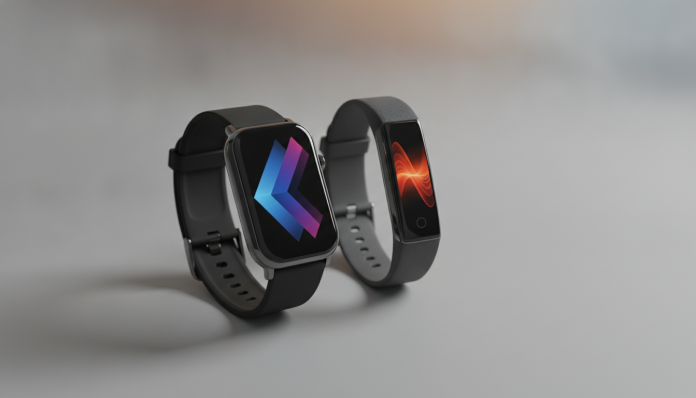

Smartwatch vs Fitness Tracker: Which Is Worth Buying in 2026
You’re looking at your wrist and thinking about putting some device there that does more than show the time. The inevitable question that follows is: should I buy a full smartwatch or a fitness tracker? The short answer is: it depends on what you want to monitor, how much you want to spend, and whether you’ll use your phone alongside it or want a more independent device.
Both categories have evolved significantly. Fitness trackers have become more capable, with continuous heart rate sensors, SpO2 (pulse oximetry, which measures blood oxygen saturation), and even ECG in some models. Smartwatches, on the other hand, have incorporated functions that previously only existed in medical devices for home use. But price and complexity have risen along with it. Understanding what each category truly delivers helps avoid paying for features you’ll never use.
This comparison gets straight to the point: what each device does better, where it falls short, and which user profile fits each option.
Comparison Table: Smartwatch vs Fitness Tracker
| Criteria | Smartwatch | Fitness Tracker |
|---|---|---|
| Display | Larger AMOLED (1.3″ to 2.0″), always-on in premium models | Smaller AMOLED (0.95″ to 1.5″), sufficient resolution for basic data |
| Typical Battery | 1 to 4 days (active use); up to 20 days in basic mode | 7 to 21 days with continuous monitoring |
| Built-in GPS | Yes, in most mid-range and premium models | Only in higher-end models of this category |
| NFC Payments | Yes, present in many models | Rare; few models support it |
| Notification Response | Read and reply via keyboard or voice | Read-only with basic actions (dismiss/reply) |
| Third-Party Apps | Yes (Wear OS, watchOS, Galaxy One UI Watch) | No; only manufacturer app |
| ECG and Oximetry | Present in mid-range and premium models | Present in entry and mid-range models |
| Price Range (Brazil) | R$ 600 to R$ 5,000+ | R$ 200 to R$ 900 |
| Average Weight | 30g to 60g | 15g to 30g |
| ANATEL Certification | Required; check ANATEL website | Required; check ANATEL website |
What Fitness Trackers Do Better
The fitness tracker wins in two aspects that for many people are decisive: battery life and weight. If you need a device that stays on your wrist for days without thinking about a charger, the fitness tracker still has a clear advantage over most smartwatches.
Models like the Xiaomi Smart Band 9 and Amazfit Band 7, available in Brazil, promise up to 14 to 21 days of use according to manufacturer information. In practice, with GPS constantly activated or 24-hour sleep monitoring, that number drops, but it’s still superior to the average smartwatch. For those who travel frequently or simply forget to charge electronics, this changes your daily routine.
Health monitoring has also evolved. Mid-range fitness trackers already include continuous heart rate sensor, SpO2, sleep monitoring with REM and NREM phases, and stress detection based on heart rate variability (HRV, a metric that analyzes the variation millisecond by millisecond between heartbeats). These aren’t medical devices and don’t replace clinical diagnosis, but as a personal monitoring tool they work well.
The weakness is clear: the fitness tracker is a data display device, not an interaction device. You read the notification but can’t respond comfortably. You can’t install apps. You can’t pay at checkout from your wrist. If you’re looking for that autonomy, you’ll be frustrated.
What Smartwatches Do Better
The smartwatch is a mini computer on your wrist. Platforms like Wear OS 5 (from Google, found in Pixel Watch and partner models) and One UI Watch 7 (from Samsung, used in Galaxy Watch) allow you to install applications, reply to messages with keyboard or voice dictation, make and receive calls with built-in microphone and speaker, and use NFC for payments at compatible terminals, without taking your phone out of your pocket.
The integrated high-precision GPS is another important differentiator for runners and cyclists. Premium smartwatches use GPS with multiple satellite systems (GPS, GLONASS, Galileo, and BeiDou simultaneously), which improves route accuracy, especially in urban areas with tall buildings. Fitness trackers, when they have GPS, tend to use simpler systems or depend on your phone’s GPS via Bluetooth connection.
The larger display also counts. On smartwatches with displays from 1.7″ to 2.0″, viewing a running map, a full message, or a heart rate graph is much more comfortable. This difference seems small on paper, but you notice it in daily use.
The cost, of course, is battery life. Large screen, more powerful processor, and active connectivity consume energy. Smartwatches like the Samsung Galaxy Watch 7 and Apple Watch Series 10 (launched in 2024 and still a reference in the segment in 2026 until the next update) reach 1 to 3 days of battery life with normal use, according to manufacturer datasheets. To compare: Bluetooth earphone battery life is also a topic where expectations and reality diverge quite a bit, as we showed in Bluetooth Earphones: How Long Does Battery Really Last. The reasoning applies here: manufacturer numbers are obtained under controlled conditions.
Health Sensors: The Practical Difference Between The Two
This is a point that causes confusion. In 2026, both fitness trackers and smartwatches bring similar sensors on paper: heart rate, SpO2, skin temperature, ECG in some cases. The difference lies in the sensor quality, reading frequency, and data processing.
Premium smartwatches tend to use sensors with more LEDs and more refined proprietary algorithms, which, according to manufacturers, results in more accurate readings in situations of intense movement. Entry-level fitness trackers, on the other hand, may have difficulty with readings during high-intensity workouts, such as weightlifting with heavy wrist movement.
The ECG (single-lead electrocardiogram, which captures the electrical rhythm of the heart to detect atrial fibrillation) is present in smartwatches like Apple Watch and Galaxy Watch, and has reached some higher-end fitness trackers. But here’s a critical point for Brazilian consumers: ANVISA approval for using ECG as a health resource may vary by model and software version. Before buying betting on this feature, check if it’s enabled in the version sold in Brazil.
Import, ANATEL, and Warranty in Brazil
Buying an imported smartwatch or fitness tracker can be cheaper, but it comes with real risks. Devices without ANATEL certification (Brazil’s telecommunications regulatory agency) can be held at customs or even seized. Even if they pass, they may not work on some Bluetooth or Wi-Fi frequencies compatible with the Brazilian standard, and the manufacturer’s warranty typically doesn’t cover the product outside the country of origin.
The national market has options from brands like Samsung, Xiaomi, Amazfit, Garmin, and Huawei, with local warranty of at least 12 months (required by the Consumer Protection Code). Some Apple models are sold by authorized resellers in Brazil, with warranty valid here, but the Apple Watch line doesn’t have a compatible carrier with active e-SIM in the country for all functions, so check first.
If you’re going to import to save money, research the certification of the specific model on the ANATEL website before finalizing the purchase, and consider that post-sale support will be more complicated.
Which One to Choose Based on Your Profile
If you’re an athlete or do physical activities frequently: a smartwatch with native GPS and a more robust heart monitor delivers more complete data. Garmin and Samsung have models dedicated to sports with advanced training metrics. The fitness tracker is suitable for casual monitoring but loses in accuracy during intense workouts.
If you want to leave your phone behind during the day or at the gym: the smartwatch wins, especially models with e-SIM that allow you to receive calls and messages without your phone nearby.
If your budget is limited and you want basic health monitoring: a fitness tracker between R$ 250 and R$ 500 covers continuous heart rate, sleep, and notifications comfortably. Spending more than that on a fitness tracker starts entering smartwatch entry-level pricing.
If you have an iPhone and want total integration: the Apple Watch remains the option with the best iOS ecosystem utilization. Android offers more manufacturer options, but Wear OS and Galaxy Watch work better with Android.
Frequently Asked Questions About Smartwatches and Fitness Trackers
Is a Fitness Tracker Good for Sports Activities?
It works for moderate-intensity activities like walking, light running, and cycling without requiring precise route tracking. For high-intensity sports or those requiring reliable GPS, a sports-dedicated smartwatch delivers more complete and consistent data.
What’s The Difference Between SpO2 and ECG on Your Wrist?
SpO2 measures the percentage of oxygen in your blood using infrared light, similar to a finger pulse oximeter. ECG records the heart’s electrical activity to detect abnormal rhythms, such as atrial fibrillation. Both are personal monitoring tools and don’t replace medical exams.
Can I Use a Smartwatch or Fitness Tracker Bought in the US in Brazil?
Technically yes, in most cases Bluetooth and Wi-Fi work. But the device may not have ANATEL certification, which creates risk of customs retention and complicates support. Features like e-SIM and NFC payments may not work with Brazilian carriers and banks. Check certification on the ANATEL website.
Does a Smartwatch Break Down Faster Than a Fitness Tracker?
Not necessarily. Durability depends more on the water resistance rating (IP68 or MIL-STD certification) and the build quality of the specific model than on the category. Both need band replacement over time and may experience battery degradation after a few years of heavy use.
The Final Choice Depends on How Much You Use Your Phone
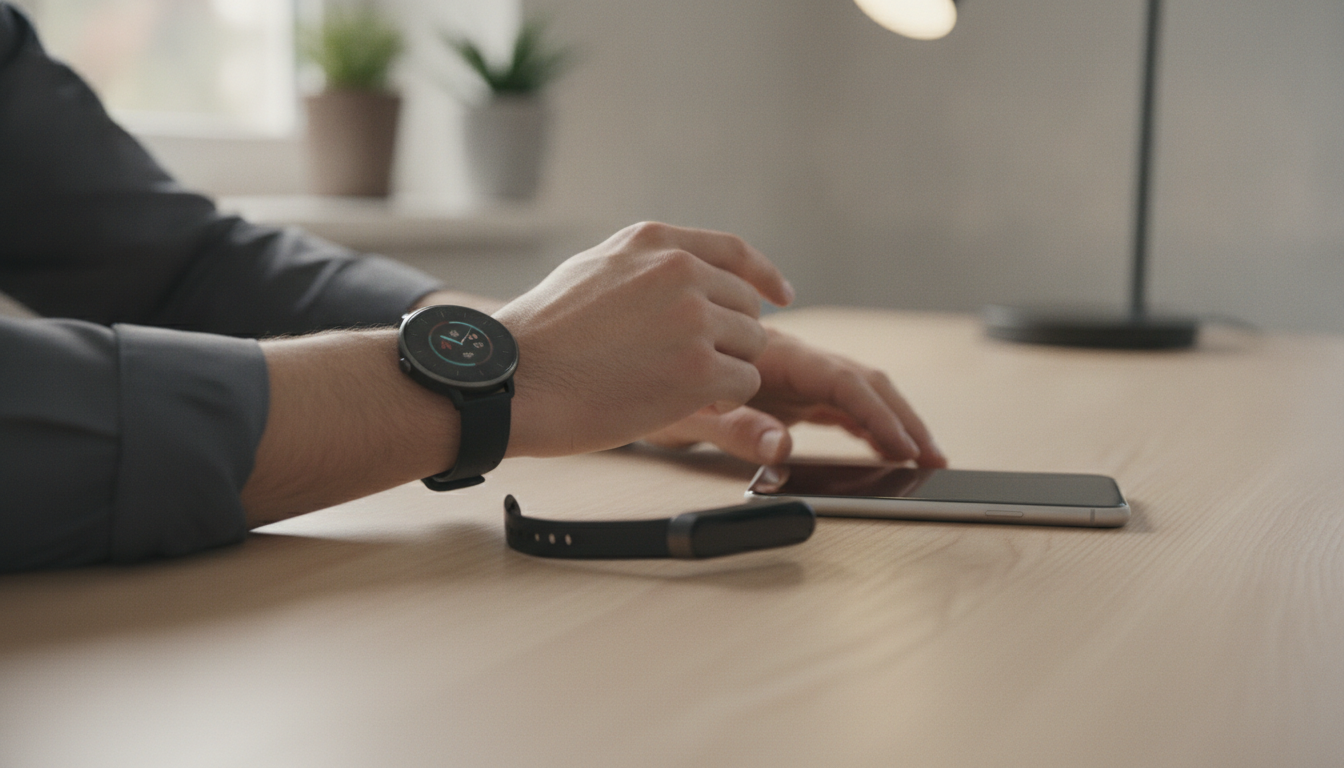
If your smartwatch will basically just count steps and show the time, you’re overpaying for features you won’t touch. A fitness tracker priced between R$ 300 and R$ 500 covers that use with room to spare and still lasts longer on a single charge. But if you want to reply to messages without taking your phone out of your pocket, pay for coffee from your wrist, and have a running map on your arm, the smartwatch justifies the investment.
The wearables category is moving toward devices with increasingly similar sensors, but the interaction difference and ecosystem is still real in 2026. Just like choosing a peripheral depends on context of use, as happens in the discussion about IPS or VA panels for work, the best wrist device is one that fits your routine, not the one with the most specs on paper.