

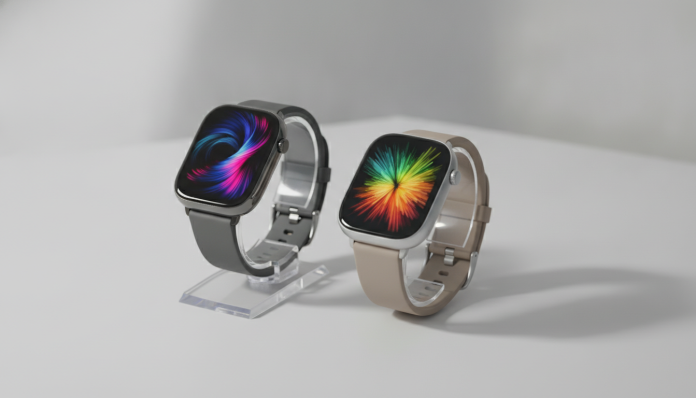

Amazfit Bip 6 and Active 2: Understand what sets the two apart before buying
Amazfit has two smartwatches that often cause confusion at purchase time: the Bip 6 and the Active 2. Both are affordable, offer health monitoring, have GPS, and run the Zepp OS system. But the differences between them are more relevant than the price suggests, and choosing the wrong model can leave you frustrated in a few months.
The short answer: the Bip 6 is the choice for those who want a simple, lightweight smartwatch with long battery life. The Active 2 is for those who exercise frequently, want a larger screen, and are willing to pay a bit more for it. The devil is in the details, and that’s exactly what this comparison will break down.
Specifications side by side
| Specification | Amazfit Bip 6 | Amazfit Active 2 |
|---|---|---|
| Display | AMOLED 1.91 in | AMOLED 1.75 in |
| Resolution | See official tech specs | See official tech specs |
| Processor | Zepp OS (proprietary chip) | Zepp OS (proprietary chip) |
| GPS | Yes (multi-system) | Yes (multi-system) |
| Battery | Up to 10 days (typical use) | Up to 10 days (typical use) |
| Water Resistance | 5 ATM | 5 ATM |
| Heart Rate Monitoring | Yes (continuous) | Yes (continuous) |
| SpO2 (Oximetry) | Yes | Yes |
| Body Temperature | Yes | Yes |
| ECG | No | No |
| Sports Modes | Over 120 | Over 160 |
| NFC for Payments | No (check regional version) | No (check regional version) |
| Approximate Weight | Lightweight (see specs) | Medium (see specs) |
| Launch Price (USA) | Around USD $70 | Around USD $100 |
| Price Range in Brazil | R$ 400 to R$ 600 | R$ 550 to R$ 800 |
Prices subject to change; check your retailer at the time of purchase. Detailed technical specifications should be confirmed on the official Amazfit website or product packaging.
Display: Size matters, but context does too
The Bip 6 arrived with an AMOLED screen of 1.91 inches, which is generous for a watch in this price range. The Active 2 works with 1.75 inches, a smaller display, but equally AMOLED. In practice, the difference of a few tenths of an inch is already noticeable when reading notifications and tracking metrics during workouts.
AMOLED (Active Matrix Organic Light-Emitting Diode) is the display technology that ensures deep blacks and vibrant colors even at reduced brightness, unlike the LCD panels more common in budget smartwatches. In direct sunlight, both models perform well according to the manufacturer, thanks to the high brightness available on these panels.
If you use the watch mainly during the day, in the office, or to read notifications, the Bip 6 has an advantage with its larger screen. If you prefer a more compact watch on your wrist or usually work out in long sleeves, the Active 2 may be more comfortable without sacrificing much readability.
Health and monitoring: where the two are equal and where they diverge
In health sensors, the two walk very closely. Both offer continuous heart rate monitoring, SpO2 measurement (blood oxygen saturation, useful for detecting drops during sleep or at high altitudes), skin temperature, and sleep analysis. Amazfit calls the sleep analysis set “Readiness Score” in some markets, but the name may vary depending on the installed Zepp OS version.
What sets the Active 2 apart here is the number of sports modes. With over 160 activity profiles according to the manufacturer, compared to just over 120 on the Bip 6, the Active 2 better serves those who practice less conventional sports like climbing, fencing, or specific water sports. For running, walking, cycling, and gym workouts, both deliver the basics with quality.
Neither model has ECG (electrocardiogram, which detects cardiac arrhythmias), a feature found on more expensive smartwatches like the Apple Watch Series 9 or Samsung Galaxy Watch 7. If this feature is a priority for you due to medical recommendation, neither model will meet your needs.
GPS and sports performance: Active 2 takes the lead
Multi-system GPS is present in both, meaning they connect to different satellite constellations (American GPS, Russian GLONASS, European Galileo, among others) for greater location accuracy. This makes a difference in urban routes with tall buildings or trails with dense vegetation cover.
According to Amazfit’s public information, the Active 2 has greater focus on sports performance, with more elaborate training modes and more complete integration with running metrics such as cadence and stride length. The Bip 6, while competent, positions itself more as an everyday watch with sports capability, rather than the other way around.
If you run more than three times a week, cycle frequently, or are training for a race, the Active 2 offers more useful tools. For those who work out twice a week and use the watch mainly to count steps and monitor sleep, the Bip 6 does the job comfortably.
Battery: Similar promise, real-world use may vary
Both models promise up to 10 days of battery life in typical use according to the manufacturer, but this estimate assumes moderate GPS use, heart rate checks at regular intervals, and controlled screen brightness. With GPS active continuously during long workouts, battery life drops significantly in both cases.
Amazfit doesn’t usually publish battery data with continuous GPS for all markets, so it’s worth checking the full spec sheet on the official website before making a purchase. A practical tip: if you plan to use it for runs longer than two hours with GPS on, ask at the store or look for reports from other Brazilian users on forums like Reddit (r/amazfit) or YouTube groups.
Zepp OS and app: the experience beyond the wrist
Both run Zepp OS, Amazfit’s proprietary operating system. It doesn’t have the number of third-party apps that Google’s Wear OS or Apple’s watchOS offer, but it covers the essentials well: phone notifications, music control, alarms, weather forecast, and health data. Synchronization is done through the Zepp app, available for Android and iOS, which organizes your activity and sleep history clearly.
Zepp OS doesn’t support contactless payments in Brazil at the moment (the NFC payment function depends on approval and local banking partners), so don’t expect to use the watch to pay at the supermarket like you would with an Apple Watch. If this is essential for you, the Google Pixel Watch or Galaxy Watch 7 are better alternatives, though more expensive.
Brazilian context: imports, Anatel, and warranty
This is a point many people ignore and regret later. Amazfit sells both models in global versions, and most stock that reaches Brazil comes through direct import, without local warranty. Check if the seller offers a Brazilian invoice and warranty of at least 90 days (minimum legal requirement), preferably 1 year.
Products with Anatel approval (Brazil’s telecommunications regulatory agency) have passed conformity tests for the national market and can be legally sold here. Without the seal, the product can be held at customs if you import directly. When shopping on marketplaces like Mercado Livre or Amazon Brasil, check if the listing mentions the Anatel approval number and if the product is shipped from within the country.
Which one to choose by profile and budget
If you want the best overall value for money: the Bip 6 delivers a large screen, complete sensors, and lightness at a lower price. It’s the right watch for those entering the smartwatch world or simply wanting to monitor health without complications.
If you’re a regular sports practitioner: the Active 2 is worth the extra investment for more elaborate sports modes and focus on workout metrics. It’s not a professional athlete’s watch, but delivers enough for those who train seriously.
If budget is the main criterion: the Bip 6 wins. For those comparing smartwatches with tablets or other gadgets, the cost-benefit logic is similar to what we discussed in the comparison of the iPad 11 vs Galaxy Tab S10 FE: which tablet to buy? — paying more doesn’t always mean more value for your specific use.
- Bip 6: casual users, smartwatch beginners, those who want a large screen for less money
- Active 2: regular sports practitioners, those who want more activity modes, those willing to pay R$ 100 to R$ 200 more
Frequently asked questions about Amazfit Bip 6 and Active 2
Do both work with iPhone?
Yes, both are compatible with iOS via the Zepp app. Integration is more complete with Android, especially for notifications and some quick response functions, but basic use works normally on iPhone.
Is it worth importing to pay less?
It depends on the risk you’re willing to accept. Without Anatel approval, the product can be held at customs. Without local warranty, any factory defect becomes a headache. If you find the product with a Brazilian invoice and warranty at a local store, prefer that option even if you pay a bit more.
Which has the prettier screen?
Both use good quality AMOLED panels. The Bip 6 has a larger screen (1.91 in), which favors readability. In terms of pure image quality, both are equivalent for the price range.
Does the Active 2 measure ECG?
No. Neither model has ECG. This function is available on smartwatches in higher categories, like the Apple Watch Series 9 or Samsung Galaxy Watch 7, at significantly higher prices.
What is the final verdict
The Amazfit Bip 6 and Active 2 are honest proposals for those who want to go beyond the basics without spending much. Amazfit got it right by differentiating the two clearly: one is for everyday use, the other is for those who train. The mistake would be buying the cheapest one thinking you’ll have everything the more expensive one offers, or paying more without needing the extra features.
Before making a purchase, confirm the specs on Amazfit’s official website (amazfit.com), check the seller’s Anatel approval number, and ask about the warranty policy. With this information in hand, the decision becomes simple.