

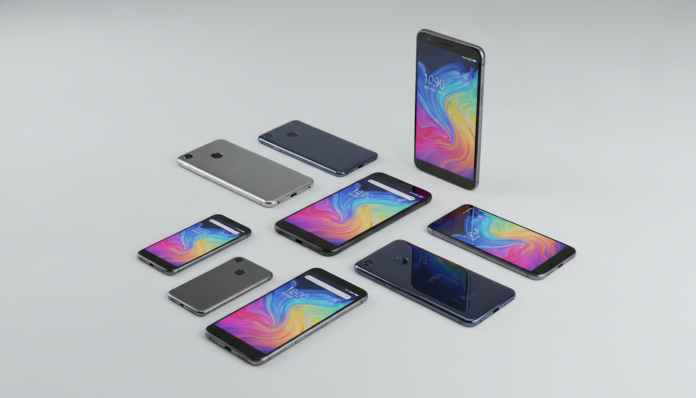

Why value-for-money Android phones are harder to assess than they seem
Choosing a budget-friendly Android phone in 2026 is not a simple task. The Brazilian market has completely different prices than those practiced in the US, taxation impacts the final price brutally, and what is “mid-range” in dollars can become “flagship” in reals when you put it in the cart.
This guide won’t give you a generic list of the “best phone.” It will help you understand what really matters in each price range, which specifications make a difference in everyday use and which are pure marketing, and how to navigate the options available in Brazil without falling into an import trap.
Short answer: there is good value-for-money in Android in Brazil in 2026, but it is concentrated in specific price ranges and requires attention to details such as Anatel homologation, software support and local technical assistance.
What changed in the Android market in 2026
The year 2026 consolidated some trends that change the game when buying. The main one is the arrival of embedded generative AI in mid-range devices, something that until 2024 was exclusive to flagships. Processors like the Snapdragon 7s Gen 3 and MediaTek Dimensity 7300 already have AI engines capable of running photo editing tasks, audio transcription and text suggestions without depending on the cloud.
Another relevant point is price compression. Chinese manufacturers like Xiaomi, Motorola (which operates partial development in China) and realme pushed competition downward, and today it is possible to find AMOLED screens with 120 Hz refresh rate, a decent camera setup and 5,000 mAh or larger battery in devices below R$ 2,000. This means you need to be more selective, because basic hardware has improved, but the software experience and build quality still differentiate products a lot in this range.
An important warning: many devices sold on import sites do not have Anatel homologation, the Brazilian regulatory body that certifies that the device works on the 4G and 5G frequencies used by the country’s operators. Without this seal, the phone may function poorly on the network, lose connection in certain regions and, in extreme cases, be seized by the Post Office at customs.
The price ranges that make sense in Brazil
Up to R$ 1,500: the territory of basic value-for-money
In this range you find devices that handle daily tasks well: social networks, streaming, decent camera, battery that lasts the day. Highlights usually come from Motorola (Moto G line) and Xiaomi (Redmi Note line), which have a consolidated presence in national retail and technical assistance.
The point of attention here is the processor. Avoid very old repackaged chips. A Helio G99 or a Snapdragon 4s Gen 2, for example, deliver consistent performance for medium use. Chips like the Helio G85 still appear in new devices, but are projects from years ago and will show limitations in heavier games and multiple simultaneous tasks.
Ensure the device has at least 4 GB of RAM (preferably 6 GB or more) and 128 GB internal storage with UFS 2.2 standard, which is faster than the eMMC still used in some entry-level models. The difference between UFS and eMMC is similar to the difference between an SSD and a mechanical hard drive in a computer: you feel it in app opening time.
From R$ 1,500 to R$ 3,000: where value-for-money is most generous
Here lies the largest concentration of good choices in 2026. In this range you start to have access to AMOLED screens with high brightness (over 1,000 nits peak, important for outdoor use), fast charging above 33W, cameras with decent main sensor size and processors that handle video editing and demanding games.
The most relevant competitors in this range for the Brazilian market include the Samsung Galaxy A56, the Motorola Edge 50 and Xiaomi models like the Redmi Note 14 Pro. I don’t cite detailed specifications of 2026 launches without official confirmation of availability in Brazil, but the technical sheet of each one is available on the manufacturers’ websites and on Anatel homologation pages, which is the right place to check supported frequency bands.
What you must check obligatorily in this range: how many Android updates the manufacturer guarantees, what is the security scheme (Samsung tends to be more generous with monthly patches) and whether there is wireless charging, which is not yet standard in this range but is starting to appear.
Above R$ 3,000: the zone of diminishing returns
Above R$ 3,000 you start paying for differentials that make sense for specific profiles: camera with larger sensor and periscope lens (long optical zoom without losing quality), top-of-line processor, brighter screen and premium materials. Strict value-for-money begins to diminish, but if you need a device that will replace a compact camera or last five years without lag, the investment may be justified.
In this range, the main competitors in Brazil are the Samsung Galaxy S25, the iPhone 16 (which is technically iOS but competes for the same audience’s wallet) and, depending on availability, Xiaomi 15 series models. Before buying any of them, check the Anatel page to see if the specific model is homologated for Brazil.
Specifications that really matter (and those that don’t matter as much)
What makes a difference in daily use
- Processor and generation: more important than the number of cores is the generation of the chip. A Snapdragon 7 Gen 3 delivers more than a Snapdragon 888, which is older even though it’s a higher line
- RAM: 8 GB is the comfortable floor in 2026 for those who use many apps at the same time; 12 GB is real differential in heavy games
- AMOLED vs LCD screen: AMOLED has deeper blacks, uses less battery with dark interfaces and generally has higher brightness; LCD still appears in entry-level and is not necessarily bad, but loses in this regard
- Refresh rate: 120 Hz makes scrolling noticeably smoother; below that you start to notice the difference if you’ve already used a modern device
- Charging speed: 33W is decent; 67W charges a 5,000 mAh phone in just over an hour; above 100W the differential is less than it seems in everyday life
What you can ignore (or at least put in perspective)
- Camera megapixels: 200 MP in small sensor loses to 50 MP in larger sensor; look for sensor size in square millimeters in the technical sheet, not pixel count
- Number of cameras: manufacturers love to add 2 MP macro lenses that are useless; an ultra-wide camera and a quality main camera are worth more than three mediocre cameras
- “Gaming” processor in entry-level phone: chips with this marketing frequently have good GPU but weak CPU; the result is uneven
Import or buy in Brazil?
The temptation to import is real. A device that costs US$ 300 in the US can reach R$ 2,500 or more in Brazilian retail. But importing has hidden costs that many people forget to calculate.
Purchases over US$ 50 sent to individuals are subject to Brazilian customs taxation, with rates that can reach 20% on the product value plus freight, according to rules in effect in 2026. Beyond cost, there is the risk that the device does not have Anatel homologation, which in addition to connectivity problems complicates warranty obligations. Without a Brazilian invoice, any repair will come out of your pocket.
The bill closes in few cases: when the device is not sold officially in Brazil, when the price difference is very large and you are aware of the risks, and when you confirm in advance that the model has the correct frequency bands to work with Brazilian operators. This specific data you find in the manufacturer’s technical sheet and can cross-reference with the bands used by Claro, Vivo, TIM and Oi on the operators’ own websites.
Price range comparison
| Range (R$) | Hardware expectation | Strong point | Weak point |
|---|---|---|---|
| Up to 1,500 | Low-mid chip, basic LCD or AMOLED, 4-6 GB RAM | Low initial cost, national brands | Short software support, limited camera |
| 1,500 to 2,500 | Strong mid-range chip, 120 Hz AMOLED, 6-8 GB RAM | Real balance between price and delivery | Wireless charging still rare |
| 2,500 to 3,500 | Advanced chip, camera with larger sensor, 8-12 GB RAM | Greater durability, more versatile camera | Return per real invested begins to decline |
| Above 3,500 | Flagship, periscope sensor, premium materials | Maximum performance, long lifespan | Strict value-for-money does not justify for basic use |
Warranty, assistance and software support in Brazil
This is an underestimated criterion when buying. Samsung and Motorola have the largest authorized technical assistance networks in Brazil, which means that in case of a defect you have somewhere to complain within the 90-day legal deadline for durable products provided for in the Consumer Protection Code.
Xiaomi has greatly improved its customer service structure in Brazil in recent years, but still has geographically smaller coverage. Brands like realme and OPPO have a more concentrated presence in major centers.
As for software updates, this directly impacts the security of your phone. Samsung is a reference in Android with its policy of four major system version updates and five years of security patches in the most recent mid-range devices. Motorola has evolved on this point but still falls behind. Check the specific policy for the model before buying; this information is on each manufacturer’s official website.
It’s worth considering that a phone with guaranteed support for five years may be more advantageous than a cheaper one that will become outdated in two years, even if the initial price is higher.
Frequently asked questions about budget Android phones
Is Snapdragon processor always better than MediaTek?
Not necessarily. The MediaTek Dimensity 9300 and Dimensity 8300, for example, are 2024 processors that compete equally with Snapdragon of the same generation in many scenarios. What matters is the generation of the chip, not just the platform names. Compare models from the same era, not just the names of the platforms.
Is it worth buying a 5G phone now in Brazil?
Yes, if you live in a capital or large city where 5G coverage already exists. In 2026 the coverage has expanded greatly, and Sub-6 GHz 5G, which is the most common standard, is present in most mid-range devices. Even if you don’t use it now, buying with 5G ensures the device won’t become obsolete prematurely.
Is it safe to buy a phone on third-party marketplaces?
It depends on the seller. Prefer sellers with CNPJ, invoice and who are within the official platform of major retailers like Magazine Luiza, Americanas or Mercado Livre with clear identification. Be suspicious of prices well below market; most of the time they indicate products without warranty or imported without homologation.
How much internal storage is enough in 2026?
128 GB is the acceptable minimum. With heavy apps, high-resolution cameras and 4K videos, 64 GB fills up quickly. If the phone accepts a microSD card, you have an emergency exit, but internal storage will always be faster for the operating system and apps.
How to make the final decision before buying
Before completing your purchase, go through this checklist:
- Confirm the homologation of the exact model on the Anatel website (just search for the device name on the portal)
- Check if the serial number or homologation code on the package matches what is registered
- Read the software update policy on the manufacturer’s website for that specific model
- Compare the price at least three stores with invoice and Brazilian warranty
- Check if there is authorized technical assistance in your city
- Confirm that the model supports the 4G and 5G bands used by your operator
If you’re the type who uses the phone a lot for physical activity and wants to combine it with good wireless headphones, check out our guide to gym headphones 2026 that don’t fall off during training, where we evaluate the best options for those who don’t compromise on audio quality even while running or working out.
And if you’re thinking about expanding the ecosystem with a tablet, we have a complete analysis on whether the Galaxy Tab S10 FE is worth buying in 2026?, which is one of the most competitive options in the Android tablet segment with official support in Brazil.
The Android market in 2026 offers great options, but well-informed buying still depends on research. With the right criteria in hand, you go far beyond marketing specifications and choose a device that will serve you well for as long as you need it.