


The best robot vacuums under R$ 1,500 in 2026
Robot vacuums are no longer a luxury item. With a mature category and fierce competition, you can find models with good suction, intelligent mapping, and even floor mopping capabilities for under R$ 1,500. The problem is that at this price point, the differences between models matter a lot: choosing wrong means paying for features that don’t work well or giving up something essential for your home type.
The criteria for this comparison are clear: real autonomy, suction power, mapping quality, and support available in Brazil. Prices were collected from major national retailers (Mercado Livre, Amazon Brasil, Magazine Luiza, and Shopee) in mid-2026 and may vary. Always check the updated price before purchasing.
This guide is for those living in apartments up to 80 m², homes with low-pile carpets, or with pet hair. If your property has high-pile carpets, multiple level changes, or more than two floors, you’ll likely need a bigger budget.
Comparison table: robot vacuums under R$ 1,500
| Model | Suction (Pa) | Mapping | Mopping | Declared Autonomy | Price Range (BR) |
|---|---|---|---|---|---|
| Xiaomi Robot Vacuum S10 | 4,000 Pa | LDS (laser) | No | Up to 130 min | R$ 1,100 – R$ 1,300 |
| Roborock Q5 | 2,700 Pa | LDS (laser) | No | Up to 180 min | R$ 1,200 – R$ 1,450 |
| Dreame D10 Plus | 4,000 Pa | LDS (laser) | Yes (basic) | Up to 200 min | R$ 1,300 – R$ 1,500 |
| Ecovacs Deebot N10 | 4,300 Pa | LDS (laser) | Yes (basic) | Up to 300 min | R$ 1,200 – R$ 1,400 |
| Viomi S9 | 2,700 Pa | LDS (laser) | Yes | Up to 180 min | R$ 900 – R$ 1,100 |
> Important: specifications and prices are based on official technical sheets and public announcements from manufacturers. Suction measured in Pascal (Pa) measures aspiration force; the higher the number, the more efficient it is with heavy debris and carpets.
Laser mapping: why this matters more than suction
The LDS mapping (Laser Distance Sensor) is the feature that separates a useful robot vacuum from an expensive toy. While cheaper models use infrared or simple cameras to avoid obstacles, LDS projects a 360-degree laser beam and creates a real map of your environment, like a digital floor plan.
In practice, this means the robot won’t keep hitting chairs, completes cleaning in less time, and lets you set forbidden zones or priority areas through the app. All models on this list use this technology, which is already a good starting point.
What sets each one apart is the quality of the algorithm behind the sensor. Roborock and Dreame historically have the most accurate maps according to user reviews and specialized publications like The Verge and RTINGS. Xiaomi delivers competitive mapping, but the Mi Home app can be less intuitive for those unfamiliar with the brand’s ecosystem.
Which model stands out in each situation
For apartment without carpet: Xiaomi Robot Vacuum S10
The Xiaomi Robot Vacuum S10 is the most balanced entry point on the list. According to the manufacturer, it delivers 4,000 Pa of suction and laser mapping with multi-floor support. For an apartment with hard flooring and minimal heavy debris, this performance is more than enough.
The weak point is the lack of mopping function and dependence on the Mi Home app, which requires a Xiaomi account and connection to servers in China. For those concerned with data privacy or who prefer not to create another account, this can be a dealbreaker. Warranty in Brazil depends on the sales channel; prefer versions sold by authorized resellers for local coverage.
For home with low-pile carpets and pets: Ecovacs Deebot N10
The Ecovacs Deebot N10 stands out for its declared autonomy of up to 300 minutes, the highest on the list. In an 80 m² home with carpets spread throughout, this means the robot likely completes cleaning without needing to return to base for recharging mid-cycle, which is more efficient and saves time.
According to Ecovacs’ technical sheet, the 4,300 Pa suction is the highest among the models listed here, which in theory favors pet hair removal and compacted debris on carpets. The mopping function exists but is basic: a water reservoir with passive cloth, no vibration. For very dirty floors, the result is modest.
For those wanting functional mopping without spending much: Dreame D10 Plus
The Dreame D10 Plus positions itself as the most complete option within the R$ 1,500 ceiling. The mopping function has electronically controlled water reservoir, ensuring constant cloth moisture, unlike the passive system of Deebot N10. It’s still not comparable to ultrasonic vibration mopping systems from premium models (above R$ 3,000), but it already makes a difference for those with lightly oily floors.
According to Dreame, the D10 Plus also has automatic emptying station, meaning the robot dumps collected debris into a bag at the base, reducing user contact with dirt. This feature, common in higher-end models, is rare below R$ 1,500. Check if the version available includes the station, as some listings sell the robot separately.
Best value for money: Roborock Q5
The Roborock Q5 has the lowest declared suction on the list (2,700 Pa), but Roborock has the most solid track record in software quality and long-term updates. The Roborock app is widely recognized by publications like RTINGS as one of the most complete in the category.
For clean apartments without carpets and without pets, 2,700 Pa is sufficient. The major advantage lies in autonomy of up to 180 minutes and reliability of mapping over time. Those who buy Roborock tend to use the same robot for more years without loss of functionality, which is a real cost-benefit factor.
Brazilian context: approval, warranty, and import
This is the part most guides ignore and that can be costly. Robot vacuums imported independently (via international Shopee or AliExpress, for example) don’t have Anatel homologation, which is the certification that ensures the product can be legally used in Brazil and that Wi-Fi operates on correct frequencies.
Models without homologation may have blocked or unstable Wi-Fi signal, precisely the feature that makes the device useful. Plus, in case of defect, the return process is complicated and international shipping at buyer’s expense can cost more than repair.
Prefer models sold by national stores with invoice issued in Brazil. Xiaomi, Roborock, Dreame, and Ecovacs have official or semi-official distribution in the country, but the presence of local technical support is still limited. Before buying, research if technical support exists in your city or state, especially for Dreame and Ecovacs, which are newer brands in the national market.
If you’re unsure how to navigate between brands and models of imported gadgets in Brazil, the process is similar to what we covered when analyzing the POCO X8 Pro worth it in Brazil for the price?: warranty, invoice, and homologation criteria apply to any electronics from Chinese brands purchased here.
What to evaluate before finalizing the purchase
- Property area: above 100 m², prioritize models with higher autonomy (above 150 min declared)
- Floor type: hard floors = any model works; low-pile carpet = prioritize suction above 3,500 Pa
- Pet: pet hair requires high suction and frequent side brush cleaning; check if replacement parts are sold in Brazil
- Mopping: only worthwhile if you have hard flooring and oiliness; otherwise, it’s a feature you’ll ignore
- App: all models here depend on 2.4 GHz Wi-Fi; none work on exclusive 5 GHz networks
- Automatic station: the Dreame D10 Plus is the only on this list with this function; very worth it for those with dust allergies
Frequently asked questions about robot vacuums under R$ 1,500
Does a robot vacuum replace a conventional vacuum?
For daily maintenance cleaning, yes. For deep cleaning, especially on upholstery, tight corners, and thick carpets, a conventional vacuum is still necessary. Most users use the robot daily and the conventional vacuum once a week or every two weeks.
Does it work in homes with steps or level changes?
The models on this list detect drops with infrared sensors and stop before descending stairs. However, door thresholds above 2 cm can be an obstacle depending on the model. Check the technical sheet for the maximum obstacle height the robot can overcome, which typically varies between 1.5 cm and 2 cm.
Is it worth paying more for a model with navigation camera?
At this price point, models with cameras still don’t deliver the same precision as laser mapping. Cameras depend on adequate lighting and may have limited object recognition. For up to R$ 1,500, always prefer laser LDS over cameras.
Does the robot work with 5 GHz Wi-Fi?
No. All robot vacuums in this category operate exclusively on 2.4 GHz Wi-Fi. If your router transmits only on 5 GHz or uses dual-band without network separation, you’ll need to set up a separate 2.4 GHz network to connect the device. Modern routers typically allow this in advanced settings.
Which to choose: recommendation by profile
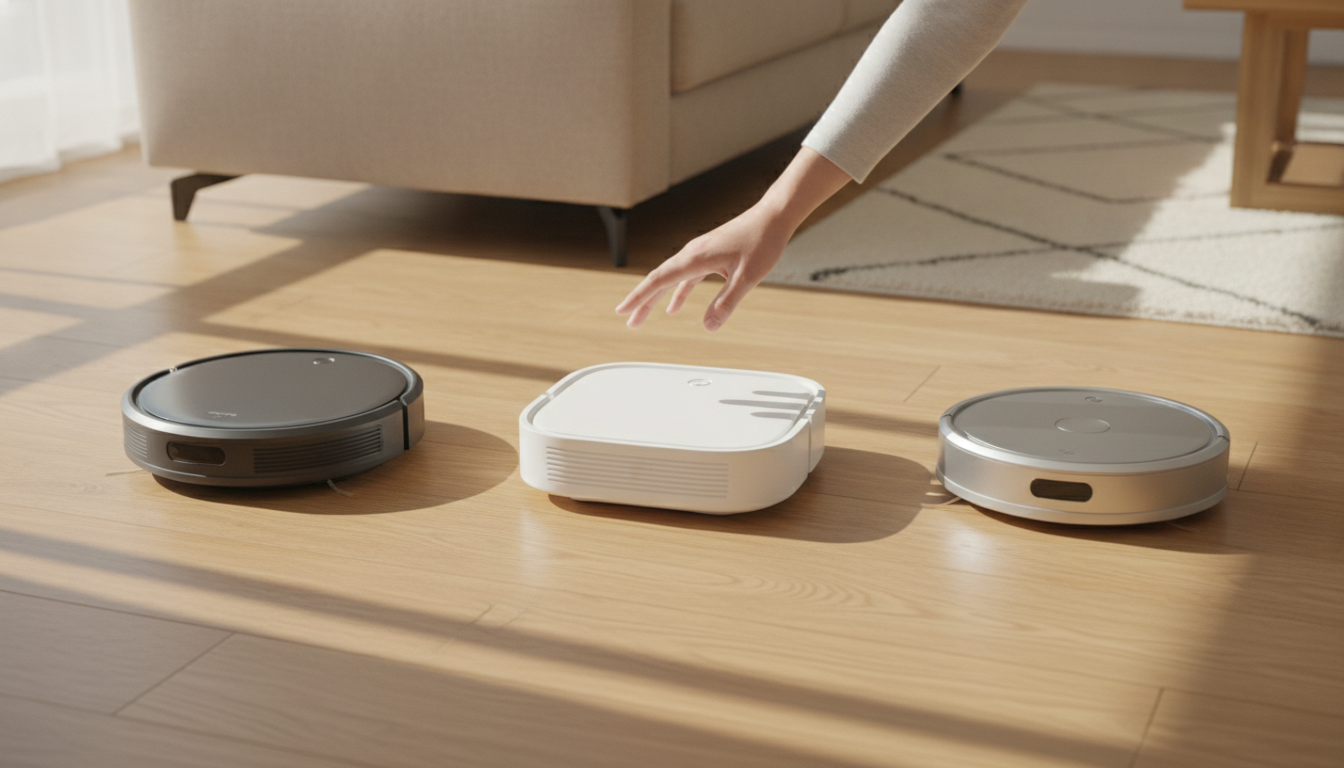
If you live in a small apartment, without carpet and without pets, the Roborock Q5 delivers the best long-term user experience through software consistency. If you have pets or low-pile carpets, the Ecovacs Deebot N10 is justified by higher suction and superior autonomy. For those wanting the most complete experience possible within budget, the Dreame D10 Plus with automatic station is the model to consider, provided you confirm the sold version includes the emptying base.
The Xiaomi S10 is the right choice for those already using the Mi Home ecosystem and want simple integration with other brand devices. The Viomi S9 is the most affordable on the list and works for those wanting to test the category without compromising much budget.
A practical tip: regardless of the model chosen, schedule daily cleaning for times when you’re not home. The noise and movement of the robot are smaller annoyances when you’re simply not there to notice. This way, you get the most out of the feature without needing to adapt your routine to it.