

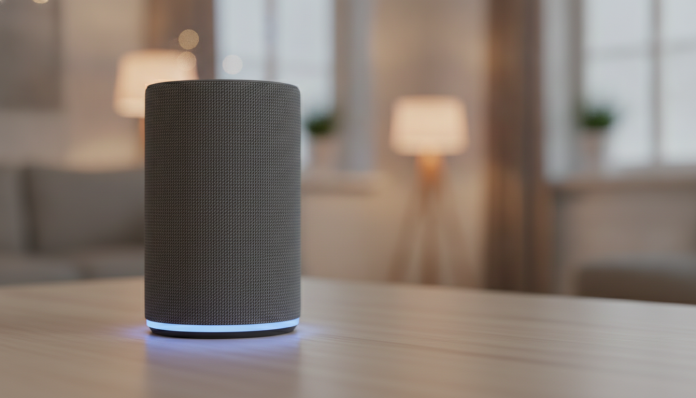

Did the Echo Dot Max change the game for compact smart speakers?
The Echo Dot Max is the expanded version of Amazon’s most popular smart speaker line, positioned above the conventional Echo Dot and below the fifth-generation Echo. The proposal is clear: deliver more sound power and premium features in still-accessible format, with Alexa as the brain of everything. If you already have a previous-generation Echo Dot at home and are wondering if it’s worth switching, or if you’re buying your first smart speaker, this review was made exactly for you.
The short answer is: it depends on what you prioritize. For those who want above-average audio quality without paying Echo Studio prices, the Echo Dot Max makes sense. For those who use the device only as a kitchen timer or to check the weather forecast, the standard Echo Dot works for less money.
Before diving into details, an important note: as a relatively recent product on the market, some supplementary technical specifications may vary by region. Always check the official technical specifications on Amazon’s website before closing the purchase, as the manufacturer updates this data periodically.
Echo Dot Max Technical Specifications
| Specification | Detail |
|---|---|
| Manufacturer | Amazon |
| Speaker | 1.73-inch woofer + high-frequency tweeter (per Amazon technical sheet) |
| Connectivity | Wi-Fi 6 (802.11ax), Bluetooth 5.2 |
| Voice Assistant | Alexa (cloud processing) |
| Microphones | 4-microphone array with noise suppression |
| Port | USB-C (power) |
| Compatibility | Matter, Zigbee (integrated hub), Alexa Cast |
| Dimensions | Check official Amazon website for most current version |
| Availability in Brazil | Amazon.com.br and authorized retailers |
| Homologation | Verify if Anatel number appears on packaging when purchasing |
| Approximate Price (Brazil) | Starting from R$ 599 to R$ 799 (varies by store and promotion) |
| Launch Price (USA) | US$ 59.99 (announced by Amazon) |
Audio Quality: The Main Selling Point
This is the point that sets the Echo Dot Max apart from previous models in the Dot line. The configuration with dedicated woofer and separate tweeter (the tweeter reproduces high frequencies, while the woofer handles bass, like a conventional speaker box but in miniaturized scale) results in sound with more body and depth.
According to the manufacturer, the goal of the Dot Max acoustic design is to reproduce midrange and bass with more definition than the fifth-generation Echo Dot, which used a single 1.73-inch driver. For a space up to 20 square meters, like a bedroom or small office, the volume delivered is sufficient without noticeable distortion at normal usage levels. For a large room, the device still has physical limitations inherent to its size.
Alexa also allows you to adjust the equalizer by voice or through the Alexa app, with controls for bass, midrange, and treble. This is useful for those who prefer more punch in the low end for electronic music or a flatter profile for podcasts and audiobooks.
Alexa in 2026: Has the Assistant Evolved Enough?
Alexa underwent relevant updates in recent years, with improvements in natural language processing that bring it closer to the conversational abilities of assistants like Google Assistant and Siri. In the Brazilian context, Amazon invested in localization, and today Alexa understands regional variations, different accents, and more colloquial commands with more precision than in 2022 and 2023 versions.
The Echo Dot Max benefits from the integrated Zigbee hub (a low-power wireless communication protocol used in smart home devices) and support for the Matter standard, which is the interoperability standard created in 2022 by the CSA manufacturer alliance, allowing devices from different brands to communicate with each other. In practice, this means you can control Philips Hue lights, smart plugs from other brands, and compatible locks directly through the Echo Dot Max without needing a separate hub.
For those building a smart home ecosystem, this point is more relevant than audio. The device functions as an affordable home automation hub. It’s worth mentioning that integration with Brazilian automation platforms and with Google Home via Matter can still have compatibility variations; consult the updated list of compatible devices on Amazon Brazil’s website.
Connectivity and Setup in Brazil
The Wi-Fi 6 (also called 802.11ax) present in the Echo Dot Max is a real differentiator if you have a modern router. Wi-Fi 6 offers lower latency and better performance in networks with many devices connected simultaneously. If your router is still Wi-Fi 5 or earlier, the device functions normally but without reaching maximum potential.
Setup is done through the Alexa app, available free for Android and iOS. The process takes less than five minutes in most cases: you plug the device in, open the app, select the Wi-Fi network, and that’s it. It doesn’t require an Amazon Prime account to function, but some features, like unlimited music through Amazon Music, require a subscription.
Regarding Anatel homologation, which certifies that the product meets Brazilian technical standards for radiofrequency and electrical safety, products sold by Amazon.com.br generally come pre-certified. If you import directly from the USA, the device may not have the Anatel seal, which technically prevents use in Brazilian territory and can complicate warranty matters. Buying via Amazon Brazil is the safest route.
Amazon’s standard warranty in Brazil is 12 months for manufacturing defects. Check the complete conditions on the official page before purchasing.
Pros and Cons of the Echo Dot Max
Pros:
- Notably superior audio quality to conventional Echo Dots for small spaces
- Integrated Zigbee hub and Matter support, eliminating the need for a separate automation hub
- Wi-Fi 6 for modern networks
- Simple setup through the Alexa app
- Available on Amazon Brazil with warranty and invoice
- More affordable price than fifth-generation Echo and Echo Studio
Cons:
- Doesn’t replace a premium smart speaker in large rooms
- Relies on active connection with Amazon cloud to function fully; without internet, functions become very limited
- Alexa ecosystem remains more restricted in Brazil compared to American market in number of skills and local integrations
- No display (unlike Echo Show), which limits visual feedback
- Price in Brazilian reais fluctuates with exchange rates and can be steep during high dollar periods
Competitors and Alternatives in Brazil
| Product | Approximate Price (BR) | Highlight | Limitation |
|---|---|---|---|
| Echo Dot (5th generation) | R$ 349 to R$ 449 | Cost-benefit, compact | Less powerful audio |
| Echo (5th generation) | R$ 699 to R$ 899 | Best audio in Dot Plus line | No screen |
| Echo Show 5 | R$ 649 to R$ 799 | Has 5.5-inch display | Average audio |
| Google Nest Mini | R$ 299 to R$ 399 | Google Home integration | No Zigbee hub |
| Apple HomePod mini | R$ 1,099 to R$ 1,299 | Excellent audio, Apple ecosystem | Expensive, restricted to iOS/macOS |
For those comparing wearables and personal tech gadgets, it may be useful to see how different brands position their products in other categories. A good example is our analysis on Galaxy S25 FE worth it in 2026: complete review, where this same type of value-for-money reasoning by user profile applies.
The Google Nest Mini is a legitimate alternative if you already use Android and the Google ecosystem in your daily life; integration with Google Calendar, Google Maps, and YouTube Music is smoother. The HomePod mini is superior in audio but requires iPhone for initial setup and gets expensive with dollar exchange rates.
Frequently Asked Questions About the Echo Dot Max
Does the Echo Dot Max work without internet?
Not completely. Alexa processing occurs on Amazon’s cloud servers, so without internet connection most voice commands don’t work. Only some basic functions, like pre-configured alarms and control of local devices via Zigbee, may continue operating depending on configuration.
Do you need Amazon Prime or Amazon Music subscription to use it?
It’s not mandatory. The Echo Dot Max works without subscription for voice commands, home automation, news, and music on free radio services like TuneIn. Amazon Music Unlimited and Prime Music require paid subscription, but you can connect services like Spotify (free or Premium) without additional cost.
Does the product sold in Brazil come with warranty and invoice?
When purchased through Amazon.com.br or authorized resellers, yes. Standard warranty is 12 months. Products imported directly from the USA on your own don’t come with local support and may have Anatel homologation issues.
Is it worth upgrading from 5th-generation Echo Dot to Dot Max?
If use is primarily musical and you want more robust sound, the upgrade makes sense. If you use Echo Dot mainly for quick commands, timers, and basic smart home control, the practical difference in daily life may not justify the extra cost. Assess your usage profile before deciding.
Is the Echo Dot Max Worth Buying?

The Echo Dot Max fulfills the role it proposes: being a smart speaker with above-basic audio quality, integrated smart home hub, and competitive price within the Amazon line. For the Brazilian user who wants to take the first step into the Alexa ecosystem with something more robust than the conventional Dot, it’s a solid choice.
That said, the smart speaker market has evolved and competitors like the Google Nest Audio and HomePod mini compete with equally coherent proposals. The choice between them hinges less on technical specifications and more on the ecosystem you already use on your phone and at home. If you use Fire TV, bought books on Amazon, or already own other Alexa devices, the Dot Max fits naturally.
Recommended for: those who want superior audio quality to the standard Dot, are building smart homes with Zigbee or Matter devices, and prefer the Alexa ecosystem. Also indicated for those who want to centralize home automation without spending on a dedicated hub.
Price range: between R$ 599 and R$ 799 at Amazon Brazil and resellers (prices vary with promotions and exchange rates; launch price in the USA was US$ 59.99).