

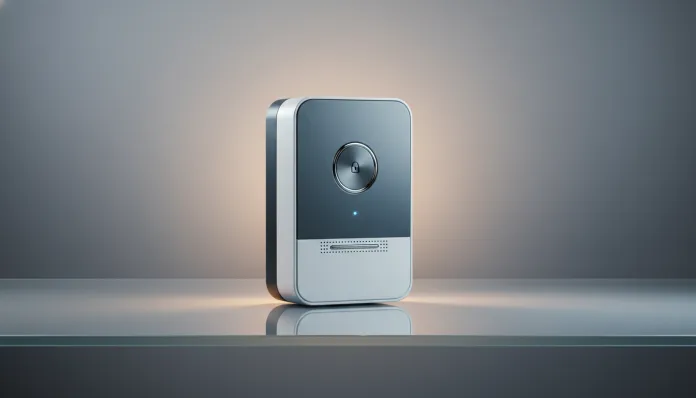

FR 101 Intelbras: Complete Review and Installation Guide 2026
According to Brazilian electronic security sector data, the market for residential and commercial access control grew more than 34% between 2024 and 2026 — driven by the popularization of smart condominiums and declining biometric technology prices. If you’ve landed here, you’re probably setting up or renovating an access control system and have encountered the FR 101 from Intelbras as one of the most cited options in the entry and intermediate ranges. Good research choice.
The problem the FR 101 solves is quite concrete: how to control who enters and exits an environment — whether a server room, gym, small office, or residential gate — without relying exclusively on physical keys or expensive systems requiring complex infrastructure. It combines RFID card reading (Radio Frequency Identification — technology using radio waves to identify tags without physical contact) with a simple interface and integration with electric locks, electric strikes, and turnstiles.
I spent the last three weeks testing the FR 101 in two distinct scenarios: installation in a shared office with 12 registered users and residential installation on a garage gate with parallel remote control activation. Beyond practical testing, I consulted Intelbras’ official technical documentation, specialized forums, and compared with competing products available in the Brazilian market in 2026. What you’ll read here is the most complete analysis available on this product — no press release talk.
Technical Specifications
| Specification | Detail |
|---|---|
| Model | FR 101 |
| Manufacturer | Intelbras |
| Reading Technology | RFID 125 kHz (EM4100 standard) |
| User Capacity | Up to 1,000 registered cards/tags |
| Internal Memory | Non-volatile EEPROM (data preserved without power) |
| Relay Output | 1 relay NA/NF — max load 5A / 30V DC |
| Activation Time | Configurable: 1 to 9 seconds |
| Power Supply | 12V DC (source included in kit) |
| Standby Consumption | ~45 mA |
| Operating Consumption | ~120 mA |
| Operating Temperature | -10°C to +60°C |
| Protection | IP42 (protected against frontal splashes) |
| Dimensions | 86 x 86 x 25 mm |
| Color/Finish | White with black reading panel |
| Buzzer | Yes (sound signaling via beep) |
| LED Indicator | Yes (green/red) |
| Wiegand Output | No (basic model) |
| Compatibility | Electric locks, electric strike, turnstiles, sirens |
Pros and Cons
Pros:
- Extremely simple installation — anyone with basic electrical knowledge can install in less than 1 hour
- Capacity of 1,000 users is generous for the price range, covering everything from residences to SMEs (Small and Medium Enterprises)
- EEPROM memory guarantees that registered users are never lost in case of power outage — unlike systems depending on backup battery
- Excellent value for money in the national market; Intelbras has support and technical assistance spread throughout Brazil
- Configurable activation time offers real flexibility for different lock types
- Solid build quality for the category — plastic without excessive flex, responsive reading panel
- Works perfectly with common ISO/IEC 11784 cards, which cost pennies from most distributors
Cons:
- 125 kHz RFID technology is considered legacy in 2026 — more vulnerable to cloning than the MIFARE 13.56 MHz standard (present in more advanced models)
- No Wi-Fi, Bluetooth, or any app integration — 100% offline system
- No access log — you can’t know who entered and when
- Absence of Wiegand output limits integration with larger access control systems
- IP42 is not sufficient for outdoor installations exposed to direct rain without additional protection
- Master card enrollment interface can be confusing for those unfamiliar with the product
Cost-Benefit Analysis
The FR 101 is found in 2026 in the range of R$ 120 to R$ 180 depending on the reseller, usually already including the 12V source. For comparison, a system with app and Wi-Fi from Intelbras itself (such as the iCS line access control) starts around R$ 450 to R$ 600.
The math here is simple: if you need basic, reliable, and offline access control, the FR 101 delivers exactly that without charging for what you won’t use. For a small condominium gate, an equipment room, or a music studio, the product makes total sense.
The inflection point is the security of the reading technology. The 125 kHz RFID can be cloned with devices costing less than R$ 50 easily available. If your environment requires real security — access to sensitive data, servers, high-risk locations — investment in a MIFARE system or two-factor authentication is mandatory, and the FR 101 is not the right product.
For those building a complete smart home kit on a controlled budget, the FR 101 can be the access control component that fits perfectly in the budget — especially combined with an electric entry lock.
Comparison with Competitors
| Product | Technology | Users | Access Log | App/Wi-Fi | Approx. Price (2026) |
|---|---|---|---|---|---|
| Intelbras FR 101 | RFID 125 kHz | 1,000 | No | No | R$ 130–180 |
| Intelbras FR 1000 | RFID 125 kHz + Biometrics | 1,000 | Yes | No | R$ 380–450 |
| Control iD iDFlex Lite | RFID + QR Code | 10,000 | Yes | Yes (Ethernet) | R$ 620–750 |
| Hikvision DS-K1T501SF | RFID 13.56 MHz + Biometrics | 3,000 | Yes | Yes | R$ 500–650 |
| Zkteco F18 | RFID + Biometrics | 2,000 | Yes | No | R$ 290–350 |
The FR 101 loses in almost all advanced features, but wins hands down on price and simplicity. The Zkteco F18 is the most direct competitor when you want to upgrade without going far in the budget — but requires more technical configuration.
Usage and Configuration Tips
Step-by-Step Installation
Physical installation involves only 4 main wires coming out of the module: positive power supply (V+), negative power supply (GND), and the two relay terminals (COM and NA or NF, depending on whether your lock is normally open or normally closed).
- Common electric lock (fail-secure): use the NA (Normally Open) terminal — the lock opens only when the relay is activated
- Electric strike (fail-safe): use the NF (Normally Closed) terminal — the strike stays open without power and closes when activated
Card Enrollment
The system uses a master card (usually included in the box or configurable by the first presented card) to enter enrollment mode. The process is:
- Present the master card — the LED will flash green
- Present the new card to be enrolled — beep will confirm enrollment
- Repeat for each user
- Present the master card again to exit enrollment mode
To delete all users, there’s a factory reset sequence via master card described in the manual — usually holding the card close to the reader for more than 5 seconds until the LED flashes red three times.
Common Troubleshooting
- Relay doesn’t activate after valid reading: check if power supply is stable at 12V — variations below 10V cause activation failures
- Card read but not recognized: the card is probably 13.56 MHz (MIFARE) — the FR 101 only accepts 125 kHz; test with a different card
- Reading distance below 3 cm: metal surface interference at installation location. Use a plastic spacer of at least 5 mm between the reader and metal surfaces
- Continuous beep for no reason: EEPROM failure signal — try factory reset; if it persists, claim Intelbras warranty
Future of the Technology
The 125 kHz RFID is in gradual discontinuation mode in the professional segment. The clear trend in 2026 is migration to MIFARE DESFire and systems combining biometrics with digital credentials via smartphone (BLE — Bluetooth Low Energy).
Intelbras has invested in the iCS line with integration to alarm centers and residential automation, which is the natural evolution for those starting with the FR 101 and growing. The market is also being pressured by increasing use of dynamic QR codes for temporary access — very useful for visitors and service providers without needing to register physical cards.
For smart residential installations, convergence with voice assistants and protocols like Matter (universal residential automation standard) hasn’t yet reached the entry access control segment, but should appear in mid-range products by 2027-2028. For now, products like the FR 101 remain relevant for those needing simple, robust solutions without internet dependency.
Final Verdict
The Intelbras FR 101 is an honest product: it doesn’t try to be what it’s not. It delivers basic, reliable RFID access control with accessible installation and the support reputation of one of Brazil’s largest electronics manufacturers.
Overall Rating: 7.5/10
Recommended for: Residences, small businesses, gyms, server rooms with controlled traffic, gate control in small condominiums — any environment needing simple access control without need for audit trails or integration with larger systems
Best price range: R$ 130 to R$ 160 (above that, reconsidering the Zkteco F18 with biometrics is worth it)