

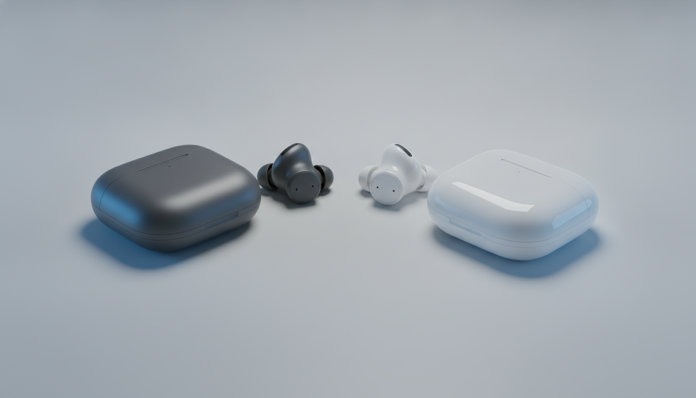

Galaxy Buds FE vs Redmi Buds 6 Play: Which Offers Better Value for Your Money in 2026
The market for active noise-canceling Bluetooth earbuds is no longer exclusive to those willing to pay premium prices. Today, both Samsung and Xiaomi offer options below R$ 300 that promise decent audio delivery, reasonable battery life, and features that were once reserved for flagship models. The Galaxy Buds FE and Redmi Buds 6 Play are the most popular representatives in this battle in Brazil, and the question of which one comes out on top is legitimate.
The short answer: it depends on the ecosystem you already use. If you have a Samsung and want native integration with your smartphone, the Galaxy Buds FE delivers a smoother experience. If you’re looking for the most value per real spent without caring about brand, the Redmi Buds 6 Play impresses with its specs for the price. But there are important nuances before you swipe your card.
Specifications Compared
| Specification | Samsung Galaxy Buds FE | Redmi Buds 6 Play |
|---|---|---|
| Type | In-ear with tip | In-ear with tip |
| Driver | 8.4 mm dynamic | 12.4 mm dynamic |
| ANC | Yes | Yes |
| Transparency (Ambient Sound) | Yes | Yes |
| Bluetooth | 5.2 | 5.4 |
| Audio Codecs | SBC, AAC | SBC, AAC |
| Earbud Battery | 60 mAh | Not officially disclosed |
| Case Battery | 500 mAh | Not officially disclosed; check retailer specs |
| Battery Life (ANC on) | Up to 6 hours | Up to 6 hours |
| Total Battery Life (with case, ANC) | Up to 21 hours | Up to 30 hours (manufacturer claims) |
| Water Resistance | IPX2 (earbuds) | IP54 |
| Microphones | 3 microphones | 2 microphones |
| Control App | Galaxy Wearable | Redmi Earbuds App |
| Launch Price (USA) | US$ 99 | Approximately US$ 25 to US$ 30 |
| Price Range in Brazil (2026) | R$ 250 to R$ 350 | R$ 130 to R$ 200 |
Prices vary by retailer, promotions, and exchange rates. Check before purchasing.
Audio Quality: Does a Larger Driver Mean Better Sound?
The Redmi Buds 6 Play comes with a 12.4 mm driver, while the Galaxy Buds FE uses an 8.4 mm driver. A driver is the “speaker” inside the earbud; a larger diameter theoretically allows more air movement and deeper bass. But driver size isn’t everything: the tuning of the sound profile depends heavily on software and internal acoustic chambers.
According to information released by Xiaomi, the Redmi Buds 6 Play was tuned for a bass-forward profile, which appeals to those who listen to trap, funk, and electronic music. Samsung, on the other hand, positions the Galaxy Buds FE with a more balanced sound, with present but not dominant bass in the midrange. Neither supports high-resolution codecs like LDAC or aptX, so the maximum quality difference is limited by SBC and AAC, which are universal Bluetooth codecs.
If you use the Galaxy Wearable app with the Buds FE, you have access to a six-band equalizer that lets you adjust the sound to your taste. The Redmi app is simpler, with a few presets. For those who like to customize sound, the Galaxy Buds FE has a clear advantage here.
ANC and Call Quality: What the Specs Reveal
Active Noise Cancellation (ANC) is a technology that uses microphones to capture ambient sound and generate an inverse sound wave, canceling out part of the noise. It’s useful on subways, in open offices, and in cafes. Both products feature ANC, but the level of efficiency varies significantly between devices in this price range.
The Galaxy Buds FE features three microphones, two external and one internal, according to Samsung. More microphones generally mean better isolation and cleaner voice in calls. The Redmi Buds 6 Play uses two microphones. In entry-level earbuds, ANC rarely eliminates low-frequency noise like airplane engines, but it helps a lot with constant ambient chatter. Neither will replace a Sony WH-1000XM5, but for the price, they do the job.
Regarding water resistance, the Redmi Buds 6 Play’s IP54 rating is more generous than the Galaxy Buds FE’s IPX2. IP54 means protection against dust and splashes from any direction; IPX2 only protects against drops falling vertically. For those who train outdoors or use earbuds in the rain, this difference matters.
Battery and Daily Autonomy
Battery life is often the deciding factor in this price range, and here the Redmi Buds 6 Play has a significant declared advantage. According to Xiaomi, the earbuds plus case deliver up to 30 hours with ANC active. Samsung declares up to 21 hours under the same conditions for the Galaxy Buds FE.
Both brands measure battery life under controlled lab conditions, with specific volume and ideal temperature. In practice, your results may vary. Still, the declared difference is significant enough to be worth considering. If you travel frequently or often forget to charge your earbuds, the Redmi Buds 6 Play offers more safety margin.
Neither offers wireless charging, which is a feature reserved for more expensive models even within Samsung and Xiaomi’s lines. Both charge via USB-C, which is the standard expected in 2026.
Ecosystem Integration and Software
The Galaxy Buds FE shines when connected to a Samsung smartphone. Auto-pairing with Galaxy devices, quick switching between phone and tablet, and Bixby integration are real differentiators for those already in the Samsung ecosystem. The Galaxy Wearable app is quite complete, with an equalizer, gesture settings, firmware updates, and battery monitoring for each earbud separately.
With iPhones or Androids from other brands, the Galaxy Buds FE works, but loses much of those advanced features. It becomes basically a regular Bluetooth earbud, which isn’t bad, but fails to justify the higher price compared to the Redmi.
The Redmi Buds 6 Play, being Bluetooth 5.4 (the latest version of the protocol), theoretically has a more stable and efficient connection than the Galaxy Buds FE’s Bluetooth 5.2. In practice, the difference between adjacent Bluetooth versions is rarely noticeable in daily use, but it’s a technical point favoring the Redmi.
Situation in Brazil: Homologation, Warranty, and Where to Buy
The Galaxy Buds FE is homologated by Anatel and sold officially by Samsung Brasil, which guarantees support at authorized technical service centers in the country and 12-month warranty according to the Consumer Protection Code. You can find the product in stores like Magazine Luiza, Americanas, Amazon Brasil, and carriers.
The Redmi Buds 6 Play has a more varied situation. Part of the inventory in Brazil comes from parallel imports via AliExpress and Shopee, without Anatel homologation and no local warranty. There are Brazilian sellers offering the product with invoice, but it’s important to verify if the device has the homologation seal before buying. Without homologation, the product technically cannot be used in the country, and in case of defect you rely on the seller’s policy, not Xiaomi Brasil. Always check if the listing specifies “Anatel homologated” and if the seller’s CNPJ is from an established Brazilian company.
If you’re interested in entry-level earbuds with good value for money, it’s also worth looking at alternatives like the QCY MeloBuds N70, which underwent a complete review for the Brazilian market and represents this price range well with growing presence in national retail.
Which to Choose: Recommendation by Profile
Choose the Galaxy Buds FE if:
- You already use a Samsung smartphone and want to leverage native integration
- Call quality and number of microphones are priorities for you
- You prefer to buy in a physical store with Samsung Brasil warranty and support
- You like to customize sound through the app’s equalizer
Choose the Redmi Buds 6 Play if:
- Price is the most important factor and you want maximum value for less money
- You use the earbud for training and need better splash resistance (IP54)
- Extended battery life is critical for your use
- You’re willing to verify origin and Anatel homologation before buying
For those using iPhone or Android from other brands without ecosystem preference, the Redmi Buds 6 Play delivers more specs per real spent. For those in the Samsung universe, the Buds FE justifies the extra price for the integrated experience. An interesting option in this same conversation is to check whether the Galaxy S25 FE is worth buying in 2026 before assembling a complete Samsung setup.
Frequently Asked Questions About Galaxy Buds FE and Redmi Buds 6 Play
Does the Galaxy Buds FE work with iPhone?
It works via standard Bluetooth, but loses access to advanced Galaxy Wearable app features like the equalizer and automatic device switching. For iPhone users, the product becomes less interesting than for those with a Galaxy.
Does the Redmi Buds 6 Play have warranty in Brazil?
It depends on the purchase channel. Products purchased through parallel imports on sites like AliExpress have no coverage from Xiaomi Brasil. Look for sellers with a Brazilian CNPJ, invoice, and Anatel homologation verification to have legal support in case of defect.
Which of the two has better ANC for subway use?
Both offer entry-level ANC, suitable for reducing the constant chatter of enclosed environments. The Galaxy Buds FE has three microphones versus two on the Redmi, which may result in better practical performance, but neither was designed to expressively eliminate intense public transport noise.
Is it worth paying more for the Galaxy Buds FE if I don’t use Samsung?
Not in most cases. The Buds FE’s differentiator is integration with the Samsung ecosystem. Without it, the Redmi Buds 6 Play delivers comparable or superior specs at a significantly lower price.