

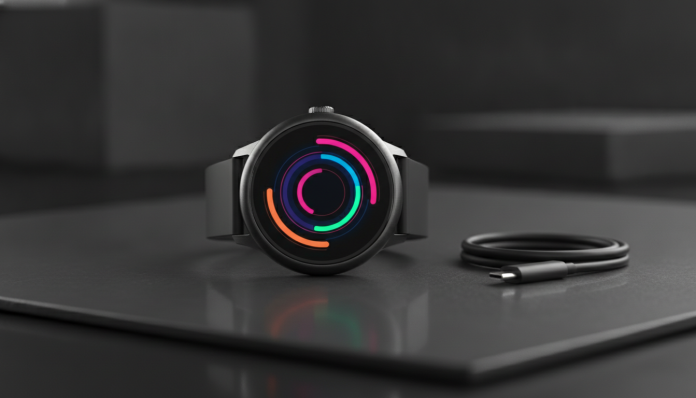

Galaxy Watch 8: does the battery finally deliver?
The Galaxy Watch 8 arrived in 2025 as Samsung’s bet to solidify its main smartwatch in the mid-to-premium segment. With a revised design, new health sensors and promise of improved battery life, the watch generated expectations especially among those who always complained that previous versions didn’t make it through the day with intensive use. The question that appears most in comments and forums is direct: is the battery really good, or did Samsung only improve on paper?
The short answer is: it depends on your usage profile. According to the manufacturer, the 44mm Galaxy Watch 8 has a 425 mAh battery and promises up to 40 hours of autonomy in power-saving mode. In normal use, with AOD (Always-on Display, meaning the screen always on showing time and basic information) enabled, the promise drops to about 24 hours. For those who sleep with the watch and want to track sleep, that means you’ll need to charge it during the day at some point. It’s better than previous versions, but it’s still not that smartwatch you forget on your wrist for two days.
This review is for those sitting on the fence between the Watch 8 and competitors like the Pixel Watch 3 or Apple Watch Series 10, and want to know if it’s worth paying more for a Samsung watch in 2026, with the Watch 8 already in its second year on the market and with more accessible prices than at launch.
Galaxy Watch 8 Specifications
| Specification | Watch 8 (40mm) | Watch 8 (44mm) |
|---|---|---|
| Processor | Exynos W1000 | Exynos W1000 |
| RAM | 2 GB | 2 GB |
| Storage | 16 GB | 16 GB |
| Display | Super AMOLED 1.3″ | Super AMOLED 1.5″ |
| Resolution | 432 x 432 px | 480 x 480 px |
| Battery | 300 mAh | 425 mAh |
| Autonomy (normal use) | ~18 hours | ~24 hours |
| Charging | 10W wireless | 10W wireless |
| System | Wear OS 5 with One UI Watch 6 | Wear OS 5 with One UI Watch 6 |
| Sensors | BioActive (heart rate, ECG, SpO2, blood pressure) | BioActive (heart rate, ECG, SpO2, blood pressure) |
| GPS | Yes, multi-system | Yes, multi-system |
| Durability | 5ATM + MIL-STD-810T | 5ATM + MIL-STD-810T |
| Connectivity | LTE, Wi-Fi 6, Bluetooth 5.3, NFC | LTE, Wi-Fi 6, Bluetooth 5.3, NFC |
| Launch Price (USA) | $299 | $329 |
Specifications per Samsung’s official technical sheet. Prices and availability vary.
Battery: the central point of debate
Samsung changed how it optimizes power consumption in the Watch 8, betting on the Exynos W1000 processor with 3nm manufacturing (nanometers, a measure of transistor size: the smaller, the more efficient). This allowed, according to the manufacturer, real efficiency gains compared to the Exynos W930 used in the Watch 6.
In practice, what does this mean for everyday use? With AOD disabled, notifications arriving normally, a 40-minute workout session with GPS and sleep monitoring, the 44mm Watch 8 should complete a 24-hour cycle comfortably. With AOD enabled, continuous heart rate and SpO2 (blood oxygen saturation) tracking and more intensive app use, that number drops and may not exceed 18 hours. The 40mm model, with a smaller battery, is more limited and suffers more with heavy configurations.
Charging is done wirelessly, using the WPC (qi) standard with power up to 10W. According to Samsung, the watch goes from 0 to 100% in about 85 minutes on the 44mm model. It’s not ultra-fast charging, but it’s functional for those who leave the watch on the dock while showering in the morning. The downside is that the charger doesn’t come in the box in all markets, so check what’s included in the version purchased in Brazil.
Display, design and health sensors
The Super AMOLED screen of the Watch 8 is one of the most praised points by users. AMOLED technology (Active Matrix Organic Light-Emitting Diode) delivers deep blacks and vibrant colors because each pixel emits its own light, without needing backlighting. In bright sunlight, peak brightness ensures comfortable reading of information, important for those using it during outdoor activities.
The design replaced the physical rotating click (that rotating ring present in older models and the Watch Ultra) with a digital touch bezel. Those who loved the tactile feel of the physical ring will find it strange. The aluminum construction with Gorilla Glass DX offers adequate resistance for daily use and even shallow diving, with 5ATM certification (equivalent to 50 meters of water pressure).
BioActive sensors are a real differentiator in Samsung’s ecosystem. Blood pressure monitoring is what gets the most attention, but requires periodic calibration with a conventional sphygmomanometer (that blood pressure device) and is only available in markets with regulatory approval. In Brazil, check the availability of this function in the version certified by Anatel, as some health resources go through local approval before being released.
Software and integration with Samsung ecosystem
Wear OS 5 with Samsung’s One UI Watch 6 layer is arguably the most complete experience on Android smartwatches. Integration with Galaxy smartphones is native and fluid: calls, SMS, Samsung Pay, camera control and Samsung Health synchronization work without additional configuration. But the Watch 8 also works with other Android devices in a more limited way, and is not compatible with iPhone.
Galaxy AI, Samsung’s artificial intelligence system, brought some features to the Watch 8 via update. Sleep analysis with personalized suggestions, physical activity summaries and more contextual health alerts are the highlights. They’re useful features, but they’re not miraculous: they depend on you using the watch consistently so the data makes sense.
The Wear OS app store has expanded significantly in recent years, and today you can find Spotify, Google Maps, Strava and other relevant apps without difficulty. Still, the catalog is smaller than Apple’s watchOS. If you use niche apps on your smartwatch, research beforehand whether they have a Wear OS version.
Pros and cons
Pros:
- Efficient processor that improves battery life compared to previous generations
- Excellent AMOLED display with good readability in strong sunlight
- Set of health sensors among the most complete in the category
- Native and fluid integration with Samsung Galaxy smartphones
- 5ATM durability and military certification for demanding use
- Wear OS 5 with broad app ecosystem
Cons:
- 40mm model battery life is still limited for intensive use
- AOD enabled consumes battery noticeably
- Wireless charger may not be included depending on the version
- Health features like blood pressure measurement need verification for Brazilian availability
- Price still high for those not in Samsung ecosystem
- No iPhone compatibility
Competitors and alternatives in Brazil
| Model | System | Battery Life (manufacturer) | Approximate Price in Brazil |
|---|---|---|---|
| Samsung Galaxy Watch 8 (44mm) | Wear OS 5 | ~24h (normal use) | R$ 1,800 to R$ 2,200 |
| Apple Watch Series 10 (46mm) | watchOS 11 | ~18h | R$ 4,500 to R$ 5,500 |
| Google Pixel Watch 3 (45mm) | Wear OS 4 | ~24h | R$ 2,500 to R$ 3,000 |
| Garmin Venu 3 | Garmin OS | ~14 days | R$ 2,800 to R$ 3,500 |
| Xiaomi Watch S3 | HyperOS Watch | ~12 days | R$ 700 to R$ 900 |
Reference prices in 2026; values vary by store, exchange rate and promotions.
The Garmin Venu 3 is the most different competitor: it has battery that lasts for weeks, but falls short in app ecosystem and Android integration. For those who prioritize autonomy above all, Garmin is the most honest answer. The Pixel Watch 3 is an interesting alternative for Google smartphone users, with a cleaner pure Wear OS experience. Xiaomi delivers unbeatable price, but with a closed ecosystem and less accurate health features according to analyses published by international specialized vehicles.
It’s worth mentioning that when assembling your personal technology setup, choosing a watch often goes hand-in-hand with other peripherals. If you’re researching headphones to complement your daily life, a comparison like JBL Tune 770NC vs Sony WH-CH720N: which is better for home office can help you complete the kit without overspending.
Situation in Brazil: certification, warranty and imports
The Galaxy Watch 8 has versions certified by Anatel for official sale in Brazil, which ensures the device works on local network frequencies, including the LTE version. Samsung warranty in Brazil is 12 months for the official channel. Buying via import can be cheaper, but you lose local warranty, may have issues with region-locked features and face the risk of no local technical support.
In authorized Brazilian stores, the 44mm Watch 8 was being found in the R$ 1,800 to R$ 2,200 range in 2026, already with some price drop from launch. Track the price in major retail networks and marketplaces before closing the deal.
Frequently asked questions about the Galaxy Watch 8
Does the Galaxy Watch 8 battery last all night to track sleep?
It depends on how much battery the watch still has when you go to bed. If you started the day at 100% and used it normally, the 44mm Watch 8 should have enough battery to track sleep. With heavier use during the day, it’s ideal to charge quickly before bed.
Does the Galaxy Watch 8 work with any Android phone?
It works with any Android 10 or higher, but the full experience, with all Samsung Health features and native integration, is exclusive to Samsung Galaxy smartphones. On other Android devices, some features are restricted or unavailable.
Is it possible to use the Watch 8 without a phone to listen to music or pay?
Yes, as long as the model has storage and the LTE version with chip. You can store music locally via Spotify (in offline mode for wearables) and use Samsung Pay on NFC terminals without needing your phone nearby.
Do ECG and blood pressure measurement work in Brazil?
The ECG (electrocardiogram) was available for use in Brazil in previously certified versions, but blood pressure measurement depends on specific Anvisa approval. Check with Samsung Brazil which health features are released in the national version before buying.
Is it worth buying the Galaxy Watch 8 in 2026?
With the watch already in its second year on the market and more accessible prices, the Galaxy Watch 8 becomes an easier purchase to justify than it was at launch. The battery isn’t the best in the category in absolute terms, but it’s sufficient for the day of an average user, and the combination of quality display, robust health sensors and Android integration makes the package quite complete.
If you’re building a Samsung setup and want the best integrated experience with the Galaxy, this is the right watch. Those who sleep with the watch and want worry-free autonomy may be frustrated with the 40mm model. For that profile, it’s worth considering the 44mm model or looking at alternatives with larger batteries, like Garmin models.
Recommended for: Samsung Galaxy smartphone users who want complete health monitoring, native integration and mature software experience, without compromising on premium design.
Price range: R$ 1,800 to R$ 2,200 (44mm, national version); confirm updated values in stores before buying.