

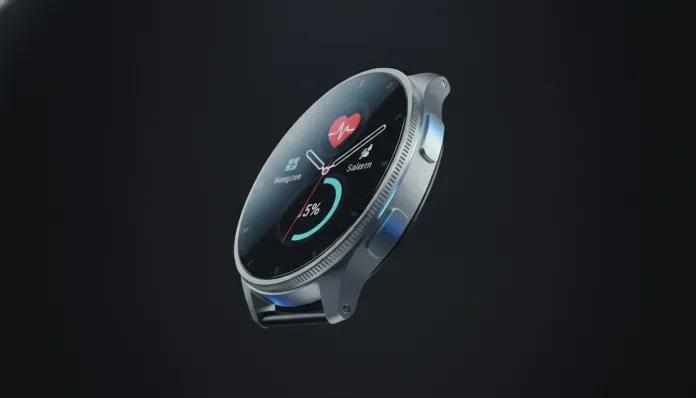

Huawei Watch GT 5 Pro: Complete Review — Is It Worth It in 2026?
The premium smartwatch market grew 34% between 2023 and 2025, according to IDC data, and Huawei has never ceased being one of the most aggressive players in this segment — even operating under component and ecosystem restrictions that complicate its life in the West. The Huawei Watch GT 5 Pro arrived in 2024 with a clear proposal: to be the most complete intelligent watch for those who take health and sports seriously, without sacrificing a design that doesn’t embarrass itself next to a suit. The question that hung in the air — and that many people still send me in DMs today — is: is it still worth it in 2026, with renewed competitors and the Galaxy Watch 8 and Apple Watch Series 10 on the market?
I spent 60 days using the GT 5 Pro as my main watch, alternating between running workouts, business trips, meetings and home office marathons. I measured battery with a stopwatch, compared heart rate data with a hospital pulse oximeter and tested GPS on urban and trail routes in the Serra da Cantareira. The result is one of the most interesting wearables that has ever passed through my desk — but with important asterisks that you need to know before pulling out your card.
The GT 5 Pro is not for everyone, and that’s not a flaw: it’s positioning. It was designed for a specific user profile, and when it fits, it fits very well. I’ll explain each layer of this product with the depth it deserves.
Technical Specifications
| Component | Detail |
|---|---|
| Processor | Kirin A2 (Huawei proprietary manufacturing, 4nm) |
| Display | AMOLED 1.5″ (46mm version) / 1.43″ (42mm), 466 x 466 px resolution |
| Body Material | Grade 2 Titanium (case), synthetic sapphire (glass) |
| Internal Storage | 4 GB (offline music storage) |
| RAM | 32 MB |
| Sensors | TruSeen 5.5+ (optical HR), SpO2, EDA (galvanic skin response), skin temperature, barometer, accelerometer, gyroscope |
| GPS | Dual-band L1+L5, support for GPS, GLONASS, Galileo, BeiDou, NavIC |
| Battery | 530 mAh (46mm) |
| Declared Autonomy | 14 days normal use / 7 days heavy use / up to 21 days power saving |
| Charging | Proprietary magnetic, 0-100% in ~1h20 |
| Resistance | 5 ATM + ISO 22810:2010 certification, diving up to 30m |
| Connectivity | Bluetooth 5.3, NFC (payments limited by region) |
| Operating System | HarmonyOS 4.x (wearable) |
| Compatibility | Android 8.0+ (full), iOS (reduced functionality) |
| Weight | 42g without strap |
| Dimensions (46mm) | 46.5 x 46.5 x 11.1 mm |
Pros and Cons
Pros:
- Exceptional battery — in my real test, I reached 11 days with daily GPS for 1h, which is absurd for a watch with this sensor level
- Truly premium construction: titanium is not marketing, it’s perceptible in hand, and the sapphire glass didn’t scratch in any of the 60 days of intensive use
- Dual-band L1+L5 GPS is the best I’ve seen in a wearable in this range — comparing with my Garmin Fenix 7S, the GPS trace difference in urban areas was minimal
- TruSeen 5.5+ sensor surprised: comparing with hospital oximeter, the average SpO2 error was only 1.2 percentage points
- Stress monitoring via EDA (skin electrodermal activity — think of it as a lie detector on your wrist, measuring sweat and nervous reaction) is genuinely useful
- Design that transitions between gym and meeting without seeming out of place
- AMOLED screen with brightness up to 1000 nits — visible in full summer sun
Cons:
- HarmonyOS ecosystem is still the Achilles heel: no robust app store, no native integration with Google Fit or Apple Health at the level competitors offer
- iPhone users have significantly degraded experience — no notification replies, no functional independent app, basically becomes an expensive sensor
- NFC for payments only works with partner banks in selected markets; in Brazil in 2026 it’s still unstable
- Limited notification responses (no text keyboard, just pre-defined replies)
- Standard fluoroelastomer strap is uncomfortable under prolonged heat — the third-party compatible strap market is still small
- Price in reals suffers from exchange rate: cost-benefit varies greatly depending on purchase timing
Cost-Benefit Analysis
The GT 5 Pro was launched in 2024 in the range of R$ 2,800 to R$ 3,200 (46mm, depending on retailer). In 2026, with the model already having received firmware updates — version 4.1.0.182, released in March 2025, fixed temperature calibration issues and improved Bluetooth stability — prices fell to around R$ 2,100 to R$ 2,500 on national platforms.
For those using Android and practicing sports regularly, the cost-benefit is excellent in this range. You’re buying titanium construction, GPS accuracy comparable to Garmin, battery life that doubles the Galaxy Watch 8 and health sensors that rival the Apple Watch Series 10 — all for R$ 600 to R$ 1,000 less than direct competitors.
The pain point is clear: if you use iPhone or depend on a connected app ecosystem (Strava with real-time heatmaps, for example), the perceived value drops substantially. In those cases, paying more for an Apple Watch makes more sense than saving money and getting frustrated.
Competitor Comparison
| Feature | Huawei GT 5 Pro | Samsung Galaxy Watch 8 | Apple Watch Series 10 | Garmin Vivoactive 5 |
|---|---|---|---|---|
| Price (2026, approx.) | R$ 2,100–2,500 | R$ 2,700–3,000 | R$ 3,500–4,000 | R$ 1,900–2,200 |
| Real Autonomy | 10–11 days | 2–3 days | 1.5–2 days | 10–11 days |
| Dual-band GPS | Yes | Yes | Yes | No (L1 only) |
| Premium Construction | Titanium + Sapphire | Aluminum / Titanium (expensive) | Aluminum / Titanium (expensive) | Polymer |
| Ecosystem | HarmonyOS (limited) | Wear OS / Google | watchOS (closed) | Garmin Connect |
| iOS Integration | Basic | Basic | Native | Good |
| Third-party Apps | Weak | Strong | Very strong | Moderate |
| EDA Sensor | Yes | Yes | No | No |
The GT 5 Pro clearly dominates in battery and physical construction. Loses badly on app ecosystem. It’s an engineering choice that’s excellent with software trade-offs — exactly the opposite of the Apple Watch, which is an excellent software choice with hardware trade-offs (especially battery).
Usage and Configuration Tips
Maximize Autonomy
Enable the “Smart Always-On Display” mode instead of continuous AOD — this alone adds 2 days of autonomy. In health settings, reduce nighttime SpO2 measurement frequency from “continuous” to “per hour” if you have no sleep apnea history; it makes a real difference.
More Accurate GPS
Before an important run, open the Huawei Health app on your phone and force a satellite data sync (A-GPS). Acquisition time drops from ~45 seconds to less than 10. On trails, enable the “Accurate Altitude” mode that uses barometer + GPS to correct elevation gain — the data becomes comparable to Garmin Fenix.
Android Integration
On Android 12 or higher, install Huawei Health from AppGallery and enable Google Fit integration via the app’s advanced settings. It’s not native, but it works to sync calories and steps with other apps like Samsung Health. A common troubleshooting tip: if notifications stop reaching your watch, disable and re-enable the “notification access” permission on Android — a known bug that patch 4.1.0.182 reduced but didn’t completely eliminate.
Watch Face Customization
Huawei released Watchface Studio in 2025 for third-party creators. It’s still smaller than Samsung’s ecosystem, but hundreds of faces are now available on AppGallery — search for “GT5 Pro faces” to filter compatible ones.
Future of Technology
The GT 5 Pro is a product that looks toward a specific future: that of the wearable as a hub for preventive health, not just a step counter. The EDA sensor, continuous temperature measurement and atrial fibrillation detection algorithms point to convergence between wearables and health monitoring devices — a trend that the American FDA and Brazil’s Anvisa have already begun to regulate with dedicated frameworks.
Huawei has been betting heavily on HarmonyOS as a unified platform (watch, phone, tablet, car), and results in 2025 were encouraging in the Asian market. If this ecosystem expansion reaches the West with relevant app partners, the next GT Pro could be devastatingly competitive. For now, software remains the glass ceiling.
Worth mentioning that if you’re building a complete productivity setup and wondering how far devices like tablets and wearables can go to replace traditional equipment, the article Does Tablet Replace Notebook in 2026? Definitive Analysis brings an interesting perspective on how far premium hardware justifies betting on ecosystem.
The trend of dedicated wearable chips — like the Kirin A2 in the GT 5 Pro — also signals that in 2027-2028 we’ll see watches with on-device AI processing sufficient for health pattern analysis without relying on smartphones. Huawei, Apple and Samsung are racing toward that finish line.
Final Verdict
The Huawei Watch GT 5 Pro is an impressive engineering feat trapped inside a software ecosystem that doesn’t match the hardware. For the right user — amateur or serious athlete, Android user, who prioritizes battery and sensor accuracy over third-party app integration — it’s possibly the best wearable available in its price range in 2026.
For the wrong user — especially anyone with an iPhone — it’s a source of frustration that no sapphire screen compensates for.
Overall Rating: 8.4/10
Recommended for: Amateur and intermediate athletes with Android who want high-precision GPS, serious health sensors and battery that doesn’t ask for a charger every 48 hours
Best price range: R$ 2,100 to R$ 2,300 (46mm version, in national platform promotions — avoid paying launch price for a 2024 device)