

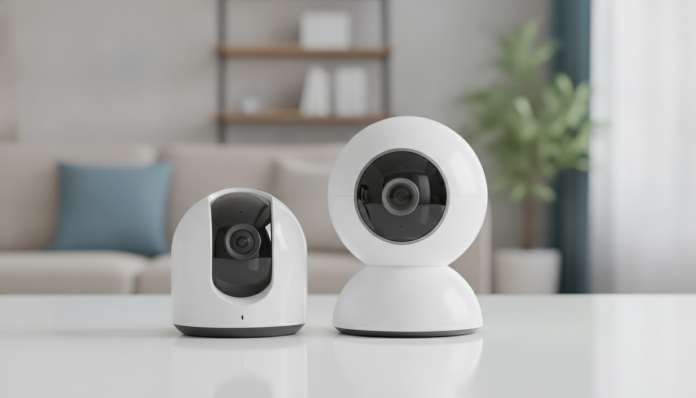

Two cameras that frequently appear in searches for residential security in Brazil, Intelbras IM5 and Tapo C200, occupy a similar space in the market: they are indoor surveillance cameras with Wi-Fi, Full HD resolution and affordable pricing. The question that comes up all the time in comments and tech groups is simple: which one should you buy? The answer depends on where you live, how you plan to use the camera, and how much you want to spend in the long run.
Intelbras is a Santa Catarina-based manufacturer with decades of history in Brazil, which guarantees national support, consolidated Anatel homologation and widespread distribution. Tapo is the camera line from TP-Link, a Taiwanese brand with strong global presence and rapid growth in Brazil, also with products homologated by Anatel. Neither is a wrong choice, but they have slightly different proposals that make all the difference depending on your case.
The short answer: if you already have other Intelbras products at home or prefer 100% national support, go with the IM5. If you want a more polished app, seamless integration with Alexa and Google Home and don’t mind a global ecosystem, the Tapo C200 delivers more for a similar price.
Comparative specifications
| Feature | Intelbras IM5 | Tapo C200 |
|---|---|---|
| Resolution | 1080p Full HD | 1080p Full HD |
| Field of view | 102° | 114° horizontal |
| Horizontal rotation | 355° | 360° |
| Vertical rotation | 90° | 114° |
| Night vision | Up to 10 m (IR) | Up to 10 m (IR) |
| Motion detection | Yes | Yes, with configurable zones |
| Two-way audio | Yes | Yes |
| Local storage | microSD card (up to 128 GB) | microSD card (up to 128 GB) |
| Cloud | iMHDS (Intelbras) | Tapo Care |
| Wi-Fi | 2.4 GHz 802.11b/g/n | 2.4 GHz 802.11b/g/n |
| Voice assistants | Not native | Amazon Alexa, Google Home |
| Anatel homologation | Yes | Yes |
| App | iMHDS / Intelbras iSIC | Tapo |
| Price range (BR, 2026) | R$ 200 to R$ 280 | R$ 180 to R$ 250 |
Prices vary according to retailer and promotions. Always check the official product specifications before purchasing.
Image quality and field of view
Both cameras film in 1080p Full HD, which is sufficient to identify faces and movements within a home environment. The difference starts with the field of view: the Tapo C200 offers 114° horizontal versus 102° for the IM5, which in practice means the C200 covers a slightly larger area with the camera stationary. For large rooms or long hallways, that extra angle makes a difference.
In terms of infrared night vision (IR, technology that uses light invisible to the human eye to illuminate the scene in low light), both manufacturers indicate a range of up to 10 meters. According to official datasheets, neither offers colorful night vision in this entry model, something that appears in cameras from higher tiers of both brands. If colorful night vision is a priority for you, it’s worth looking at models like the Tapo C510W or external cameras from the Intelbras VIP line.
Rotation is another relevant point. Both are PTZ cameras (Pan-Tilt-Zoom, meaning they rotate horizontally and tilt vertically). The C200 has a slight advantage in vertical tilt (114° versus 90° for the IM5), which can help in environments with high ceilings or camera positioned on a low shelf looking upward.
App and daily user experience
Here the difference becomes more evident. The Tapo app is widely praised in the community for being intuitive, having a clean interface and functioning consistently. It also centralizes other TP-Link products (smart plugs, Deco routers), which is helpful if you already use the ecosystem. Integration with Alexa and Google Home is native, without any workarounds, and allows you to see the camera on smart displays or ask Alexa to show the image.
Intelbras’ app has undergone restructuring over the years. iMHDS is the current platform for residential IP cameras from the brand, and it works well for basic functions: live view, playback of recordings on the card and motion notifications. Integration with voice assistants is not native in entry-level models, which can be a negative point for those who already have home automation. If this is important to you, confirm before buying if the model you’re considering has this compatibility, as Intelbras’ portfolio is extensive and versions change.
Storage, cloud and privacy
Both cameras support microSD cards up to 128 GB for continuous recording or motion detection. This is the most economical way to use the product: you buy a card, insert it and that’s it, no monthly fee.
Intelbras offers the iMHDS Cloud service with paid plans for remote clip storage. Tapo has Tapo Care, also with paid plans, but offers a free 30-day clip storage period (confirm the validity of this offer on the official Tapo Brazil website, as promotions may change). For those who don’t want to spend on cloud, both work perfectly with just the card.
In terms of privacy, it’s worth noting that Intelbras is a Brazilian company with servers that, according to the brand, operate in compliance with the LGPD (General Data Protection Law). TP-Link is a company headquartered in Singapore with global operations. If the origin of your data is a concern for you, Intelbras has the advantage of being national. There’s no right answer here, but it’s a factor that some people weigh heavily.
Installation, Wi-Fi and connection stability
Both cameras operate only on 2.4 GHz, which is expected for entry-level cameras. 2.4 GHz has greater range than 5 GHz, but is more congested in buildings with many neighbors. If you have a modern dual-band router, make sure the 2.4 GHz network is separate and has a different name than the 5 GHz, otherwise the camera may have trouble connecting.
If the Wi-Fi signal reaches weakly to the point where you want to install the camera, the problem isn’t with the camera itself. You may need to improve coverage before installing any model. An article on Weak Wi-Fi on the second floor: how to fix it without buying mesh can help diagnose and resolve this without spending much.
Installation of both is simple: you download the app, follow the wizard (configuration assistant) and in less than 10 minutes the camera is online. No technical knowledge required. The Tapo C200 has a slight advantage here because of the more guided app, but the IM5 is also not complicated.
Support, warranty and availability in Brazil
Intelbras offers 1-year warranty with technical support in Portuguese, with technical assistance spread across Brazil. For the consumer who prefers to resolve any problem without depending on imports or international customer service, this is a real and concrete advantage.
The Tapo C200, officially sold in Brazil by TP-Link, also has a 1-year warranty and local support. The product is found in major physical and online stores (Amazon Brasil, Mercado Livre, Magazine Luiza, among others). Anatel homologation is regularized, so there’s no problem with gray imports or risk of blocked products.
Both are readily available. Intelbras has a stronger presence in electrical supplies, security and networking stores, while Tapo dominates more in general e-commerce channels.
Which to choose
For those with homes or apartments with automation already set up in Alexa or Google Home, the Tapo C200 fits better. The app is more refined, integration with assistants is native and the Tapo ecosystem is growing rapidly in Brazil. It’s also the choice for those who want to spend less on the card by taking advantage of the free cloud period.
If you already use Intelbras products (alarm, doorbell, router), it makes sense to maintain the ecosystem and the IM5 fits well in that scenario. Frictionless national Portuguese support is also a plus for less technical users who may need help over the phone.
For small businesses or condominiums that already have a contract with an Intelbras reseller, the IM5 comes with corporate support advantages and integration with DVRs from the brand itself. Tapo is more geared toward the residential user.
Frequently asked questions about indoor security cameras
Does the Tapo C200 work without internet?
Yes, for local recording on microSD card it works without internet after being configured. But to access live view from your smartphone away from home, you need an active connection. The same applies to the Intelbras IM5.
Do I need to pay a monthly fee to use the cameras?
Not necessarily. Both work with microSD card with no subscription required. Cloud plans (Tapo Care and iMHDS Cloud) are optional and are for those who want access to clips even without the card or want remote backup.
Does the camera record 24 hours a day?
It depends on the configuration. Both allow continuous recording or motion detection only. Continuous recording uses more card space, but is safer to not miss any event. A 64 GB card in Full HD on motion detection typically lasts several days before overwriting.
Can I use the camera outside my home?
Neither the IM5 nor the C200 are cameras for outdoor environments. Both lack protection against rain or significant moisture (no appropriate IP certification for outdoor use). For outdoor areas, you need specific models from both brands, such as the Tapo C310 or cameras from Intelbras’ VHD line.