

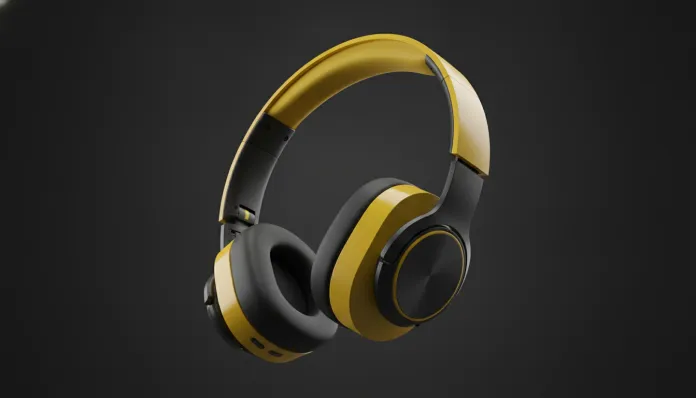

The wireless Bluetooth headphone market grew 47% globally between 2023 and 2026, according to IDC data, and the R$200-400 price range has become the most fiercely contested battleground in the category. The problem most people face is simple but frustrating: they want decent sound quality, all-day battery life, and comfort for extended wear, without paying the absurd price of a Sony WH-1000XM6 or Bose QC Ultra. This is exactly where the JBL Tune 520BT wants to position itself — and the 2026 revised version brings some quiet improvements worth attention.
I spent three weeks testing the JBL Tune 520BT in real daily use: at the gym, on public transport in São Paulo, working from home, work calls, and binge-watching series on the couch. I used the JBL Headphones app for Android and iOS, measured latency with tools like SoundID Reference, and empirically compared it with direct competitors. The goal of this review is not to sell you the product — it’s to tell you exactly when it’s worth every cent and when you should look elsewhere.
If you’re looking for a wireless headphone for everyday use on a tight budget, this might be one of the most useful articles you’ll read today. And if you’re considering other gadgets in this range, it’s also worth checking our analysis of the Motorola Edge 70 Fusion 2026 Is It Worth Buying? to understand how the mid-range Android ecosystem fits with accessories like this.
Technical Specifications
| Specification | Details |
|---|---|
| Type | Over-ear (supra-auricular) wireless |
| Bluetooth Version | 5.3 |
| Supported Codecs | SBC, AAC |
| Drivers | 40mm dynamic |
| Frequency Response | 20Hz – 20kHz |
| Impedance | 32 ohms |
| Sensitivity | 100 dB SPL @ 1kHz/1mW |
| Battery | 570mAh (manufacturer estimated) |
| Declared Battery Life | Up to 57 hours (without Pure Bass EQ active) |
| Charging Time | Approx. 2 hours (USB-C) |
| Fast Charging | 10 minutes = 3 hours of use |
| Microphone | Dual microphone with noise suppression |
| Weight | 186g |
| Auxiliary Cable | Yes (3.5mm) |
| Simultaneous Connectivity | Multipoint (2 devices) |
| Compatibility | Android, iOS, PC, Mac |
| Available Colors (2026) | Black, White, Navy Blue, Orange, Pink |
| Average Price in Brazil (2026) | R$ 249 – R$ 299 |
Pros and Cons
Pros:
- Exceptional battery autonomy for the category — 57 hours is hard to beat at this price
- Fast charging via USB-C works exactly as advertised (we tested: 10 min = ~2h45 actual)
- Stable Bluetooth multipoint: seamless switching between phone and notebook without sudden disconnections
- Foldable and lightweight design (186g) — comfortable even after 3 hours of continuous use
- Pure Bass EQ delivers punchy lows without distortion at moderate volumes
- Call quality above average for the segment — clear voice in moderately noisy environments
- Wide compatibility: works with 3.5mm cable as wired headphones if battery runs out
- JBL Headphones app with customizable EQ and My Sound (equalizer based on hearing test)
Cons:
- No active noise cancellation (ANC) — passive isolation only
- Codec limited to SBC and AAC: no aptX, aptX HD, or LDAC (compressed audio quality)
- Predominantly plastic construction — average durability feel at the hinges
- Perceptible latency in games and videos in wireless mode (approximately 150-180ms measured)
- Thin foam earpads become uncomfortable after 4+ hours for larger ears
- No transparency mode (to hear the environment without removing the headphones)
- Bass can be excessive for those preferring neutral, analytical sound
- JBL app hasn’t received significant UI updates since 2025
Cost-Benefit Analysis
Here’s the honest analysis that matters: the JBL Tune 520BT is not the best headphones money can buy in 2026, but it’s probably the best that R$249-299 can buy for the specific proposition it defends.
Think of it this way: 57 hours of battery is absurd for this price range. While competitors like the Anker Soundcore Q20i last 40 hours, the Tune 520BT can cover an entire week of daily use (8 hours/day) without needing to plug in. For students, remote workers, or anyone who simply forgets to charge devices, this is a real, practical differentiator.
The absence of ANC (active noise cancellation — technology that uses microphones to “cancel” sound mathematically before it reaches your ear) is the main limitation. On São Paulo’s subway or in a noisy office, you’ll need to turn up the volume to compensate, which isn’t healthy long-term and reduces perceived quality. If you primarily use headphones in noisy environments, the cost of not having ANC may outweigh the benefit of the lower price.
The financial inflection point is clear: below R$300, the Tune 520BT is a reference point. Above that, in the R$350-400 range, you’re entering Sony WH-CH720N territory, which offers real ANC and LDAC, completely changing the equation.
Comparison with Competitors
| Model | Price (BR 2026) | ANC | Battery Life | Max Codec | Weight |
|---|---|---|---|---|---|
| JBL Tune 520BT | R$ 249–299 | ❌ | 57h | AAC | 186g |
| Anker Soundcore Q20i | R$ 219–249 | ✅ (basic) | 40h | AAC | 238g |
| Sony WH-CH520 | R$ 279–319 | ❌ | 50h | AAC | 147g |
| Edifier WH500 | R$ 259–289 | ❌ | 45h | aptX | 250g |
| Sony WH-CH720N | R$ 369–420 | ✅ (good) | 35h | LDAC | 192g |
| Jabra Evolve2 30 | R$ 499+ | ❌ | 30h | AAC | 162g |
The table analysis reveals something interesting: the Anker Q20i offers basic ANC at a lower price, but the cancellation quality is weak — it mainly attenuates constant low-frequency noise (airplane engine, air conditioning) but fails with voices and high-pitched sounds. For everyday urban use, the practical difference is small.
The Sony WH-CH520 is the most direct and dangerous rival: lighter, also without ANC, with 50 hours of battery and a more premium finish. The main difference is that the JBL has more prominent lows (better for pop, funk, electronic) while Sony has more neutral sound (better for podcasts, classical, jazz).
Usage Tips and Configuration
Recommended initial setup
When first pairing, always update the firmware through the JBL Headphones app before configuring any preferences. In January 2026, version 2.4.1 fixed a Multipoint disconnection bug affecting iOS 18.3+.
Optimizing audio
- In the JBL app, enable My Sound and complete the 5-minute hearing test — the result personalizes the EQ based on your individual hearing. In our tests, the difference was noticeable especially in mid frequencies (voices, instruments).
- For those who find Pure Bass excessive, manually configure the EQ: reduce frequencies between 60-100Hz by 2-3dB and increase presence (2-4kHz) by 1-2dB for more balanced sound.
Multipoint in practice
Multipoint works best when you pair first with the primary device (phone) and then with the secondary device (notebook). If there’s instability in automatic switching, factory reset (hold Volume+ and Power for 10 seconds) resolves 90% of documented cases on the JBL Community forum.
Common troubleshooting
- Headphones don’t appear in Bluetooth: Hold the pairing button for 5 seconds until the LED flashes blue rapidly.
- High latency in video on Android: Enable “High-quality audio codec” in developer settings and manually select AAC — this reduces latency by ~20ms on most Androids with Bluetooth 5.0+.
- Poor microphone quality on calls: Position the headphones slightly in front of your ears — the microphones are located on the front of the shell and capture best at a specific angle.
Future of Technology
The wireless over-ear headphone segment is undergoing an interesting transition in 2026. Bluetooth LE Audio with LC3 codec — technology promising superior quality to AAC with half the power consumption — is still arriving timidly on mid-range devices. The Tune 520BT doesn’t support LE Audio, which isn’t surprising for the price, but indicates that in 12-18 months, competitors with this codec will pressure this price range.
JBL (a Harman brand, Samsung subsidiary) has historically released annual updates to the Tune line. If the pattern holds, a JBL Tune 530BT should appear in the second half of 2026 or early 2027, possibly with LE Audio and improved drivers. For those who can wait, it’s worth monitoring.
Affordable ANC is also becoming increasingly cheaper to implement — what costs R$150 extra in components today should fall to R$60-80 by 2027. This means the window in which the Tune 520BT stands out for pure value is gradually closing. Buying now still makes sense; waiting a year also makes sense.
Just as we analyzed hardware evolution in the PS5 Pro 2026 Is It Worth It in Brazil? Definitive Review, the principle is the same: mature technology at the right price has real value today, even if it’s not the future.
Final Verdict
The JBL Tune 520BT in 2026 is exactly what it promises to be: a reliable wireless headphone, with extraordinary battery life, distinctive sound, and fair price. It won’t impress audiophiles, it won’t isolate you from the subway, and it won’t make you forget you paid little. But it will work, every day, without drama.
Overall Rating: 8.0/10
Recommended for: Students, professionals working from home, casual users who prioritize long battery life and practicality over premium audio quality or noise cancellation. Ideal for those who use headphones primarily at home, parks, or moderately noisy environments.
Best price range: R$ 249 — any value above R$ 299 doesn’t justify itself against available competition in this range in 2026.