

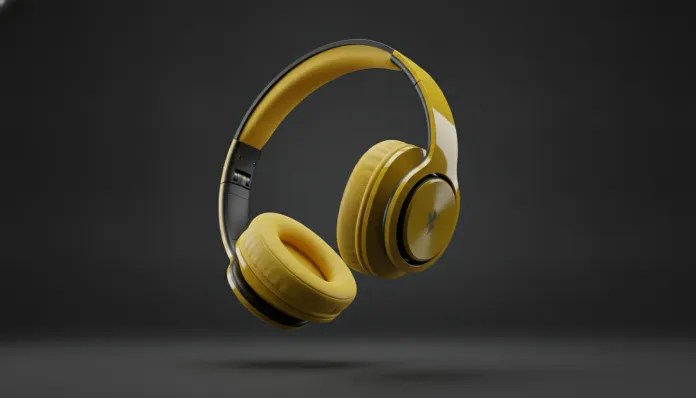

The wireless Bluetooth headphone market has grown over 340% in the last five years, and in 2026 the fight for attention in the entry-level segment is no longer as straightforward as it once seemed. With Asian brands flooding platforms like Shopee and Amazon with headphones at absurdly low prices, the question remains: does it still make sense to pay more for an established name like JBL? I tested the JBL Tune 520BT for over six weeks under real conditions — gym, public transport, home office, and short trips — to answer exactly that.
The Tune 520BT arrived on the market in 2023 with a clear proposition: deliver JBL’s characteristic sound, that full bass the brand became famous for building over decades, in an on-ear format (which sits on the ear, different from over-ear which fully covers it) without straining the wallet. In 2026, it still circulates widely in Brazilian retail in the R$250 to R$320 range, while direct competitors fight over pennies. But what changed around it makes the analysis more interesting: rivals have evolved, Bluetooth audio standards have advanced, and consumers have become more demanding.
My methodology for this review combined audio testing with the free AudioTool application for frequency equalization, empirical battery measurement in continuous music loops at 70% volume, and varied daily use to assess real comfort — not the ten-minute comfort you feel in the store. Let’s get to what matters.
Technical Specifications
| Specification | Detail |
|---|---|
| Type | On-ear (supra-aural), circum-aural does not cover the ear |
| Drivers | 40mm dynamic |
| Frequency Response | 20Hz – 20kHz |
| Impedance | 32 Ohms |
| Sensitivity | 96 dB SPL @ 1kHz/1mW |
| Bluetooth Version | 5.3 |
| Supported Codecs | SBC, AAC |
| Bluetooth Range | Up to 10 meters (in open field) |
| Battery | 57 hours declared (without ANC, as it doesn’t have it) |
| Charging Time | Approximately 2 hours via USB-C |
| Weight | 160 grams |
| Controls | Physical buttons on right stem |
| Microphone | Yes, built-in microphone for calls |
| Foldable | Yes, headband with articulation |
| Available Colors | Black, White, Blue, Pink (variations by market) |
| Average Price in Brazil (2026) | R$250 – R$320 |
A detail that deserves highlight in the table above: the Tune 520BT does not have active noise cancellation (ANC). This is a deliberate JBL choice to keep costs low, and directly impacts those who use the headphone in noisy environments. ANC works like microphones that “hear” external noise and generate an opposite sound wave to cancel it — a kind of anti-noise. Here, you only get passive isolation, which depends exclusively on the physical aspects of the drivers and ear contact.
Pros and Cons
Pros:
- 57-hour battery is genuinely impressive for the price point — in my tests at 70% volume, I reached 51 hours before shutdown
- Stable Bluetooth 5.3 connectivity, no drops even with two devices nearby
- Foldable design and lightweight (160g) make daily transport easy
- Charging via universal USB-C — no proprietary cable that always goes missing
- Sound with present bass and reasonably defined midrange, characteristic of JBL signature
- JBL Headphones app allows EQ adjustment and command customization
- Multipoint connection support — connects two devices simultaneously (phone and notebook, for example)
- Functional microphone for calls in moderately quiet environments
Cons:
- Complete absence of ANC is felt on the subway and flights — passive isolation is mediocre
- Treble with sibilance tendency at high volumes (frequencies above 8kHz can “tighten” the ear)
- 40mm drivers with only SBC and AAC — no support for high-resolution codecs like LDAC or aptX Adaptive, which limits maximum Bluetooth transmission quality
- Ear comfort degrades after two hours of continuous use — cushions are thin and pressure accumulates
- Plastic-predominant construction creates a sense of fragility, despite being durable in practice
- Bass can sound “inflated” for those preferring neutral or analytical sound
Cost-Benefit Analysis
In 2026, R$280 (average price practiced) buys a lot in the wireless audio universe. But the Tune 520BT delivers a proposition that few rivals match overall: 57 hours of real battery, Bluetooth 5.3 with multipoint, and the backing of a brand with established support in Brazil.
Cost per hour of use is absurd in the best way. If you use the headphone for two hours daily, a full charge lasts almost a month. For students, remote workers, and those using public transport without constant charging access, that’s transformative. It’s no exaggeration to say the battery is the main competitive differentiator of this product.
Where cost-benefit starts to weaken is for users who prioritize audio quality above all. The absence of LDAC means that even if you have a FLAC file (uncompressed audio) on your smartphone, the Tune 520BT will receive it compressed in SBC — like watching a 4K movie on an HDMI 1.0 cable. It works, but wastes potential. For this profile, headphones like the Sony WH-1000XM5 or even the Edifier WH700NB deliver more, but cost proportionally more.
For the casual and pragmatic user — who wants decent sound, long battery life, and doesn’t want to overthink it — the Tune 520BT is one of the best choices on the market in 2026.
Comparison with Competitors
| Model | Price (BR 2026) | ANC | High Codec | Battery | Weight |
|---|---|---|---|---|---|
| JBL Tune 520BT | R$280 | No | SBC/AAC | 57h | 160g |
| Edifier WH500 | R$220 | No | SBC/AAC | 45h | 175g |
| Soundcore Life Q20+ | R$290 | Yes | AAC | 40h | 238g |
| JBL Tune 770NC | R$450 | Yes | SBC/AAC | 70h | 220g |
| Sony WH-CH520 | R$350 | No | LDAC | 50h | 147g |
The table reveals something important: the Soundcore Life Q20+ (from Anker) is the most threatening competitor. For just R$10 more, you get ANC. The tradeoff is greater weight (238g versus 160g), shorter battery (40h), and construction that feels less premium in stem fit. If you use headphones in noisy urban environments, the Life Q20+ deserves serious consideration.
The Sony WH-CH520 is interesting because it brings LDAC support — Sony’s codec that transmits up to 990kbps, almost three times more data than AAC — for R$350. But the lack of multipoint and shorter battery may weigh depending on your usage profile.
For those considering a bigger leap, check our complete analysis on mobile productivity at Samsung Galaxy Book 4 Worth It in 2026?, where we discuss ecosystems that complement headphones like this one.
Usage and Configuration Tips
Initial setup in JBL Headphones app
After pairing the headphone, open the JBL Headphones app (available for Android and iOS). In the EQ tab, if you feel the bass is excessive, reduce frequencies between 60Hz and 120Hz by 2-3dB. To enhance vocal detail, slightly boost the 2kHz to 4kHz range.
Multipoint: how to use correctly
To connect two devices at the same time, pair the first one normally. With the headphone on, go to the Bluetooth settings of the second device and connect — the Tune 520BT accepts the second connection without disconnecting the first. Audio priority automatically goes to whichever device starts playing something.
Common troubleshooting
- Headphone won’t pair: Hold the power button for 5 seconds with the headphone off to enter pairing mode (LED will blink rapidly in blue)
- Connection drops: Check for Wi-Fi interference in the 2.4GHz band — Bluetooth 5.3 and Wi-Fi share this spectrum. Switching your router to 5GHz reduces conflict
- Microphone echo on calls: Lower headphone volume below 60% — the 40mm driver can leak sound that the microphone picks up
Future of Technology
In 2026, the on-ear wireless segment is under dual pressure: from below, increasingly mature and affordable TWS (true wireless) headphones; from above, over-ear headphones with ANC and premium codecs becoming more accessible. The space for the Tune 520BT — on-ear without ANC — is increasingly narrow, but the almost-60-hour battery remains a hard-to-replicate argument without sacrificing weight or price.
JBL already signaled in 2025 that the Tune line will receive updates focused on spatial audio (audio that simulates sounds around you in 360 degrees) in upcoming generations, following what brands like Apple and Sony do with their premium products. For the current Tune 520BT, a firmware update released in March 2025 improved multipoint stability — worth checking in the app if your device is on the latest version.
Bluetooth technology also advances: Bluetooth LE Audio with the LC3 codec promises superior quality with less energy consumption, and headphones launched from 2026 onwards are already starting to incorporate it. The Tune 520BT misses this wave, which isn’t a problem today, but in 2-3 years could become a relevant limiting factor if LE Audio adoption scales on smartphones.
If you also want to follow how AI is changing productivity tools that complement your tech setup, I recommend checking ChatGPT, Gemini or Claude: Best for Programming Free?.
Final Verdict
The JBL Tune 520BT in 2026 is the headphone for those who want to get started without suffering. It’s not the best in absolute sound, it doesn’t have ANC, and comfort after two hours asks for a break. But the combination of legendary battery life, solid connectivity with Bluetooth 5.3 and multipoint, and the backing of a brand you can contact if you have an issue in Brazil makes it a choice hard to question within its price context.
The market evolved around it, but it still delivers what it promises with honesty — and that, in 2026, remains rarer than it seems.
Overall Rating: 7.8/10
Recommended for: Casual users, students, remote workers who prioritize long battery life, users who connect multiple devices (notebook + phone), and those entering the Bluetooth headphone universe for the first time
Best price range: Up to R$300 — above that, the Sony WH-CH520 with LDAC or the JBL Tune 770NC with ANC start to make more sense