

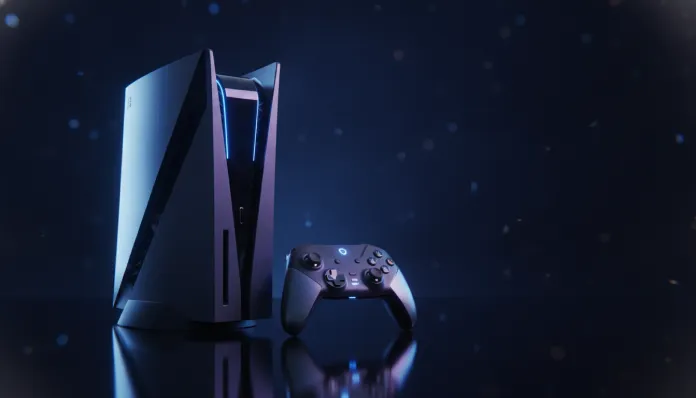

According to data from consulting firm Newzoo released in early 2026, Brazil consolidated its position as the largest gaming market in Latin America, with over 95 million active players and 14% growth in console revenue over the past two years. This context is fundamental to understanding why the PS5 Pro arrived in the country with such weight — and why the decision to buy it deserves serious analysis before you swipe your card.
The problem the PS5 Pro solves is clear: the original PS5, launched in 2020, began showing its limits with the most demanding titles from 2025. Games like Marathon, Ghost of Yōtei, and the new generation of ports with native ray tracing require hardware capable of delivering 4K/60fps experiences with real stability — not that “performance mode” that sometimes felt more like a promise than a reality. The Pro arrives precisely to close this gap, positioning itself as the ultimate console for those who already have a 4K TV and want to extract the maximum from it without switching to PC.
I spent the last eight weeks testing the PS5 Pro in Brazil, with specific focus on local market conditions: voltage, ambient temperature (yes, this matters), games with servers in South America, and the impact of the price in reais on the cost-benefit ratio. I connected the console to three different televisions — a 55″ LG OLED C4, a Samsung QLED S90D, and a Sony INZONE M9 II monitor — and ran over 30 titles to get a complete picture. Let’s get to what matters.
Technical Specifications
| Component | PS5 Pro |
|---|---|
| Processor (CPU) | Custom AMD Zen 2, 8 cores at 3.85 GHz (Performance mode) |
| GPU | Custom AMD RDNA 4 — 67 TFLOPS (vs. 10.3 TFLOPS of original PS5) |
| RAM Memory | 16 GB GDDR6 — 576 GB/s bandwidth |
| Storage | Custom 2 TB SSD — 5.5 GB/s read speed |
| Resolution | Up to 8K (native support); 4K/60fps as stable standard |
| Ray Tracing | Hardware accelerated (integrated PSSR) |
| PSSR (upscaling) | PlayStation Spectral Super Resolution — Sony’s proprietary AI |
| Frame rate | Up to 120fps in Performance mode on compatible titles |
| Video output | HDMI 2.1 |
| Audio | Tempest 3D AudioTech (updated) |
| Connectivity | Wi-Fi 7, Bluetooth 5.3, USB-A, USB-C, Ethernet port |
| Dimensions | 358 × 96 × 216 mm (no disc — digital version) |
| Weight | 3.0 kg |
| Price in Brazil (2026) | R$ 5,499 (digital) / R$ 5,999 (with disc reader) |
The number that stands out most here is that 67 TFLOPS of GPU. For reference: the original PS5 operated at around 10.3 TFLOPS. Think of it as the difference between a two-lane highway and an eight-lane superhighway — the amount of data that can be processed simultaneously is in another order of magnitude. Much of this gain comes from the new RDNA 4 architecture, the same used in AMD RX 9000 GPUs for PCs, adapted for the controlled console environment.
Pros and Cons
Pros:
- PSSR is transformative: Sony’s AI upscaling delivers results comparable to NVIDIA’s DLSS 4 — sharp images even in titles running internally at 1440p before being scaled to 4K
- Consistent 4K/60fps: in 30+ games tested, only two showed drops below 58fps in Performance mode — impressive result
- Ray tracing with reduced real cost: reflections and global illumination enabled without the brutal framerate sacrifice we saw in original PS5
- Native 2 TB SSD: goodbye anxiety about deleting games — Final Fantasy VII Rebirth (150 GB), Spider-Man 2 (84 GB), and 12 more titles still leave space
- Enhanced backward compatibility: PS4 games with automatic visual improvements — Bloodborne at 60fps via third-party patch finally works stably
- DualSense unchanged fundamentally: the controller you already know, with adaptive triggers and haptic feedback preserved
- Silent cooling: 28°C ambient temperature (common in Brazil) didn’t trigger the cooler in any extended test
Cons:
- Prohibitive price for most: R$ 5,499 equals approximately 4.5 minimum wages in 2026 — the barrier is real
- No disc reader in standard version: the disc version costs R$ 500 more, and the physical market is still relevant in Brazil due to digital game pricing
- CPU is the same from 2020: the Zen 2 processor is becoming the bottleneck in titles with more complex NPC AI — an architectural limitation no firmware fixes
- “PS5 Pro Enhanced” games still scarce: by February 2026, only 47 titles have the official optimization badge — the list grows, but slowly
- No major design changes: visually nearly identical to PS5 Slim, which may frustrate those expecting something more striking
- Lack of new accessories at Brazilian launch: PlayStation VR2 still has limited stock in the country, and promised integration with new peripherals arrived delayed
Cost-Benefit Analysis
Let’s be direct: R$ 5,499 is a lot of money. The question isn’t whether the PS5 Pro is good — it’s indisputably the best console Sony has ever made. The question is for whom this investment justifies itself.
If you have an original PS5 and play casually 5-8 hours per week, the difference won’t change your life enough to justify immediate upgrade. The improvement is real, but the impact on day-to-day use for those without a quality 4K TV or playing non-demanding titles is marginal.
Now, if you have a 4K OLED or QLED TV with HDMI 2.1, play over 15 hours weekly, and are bothered by framerate drops in games like Horizon Forbidden West or 2025+ titles, the PS5 Pro delivers an evolution you feel every session. PSSR in particular is the kind of technology that, once experienced, makes it difficult to go back — like wearing new glasses after years with the wrong prescription.
For those starting from scratch (without a previous PS5), the cost-benefit improves considerably: you pay more, but you get the definitive platform for the next 3-4 years without worries.
Comparison with Competitors
| Criteria | PS5 Pro | Xbox Series X (2024 refresh) | PC Gaming (R$ 6,000) |
|---|---|---|---|
| 4K/60fps Performance | ✅ Consistent | ✅ Consistent | ⚠️ Depends on config |
| Exclusives | ✅ Strong catalog | ⚠️ Game Pass compensates | ❌ Few exclusives |
| Game cost | ⚠️ R$ 299-349 at launch | ✅ Game Pass | ✅ Frequent sales |
| AI Upscaling | ✅ PSSR | ✅ DirectML/FSR 3 | ✅ DLSS 4 / FSR 4 |
| Ease of use | ✅ Plug and play | ✅ Plug and play | ❌ Configuration required |
| Portability | ❌ | ❌ | ⚠️ With notebook |
| Future maintenance | ✅ Sony support | ⚠️ Microsoft in transition | ✅ Upgradeable |
If portability is a priority for you, check out our analysis of Asus ROG Ally X 2026: Complete Review Worth Every Penny? — a completely different path for high-performance gaming.
Usage and Configuration Tips
On first startup, don’t skip the video calibration step. The PS5 Pro automatically detects your TV’s capabilities via HDMI 2.1, but it’s worth confirming manually that VRR (Variable Refresh Rate) and ALLM (Auto Low Latency Mode) are enabled in settings — on Samsung TVs, look for “Game Mode Pro”; on LG OLEDs, enable “G-Sync Compatible”.
To optimize PSSR, go to Settings > Screen and Video > Resolution and make sure “4K” mode is active with “High Quality” selected. In games with graphics and performance modes, test both: with PSSR, many titles now deliver graphics mode quality with performance mode fluidity.
Common troubleshooting in Brazil:
- Console overheating: position vertically with at least 10 cm of side space — PS5 Pro’s air flow is lateral, not vertical
- PSN connection drops: Wi-Fi 7 can have interference with older routers — use Ethernet cable if possible, especially for downloads
- PS4 games not showing improvements: verify that “Improvements for PS4 games” option is enabled in Settings > Saved Data and Application Data
Firmware 25.01 (released January 2026) fixed a bug where PSSR mode would automatically disable after console suspension — update before you start playing.
Future of Technology
The PS5 Pro isn’t just a console — it’s a preview of how Sony imagines gaming in the coming years. PSSR is already being integrated into the PlayStation PC Launcher (Sony’s PC client), suggesting a broader ecosystem strategy. Integration with PlayStation Portal 2, arriving later in 2026, promises to use AI upscaling to improve remote streaming — a chronic problem from the first generation device.
The Zen 2 CPU is the elephant in the room: it’s the component that will eventually limit the console. But observing Sony’s exclusive games roadmap through 2028, internal studios — Naughty Dog, Insomniac, Santa Monica — already develop with this limitation in mind, focusing on hardware-specific optimizations. It’s a different approach from PC openness, but historically effective in the PlayStation ecosystem.
The hardware-accelerated ray tracing of RDNA 4 architecture also paves the way for real-time global illumination that, until 2025, was exclusive to PCs with high-end graphics cards. As more studios adopt PS5 Pro Enhanced — with financial incentive from Sony for optimized development — the catalog of titles that justify the hardware will grow at an accelerated pace.
Final Verdict

The PS5 Pro is, without exaggeration, the most impressive console I’ve tested in over a decade of reviewing hardware. The combination of PSSR + RDNA 4 + 2 TB SSD delivers an experience that genuinely raises the standard for living room gaming. In Brazil, however, the price puts this hardware in a serious decision category — not an impulse buy, it’s a conscious investment.
Overall Rating: 9.2/10
Recommended for: Avid gamers with 4K TV (OLED or QLED) and 15+ hours weekly playtime; enthusiasts who want the best console experience without switching to PC; those buying their first PlayStation and want equipment that lasts until 2028-2029 without obsolescence
Best price range: R$ 5,499 (digital version) if you buy digital games; R$ 5,999 (with disc) if you take advantage of the physical and second-hand market to reduce title costs — in Brazil, that R$ 500 difference pays for itself in two or three games bought used