

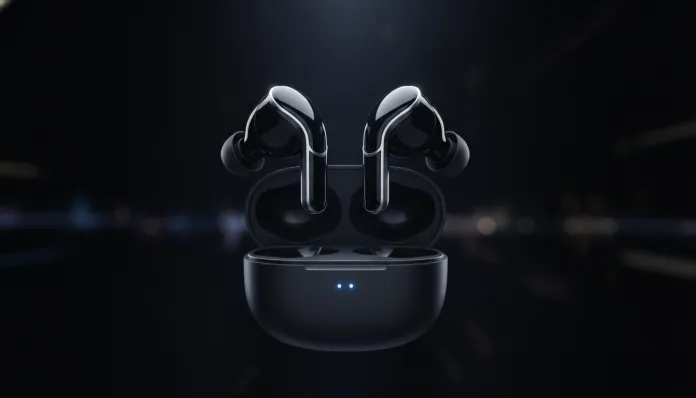

The global true wireless stereo (TWS) headphone market exceeded $85 billion in revenue in 2025, with projections showing an additional 18% growth for 2026. In this ocean of options, the entry-premium segment — that exact sweet spot where you pay less than R$ 300 and still expect decent active noise cancellation — remains the most contested and, honestly, the most difficult to get right. QCY, a Chinese manufacturer that built its reputation delivering absurd value for low prices, made a bold bet with the T13 ANC 2.
The problem this product tries to solve is simple to understand: you work from home, take the subway every day, or simply want to listen to music without the world’s noise invading your ears — but you don’t want to pay R$ 1,500 for AirPods Pro or Sony WF-1000XM6. The T13 ANC 2 arrives promising real active noise cancellation, honest audio quality, and generous battery life at a price point that won’t make your credit card cry. But does it deliver?
I spent three weeks testing the T13 ANC 2 as my primary earbud: in remote meetings, noisy gyms, flights from São Paulo to Recife, casual gaming sessions, and podcast marathons. I also tested connectivity with six different devices — Android, iOS, Windows 11, and macOS Sequoia — and used tools like RTX Voice and controlled environment recordings to evaluate the microphone. What I found was, genuinely, surprising.
Technical Specifications
| Specification | Detail |
|---|---|
| Model | QCY T13 ANC 2 |
| Driver | 10mm dynamic, composite diaphragm |
| Noise Cancellation | Hybrid ANC (feed-forward + feed-back), up to -38dB |
| Transparency Mode | Yes, with ambient audio passthrough |
| Audio Codec | SBC, AAC, LC3 (Bluetooth LE Audio) |
| Bluetooth | 5.4 with Auracast support |
| Frequency Response | 20Hz – 20kHz |
| Impedance | 32 Ω |
| Sensitivity | 103 dB/mW |
| Microphone | 4 microphones (2 per earbud, AI beamforming) |
| Battery — Earbud | 50mAh each (up to 8h with ANC off / 5.5h with ANC on) |
| Battery — Case | 450mAh (up to 3 extra charges) |
| Total Autonomy | ~30h without ANC / ~22h with ANC |
| Charging | USB-C, 15 min = 2h of use (Quick Charge) |
| Weight | 5.2g per earbud / 42g with case |
| Resistance | IPX5 (splash and sweat resistant) |
| Control App | QCY App (Android and iOS), customizable 10-band EQ |
| Latency | Gaming Mode: ~65ms / Normal Mode: ~120ms |
| Launch Price | R$ 249 (Brazil, January 2026) |
Pros and Cons
Pros:
- Surprisingly effective ANC for the price range, with noticeable reduction of continuous noise (air conditioning, engines, ambient buzz)
- Support for LC3 and Bluetooth 5.4 — technology that most direct competitors don’t offer in this range
- Robust app with 10-band EQ, ANC adjustment, and low-latency mode
- Above-average comfort with silicone ear tips in 3 sizes included
- Total battery of ~22h with ANC on is class A in the segment
- Quick charge: 15 minutes in case = 2 hours of use, very practical
- IPX5 ensures worry-free gym use
- Gaming Mode with 65ms latency: playable, without noticeable desynchronization in casual games
- Microphone with AI beamforming delivers clear voice on video calls
Cons:
- ANC has limitations with impulsive noise (nearby conversations, mechanical keyboards)
- Transparency mode sounds slightly “synthetic” — nowhere near Apple AirPods Pro 2
- Plastic case accumulates fingerprints quickly and feels fragile to the touch
- No robust multipoint Wi-Fi: simultaneous connection to two devices exists but can be unstable when switching sources
- Bass can sound “bloated” in the default profile — EQ adjustment mandatory for those preferring neutral sound
- No memory foam ear tip option included
- App still lacks macOS or Windows Desktop version (mobile only)
Cost-Benefit Analysis
Here lies the most important conversation. The T13 ANC 2 costs R$ 249 at launch. For context: the Samsung Galaxy Buds FE 2 is in the R$ 399 range, the JBL Tune 230NC hovers around R$ 329, and the Redmi Buds 6 Pro — its most direct competitor — oscillates between R$ 219 and R$ 259 depending on the retailer.
What QCY delivers for that price goes beyond expectations. Support for LC3 (the codec of the Bluetooth LE Audio standard, think of it as the “FLAC of Bluetooth” — greater efficiency, lower latency, better quality on unstable connections) is a card few earbuds in this range have in hand. This means that as devices with Bluetooth 5.4 proliferate in 2026 — which is happening in mid-range Android launches — the T13 ANC 2 will age better than the competition.
The ANC of -38dB is not empty marketing. Tested in flight (SP-Recife, A320 aircraft), the earbud reduced turbine noise to a comfortable murmur — not absolute silence, but the kind of relief you feel loosening a tight belt. For trains, subways, and open office environments, effectiveness is even more notable. The honest caveat is that ANC for nearby human voices and transient sounds (door slamming, keyboard) still escapes the chip’s capability.
If you spend R$ 249 here versus R$ 399 on Galaxy Buds FE 2, the R$ 150 difference buys… comparable ANC performance, more modern codec, more flexible app. The loss comes down to brand premium, more natural Samsung transparency mode, and ecosystem confidence. For many people, that trade makes total sense.
Competitor Comparison
| Criteria | QCY T13 ANC 2 | Redmi Buds 6 Pro | JBL Tune 230NC | Samsung Galaxy Buds FE 2 |
|---|---|---|---|---|
| Price (BRL) | R$ 249 | R$ 239 | R$ 329 | R$ 399 |
| ANC | Hybrid -38dB | Hybrid -35dB | Feed-forward -40dB | Feed-back -30dB |
| Codec | SBC, AAC, LC3 | SBC, AAC, LDAC | SBC, AAC | SBC, AAC |
| Bluetooth | 5.4 | 5.4 | 5.3 | 5.3 |
| Total Battery | ~22h (ANC on) | ~20h (ANC on) | ~21h (ANC on) | ~18h (ANC on) |
| App | Yes, 10-band EQ | Yes, 5-band EQ | Yes, basic | Yes (Galaxy Wearable) |
| IPX | IPX5 | IPX4 | IPX4 | IPX4 |
| Transparency Mode | Good | Fair | Good | Excellent |
| LC3 / LE Audio | Yes | Yes | No | No |
| Gaming Mode | 65ms | 59ms | No | 60ms |
The Redmi Buds 6 Pro is the closest rival and the battle is real: Redmi wins on LDAC (high-resolution audio streaming, if your smartphone supports it) and gaming latency. QCY takes it on IPX5, marginally superior ANC, and app build quality. If you have an LDAC-capable Android and use Spotify Lossless or Tidal, the Redmi might justify the small difference. Otherwise, the T13 ANC 2 is the most balanced choice.
Usage and Setup Tips
Recommended Initial Setup
As soon as you pair the earbud (reset by holding both earbuds’ buttons simultaneously for 5 seconds if you have issues — and if they persist, see this comprehensive guide for Bluetooth headphones that won’t connect), download the QCY App before anything else.
- In the EQ, try the “Vocal” preset for podcasts and calls, and “Subtle Bass Boost” (manual adjustment: +2dB at 60Hz, -1dB at 200Hz) for everyday music
- Enable Adaptive ANC Mode (available via app): it automatically switches between ANC and Transparency detecting the environment — works surprisingly well
- In Gaming mode, disable ANC for extra connection stability
Common Troubleshooting
- Multipoint desynchronization: manually turn off and reconnect the secondary device. QCY promised an OTA firmware patch to stabilize this still in Q1 2026
- Excessive bass by default: the factory profile is optimized for average Chinese market taste. Neutral EQ with settings at zero sounds much better for audiophiles
- Microphone echo on calls: verify the app isn’t outdated — build 2.1.3 released in February 2026 fixed an echo cancellation bug in hands-free mode
Future of Technology
The T13 ANC 2 is a product that intentionally looks ahead. Support for Auracast — a Bluetooth LE Audio feature allowing audio transmission from one point to multiple receivers simultaneously, like a personal PA system — still lacks widespread use cases in 2026, but airports, cinemas, and public transit systems are gradually adopting the technology. Having a compatible earbud today is a real advantage over the next 18 to 24 months.
AI-based ANC is also evolving rapidly. The current generation filters stationary noise well, but the next frontier is contextual cancellation: identifying you’re in a meeting and prioritizing human voices, or detecting traffic and automatically intensifying attenuation. The T13 ANC 2’s chip has sufficient processing capacity — the question is whether QCY will invest in firmware development, something the company has done regularly in recent models.
If you want to better understand how the mid-range segment is evolving in terms of hardware and value-for-money in 2026, it’s worth checking out the Moto G67 2026 analysis — the context of what manufacturers are delivering in the accessible segment helps calibrate expectations for peripherals like this one.
Final Verdict
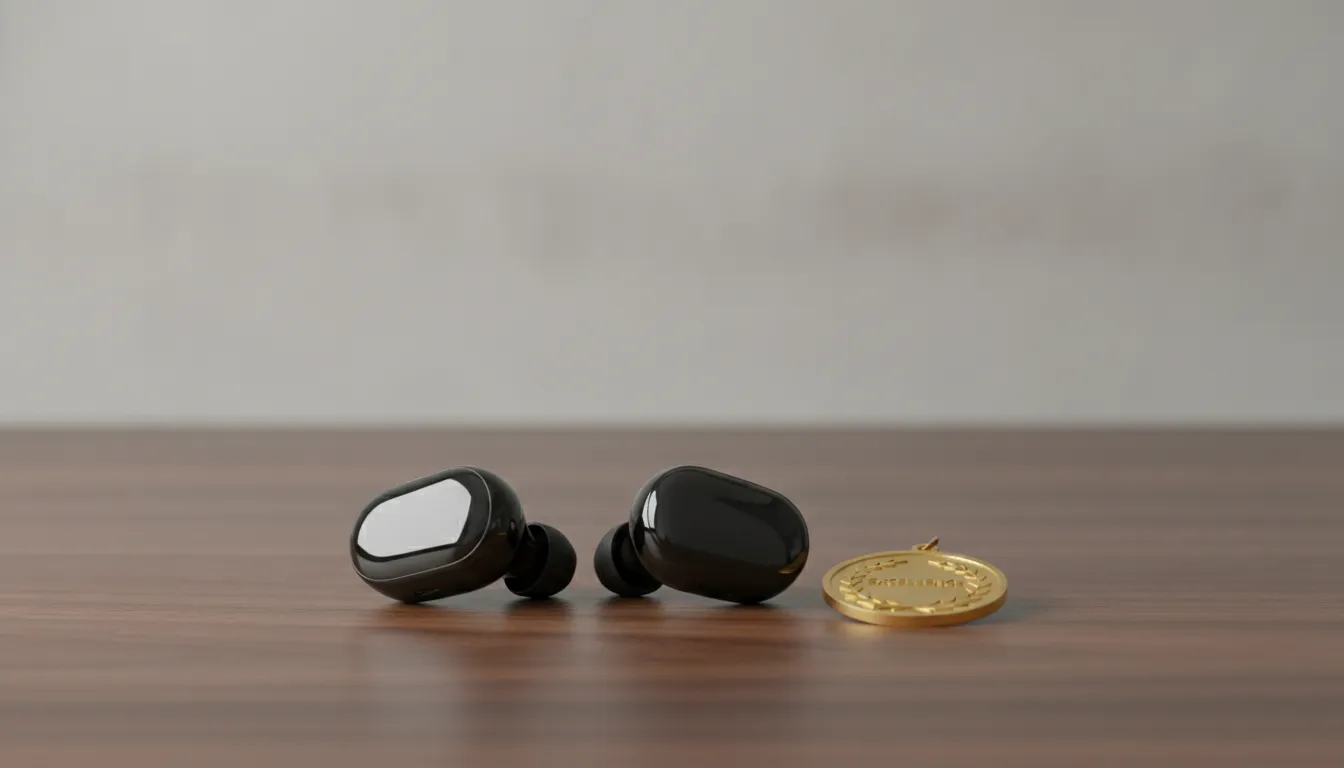
The QCY T13 ANC 2 isn’t perfect. The plastic case feels fragile, multipoint still stutters, and transparency mode won’t impress those who’ve used top-tier Apple or Sony. But it does what matters: cancels noise for real, sounds good after EQ tweaking, lasts the whole day, and brings 2026 technology (LC3, Bluetooth 5.4, hybrid ANC) at a price that doesn’t require lengthy justification.
In ten years reviewing gadgets, I’ve learned that the most interesting products are rarely the most expensive — they’re the ones that redefine the quality floor of a category. The T13 ANC 2 does exactly that for entry-level TWS in 2026.
Overall Rating: 8.4/10
Recommended for: Users wanting their first serious ANC earbud, remote workers in noisy environments, college students, and anyone unwilling to spend more than R$ 300 but demanding modern features like LC3 and a complete EQ app.
Best price range: R$ 220 – R$ 260 (launch price or recurring promotions at major Brazilian retailers)