

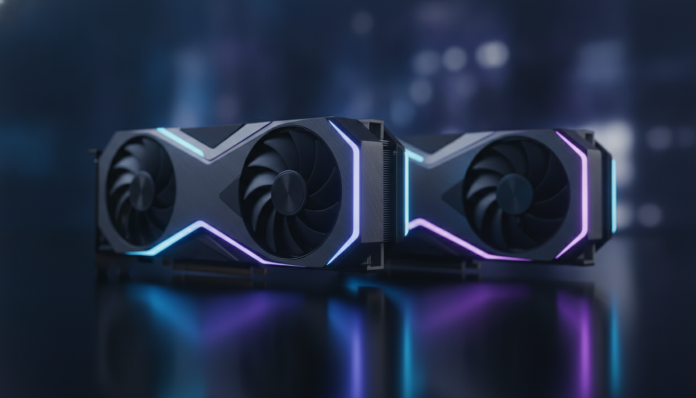

RTX 5060 Ti vs RTX 4070: Which graphics card to buy in 2026
Nvidia updated its mid-range lineup with the Blackwell architecture, and the RTX 5060 Ti arrived promising superior performance to the previous generation in a more accessible price segment. On the other side of the scale is the RTX 4070, a card from the Ada Lovelace generation launched in 2023 that still stands as a solid reference for those gaming at 1440p. The question remains: does it make sense to pay for the new model, or does the 4070 still deliver more value for the money?
The answer depends on your situation. If you don’t have either card yet and are buying now, the RTX 5060 Ti tends to be the smarter choice in most scenarios, especially because of DLSS 4 support with Multi Frame Generation. But if you already have an RTX 4070 and are thinking about selling it to upgrade, the calculation changes significantly. Let’s break down each criterion.
Technical specifications compared
| Specification | RTX 5060 Ti | RTX 4070 |
|---|---|---|
| Architecture | Blackwell (GB206) | Ada Lovelace (AD104) |
| Manufacturing process | TSMC 4NP | TSMC 4N |
| CUDA Cores | 4,608 | 5,888 |
| Tensor Cores | 4th generation | 4th generation |
| RT Cores | 4th generation | 3rd generation |
| Memory (VRAM) | 16 GB GDDR7 | 12 GB GDDR6X |
| Memory bus | 128 bits | 192 bits |
| Memory bandwidth | ~448 GB/s (estimated) | 504 GB/s |
| TDP (total power consumption) | ~180 W | 200 W |
| Power connector | 1x 16-pin (adapter included) | 1x 16-pin (adapter included) |
| DLSS support | DLSS 4 (Multi Frame Generation) | DLSS 3 (Frame Generation) |
| US launch price | $429 (16 GB) | $599 (2023 launch) |
Prices and specifications subject to variation. Always confirm from Nvidia’s official technical sheet and retailer website before purchasing.
Raw performance: more cores don’t always mean more speed
Anyone looking at the technical specifications and seeing that the RTX 4070 has more CUDA Cores (the internal GPU processors responsible for graphics calculations) than the 5060 Ti might find it strange. But architecture matters more than the number of cores. Blackwell brought improvements in the efficiency of each core, so the 5060 Ti can compete well even with fewer processing units.
According to Nvidia itself, the RTX 5060 Ti delivers performance equivalent to or superior to the RTX 4070 in native rasterization (the traditional method of rendering graphics). In ray tracing (a technique that simulates the actual behavior of light, generating more realistic reflections and shadows, but demanding a lot from the GPU), the difference is smaller, and the 4070 still holds up well thanks to its wider memory bus.
The point where the 5060 Ti clearly wins is in using AI for frame generation. DLSS 4 with Multi Frame Generation can generate up to three extra frames for each rendered frame, which can significantly multiply perceived fluidity in compatible games. The RTX 4070 only supports DLSS 3 Frame Generation, which generates one extra frame at a time. For those gaming at 1440p with titles supporting DLSS 4, this difference can be huge in practice.
VRAM: Does 16 GB vs 12 GB make a real difference?
Yes, and increasingly so. The amount of VRAM (dedicated GPU memory used to store textures and game data) matters a lot in 2026. Modern AAA titles, such as games with high-resolution textures and dense scenes, already consume over 10 GB of VRAM frequently. The RTX 5060 Ti comes with 16 GB of GDDR7, while the RTX 4070 has 12 GB of GDDR6X.
The RTX 4070 still doesn’t suffer from memory shortages in most 1440p games, but it’s starting to show limitations in some specific cases, such as heavy mods on PC or ultra settings in newer games. Over the next two years, this difference will weigh even more. The RTX 5060 Ti comes out ahead here, especially for those who want the card to last longer without becoming outdated.
There’s a catch: the 128-bit memory bus of the 5060 Ti is narrower than the 192-bit bus of the 4070. In practice, this means that the available bandwidth for moving data between memory and the graphics processor is smaller. Nvidia compensated for this with the superior speed of GDDR7, but it’s a point worth monitoring in independent benchmarks, especially in scenarios where large amounts of data need to transit quickly.
Price and cost-benefit in Brazil
Here’s the most sensitive point for the Brazilian buyer. The RTX 5060 Ti was launched in the US for $429, while the RTX 4070 originally launched for $599 in 2023. With the RTX 4070 out of main production, prices for used and stock units varied widely throughout 2025 and 2026.
In Brazil, the scenario is complex. Nvidia graphics cards are sold by partners such as Asus, Gigabyte, MSI, and Zotac, and national prices suffer from import taxes, currency fluctuations, and distributor margins. A new RTX 5060 Ti can be found in authorized national stores in ranges that typically hover between R$3,500 and R$4,500, depending on the model and store. The new RTX 4070, when still available, fluctuates in similar or higher ranges in remaining inventory.
Used RTX 4070 cards sold on marketplaces like Mercado Livre can come at lower prices, but require attention: verify if the seller offers an invoice, if the manufacturer’s warranty is still valid, and if the product has Anatel homologation (mandatory for electronic equipment sold in Brazil). Cards imported without homologation may have customs issues and don’t have local warranty coverage.
If you’re building a new PC and want to know which processor works well with these cards, the article Ryzen 7 9700X or Core Ultra 7: which processor to buy can help complete your build reasoning.
Power consumption and compatibility with your PC
The RTX 5060 Ti consumes around 180 W according to Nvidia’s technical sheet, while the RTX 4070 operates around 200 W. The difference seems small, but over hours of daily use, it represents a real advantage both in your electricity bill and in heat generated inside the case.
Both cards use the 16-pin connector (PCIe 5.0), and manufacturers usually include adapters for older power supplies with 8-pin connectors. If your power supply has less than 650 W, it’s worth calculating whether it can handle the card plus the rest of your components. 750 W power supplies provide a comfortable margin for either of these cards to run without instability.
The RTX 5060 Ti uses PCIe 5.0 but is backward compatible with PCIe 4.0 and 3.0 slots. The performance difference between PCIe 4.0 and 5.0 in graphics cards is still marginal in practice, so those with a PCIe 4.0 motherboard don’t need to worry.
Which to choose: recommendation by profile
If you’re buying now, without a current card or with an old one: go with the RTX 5060 Ti. DLSS 4 support, 16 GB of GDDR7, and lower power consumption make it the most rational choice for a three to four-year horizon. The US price is lower than the 4070’s launch price, and national versions should balance out throughout 2026 as inventory increases.
If you already have an RTX 4070 and are thinking about upgrading: it’s not worth it in most cases. The performance gain in games without DLSS 4 doesn’t justify selling the card and investing the difference. Wait for the RTX 5070 or future releases with more significant jumps.
If you want to save money and don’t need DLSS 4: a used RTX 4070 in good condition, with an invoice and remaining warranty, can be a good choice if the price stays significantly below the new 5060 Ti. Just don’t buy without warranty, as the risk of defects in second-hand cards is real.
If you game mainly at 1080p: neither of these is necessary for that resolution. The RTX 5060 (without Ti) or even an AMD RX 7700 works well and costs less.
Frequently asked questions about RTX 5060 Ti vs RTX 4070
Does the RTX 5060 Ti run games at 4K?
Yes, but it’s not its strong point. According to Nvidia, the card was designed to shine at 1440p. At native 4K, performance drops, especially in heavier games. With DLSS 4 in quality or performance mode, the 4K experience improves significantly, but those prioritizing native 4K will be more satisfied with an RTX 5070 or higher.
Will the RTX 4070 still receive support for many years?
Nvidia usually maintains driver support for several years after the end of production of a generation. The RTX 4070 should continue receiving driver updates for at least another four or five years, based on the company’s history with previous generations. Support for features like ray tracing and DLSS 3 remains active.
Which card is better for those who also use their PC for creative work?
For content creation, VRAM matters a lot. The RTX 5060 Ti has an advantage with 16 GB of GDDR7, especially for tasks like 3D rendering, high-resolution video editing, and using local AI models. The RTX 4070 with 12 GB still handles most workflows, but can show limitations in larger projects or with 8K textures.
Where to buy in Brazil with reliable warranty?
Prefer authorized stores from Nvidia’s official distributors in Brazil, such as Asus, MSI, Gigabyte, and Zotac. Networks like Kabum, Pichau, Terabyte, and Amazon Brasil usually have inventory of homologated cards with national warranty of one to two years. Check the Anatel homologation number on the box or product page before finalizing your purchase.
What to decide before clicking buy
If you’ve made it this far, you have enough to make a conscious decision. The RTX 5060 Ti is the right card for those building or upgrading a PC in 2026 who want to invest thinking ahead for the next few years. The RTX 4070 is still an excellent card, but its lifecycle has passed its peak, and the price needs to reflect that to make sense.
Before finalizing your purchase, check the full technical sheet on Nvidia’s official website, compare models from different manufacturers (each has variations in clock, cooler, and warranty), and don’t forget to verify that your power supply and case can accommodate the new card. A well-informed choice now prevents regret for at least three years.