

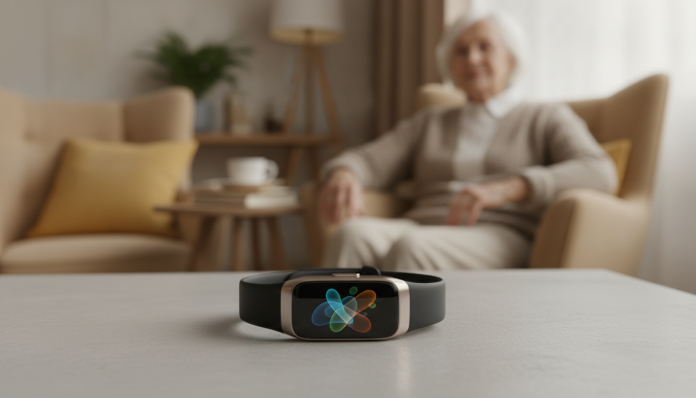

Smart Wristband for Elderly with Fall Detection: Is It Worth It?
When an elderly family member lives alone or spends much of the day without supervision, the anxiety for caregivers is constant. A fall without rapid assistance can be fatal, and this reality has grown a specific market for wearable devices focused on elderly safety. Smart wristbands with fall detection are the most sought-after product in this category, and the question that arrives every week on our social networks is always the same: does this really work, or is it just another expensive gadget that will end up in a drawer?
The short answer is: it works, but with important limitations you need to understand before buying. These devices use accelerometers and gyroscopes (sensors that measure body movement and orientation, like your phone’s rotation sensor, but more sophisticated) to identify fall patterns. Most trigger an automatic alert to caregivers or a monitoring center. The major difference compared to a regular smartwatch is precisely the calibration of these algorithms for real falls, not just sudden movements during a run.
This article is for anyone evaluating the purchase for an elderly family member, whether for domestic use in Brazil or imported from the USA. We’ll cover real specifications, what the national market offers, import costs, and when this type of device truly makes sense.
Technical Sheet: What to Look At Before Comparing Models
The table below brings together the specifications that matter most in this category. Since models vary widely and new products emerge frequently, use this list as a guide for what to demand from any manufacturer before closing a purchase.
| Specification | What to Check |
|---|---|
| Fall Sensor | 3-axis accelerometer + gyroscope (minimum) |
| Connectivity | Integrated 4G LTE or smartphone dependence via Bluetooth |
| GPS | Integrated into device (essential for external tracking) |
| Battery Life | 24h to 72h in typical use (varies greatly by model) |
| Water Resistance | IP67 or higher (supports accidental immersion) |
| Panic Button | Physical, accessible with long press |
| Automatic Detection | Alert without user action after detected fall |
| Monitoring Center | Optional in some models (separate monthly cost) |
| Anatel Certification | Mandatory for legal use in Brazil |
| Compatibility | iOS and Android, with app in Portuguese |
How Fall Detection Works in Practice
The detection algorithm combines two types of data: the sudden acceleration at the moment of impact and the change in body position right after. Imagine the sensor perceives intense acceleration (like a falling object) followed by prolonged immobility in a horizontal position. This sequence is what differentiates a fall from a normal gesture, like sitting quickly or bending down to pick something up.
The real technical problem is the false positive rate (alerts triggered without an actual fall) and false negatives (falls that go undetected). Manufacturers typically don’t publicly disclose these numbers clearly, so be suspicious of vague promises like “99% accuracy” without explained methodology. What the technical sheet should inform is whether the device uses machine learning to calibrate patterns over time or if the detection threshold is fixed.
Another critical variable is the response time. After detecting the fall, the device normally waits a few seconds (typically between 20 and 60 seconds, depending on configuration) for the user to cancel the alert if it was a false positive. If not canceled, the alert is sent. This interval needs to be configurable, especially for elderly people with reduced mobility.
GPS, Connectivity, and Smartphone Dependence
Here lies one of the most important decisions. There are two main types of wristbands in the market:
- Smartphone dependent: connect via Bluetooth to the elderly person’s phone. They’re cheaper but only work near the device. For elderly people who don’t carry their phones all the time, this is a real weakness.
- Independent with 4G chip: function like a small phone on the wrist. They have integrated GPS, make calls, and send alerts directly over the cellular network. They’re more expensive and require an active chip (monthly carrier cost).
For most domestic use cases, Bluetooth connectivity with a range of 10 to 30 meters may be sufficient if there’s a well-defined routine. For elderly people who go out alone, the model with 4G and integrated GPS is practically mandatory.
The GPS in these devices uses the same technology as car navigation, but optimized for low power consumption. In closed environments, accuracy drops (as with any GPS), so indoor location is estimated, not exact. This is normal and expected with current technology.
Models Available in Brazil in 2026
The national market has evolved considerably. Some options arrive with Anatel certification and local warranty, which greatly simplifies the consumer’s life.
Models Focused on Elderly and National Sales
- AngelSense and Medical Guardian are well-established American brands, but official availability in Brazil is still limited. Importing can work, but Anatel certification for devices with radio (Wi-Fi, 4G, Bluetooth) is mandatory for legal use. Without the certificate, Anatel can seize the product at customs.
- Brands like Multilaser and suppliers in the Brazilian digital health ecosystem have launched devices in this category. Check each model’s technical sheet for genuine fall detection (specific algorithm), as some “smartbands for elderly” only offer heart rate monitoring and pedometer.
- Marketplace platforms like Mercado Livre and Amazon Brasil have imported models from Asian manufacturers with prices between R$ 200 and R$ 800. Quality varies greatly. Before buying, confirm the seller has Anatel certification and the app has Portuguese support.
Is Importing from the USA Worth It?
Models like the Medical Guardian MGMove or the Bay Alarm Medical SOS Smartwatch have good reputations in the USA and launch prices in the range of $100 to $200 for hardware, plus monthly service subscription. Importing via shopping assistant or mail forwarding adds IOF, import tax (60% on the declared value above $50 via simplified remittance), and shipping. A $150 device can reach R$ 1,200 or more depending on exchange rates and fees. And there’s still the risk that the 4G chip will be incompatible with Brazilian operators’ frequency bands.
The math rarely works out. Unless you have someone in the USA to send it as accompanied baggage, prioritize what’s available with a receipt and warranty in Brazil.
Battery and Daily Use
Battery life is a critical point that many people underestimate. A security system that runs out of battery at the wrong time is useless. Most models with integrated 4G deliver between 24 and 48 hours of real use. Models dependent on smartphone, consuming less local processing, tend to last longer, reaching 3 or 4 days.
Ideally, the device should alert the elderly person and caregiver when battery is below a threshold (20%, for example). Check if the manufacturer’s app offers this notification, as it’s not universal. Creating a nightly charging routine, like with a phone, usually resolves battery autonomy for most cases. Water resistance with IP67 certification ensures daily bathing won’t damage the device.
Pros and Cons
Pros:
- Automatic alert firing without depending on the elderly person’s action after a fall
- Integrated GPS (in appropriate models) allows real-time location
- Physical panic button for situations beyond falls
- Heart rate monitoring in many models
- Caregiver app allows remote well-being monitoring
- Much more discreet and practical alternative to home cameras
Cons:
- False positives can cause unnecessary caregiver anxiety
- 4G models have recurring chip costs and sometimes monitoring center subscriptions
- Battery autonomy requires charging discipline
- Imported devices without Anatel certification risk customs seizure and no support
- GPS accuracy drops in closed environments
- Doesn’t replace human monitoring for more complex medical needs
Competitors and Alternatives in Brazil
| Category | Product Example | Approx. Price (BR) | Connectivity | Detects Falls Automatically |
|---|---|---|---|---|
| 4G Wristband with GPS | Specialized health models | R$ 800 to R$ 1,800 | 4G + GPS + BT | Yes (check sheet) |
| Smartwatch with SOS | Galaxy Watch / Apple Watch (third-party app) | R$ 1,500 to R$ 4,000 | Wi-Fi + 4G + BT | Yes (Apple Watch series 9+, Galaxy Watch 7+) |
| Simple Panic Button | PERS devices without smartwatch | R$ 150 to R$ 500 | Bluetooth or 4G | No (manual button only) |
| Care App on Phone | Apps like Noonlight | Free to R$ 50/month | Smartphone | Limited |
The Apple Watch deserves special mention. Starting with the series 6, Apple implemented fall detection which, according to the manufacturer, uses algorithms trained with real fall data. The problem for the elderly audience is the high price, the need for a paired iPhone, and an interface that may be complex. For an elderly person already using an iPhone with some tech familiarity, it may be the best integrated solution available in Brazil today. The Samsung Galaxy Watch 7 offers similar functionality in the Android ecosystem.
If the context is a smart home with more integrated devices, it’s worth researching how fall sensors fit into a larger ecosystem. An introductory guide on home automation can help understand how to connect different devices in the same monitoring center, and the integration logic is similar to other smart home projects.
Frequently Asked Questions About Fall Detection Wristbands
Does the Wristband Work Without Internet or Nearby Cell Phone?
It depends on the model. Devices with integrated 4G and active chip work autonomously, without needing a smartphone. Bluetooth models depend on the elderly person’s phone being nearby and connected. Check this specification before buying, as it defines practically everything about real-world use.
Does the Elderly Person Need to Do Something After a Fall for the Alert to Work?
With automatic detection models, no. The device identifies the fall on its own and fires the alert after a configurable interval. If the elderly person is conscious, they can cancel the false positive. If not canceled, the alert goes to registered contacts or monitoring center. This autonomy is the main benefit compared to a simple panic button.
Do I Need Anatel Certification to Use in Brazil?
Yes. Every device with radio (Wi-Fi, Bluetooth, 4G) needs Anatel certification for legal use in Brazilian territory. This doesn’t prevent the device from working technically, but devices without the certificate can be seized during import and have no legal guarantee of not causing interference with other networks. Look for the Anatel certification number on the box or in the product’s technical sheet.
Is There Any Monthly Cost Besides the Device?
Often, yes. Models with 4G need an active operator chip (M2M data plans for devices typically cost between R$ 20 and R$ 60 per month). Some manufacturers also charge a subscription for a monitoring platform or emergency center. Calculate the total cost of ownership over 12 months before deciding.
Is It Worth Buying a Fall Detection Wristband?
For most families with an elderly person living alone or with reduced mobility, the answer is yes. The real benefit isn’t technological, it’s emotional and safety-related: knowing there’s a system working 24 hours without depending on the elderly person remembering to ask for help changes the quality of life for everyone involved.
The caveat is important: the device doesn’t replace regular visits, nor does it solve complex health situations. It’s an extra layer of security, not a complete care solution.
Recommended for: families with elderly people living alone or spending periods without supervision; elderly people with a history of falls or reduced mobility; caregivers who need peace of mind during work hours. It’s not ideal for elderly people with severe difficulty adapting to technology without nearby support, or for those seeking professional medical monitoring (that level requires clinical equipment, not consumer wristbands).
Price range: R$ 300 to R$ 1,800 for hardware, depending on model and connectivity. Add data chip costs (when applicable) and potential platform subscriptions to calculate the real annual cost.