

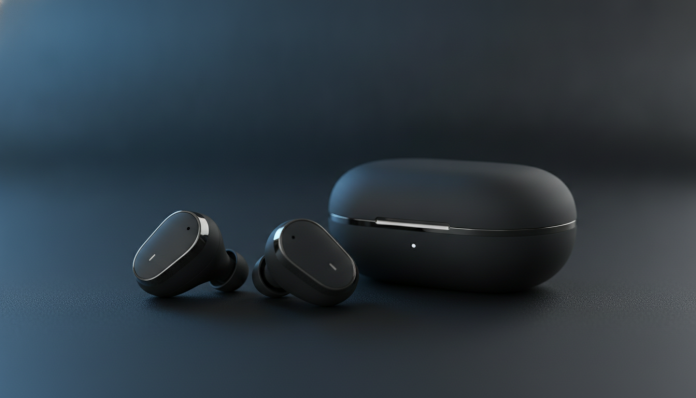
, battery life, and comparison with XM5 and competitors. Worth it?)
Sony WF-1000XM6 Worth It in Brazil? Complete Review
The Sony WF-1000XM6 arrived as the sixth generation of the most respected true wireless earbuds with noise cancellation on the market. Sony launched the model with a clear goal: to be the world’s best compact wireless earbuds for active noise cancellation, with concrete performance improvements over the XM5. The short answer for those asking if it’s worth it in Brazil is: it depends on how much you’re willing to pay and how important noise cancellation is to you.
For those who work in noisy environments, travel frequently, or simply won’t compromise on premium audio quality, the WF-1000XM6 is hard to ignore. For those wanting good true wireless earbuds without paying top-tier prices, there are more affordable alternatives that deliver 80% of the experience for much less money. This review covers everything you need to know before making this decision.
Sony WF-1000XM6 Technical Specifications
| Specification | Details |
|---|---|
| Type | True wireless with ANC (active noise cancellation) |
| Driver | 8.4 mm with carbon diaphragm |
| Processor | V2 Chip (second generation) with QN3 chip support for ANC |
| Bluetooth | 5.3 |
| Supported Codecs | SBC, AAC, LDAC, LC3 |
| ANC | Yes, with microphones for external and internal noise capture |
| Ambient Mode (Transparency) | Yes |
| Water Resistance | IPX4 |
| Battery (earbuds) | Up to 12 hours with ANC off; up to 8 hours with ANC on |
| Battery (total with case) | Up to 36 hours without ANC; up to 24 hours with ANC |
| Charging | USB-C and wireless (Qi) |
| Microphones | 6 microphones total (3 per earbud) |
| Control | Capacitive touch and voice control |
| Compatibility | Android and iOS |
| Weight (earbud) | Approximately 5.9 g per unit |
| Available Colors | Black and Silver |
| Management App | Sony Headphones Connect |
Noise Cancellation: The Main Selling Point
Active noise cancellation (ANC) is a technology that uses microphones to capture surrounding sounds and generates an inverted sound wave to neutralize them before they reach your ear. Think of it as a “wave that cancels another wave”. The WF-1000XM6 uses two chips dedicated to this function: the V2 processor, already known from the XM5 line, and the QN3 chip, which appears for the first time in a Sony in-ear model.
According to the manufacturer, the combination of these chips allows noise processing up to eight times faster than the previous generation. In practice, this means the earbud can react more quickly to sudden sound variations, like the roar of an airplane engine or the buzz of a busy office. Sony claims that the XM6’s noise cancellation performance surpasses the XM5, which was already a benchmark in its segment.
The six microphones distributed between both earbuds (three in each) also contribute to the quality of transparency mode, which is the opposite of ANC: instead of blocking the environment, it captures external sounds and transmits them to your ear naturally, useful when you need to hear a boarding call or briefly chat without removing the earbuds.
Audio Quality and Supported Codecs
The 8.4 mm driver with carbon diaphragm applies the same concept as previous versions of the line, but with refinements according to the manufacturer. Carbon is a material that is both light and rigid, allowing the driver to respond more precisely to variations in the audio signal, especially in the high frequencies.
Support for LDAC is one of the most important points for the Brazilian audience using Android. LDAC is a codec developed by Sony itself that transmits audio at bit rates up to 990 kbps via Bluetooth, well above what AAC (used by iPhone) or SBC (generic standard) can transmit. In simple terms, LDAC allows the sound sent from your phone to the earbuds to preserve more details from the original recording.
The LC3 codec, the Bluetooth LE Audio standard, is also present. Although the ecosystem of devices compatible with LE Audio is still expanding, the inclusion of the codec positions the XM6 well for the coming years. The Sony Headphones Connect app allows you to adjust the equalizer, manage ANC profiles, and enable Speak-to-Chat, a function that automatically pauses audio when it detects you’re talking.
Battery, Comfort and Daily Use
Sony promises up to 8 hours of playback with ANC active per charge on the earbud, reaching 24 hours total when adding the case. With ANC disabled, the numbers rise to 12 hours on the earbud and 36 hours with the case. These values are declared by the manufacturer and may vary depending on volume, codec used, and ambient temperature.
The case now supports Qi wireless charging, which greatly facilitates the routine for those who already have a wireless charger at home or on their desk. USB-C charging is also available. The IPX4 certification guarantees resistance to sweat splashes and light rain, making the earbuds suitable for the gym and outdoor use, but not for diving or intense water exposure.
The XM6 design underwent a revision in the driver shape and silicone tip structure, aiming to improve fit and passive isolation. The earbud has been approved for use with 360 Reality Audio, Sony’s spatial audio technology available on streaming services like Apple Music and Amazon Music.
WF-1000XM6 in Brazil: Price, Certification and Where to Buy
This is the point that most impacts the decision of Brazilian buyers. The WF-1000XM6 was launched in the US with a suggested price of US$ 319. In Brazil, the expected price range at authorized stores is between R$ 2,200 and R$ 2,800, depending on the sales channel and exchange rate variations throughout 2026. Confirm the current price before buying, as it fluctuates.
Anatel certification is mandatory for any device with wireless transmission sold legally in Brazil. Check if the model you’re buying has the certification number on the packaging or the Anatel website. Parallel imported products (without certification) may have difficulties in technical support and do not have Brazil’s legal 90-day guarantee for manufacturing defects.
Sony Brazil’s official warranty is usually 12 months. Buying through direct import, you depend on the brand’s international policy, which can complicate exchanges and repairs. Stores like Amazon Brasil, Magazine Luiza, Americanas, and the official Sony Store are options for purchasing with invoice and local warranty. Those thinking of importing from the US should also consider import tax costs, which can significantly increase the final price.
Pros and Cons
Pros:
- ANC with dual processing (V2 + QN3), among the best in the category according to the manufacturer
- Support for LDAC and LC3, ensuring high-resolution audio quality and future-ready
- Integrated Qi wireless charging in the case
- IPX4 certification for sweat and splashes
- Robust app with equalizer, ANC profiles, and customization features
- Compact and lightweight design (about 5.9 g per unit)
Cons:
- High price in the Brazilian market (R$ 2,200 to R$ 2,800 on average)
- No HD call support in AAC on iOS (codec limitation on iPhone for calls)
- Water resistance limited to IPX4 (no protection for immersion)
- LC3/LE Audio ecosystem still growing in Brazil
Competitors and Alternatives in Brazil
| Model | Approximate Price (Brazil) | ANC | LDAC | Battery (ANC Active) |
|---|---|---|---|---|
| Sony WF-1000XM6 | R$ 2,200 to R$ 2,800 | Yes | Yes | Up to 8h |
| Sony WF-1000XM5 | R$ 1,600 to R$ 2,000 | Yes | Yes | Up to 8h |
| Apple AirPods Pro 2 | R$ 1,900 to R$ 2,400 | Yes | No | Up to 6h |
| Samsung Galaxy Buds3 Pro | R$ 1,400 to R$ 1,800 | Yes | No | Up to 6h |
| Jabra Evolve2 Buds | R$ 2,000 to R$ 2,500 | Yes | No | Up to 8h |
The WF-1000XM5 deserves special attention: it delivers an experience very close to the XM6 with high-level ANC and LDAC support, for a price R$ 400 to R$ 800 cheaper depending on the promotion. For those using iPhone, the AirPods Pro 2 has native integration with the Apple ecosystem and competitive ANC, but gives up LDAC. The Galaxy Buds3 Pro is a good choice for Samsung users. As with evaluating products in different categories, such as when choosing the best robot vacuum up to R$ 1,500 in 2026, the cost-benefit ratio depends a lot on your usage profile.
Frequently Asked Questions About Sony WF-1000XM6
Does the WF-1000XM6 work well with iPhone?
Yes, the earbuds are compatible with iOS via Bluetooth and work with the Sony Headphones Connect app. However, iPhone does not support the LDAC codec, so audio transmission occurs via AAC, without the benefit of high resolution. For iPhone users, the XM6’s advantage centers on ANC and comfort, not maximum audio quality.
Is it worth buying the XM6 or is XM5 still enough?
If your focus is cost-benefit, the WF-1000XM5 is still an excellent option in 2026. The XM6 brings real gains in ANC (faster processing with the QN3 chip) and adds LC3 support, but the audible difference in everyday audio for most people will be small. Those who travel a lot or are in very noisy environments will notice the leap more.
Does the earbud have warranty in Brazil?
Buying from authorized Sony stores in Brazil, the warranty is 12 months against manufacturing defects, according to Sony Brazil’s policy. Parallel imported products do not have this local warranty and may have difficulties in technical support.
Does the WF-1000XM6 have Anatel certification?
Devices officially launched by Sony in Brazil are submitted to Anatel certification, which is mandatory for legal use of wireless communication products. Check the certification number on the packaging or consult Anatel’s public database by product name before finalizing the purchase, especially if buying from non-official resellers.
Is It Worth It?
The WF-1000XM6 is, according to Sony’s official specifications, the most advanced true wireless ANC earbuds the company has ever produced. The combination of two chips dedicated to noise cancellation, support for LDAC and LC3, wireless charging, and refined design make it a product hard to criticize technically. The problem, as almost always in Brazil, is the price.
In the R$ 2,200 to R$ 2,800 range, it competes with imports and products from other brands that deliver very similar experiences. Those who already have the XM5 and are satisfied will probably not feel the need for an immediate upgrade. But for those entering the premium category for the first time, or coming from an entry-level earbud, the difference will be noticeable and significant.
Recommended for: Android users who value high-resolution audio quality via LDAC, frequent travelers who depend on high-performance ANC, and professionals who need consistent sound isolation in varied environments.
Price range: R$ 2,200 to R$ 2,800 in Brazil in 2026 (US launch at US$ 319); confirm the current value before buying.