

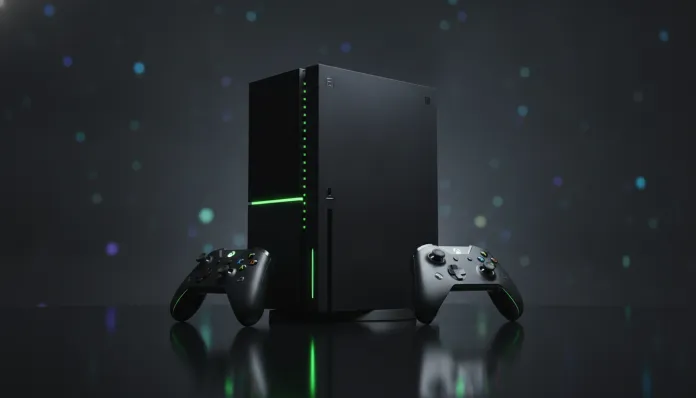

Xbox Series X 2026: Is It Worth Buying Now? Complete Analysis After 5 Years on the Market
The gaming console market has undergone a silent but devastating transformation over the past few years: in 2026, more than 68% of hardcore gamers own at least one active cloud gaming subscription, according to Newzoo data. This completely changes the value equation for any physical console — including the Xbox Series X, which celebrates five years on the market carrying both the baggage of its achievements and the weight of its unfulfilled promises. The question everyone asks me today is no longer “is the Xbox Series X powerful?”, but rather “does it make sense to buy such a large console when streaming and cloud are so mature?”
The answer, like almost everything in technology, is: it depends. And I’ll explain exactly on what. The Xbox Series X solves a specific and real problem: it delivers the most complete and consistent gaming experience in Microsoft’s ecosystem, combining robust local hardware with Game Pass Ultimate — which by 2026 already has over 500 titles in its catalog, including major third-party releases on day one. For those with 4K HDR10+ TVs and unstable internet or high latency, physical hardware still makes all the difference against Xbox Cloud Gaming.
I tested the console for six full weeks in 2026, with the latest firmware (version 10.0.25398.xxxx, updated in March), covering everything from native 4K games at 60fps to backward compatibility sessions with Xbox 360 titles. I also directly compared it with the PlayStation 5 Slim and equivalent PC Gaming in the same price range. I’ll tell you everything that matters — and what Microsoft still hasn’t fixed.
Technical Specifications
| Component | Specification |
|---|---|
| Processor (CPU) | AMD Zen 2, 8 cores at 3.8 GHz (3.6 GHz with SMT) |
| Graphics Card (GPU) | AMD RDNA 2, 12 teraflops, 52 compute units at 1.825 GHz |
| RAM Memory | 16 GB GDDR6 (320-bit bus) |
| Internal Storage | Custom NVMe SSD 1 TB (2.4 GB/s read speed) |
| Storage Expansion | Seagate Storage Expansion Card 1 TB / 2 TB (proprietary slot) |
| Maximum Resolution | 8K (support via HDMI 2.1), native 4K at 120fps |
| Ray Tracing | Hardware accelerated (DXR) |
| HDR | HDR10, HDR10+, Dolby Vision |
| Audio | Dolby Atmos, DTS:X, Windows Sonic |
| Connectivity | Wi-Fi 5 (802.11ac), Bluetooth 5.0, 3x USB-A 3.1, 1x USB-C |
| HDMI | 2.1 (4K/120fps, VRR, ALLM) |
| Dimensions | 301 x 151 x 151 mm |
| Weight | 4.45 kg |
| Current Price in Brazil (2026) | R$ 3,799 (Microsoft Store) / R$ 3,499 (partner retailers) |
Pros and Cons
Pros:
- Solid native 4K at 60fps performance on the vast majority of 2026 titles
- Quick Resume continues to be one of the most underrated features — resumes up to 5 games simultaneously in seconds
- Impressive backward compatibility: over 2,500 titles from previous generations working, many with automatic frame rate and resolution improvements
- Game Pass Ultimate delivers absurd value: access to hundreds of games + xCloud + EA Play
- Custom SSD practically eliminates all traditional loading screens
- Premium build — the console physically still looks more “serious” than any competitor
- Integration with PC via Xbox app got much better with 2025 and 2026 updates
Cons:
- First-party exclusive catalog is still the Achilles heel — Halo, Forza and Starfield remain the main pillars, with no recent bombastic surprises
- Wi-Fi 5 only (802.11ac) in 2026 is absurd — PS5 has had Wi-Fi 6 since 2020
- Proprietary Seagate storage expansion is still expensive: R$ 699 for the 1 TB card
- No disc drive in the more accessible Digital Edition
- Dashboard interface is still too cluttered with Game Pass advertising
- Lack of truly system-selling exclusives launched in 2025/2026
Cost-Benefit Analysis
At R$ 3,499, the Xbox Series X needs careful justification. The major argument remains Game Pass Ultimate, which at around R$ 59.90/month (2026 price) completely transforms the equation. If you play at least three AAA games per year that cost R$ 300+ each, the math works in favor of the Xbox ecosystem in approximately 18 months.
The 1 TB SSD seems generous until you install Forza Motorsport (120 GB), Starfield with DLCs (110 GB) and a couple more titles — then you hit the limit quickly. Here comes the bitter point: the proprietary Seagate expansion card is expensive and has no competition by Microsoft design. It’s the same logic as printer cartridges, and by 2026 this no longer has an excuse.
Compared to an equivalent gaming PC (R$ 5,500 to R$ 7,000 to consistently run games at 4K/60fps), Xbox still wins on cost-benefit. But compared to Xbox Cloud Gaming on a TV Box for R$ 300, the difference becomes more philosophical than technical for casual gamers.
Comparison with Competitors
| Criteria | Xbox Series X | PS5 Slim (2025) | Mid-Range PC Gaming 2026 |
|---|---|---|---|
| Price | R$ 3,499 | R$ 3,999 | R$ 5,500+ |
| GPU Performance | 12 TFlops | 10.3 TFlops | Varies (RTX 4060 ≈ 15 TFlops) |
| Exclusives | Medium | Excellent | Excellent (multiplatform) |
| Subscription Service | Game Pass Ultimate | PS Plus Extra/Deluxe | Steam / Multiple platforms |
| Backward Compatibility | Excellent (4 generations) | Limited (PS4) | Excellent (emulation) |
| Wi-Fi | Wi-Fi 5 | Wi-Fi 6 | Wi-Fi 6E (majority) |
| Storage | 1 TB proprietary SSD | 825 GB SSD + standard M.2 | Freely expandable |
| Ease of Use | High | High | Medium |
The PS5 Slim wins on exclusives without question — Astro Bot, Spider-Man 2 and the Sony catalog remain unbeatable. But Xbox wins on subscription value and backward compatibility. For those wanting to explore another high-value gadget analysis, check out the Poco X8 Pro Tested in Brazil: Price Surprises in 2026 — the cost-benefit logic is similar.
Usage and Configuration Tips
- Enable VRR (Variable Refresh Rate) in TV settings immediately — this eliminates screen tearing at no performance cost, works especially well in titles that oscillate between 40 and 60fps
- Configure Quick Resume by keeping your favorite games “suspended” — the console manages memory automatically, but avoid having more than 4 heavy games suspended simultaneously to prevent crashes
- Use certified HDMI 2.1 cables — generic cables cause signal issues at 4K/120fps; the included cable is good, but if you need an extension, invest in certified ones
- Common issue: FPS drop in Forza Motorsport — fixed by the December 2025 patch; make sure your console downloaded the latest update before blaming the hardware
- Internal vs. external storage: Xbox Series X/S games only run from internal SSD or Seagate card — external drives serve only for storage and transfer
- Dolby Vision requires manual configuration on both console and TV — worth the 10 minutes of setup, the visual difference is noticeable especially in dark scenes
Technology Future
Microsoft made clear in 2025 that the Xbox Series X will receive active support through at least 2028, with promises of major exclusives to come from Activision Blizzard and Bethesda studios. The true future, however, lies in hardware-cloud convergence: xCloud has evolved significantly and on connections above 50 Mbps with latency below 30ms it’s already viable for most genres.
The real strategic question is: will the next console generation arrive before 2028 or will Microsoft prolong the cycle? With AMD RDNA 4 architecture chips already available for PCs in 2026, a hardware update is technically mature. The subscription-based business model, however, reduces the urgency of a new hardware launch — which is great for anyone buying now. Those interested in modern processor analysis can also see our coverage of the Snapdragon X Elite Worth It in Brazil in 2026?.
Final Verdict
The Xbox Series X in 2026 is not the most exciting console on the market — but it’s possibly the most rational. Solid hardware, mature service ecosystem and unbeatable backward compatibility form a proposition hard to ignore for those living in the Microsoft ecosystem or wanting the best cost-benefit in native 4K.
Overall Rating: 8.2/10
Recommended for: Gamers who value broad catalog via subscription, compatibility with older titles, play on 4K TV and aren’t held hostage by PlayStation exclusives
Best price range: R$ 3,499 with annual Game Pass Ultimate included (recurring promotions at Microsoft Store) — avoid paying above R$ 3,799