

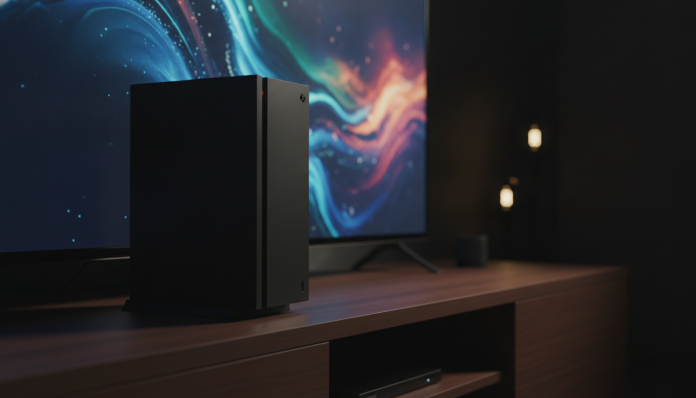

The Xbox Series X hit the market in November 2020 promising to be the most powerful console of its generation. Five years later, in 2026, it continues to be sold, has received software updates, and gained company from new models in the Xbox family. The question many people ask now is straightforward: does it still make sense to buy a Series X today, or is the money better spent elsewhere?
The short answer is: it depends on your profile. For those who want the best possible performance on a console without subscribing to anything extra, the Series X still delivers. For those who play casually or are looking at cost-benefit ratio, there are leaner options that might serve you better. The market has changed significantly since 2020, with Game Pass Ultimate gaining even more weight in the equation and new competitors consolidating their position. Understanding what the hardware still has to offer, and what the ecosystem around it means in practice, is what will help you make this decision.
Xbox Series X Technical Specifications
| Specification | Details |
|---|---|
| Processor | Custom AMD Zen 2 CPU, 8 cores at 3.8 GHz (or 3.6 GHz with SMT enabled) |
| GPU | Custom AMD RDNA 2 GPU, 12 teraflops |
| RAM | 16 GB GDDR6 |
| Internal Storage | 1 TB NVMe SSD |
| Maximum Resolution | Native 4K, 8K support |
| Maximum Refresh Rate | 120 fps |
| Ray Tracing | Yes, hardware accelerated |
| Media Drive | 4K UHD Blu-ray |
| Video Output | HDMI 2.1 |
| Storage Expansion | Seagate Storage Expansion Card (proprietary slot) |
| Power Consumption | Up to 200 W |
| Dimensions | 301 x 151 x 151 mm |
| Weight | 4.45 kg |
Specifications per Microsoft’s official datasheet. Prices and availability vary.
What 12 Teraflops of Performance Means in Practice
Teraflops is a measure of graphics processing power — basically, how many floating-point operations the GPU can execute per second. Think of it as the console’s “muscle power” for generating images. With 12 teraflops, the Series X is still among the most powerful consoles on the market in 2026, according to Microsoft’s official data.
In practice, according to the manufacturer, the hardware enables games in native 4K with ray tracing enabled and frame rates of up to 120 frames per second, depending on the title and how the studio optimized the game. Ray tracing is a lighting technique that calculates how light rays behave in virtual scenes, resulting in much more realistic reflections and shadows. In games that support the feature, the visual difference is noticeable.
The internal NVMe SSD, with read speeds up to 2.4 GB/s per Microsoft specifications, eliminates virtually the long loading times that were common in the previous generation. You resume a game in seconds with the Quick Resume feature, which keeps multiple titles suspended simultaneously. It’s one of those features that seems minor until you use it and can’t live without it anymore.
Game Pass and Ecosystem: The Real Argument for Buying in 2026
Anyone buying an Xbox today isn’t just buying hardware. They’re buying access to an ecosystem. Xbox Game Pass Ultimate (Microsoft’s subscription service name, equivalent to a “gaming Netflix”) remains one of the platform’s main selling points. With an active subscription, you have access to an extensive library of titles without needing to buy each game individually.
In 2026, with Activision Blizzard consolidated within Microsoft, franchises like Call of Duty, Diablo, and other Blizzard series continue to have presence in the service. Microsoft’s policy of launching its exclusives on Game Pass on day one also remains in effect, meaning a new Forza, Halo, or other first-party title enters your library at no additional cost beyond the monthly fee. For Brazilian readers, it’s worth calculating: the price of two or three AAA games purchased individually already exceeds months of subscription.
The point of attention is that Game Pass doesn’t eliminate the need for stable internet to take full advantage of the catalog. Downloaded games are available offline, but the rotating library requires connection for verification. In Brazil, where connection quality varies significantly by region, this is something to consider before planning your usage strategy.
Brazilian Reality: Price, Import, and Warranty
Here lies one of the biggest complexities for the Brazilian consumer. The Xbox Series X launched in the US for USD 499 in November 2020. In Brazil in 2026, the price range in authorized stores hovers around R$ 3,500 to R$ 4,500, depending on the retailer, promotions, and the dollar exchange rate at the time of your search. These values are indicative and change; always confirm at stores before buying.
Microsoft operates in Brazil with official distribution, which means you find the console with one-year legal warranty (per the Consumer Protection Code) at homologated retailers. The device sold officially in the country comes with Anatel certification (National Telecommunications Agency), mandatory for any electronic device to be sold legally in Brazilian territory. Equipment imported independently or by “freelance importers” lacks this certification, which can cause problems both in use and with potential technical support.
Buying through parallel import may seem cheaper on paper, but the risk is real: without local warranty, any defect comes out of your pocket. If you’re buying imported, at least make sure the seller offers some coverage and that the device is the Americas model, compatible with 110/220V and with a charger matching Brazilian standards.
Pros and Cons
Pros:
- Hardware still competitive in 2026, with native 4K and 120 fps in optimized titles
- 4K UHD Blu-ray drive included, something competing models in similar price ranges don’t offer
- Broad backward compatibility with games from Xbox, Xbox 360, and Xbox One
- Game Pass Ultimate adds real value, especially for those playing multiple titles per month
- Quick Resume is a genuinely useful feature in daily use
- Availability with warranty and Anatel certification in Brazil
Cons:
- Price in reais is high by Brazilian standards, especially compared to competitors
- First-party exclusive library still faces criticism in quantity and variety
- Storage expansion uses proprietary Seagate card, which has elevated cost
- Bulky design takes up significant rack space
- No hardware improvements since 2020; those waiting for a refresh get nothing new
Competitors and Alternatives in Brazil
| Console | Maximum Resolution | Approximate Price in Brazil (2026) | Disc Drive | Notable Exclusives |
|---|---|---|---|---|
| Xbox Series X | Native 4K | R$ 3,500 to R$ 4,500 | Yes (4K UHD Blu-ray) | Forza, Halo, Game Pass titles |
| PlayStation 5 Slim (with drive) | Native 4K | R$ 3,800 to R$ 4,800 | Yes (Blu-ray) | God of War, Spider-Man, Gran Turismo |
| Xbox Series S | 1440p (upscaled to 4K) | R$ 1,800 to R$ 2,500 | No (digital) | Same Xbox library + Game Pass |
| Nintendo Switch 2 | Up to 4K in dock (per Nintendo) | Confirm at retailers | No (cartridge) | Mario, Zelda, Metroid |
Approximate prices subject to change. Check authorized retailers for updated values.
The PlayStation 5 Slim is the most obvious direct competitor. Sony has invested in a consistent exclusive library, and the price range in Brazil is similar. The choice between the two, in most cases, comes down to the exclusive ecosystem: if you already have friends on PlayStation, game saves, and Sony titles you can’t stop thinking about, PS5 makes more sense. If you use PC and want integration with the Microsoft ecosystem, Xbox is the natural extension.
The Xbox Series S deserves special mention. For a much lower price, you enter the same Xbox ecosystem and Game Pass with the same software functionality. The downside is the lack of a disc drive, lower native resolution, and less RAM for games. For those who mainly play via Game Pass and don’t have a 4K TV, the Series S might be the smarter purchase.
Frequently Asked Questions about Xbox Series X
Does Xbox Series X play Blu-rays and work as a movie player?
Yes. The console has a native 4K UHD Blu-ray drive, meaning you can use the device to play physical movie discs in 4K HDR resolution. To do this, simply download the free Blu-ray app available on the Microsoft Store on first use.
Is it worth buying Xbox Series X without subscribing to Game Pass?
Technically yes, since the console works normally with individually purchased games. But much of the platform’s value proposition is in the subscription service. Without Game Pass, Xbox loses an important differentiator against PS5, especially in first-party exclusives.
Does an imported Xbox Series X work in Brazil without electrical problems?
American models generally operate at dual voltage (110/240V), but a power adapter may be necessary. The critical point is the lack of Anatel certification and local warranty, which creates risks in technical support in case of defects. Prefer the version sold by official distributors in Brazil.
Will the console receive a hardware update in 2026?
Microsoft has not publicly confirmed any new hardware model for 2026 as of this article’s publication date. Keep an eye on Microsoft’s official channels and specialized outlets for news. If a refresh is coming soon, it might be worth waiting.
Is Xbox Series X Worth It in 2026?
The Xbox Series X remains a capable and well-built console. The hardware still handles the most demanding games on the market, the Game Pass ecosystem continues to be one of the best cost-benefit arguments in the console universe, and broad backward compatibility is a real benefit for those with an old Xbox library. To make a similar decision in other electronics segments, the same principle we apply in analyses like the Galaxy Fit 3 vs Xiaomi Smart Band 10 applies: the best product is the one that best fits your use, not necessarily the most expensive or most famous.
The problem with Series X in 2026 isn’t the hardware. It’s the price in reais and the pressure from PS5 in a library of exclusives that still weighs heavy. If you’re already in the Xbox ecosystem or use Windows PC, the integration makes the console worth every cent. If you’re starting from scratch and have no ecosystem preference, it’s worth comparing each platform’s exclusive library before deciding.
Recommended for: gamers who play a lot and want to maximize value via Game Pass, Windows PC users who want native integration, physical media collectors who take advantage of the 4K Blu-ray drive, and those who already have games and saves in the Xbox ecosystem.
Price range: approximately R$ 3,500 to R$ 4,500 in Brazil at authorized retailers (subject to variation); USD 499 was the launch price in the US in 2020.