


Xiaomi S40C vs Roborock Q7 Max: Which Robot Vacuum to Buy?
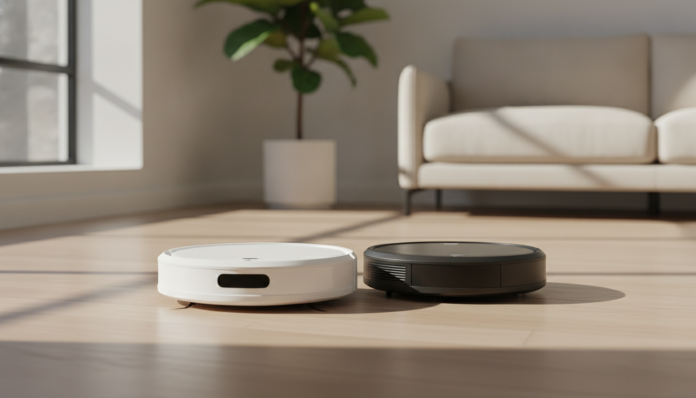
Choosing between two robot vacuums from strong brands is never simple, especially when both compete in the same price range and promise similar results on paper. The Xiaomi S40C and Roborock Q7 Max are exactly this type of dilemma: both combine vacuuming and mopping, feature laser mapping (LiDAR, which works like an optical sonar — the robot “sees” the environment by emitting light beams and calculating distances) and run via smartphone app. The real question is which delivers more value for your home type and budget.
The short answer: the Roborock Q7 Max tends to be the more solid choice for those who want suction performance and granular environment control, while the Xiaomi S40C appeals to those wanting to enter the segment at a more accessible price with native integration into the Xiaomi ecosystem. The details, however, matter and that’s where the decision will solidify.
Comparative technical specifications
| Specification | Xiaomi S40C | Roborock Q7 Max |
|---|---|---|
| Maximum suction | Check official specs | 4,200 Pa |
| Navigation system | LiDAR (SLAM) | LiDAR (SLAM) |
| Mopping function | Yes (vibrating pad, verify specs) | Yes (pad with adjustable pressure) |
| Water tank | Check official specs | 350 ml |
| Dust bin | Check official specs | 470 ml |
| Multi-floor mapping | To be confirmed in specs | Yes |
| Compatibility | Mi Home / Xiaomi Home | Roborock App, Alexa, Google Home |
| Anatel certification | Verify with retailer | Verify with retailer |
| Average price in Brazil (2026) | R$ 1,800 to R$ 2,400 (estimate) | R$ 2,500 to R$ 3,200 (estimate) |
Attention: the prices above are market estimates for 2026 and vary significantly between retailers, exchange rates and promotions. Always check the complete technical specifications on each manufacturer’s official website before making your purchase. The Xiaomi S40C is a newer model; some specifications may not yet be widely documented in English — the most reliable source is Xiaomi’s global website.
Suction and cleaning performance: where each excels
The Roborock Q7 Max has 4,200 Pa (pascal — unit of pressure indicating the force with which the robot sucks air) declared by the manufacturer. It’s respectable power for a robot in this price range, sufficient to handle medium-pile carpets and pet hair buildup. Roborock is known for calibrating the relationship between power and battery life well, and the Q7 Max reflects this: the motor doesn’t run at maximum all the time, but adjusts suction based on the type of surface detected by the sensor.
The Xiaomi S40C specifications in Pa are not yet widely documented in official English sources. Before buying, look for the technical specifications on Xiaomi’s global website or the authorized Brazilian retailer’s website and compare the Pa number directly. If the S40C doesn’t disclose this data clearly, that’s already a warning sign — brands confident in their motors usually highlight this number prominently.
For homes with thick carpets or dog/cat hair scattered around, the Q7 Max pulls ahead based on documented track record. For smooth floors with everyday dirt, the two should perform equivalently according to declared technical specifications.
Floor mopping: who actually mops and who just wets
This point divides many people. The Roborock Q7 Max uses a pad system with electronically adjustable pressure, meaning the app allows you to control how much pressure the pad applies to the floor. According to the manufacturer, this improves removal of light stains. The 350 ml reservoir is reasonable for apartments up to 80 m² in a single cycle.
The Xiaomi S40C, depending on the version available in Brazil, may use a vibrating pad system. A vibrating pad tends to be more efficient than a simple static pad, but comparison with the Q7 Max’s pressure system depends on how each manufacturer implemented the mechanism — and you need to confirm this information in the S40C’s updated technical specifications. If the version sold here doesn’t have vibration, mopping will fall short of the Q7 Max on stubborn stains.
Neither replaces manual scrubbing on heavy dirt. These robots perform daily maintenance, not deep cleaning — understanding this limitation prevents frustrations after purchase.
Mapping, app and smart integrations
The LiDAR system with SLAM (Simultaneous Localization and Mapping — the robot builds a map of the environment while navigating) is present in both models. In practice, this means they avoid obstacles more precisely than robots with cameras or simple infrared sensors, and create more detailed maps of your apartment.
The Roborock Q7 Max uses the Roborock app, which is well-established in the market. It allows you to create cleaning zones, set forbidden areas, adjust water quantity and schedule cleaning by room. The Q7 Max is also compatible with Alexa and Google Home, which facilitates those already using voice assistants in a smart home. Multi-floor mapping is supported — useful for two-story homes.
The Xiaomi S40C uses the Xiaomi Home ecosystem (former Mi Home), which works well if you already own other Xiaomi devices at home, such as lights, cameras or air purifiers. Integration becomes smoother within the same ecosystem. For those using Alexa or Google, compatibility exists, but may be less direct depending on the firmware version available in Brazil. Check before buying whether the domestic version has certified compatibility with the assistant you use.
Availability in Brazil, warranty and importing
This is a critical point for Brazilian buyers and, honestly, it’s often overlooked until the product breaks.
Roborock has more structured operations in Brazil, with authorized resellers and technical support in some cities. Models like the Q7 Max have circulated in the national market long enough for replacement parts and technicians familiar with the equipment to exist.
The Xiaomi S40C is newer and availability in Brazil needs careful verification. Many Xiaomi vacuums sold here arrive via direct importing (grey market), without local warranty and without Anatel certification (National Telecommunications Agency, which certifies devices with Wi-Fi or Bluetooth connections for legal use in Brazil). Buying a product without Anatel certification is not illegal for personal use, but may result in the product being held at customs, without valid warranty and no technical support. Always look for the certification seal on the packaging or retailer’s website.
A 12-month warranty is the legal minimum in Brazil for any product, regardless of brand. Parallel import retailers rarely honor this without bureaucracy.
Which to choose based on your profile
If you want objectivity, here it is:
Choose the Roborock Q7 Max if:
- Your priority is documented suction and carpet performance
- You have pets and animal hair scattered across the floor
- You want reliable multi-floor mapping
- You prefer local technical support and product history in Brazil
- You already use Alexa or Google Home and want seamless integration
Choose the Xiaomi S40C if:
- You already own other devices in the Xiaomi Home ecosystem
- The lower price (if confirmed in the domestic version) makes a real difference to your budget
- Your home is predominantly smooth floors without dense carpets
- You’re entering the robot vacuum segment for the first time and want to test without spending much
I don’t recommend either if:
- Your home has many stairs, high-pile carpets or lots of low furniture — neither will solve this environment well
- You lack patience for app setup and map adjustments — in that case, a simpler and cheaper robot serves the same purpose without frustration
That said, if budget allows and domestic availability is guaranteed, the Q7 Max delivers more consistency for most Brazilian homes. But if the S40C appears with an expressive discount at an authorized retailer with invoice and local warranty, it’s worth analyzing.
Frequently asked questions about Xiaomi S40C and Roborock Q7 Max
Does the robot vacuum really replace brooms and mops?
For daily maintenance, yes — especially in homes without carpets and with everyday dirt. For heavy cleaning or concentrated dirt, no. The ideal use is complementary: the robot handles day-to-day and you do the more intense cleaning when needed.
Do I need Wi-Fi at home to use these robots?
Yes, both models require Wi-Fi for initial setup and full app use. Without connection, some basic functions work via physical button, but mapping, custom zones and voice assistant integration require active network.
What’s the difference between LiDAR and camera navigation in robots?
LiDAR uses laser beams to measure distances around the robot, creating a precise map even in darkness. Camera uses computer vision, which depends on ambient light and may struggle more in environments with small objects on the floor. For those with pets leaving toys scattered, LiDAR tends to be safer.
Is it worth importing these robots from abroad to pay less?
It may cost less upfront, but you lose local warranty, risk customs retention and may end up without technical assistance. If the product needs maintenance, the cost may exceed initial savings. The recommendation is always to seek the domestic version with invoice.
Before finalizing your purchase, check the updated technical specifications on the manufacturers’ official websites, verify if the model has Anatel certification in the version sold in Brazil and compare prices at least three retailers. If you’re evaluating other gadgets to set up a connected environment at home, you may find it useful to also read our analysis on the Galaxy Fit 3 vs Xiaomi Smart Band 10: which to buy? — the logic of comparing ecosystems and local support applies the same way. The robot vacuum market in Brazil matured considerably in 2025 and 2026, and today you have real options with local support, which completely changes the cost-benefit equation.