

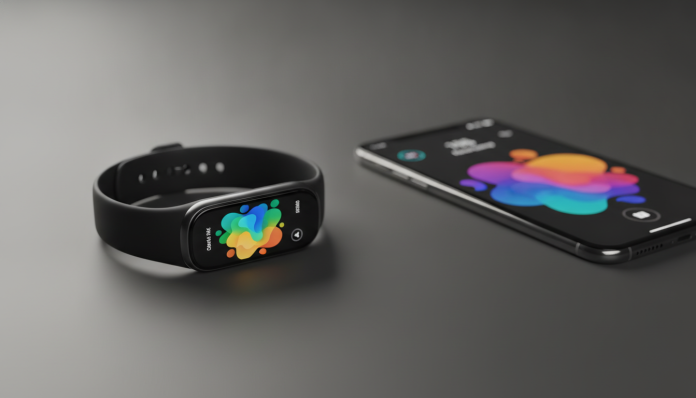

Xiaomi Smart Band 10: Technical specifications
| Specification | Details |
|---|---|
| Display | AMOLED 1.62 inches, 192 x 490 px |
| Processor | Not disclosed by manufacturer |
| Internal memory | Storage for music and health data |
| Battery | 232 mAh |
| Battery life (according to manufacturer) | Up to 21 days in typical use |
| Sensors | Heart rate, SpO2, skin temperature, accelerometer, gyroscope |
| GPS | Connected (via smartphone) |
| Water resistance | 5 ATM |
| Connectivity | Bluetooth 5.4 |
| Compatibility | Android 8.0+ / iOS 14+ |
| Charging | Proprietary magnetic |
| Weight | Approximately 27 g (with strap) |
| App | Zepp Life / Mi Fitness |
The Xiaomi Smart Band 10 arrived on the market in 2024 as the direct evolution of the Chinese manufacturer’s fitness band line, and in 2026 it still appears as one of the best-selling options in the entry-level segment. The reason is simple: it delivers a set of features that, not long ago, you could only find in more expensive smartwatches. If you want to monitor your health, receive notifications, and control music playback without spending much, the Band 10 deserves your attention.
The short answer for those asking “is it worth it in 2026?” is: yes, for the right audience. It doesn’t compete with mid-range smartwatches like the Galaxy Watch or Apple Watch SE, but it doesn’t try to either. What it does well, it does consistently with battery life that lasts the whole week without stress. Those expecting native GPS, message replies from the wrist, or an app panel will be disappointed.
This review brings together information based on Xiaomi’s official specifications, market analysis, and publicly available data through 2026. The goal is to help you clearly decide if this band is right for what you need.
Display and design: where the Band 10 really impresses
The 1.62-inch AMOLED display is the most visible evolution point compared to previous generations. AMOLED (Active Matrix Organic Light-Emitting Diode) is a display technology where each pixel emits its own light, ensuring deep blacks and vibrant colors without needing a separate backlight. In practice, you look at your wrist in bright sunlight and can still see the information clearly, which doesn’t always happen with cheaper LCD-based bands.
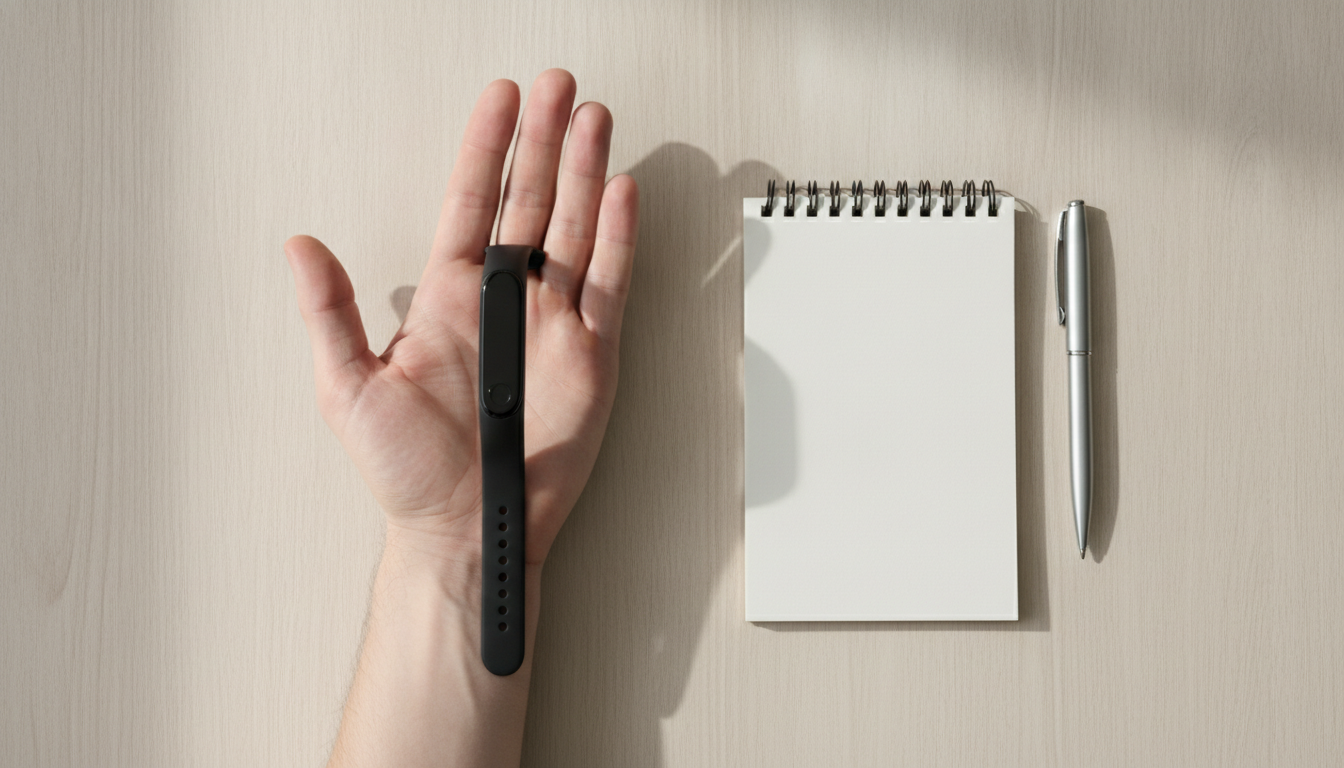
The Band 10 is narrower and lighter than many competitors, weighing around 27 g with the strap. This makes a difference for those wearing the band during sleep, which is exactly when it collects sleep monitoring data. The standard strap is silicone, but the Brazilian market already has compatible replacement strap options available both on e-commerce sites and through importers.
The display depth can vary depending on your chosen watch face. Xiaomi offers dozens of options within the Mi Fitness app, and some even display real-time health information directly on the home screen. Nothing revolutionary, but well executed for a band in this price range.
Health monitoring: what works and what has limitations
The Band 10’s sensor package includes continuous heart rate monitoring, SpO2 (blood oxygen saturation, which indirectly measures how well your blood is transporting oxygen), skin temperature, and sleep analysis. According to Xiaomi, heart rate monitoring works in real-time during exercise and can be set for automatic intervals throughout the day.
The SpO2 and skin temperature sensors are useful as trend indicators, not as replacements for medical equipment. The manufacturer itself makes clear that this data is informational in nature. For those wanting to simply track variations over time and receive basic alerts, the Band 10 performs this role well.
Sleep monitoring analyzes light, deep, and REM (Rapid Eye Movement, the sleep stage where dreams occur and which is associated with cognitive recovery) phases. The result appears in the app with a detailed summary in the morning. It’s not as accurate as clinical testing, but consistent enough to help you identify patterns.
Connected GPS: understanding the limitation
The Band 10 has no built-in GPS. It uses connected GPS, meaning route tracking depends on your smartphone’s GPS. If you go running with your phone, the Band displays the map and distance accurately. If you go without your phone, it estimates distance using the accelerometer, which is less accurate. For gym workouts and urban walks with your phone in your pocket, this works without issues. For trails or phone-free runs, it’s a real limitation.
Battery: 21 days in theory, how much in practice?
Xiaomi claims battery life of up to 21 days in typical use, with the display waking at normal intervals and moderate notifications. With continuous heart rate and SpO2 monitoring enabled, plus frequent smartphone notifications, that number drops. According to public user reports and specialized media analysis, the real average falls between 10 and 14 days with intensive use, which is still excellent for the segment.
Charging is magnetic and proprietary, meaning you won’t charge the Band 10 with a common USB-C cable. This is a point to watch: losing the charging cable can be frustrating. Keep the cable in a fixed place or buy a spare as soon as you get the product. The full charge time, according to the technical sheet, is approximately two hours.
Software and connectivity: app works well, but has nuance
The official app in Brazil is Mi Fitness, available for Android and iOS. It centralizes all band data, lets you configure watch faces, notifications, and activity goals. The interface has improved significantly since earlier versions and is in Portuguese, eliminating a common barrier with imported gadgets.
Connection is via Bluetooth 5.4, which offers greater range and lower power consumption than earlier standard versions. In practice, you can leave your phone in another room without easily losing connection. The band also receives notifications from calls, messages, and apps, but only displays the content without allowing wrist replies.
Band 10 in Brazil: imports, Anatel, and warranty
Xiaomi sells the Smart Band 10 in Brazil through official channels and is also available in stores like Americanas, Shopee, and Amazon Brasil. The international launch price was approximately 50 dollars, but in the Brazilian market the price range varies between R$ 250 and R$ 350, depending on the channel and color variant.
Models sold by official distributors in Brazil usually have Anatel certification (the agency responsible for certifying that wireless devices don’t interfere with Brazilian networks) and 12-month warranty per the Consumer Protection Code. If you import via international sites like AliExpress, you can find lower prices but lose local warranty and may face customs duties. For most buyers, purchasing through a national channel makes up for the price difference.
Speaking of gadget value for money, it’s worth keeping in mind that this type of analysis applies to other categories too: if you’re building a complete home setup, also check PS5 Pro vs PC gamer: which offers better value for money to understand how to think through these trade-offs in other tech purchases.
Pros and cons
Pros:
- AMOLED display with good sunlight visibility
- Battery with real autonomy above segment average
- Complete health monitoring for daily use
- Lightweight and comfortable design for nighttime wear
- App in Portuguese and stable connectivity
- Affordable price with availability through national channels
Cons:
- No native GPS (depends on smartphone for route tracking)
- No message replies from the wrist
- Proprietary charging cable that’s difficult to replace
- No microphone or speaker
- Limited third-party app ecosystem compared to smartwatches
Competitors and alternatives in Brazil
| Model | Approximate price (R$) | Native GPS | Message replies | Battery life (manufacturer) |
|---|---|---|---|---|
| Xiaomi Smart Band 10 | R$ 250 to R$ 350 | No | No | Up to 21 days |
| Samsung Galaxy Fit3 | R$ 350 to R$ 450 | No | No | Up to 13 days |
| Huawei Band 9 | R$ 300 to R$ 400 | No | No | Up to 14 days |
| Amazfit Band 7 | R$ 250 to R$ 350 | No | No | Up to 18 days |
| Garmin Vivosmart 5 | R$ 900 to R$ 1,200 | No (connected) | No | Up to 7 days |
The Galaxy Fit3 is the main direct rival, with smoother integration for those already using Samsung Android. The Huawei Band 9 has similar health monitoring, but the Huawei ecosystem can be a limiting factor. For those wanting something in the same price range with competitive battery life, the Amazfit Band 7 is a solid alternative.
Frequently asked questions about the Xiaomi Smart Band 10
Does the Band 10 work with iPhone?
Yes, compatibility includes iOS 14 or higher. The Mi Fitness app is available on the Brazilian App Store. Some features, like camera control and integration with native Apple health apps, may have limitations compared to Android.
Do I need to pay a monthly fee to use health features?
No. All health monitoring features available on the Band 10 work without a subscription. The Mi Fitness app is free and doesn’t require a paid plan to access basic metrics.
Is the band water-resistant for swimming?
The 5 ATM rating means water resistance in immersion up to 50 meters for 10 minutes under controlled conditions. According to Xiaomi, it supports pool swimming. For recreational diving or use in marine environments with variable pressure, it’s not recommended.
Is it worth importing to pay less?
It depends on how much you value local warranty and convenience. The price difference between an imported model and one sold through official channels in Brazil usually ranges from R$ 50 to R$ 100. Considering the risk of paying customs duty and losing warranty, for most people the national channel is more advantageous.
Is it worth it?
The Xiaomi Smart Band 10 is one of the most complete fitness bands you’ll find under R$ 350 in Brazil in 2026. It doesn’t try to be a smartwatch and shouldn’t be evaluated as one. For daily health monitoring, discrete notifications, and battery life that lasts weeks, it delivers consistently on its promises.
Recommended for: those wanting to enter the wearables world without spending much, people who exercise regularly and need basic health data, and users who’ve owned previous Xiaomi band generations and want to upgrade.
Not recommended for: athletes needing GPS tracking without a phone, those wanting to reply to messages from the wrist, or anyone with budget for a complete mid-range smartwatch.
Price range: R$ 250 to R$ 350 through national channels (international launch price around US$ 50; confirm current prices before purchasing, as they vary by channel and promotions).