

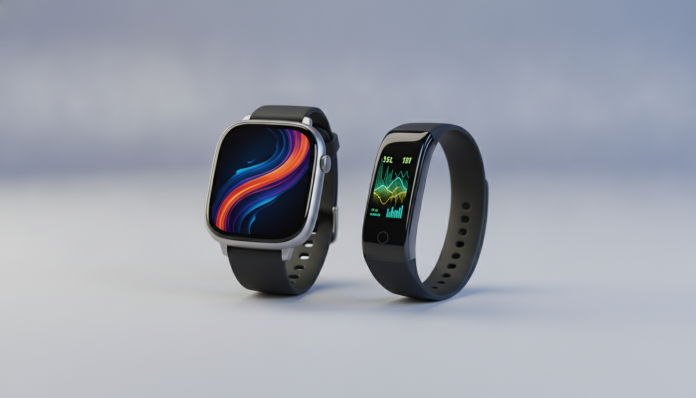

Smartwatch vs. Fitness Tracker: Which One Is Worth It for You
You’re looking at your wrist and thinking it’s time to buy a wearable, but the classic question arises: smartwatch or fitness tracker? The short answer is that it depends on what you do daily, how much you’re willing to spend, and how much you care about battery life. They’re different categories that, in recent generations, have become closer than ever, making the decision less obvious than it seems.
In 2026, the Brazilian market has solid options in both categories. Manufacturers like Apple, Samsung, Garmin, Xiaomi, Amazfit, and Huawei sell here with Anatel homologation and local warranty, eliminating a real pain point from years ago. Still, niche models arrive through importation, and it’s worth understanding what you’re giving up with that approach.
This comparison doesn’t aim to declare a universal winner. The goal is to show, criterion by criterion, where each category stands out, so you walk away with a concrete answer for your profile.
Comparison table: smartwatch vs. fitness tracker
| Criterion | Smartwatch | Fitness Tracker |
|---|---|---|
| Display | AMOLED or LCD, generally larger (1.4″ to 2.0″) | Small AMOLED (0.95″ to 1.62″) or no screen |
| Typical battery | 1 to 3 days (heavy use) | 7 to 21 days |
| Built-in GPS | Yes, in most mid-range and premium models | Only in premium models of this category |
| Third-party apps | Yes (Wear OS, watchOS, Tizen/One UI Watch) | Limited or non-existent |
| NFC payments | Available in various models | Rare; present in few models |
| Health monitoring | Advanced (ECG, SpO2, temperature) | Good (SpO2, heart rate, sleep) |
| Average weight | 30 g to 55 g | 20 g to 35 g |
| Price range in Brazil | R$ 600 to R$ 7,000+ | R$ 150 to R$ 1,200 |
| US launch price (reference) | US$ 150 to US$ 500+ | US$ 30 to US$ 200 |
Prices are market estimates for 2026 and vary by store, exchange rate, and promotions.
Display and interaction: size matters, but it depends on use
The smartwatch won the display battle without much contest. Models like the Apple Watch Series 10, Samsung Galaxy Watch 7, and competitors with Wear OS bring AMOLED displays (active matrix technology with organic LEDs, delivering deep blacks and vibrant colors) large enough to read complete messages, respond with voice, and even use maps or music streaming apps. Interaction is touchscreen with crown or physical buttons, making the experience richer.
The fitness tracker, on the other hand, has a display meant for quick checks rather than extended interaction. You glance at heart rate, see who’s calling, and decide if you’ll grab your phone, confirm step count. It’s functional, but it doesn’t replace the phone on your wrist the way a smartwatch tries to. Models like the Xiaomi Smart Band 9 and Huawei Band 9 have decent AMOLED screens for their size, with good readability under sunlight according to each manufacturer’s specifications.
If you use the device on your wrist to make decisions without pulling your phone from your pocket, the smartwatch delivers more. If you just want a health panel always visible, the tracker solves it.
Battery: where the tracker still wins by a landslide
This is the most practical daily-life difference. A top-tier smartwatch, even with 2025 and 2026 optimizations, rarely lasts more than three days with GPS and notifications active. In practice, you charge daily or every other day depending on use. This bothers those who forget the charger on trips or prefer not to have another cable on the nightstand.
The fitness tracker works with seven to twenty-one days of battery autonomy depending on the model and activated functions, according to official data from manufacturers like Xiaomi and Huawei. The reason is simple: smaller screen, simpler processor, and fewer functions running in parallel consume a fraction of the energy. For those doing long physical activities, like multi-day trails or marathons during intense training periods, not needing to charge is real relief.
The exception is smartwatches focused on outdoor and adventure, like Garmin Fenix and Instinct lines, which offer long activity-mode autonomy but fall into a price and weight bracket well above average.
Health and sports: both categories came close, but they’re not equal
Health monitoring evolved significantly in trackers. Today you find SpO2 (blood oxygen saturation, measured by optical sensor on the wrist), continuous heart rate, sleep monitoring with phase detection, and in some models, skin temperature. This already covers the needs of those wanting to track general health and moderate workouts.
The ECG (wrist electrocardiogram, which records heart electrical activity to identify arrhythmias) is still almost exclusive smartwatch territory. Apple Watch, Samsung Galaxy Watch, and some Withings models have this function with regulatory agency recognition in some markets. In Brazil, Anvisa regulations on the clinical validity of this data is still a point consumers should check before making any medical decisions based on it.
For GPS-integrated sports, the smartwatch has the advantage in most cases. Mapping routes, calculating pace (running rhythm per kilometer), and having maps on your wrist is still an important differentiator. Some new-generation trackers have started including their own GPS, but check the specific model’s specifications: many still use the smartphone’s connected GPS, requiring you to carry your phone during workouts.
Ecosystem, apps, and payments
The smartwatch with a full operating system—whether Apple’s watchOS, Google’s Wear OS, or Samsung’s One UI Watch—lets you install third-party applications. You can have Spotify for offline music, meditation apps, light games, productivity apps, and even digital wallets for NFC payments. Google Pay, Samsung Pay, and Apple Pay work on models homologated in Brazil with local bank support.
The fitness tracker depends on the manufacturer’s proprietary app, like Mi Fitness from Xiaomi or Huawei Health. Outside that ecosystem, integration is limited. For iPhone users with Apple Watch or Samsung users with Galaxy Watch, native integration goes beyond: message replies, phone unlock via watch, and deep health data synchronization. A tracker from a different manufacturer than your smartphone won’t have this integration level.
Brazilian context: homologation, warranty, and importation
Most smartwatches and trackers sold at major retailers like Americanas, Magazine Luiza, Amazon Brasil, and manufacturer stores come with Anatel homologation, the approval certificate from Brazil’s regulatory agency for devices using radiofrequency. Without it, the product technically cannot circulate in the country, and buying imported without this seal can result in customs detention.
Non-homologated models typically arrive via parallel importation through international marketplaces. The risk is twofold: no official warranty and product detention or taxation at entry. Since 2024, taxation on international purchases below US$ 50 changed, and today any import can be taxed. If you want to save buying abroad, calculate IOF, import tax, and potential costs of a problem without local technical support.
Brazil’s legal warranty is ninety days for used products and one year for new ones, per the Consumer Protection Code. Manufacturers like Samsung, Apple, and Xiaomi typically offer additional one-year warranty on official channels, totaling two years.
Frequently asked questions about smartwatches and fitness trackers
Does a fitness tracker work with any phone?
Most popular trackers, like Xiaomi and Huawei’s, work with Android and iOS via their own app. Integration is more limited than within the native ecosystem. Features like notification responses may not work in all system and app version combinations; check compatibility on the official page before buying.
Can I swim with a smartwatch or tracker?
Many models in both categories have certified water resistance with 5ATM (pressure equivalent to fifty meters of water column) or IP68 (protection against prolonged immersion up to one and a half meters) rating. This covers pool swimming. For diving or more intense water sports, check the specific model’s specifications, because not all water resistance is equal.
Is it worth importing a smartwatch from the US in 2026?
It depends on the model. If the product has no official Brazilian version with Anatel homologation, you may face customs issues and will be without local warranty. For models already sold officially here, the price usually doesn’t justify importation after taxation. Calculate all costs before closing the order.
Which category monitors sleep better?
Both categories evolved on this point. Light trackers have comfort advantage since they weigh less and the slim form factor bothers less on the wrist. The smartwatch has more processing power for detailed analysis, but many people simply can’t sleep with something more bulky on their wrist. If sleep monitoring is priority, consider weight and design before software specs.
Which to choose: recommendation by profile and budget
If you want a device that replaces your phone on your wrist in most situations, lets you pay via NFC debit, reply to messages, and access apps, the smartwatch is the right choice. For that, set aside at least R$ 1,500 to get something with decent hardware and a functional operating system. Below that, the experience can disappoint.
If priority is monitoring health and workouts for up to two weeks without charging, spending less, and not bothered by feature limitations, the fitness tracker delivers much more for less. With R$ 300 to R$ 600 you already have a reliable product from brands with Brazilian support.
There’s also an intermediate profile: those wanting smartwatch metrics without sacrificing much battery. In that case, look at smartwatches with low-power modes extending battery when you don’t need all functions active. Check this option in the specification sheet of the model you’re evaluating.
For those building a productive home setup and wanting to spend wisely on tech, it makes sense to think about wearables within a bigger gadget strategy, just as you’d choose the best cheap home office peripherals in 2026: not necessarily the most expensive, but what solves your needs without waste.
In the end, neither category is universally superior. The one worth more for you is exactly the one fitting your routine, your wrist, and your budget.