

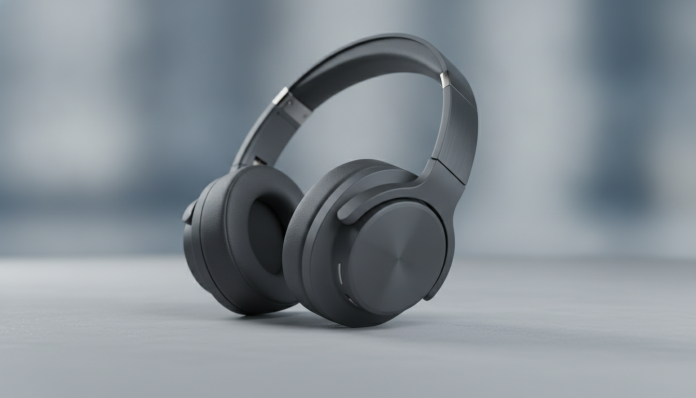

Bluetooth headphones with noise cancellation under R$ 500: are they worth it?
The short answer is: yes, but with important caveats. In 2026, the market for over-ear and in-ear headphones with ANC (Active Noise Cancelling, which uses microphones to capture ambient sound and generate inverse sound waves to neutralize it) has grown so much that the technology is no longer exclusive to R$ 1,500 products. Today you can find competent options for less than R$ 500, both in physical stores and on national marketplaces.
What changes in this price range compared to top-of-the-line models isn’t the presence of ANC, but its depth. Premium headphones block airplane and train noise with impressive efficiency. More affordable models handle continuous office noise, fans, or air conditioning well, but may fall short in more chaotic environments. If you work from home or travel by public transport regularly, this limitation will probably not bother you.
This article is a buying guide for those in this budget range, not a review of a single product. The goal is to help you understand what to expect from specifications, which brands have real presence in Brazil, and how to avoid marketing pitfalls.
Technical specifications: what to look for in models up to R$ 500
The table below brings together the main technical criteria you should evaluate when comparing models in this range. The values are category references, not for a specific product.
| Criterion | What is acceptable in this range | What should raise questions |
|---|---|---|
| Autonomy with ANC active | 20h to 35h | Below 15h or claims above 40h without source |
| Bluetooth codec quality | AAC or aptX | Only SBC (inferior wireless audio quality) |
| Bluetooth version | 5.2 or higher | 4.x on recently launched product |
| Drivers (over-ear) | 30mm to 40mm | Manufacturer omits the size |
| Declared ANC (dB attenuation) | 20 dB to 30 dB | Manufacturer does not inform the number |
| Microphone for calls | Two microphones or more | Single microphone without beamforming |
| Weight (over-ear) | Up to 270g | Above 300g for extended use |
| Anatel homologation | Mandatory in Brazil | Absent or sold only via direct import |
How ANC works in practice in this price range
Active noise cancellation is not magic: it’s physics. External microphones capture ambient sound, the headphone processor creates an opposite-phase wave, and the two cancel out before reaching your ear. The problem is that this process requires a good dedicated processor and well-positioned microphones, and that’s exactly where cheaper models economize.
In practice, headphones up to R$ 500 usually perform well against deep and continuous sounds, like the hum of an airplane engine, central air conditioning noise, or a refrigerator buzz. High-pitched and irregular noises, like nearby conversations or honking, pass more easily because the cancellation wave needs time to adjust and these sounds change too quickly.
A practical tip: if the manufacturer states that ANC operates at multiple adjustable levels, this usually indicates the system has some real sophistication. If the technical sheet says only “ANC on/off”, expectations need to be calibrated. Always prefer models that also offer ambient mode (which amplifies external sounds when you need to hear what’s around you), because this indicates the microphones have enough quality to process audio in a more complex way.
Audio quality: what the specifications say
Here lies one of the biggest market traps. Less-known manufacturers love to stamp “Hi-Res Audio” or “Sound by [famous name]” on the box without it necessarily meaning something measurable. What you should check are the supported codecs.
The codec is the protocol that compresses and transmits audio between your phone and the headphones via Bluetooth. SBC is the minimum standard, present in all devices, but with limited quality. AAC is preferred by iPhones and works well on most current Android devices. aptX and its variations (aptX HD, aptX Adaptive) are developed by Qualcomm and offer lower latency and superior quality, but both the headphones and smartphone need to support the same codec to work.
In the up-to-R$ 500 range, models from brands like JBL, Anker Soundcore, Edifier, and 1More usually clearly state the supported codecs in the technical sheet. If a model omits this information, assume it’s SBC only. For iPhone users, AAC is already sufficiently good in this price range. For Android users who listen to a lot of music with attention, it’s worth prioritizing aptX.
Day-to-day user experience: comfort, calls, and connectivity
Paper specifications don’t tell how much the headphone squeezes after two hours of use. But some indications in the technical sheet help. Memory foam ear pads retain more heat but distribute pressure better. Synthetic leather pads are cooler but degrade faster. Some brands specify the lateral pressure (clamping force), which is a good sign of transparency.
For those who use headphones in remote meetings, the microphone matters as much as the audio. Models with beamforming (technology that directs capture toward your voice and rejects side sounds) have much superior performance in calls. If you work from home and spend hours in video calls, this criterion deserves equal weight to music quality. Speaking of home office, if you’re still setting up your complete setup, the article on how to set up the ideal configuration for remote work can complement this decision well.
Multipoint connectivity, which allows connecting the headphones to two devices simultaneously (notebook and phone, for example), was rare in cheap products until 2024 and now appears more frequently in this range. It’s worth checking if the model supports it, because it changes workflow a lot.
Models available in Brazil and purchase context
Before buying, confirm Anatel homologation. In Brazil, every device that emits radiofrequency, including Bluetooth headphones, needs Anatel approval to be sold legally. This ensures the product doesn’t interfere with other frequencies and, more importantly for you, serves as a basis for claiming the one-year legal warranty provided by the Consumer Protection Code.
Some models sold on marketplaces like Mercado Livre and Shopee at tempting prices are imports without homologation. The lower price hides the risk: without a Brazilian invoice, you lose warranty coverage and may have difficulty in case of a defect. Always prefer to buy from stores with CNPJ and invoice, whether physical or online.
Brands with more consolidated national distribution in this range in 2026 include JBL (Harman/Samsung distributor), Anker Soundcore, Edifier, Philips, and 1More. Sony has some entry-level models that may appear in this range on promotions, but the XM5 and similar are well above this budget. Bose practically doesn’t compete in this price segment in Brazil.
If you’re comparing with home office peripherals more broadly, the guide to cheap peripherals for home office in 2026 brings a complementary view on how to balance budget across your entire setup.
Pros and cons of Bluetooth headphones with ANC up to R$ 500
Pros:
- Functional ANC for everyday use in office and public transport
- Battery life generally competitive (25h or more with ANC active is common)
- Quality codecs (AAC, aptX) already present in several models
- Multipoint available on newer models
- Warranty and technical support accessible when purchased with national invoice
- Best value for money ever offered historically in this category
Cons:
- Less effective ANC on high-pitched and irregular noises versus premium models
- Physical construction with more plastic, less aluminum
- Microphones for calls still inferior to top-of-the-line
- Some manufacturers omit important technical specifications
- Firmware updates via app not always available or well-maintained
- Ambient mode usually sounds artificial or with noticeable latency
Competitors and alternatives in Brazil
| Model | Type | Price range (BR) | ANC | Codec | Declared autonomy |
|---|---|---|---|---|---|
| JBL Tune 770NC | Over-ear | R$ 350 to R$ 450 | Yes | AAC, SBC | Up to 44h (without ANC) |
| Anker Soundcore Q45 | Over-ear | R$ 250 to R$ 350 | Yes | LDAC, AAC | Up to 50h (without ANC) |
| Edifier WH950NB | Over-ear | R$ 400 to R$ 500 | Yes | LDAC, aptX | Up to 55h (without ANC) |
| 1More SonoFlow | Over-ear | R$ 300 to R$ 400 | Yes | LDAC | Up to 70h (without ANC) |
| Philips TAH8506 | Over-ear | R$ 350 to R$ 480 | Yes | AAC, aptX | Up to 30h (with ANC) |
Approximate prices based on national stores; values vary according to promotions and seller.
Frequently asked questions about Bluetooth headphones with ANC up to R$ 500
Does the ANC of a cheap headphone really make a difference?
Yes, especially for constant noise like air conditioning, fans, and transport engines. The difference compared to premium models becomes evident in more chaotic environments, with voices and irregular sounds. For office use or urban public transport, the result is usually sufficiently satisfactory.
Do I need to worry about Anatel homologation when buying?
Definitely. Headphones without Anatel homologation can be seized at customs if imported directly, and don’t have coverage by Brazilian legal warranty. Always require an invoice and verify the homologation number on the packaging or on the Anatel website.
Is LDAC better than aptX in this price range?
LDAC (developed by Sony) allows audio transfer at higher bit rates than conventional aptX, but requires good Bluetooth signal stability to work in the highest quality mode. In environments with a lot of interference, LDAC can automatically drop to a lower quality. For everyday use, the perceived difference between LDAC and aptX on headphones in this price range is small.
In-ear headphones with ANC or over-ear in this range?
It depends on the use. Over-ear has greater passive isolation (the cups cover the entire ear) and usually has larger batteries. In-ear with ANC in this range generally delivers less effective cancellation, because the microphones are smaller and the processor is more limited. For work, over-ear tends to be the more accurate choice up to R$ 500.
Is it worth buying headphones with ANC up to R$ 500?
For most Brazilian user profiles, the answer is yes. The quality jump compared to headphones without ANC in the same price range is real and noticeable in daily use. What you should not expect is performance identical to a Sony WH-1000XM5 or Bose QC45, which cost two to three times more.
The key is to calibrate expectations: ANC for home office, subway or bus trips, and work focus—these models deliver. ANC for long international flights or industrially noisy environments, the investment in a premium product is justified.
Recommended for: home office professionals, students, public transport users who want focus and comfort without compromising the budget, and those buying their first noise-canceling headphones.
Price range: R$ 250 to R$ 500 in major national stores, with variations by model and promotion.