

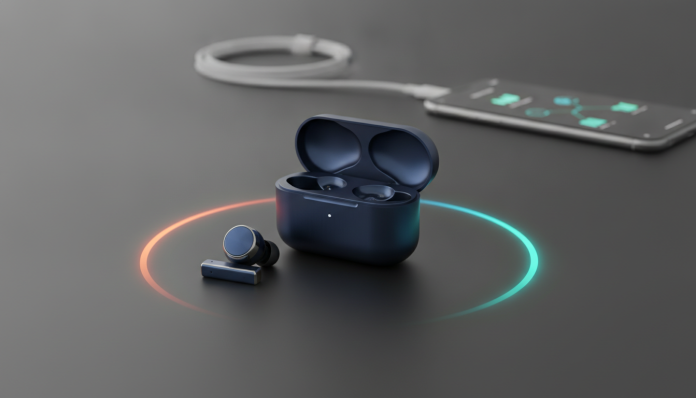

Bluetooth Headphone Battery: What Manufacturers Promise vs. What You’ll Really Get
The manufacturer says 30 hours. You use it for a day and the headphone is already asking for a charger. This feeling is common and has a technical explanation, but rarely does anyone stop to explain what’s really happening. Battery life in Bluetooth headphones is one of the most manipulated numbers in the audio market, and understanding how it’s measured makes all the difference when choosing your next pair of earbuds or headphones.
The short answer: the number on the box is real, but obtained under controlled conditions that probably don’t reflect your use. With active noise cancellation on, volume at 70%, and stable connection, you can lose between 30% and 50% of the advertised battery life. It’s not gross deception, it’s context that the manufacturer omits.
This article is for anyone who wants to understand this number once and for all, know what to look for in the spec sheet before buying, and discover which factors you can control to extend your headphone battery life in your daily routine.
Why the Advertised Number Almost Never Matches Reality
Manufacturers measure battery life in standardized laboratory conditions. Generally speaking, this means: volume around 50%, basic audio codec (usually SBC, the simplest and most efficient), without active noise cancellation (the feature known as ANC, which uses microphones to capture and cancel external sounds before they reach your ear) and controlled room temperature.
The problem is that none of these conditions describe how a real person uses headphones. Someone working in an open office turns on ANC. Someone exercising raises the volume. Someone living in an urban area connects and disconnects the headphone multiple times a day, which consumes power each time the Bluetooth connection is reestablished. Each of these behaviors drains the battery in different ways.
There’s also a factor that few mention: temperature. Lithium batteries lose capacity at low temperatures. If you use the headphone in a São Paulo winter waiting for the bus, the actual battery life will be less than in an air-conditioned office at 22 degrees. It’s not a product defect, it’s chemistry.
What Each Feature Consumes in Battery
Understanding the impact of each function helps you decide what sacrifices are worth it.
Active Noise Cancellation (ANC)
ANC is the biggest enemy of battery life. It requires microphones to constantly capture sound and an internal processor to calculate the opposite sound wave in real time. According to spec sheets of popular models like the Sony WH-1000XM5 and Bose QuietComfort 45, the difference between using ANC on and off can be 5 to 10 hours, depending on the model. Always check if the manufacturer announces both numbers separately, because some only publish the best-case scenario.
Audio Codec
The codec is the protocol that compresses and transmits audio wirelessly between your phone and the headphone. SBC is the universal standard and the most energy-efficient. Higher quality codecs like aptX Adaptive, LDAC (from Sony), and LC3 (Bluetooth LE Audio standard) require more processing and therefore consume more battery. The difference is usually less than ANC, but it exists.
Volume
High volume means more power for the drivers (the “speakers” that produce the sound). The relationship isn’t linear, but going from 50% to 80% volume can reduce battery life by 15% to 25% depending on the model and type of content being played.
Equalization and Sound Effects
Models with active equalizers via app process audio in the headphone itself. The heavier the effects, the more the internal processor works. Some JBL and Jabra models have “spatial sound” modes that consume additional power in a measurable way, according to their own spec sheets.
How to Compare Headphones Fairly Before Buying
When you look at a specification table, pay attention to these points:
- Battery with ANC on vs ANC off: reputable manufacturers publish both numbers. If only one appears, it’s probably without ANC.
- Charging case battery: in earbuds, the case serves as an extra battery. A headphone with 7 hours of battery life and a case that offers another 28 hours has a total battery life of 35 hours. Confirm if the advertised number is for the headphone, the set, or the total.
- Fast charging: many models offer 15 to 30 minutes of charging for 1 to 3 hours of use. This doesn’t increase battery life, but solves emergencies.
- Full charge time: a large headphone usually takes 2 to 3 hours to charge from zero. Earbuds typically charge in 1 to 2 hours.
| Headphone Type | Typical Advertised Battery Life | Estimated Real Use (ANC on, vol 70%) |
|---|---|---|
| Entry-level earbuds (ex: basics with ANC) | 6 to 8h (headphone) + 20h (case) | 4 to 5h (headphone) |
| Premium earbuds (ex: Sony WF-1000XM5) | 8h (ANC on) + 24h (case) | 5 to 7h (headphone) |
| Over-ear headphone with ANC (ex: Sony WH-1000XM5) | 30h (ANC on) | 20 to 24h |
| Headphone without ANC (ex: basics) | 40 to 60h | 30 to 45h |
The “real use” values above are estimates based on typical reductions documented in spec sheets and specialist publications like RTings and SoundGuys. Each model behaves differently and you should consult independent reviews of the specific product you intend to buy.
Practical Tips to Extend Your Headphone Battery Life
You don’t need to use the headphone in laboratory conditions, but small adjustments make a real difference.
- Turn off ANC when you’re in a quiet environment, such as at home or in a small meeting
- Use transparency mode instead of ANC in moderately noisy environments; it’s less intensive in power consumption
- Reduce volume to the minimum comfortable level, especially with headphones with good passive isolation
- Disable the always-on voice assistant (Alexa, Google Assistant) if you rarely use it; it keeps the microphone on
- Avoid leaving the headphone paired but idle for long periods: some models consume battery on standby with active connection
- Keep firmware updated; manufacturers frequently release updates that optimize battery consumption
Bluetooth Headphones in Brazil: Certification and Warranty
An important point for those buying in Brazil or considering importing: every Bluetooth headphone legally sold in the country must have Anatel certification, the telecommunications regulatory agency. Certification ensures that the device operates on permitted frequencies and doesn’t interfere with other equipment. Certified products have a code that you can verify on the Anatel website.
Buying uncertified headphones, especially through informal imports, carries two practical risks: lack of legal warranty (90 days for non-durable products and 1 year for durable products, according to the Consumer Protection Code) and possibility of seizure by Federal Revenue Service. Manufacturer warranty for products sold by authorized resellers in Brazil is usually 1 year.
Models from major brands like Sony, JBL, Bose, Samsung, and Apple have established local operations and latest launches arrive in the country with certification. Some brands like Edifier, 1More, and Anker have growing presence in the Brazilian market through authorized distributors, with certified products available at major retailers. Smaller Chinese-origin brands sold on marketplaces don’t always have certification: verify before buying.
How Much Does a Headphone with Good Battery Life Cost in Brazil in 2026
The domestic market has options in very distinct price ranges. The values below are approximations, as prices vary depending on the retailer, promotions, and exchange rates.
- Entry-level (R$ 150 to R$ 350): basic earbuds with simple ANC and battery life of 5 to 7 hours. Brands like QCY, Edifier, and entry-level versions of JBL. Good value for money for casual use.
- Mid-range (R$ 400 to R$ 900): earbuds with efficient ANC, quality codecs, and 6 to 8 hours of battery. Sony WF-series previous generations, Samsung Galaxy Buds, and JBL Live Pro. Launch pricing in the US typically falls in the US$ 100 to US$ 200 range for this segment.
- Premium (R$ 1,000 to R$ 2,000 or more): over-ear headphones or top-tier earbuds with 25 to 40 hours of battery life and high-efficiency ANC. Sony WH-1000XM5, Bose QuietComfort Ultra, Apple AirPods Pro. Launch prices in the US are around US$ 250 to US$ 400.
If battery life is your absolute priority, over-ear headphones without ANC or with toggleable ANC still deliver the best numbers for the price. For those who need practicality, the charging case for earbuds compensates for the smaller battery life of the headphone alone.
Frequently Asked Questions About Bluetooth Headphone Battery
Does the headphone lose battery capacity over time, like the phone?
Yes. Lithium batteries degrade with charge and discharge cycles. Most manufacturers specify that the battery maintains about 80% of original capacity after 300 to 500 complete charge cycles. This means that a headphone used daily can show noticeable battery reduction after 1 to 2 years.
Should I charge the headphone whenever I can or wait until the battery is completely depleted?
The recommended practice for lithium batteries is to avoid frequent complete discharges. Keeping the headphone between 20% and 80% charge extends battery life. Charging overnight, even without the headphone being fully discharged, causes no immediate damage to modern models with protection circuits.
Can I trust the numbers that appear in reviews from sites like RTings and SoundGuys?
These sites use their own methodologies and consistent testing, with volume and settings they publish openly. They’re better references than manufacturer numbers, but are still controlled tests. The most useful is comparing different models within the same site, as the methodology is the same for all.
Does the “low consumption” mode that some headphone apps offer actually work?
It depends on the model. Some apps, like Sony Headphones Connect, allow you to reduce ANC quality to save battery. This option usually works, but the actual savings vary. The spec sheet rarely documents this mode separately; you’ll find this information in user reviews and specialist publications.
What to Do with This Information When Buying
Before finalizing your next headphone purchase, ask three simple questions: does the manufacturer publish battery life with ANC on and off separately? Does the charging case increase total battery life significantly? And does the model have Anatel certification if you’re buying in Brazil?
If the answers are yes, you already have a solid basis for comparison. The number on the box will never be the number of your real use, but with the right information you can get close to choosing the headphone that will survive your routine, not just the manufacturer’s laboratory. To understand how the chip inside the headphone influences audio processing and overall consumption, it’s worth learning more about how chips from different manufacturers perform in real use, since premium headphones increasingly integrate specialized processors that directly affect battery life.