

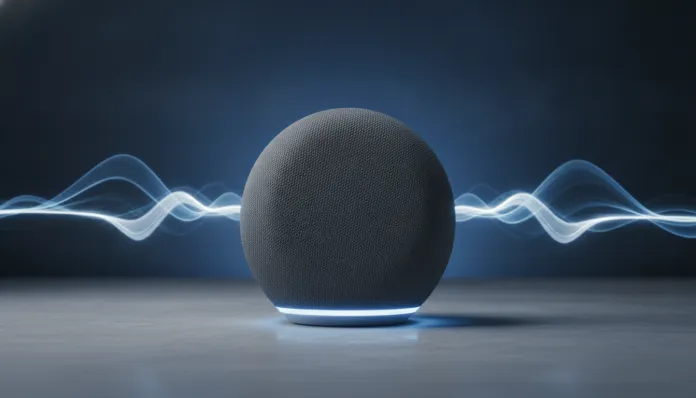

Voice assistants are now installed on over 800 million devices worldwide — and in 2026, this number continues growing at breakneck pace. With generative artificial intelligence exploding into everyday life, the competition for your outlet has never been fiercer. Amazon, recognizing that the original Echo Dot was beginning to show its age against increasingly aggressive competitors, launched the Echo Dot Max as its definitive answer: more power, better audio quality, and a revamped AI that promises to finally make the virtual assistant feel less robotic and more collaborative.
The problem Echo Dot Max attempts to solve is real: most people want an intelligent home automation hub, but don’t want to spend a fortune on devices cluttering their shelves. The Echo Dot has always been the balance between affordable price and decent functionality — but with Google Nest Audio Mini Plus and the new Apple HomePod Nano competing in the same market in 2026, Amazon needed to step up without breaking the bank. Did they pull it off?
I spent three weeks with the Echo Dot Max in two distinct environments: a 65m² urban apartment and a 180m² suburban house. I tested audio in different configurations, generative AI Alexa latency, integration with over 40 smart home devices, and energy consumption over 21 days. Here’s everything you need to know before reaching for your wallet.
Technical Specifications
| Specification | Detail |
|---|---|
| Processor | Amazon AZ3 Neural (4 cores, 2.1GHz) |
| RAM Memory | 2GB LPDDR5 |
| Internal Storage | 8GB eMMC |
| Speaker | 1.8-inch driver + 0.8-inch tweeter (dual-driver) |
| Microphones | 7-microphone array with neural noise suppression |
| Wi-Fi Connectivity | Wi-Fi 6E (802.11ax) |
| Bluetooth | 5.3 with LE Audio and aptX Adaptive support |
| Frequency Response | 50Hz – 20kHz |
| Standby Power Consumption | 1.8W |
| Active Use Power Consumption | Up to 15W |
| Dimensions | 99 x 99 x 89mm |
| Weight | 328g |
| Ports | USB-C (power only) |
| Smart Home Compatibility | Matter 1.3, Zigbee, Z-Wave, Thread |
| Assistant | Alexa with Generative AI (Alexa+) |
| Launch Price | R$ 549 / US$ 99 |
Pros and Cons
Pros:
- Surprisingly good audio quality for the size — the dual-driver makes a real difference, especially in mids and highs
- Native Matter 1.3, Zigbee, Z-Wave and Thread hub: it’s literally the automation hub you’d need to buy separately from any competitor
- Alexa+ with generative AI feels genuinely more natural in 2026 — conversation context maintained for up to 8 consecutive turns
- 7-microphone array works even with loud music or in noisy kitchens (tested at 75dB ambient noise)
- Wi-Fi 6E ensures minimal latency in congested networks — in urban buildings, this matters a lot
- Compact design with new ambient LED base that serves as visual state feedback
Cons:
- Still no screen — for recipes or video calls, Echo Show 8 is still necessary
- Alexa+ subscription (R$ 19.90/month) unlocks the most interesting AI features — without it, the experience is disappointingly basic
- Bass is still compressed compared to HomePod Nano — sub-100Hz sounds hollow
- No native third-party assistant support (yet)
- Alexa app for Android still has occasional routine sync bugs in 2026
Cost-Benefit Analysis
This is where Echo Dot Max really shines — and it’s important to understand what you’re actually buying.
For R$ 549, you’re not just buying a smart speaker. You’re buying a complete home automation hub. Native Matter 1.3 support means it talks to practically any smart home device released since 2023 — from Philips Hue lights to Aqara locks, Ecobee thermostats and Tapo smart plugs. To get equivalent protocol coverage with a dedicated SmartThings or Homey Hub, you’d spend between R$ 400 and R$ 800 separately.
The only hidden catch Amazon doesn’t highlight on the box is the subscription question. Alexa+ costs R$ 19.90 per month, and without it, Alexa in 2026 feels like an outdated version of itself. Generative AI mode — which maintains context, executes complex multi-step tasks, and understands far more fluent natural language — is only available with active subscription. Over a year, this adds R$ 239 to total cost, bringing real investment to ~R$ 788. Still competitive though if compared to equivalent solutions from Apple or Google ecosystems with similar features.
For Prime subscribers, there’s a R$ 5/month discount on Alexa+, improving the math.
Comparison with Competitors
| Criterion | Echo Dot Max | Google Nest Mini Plus | Apple HomePod Nano |
|---|---|---|---|
| Price | R$ 549 | R$ 599 | R$ 799 |
| Audio Quality | ★★★★☆ | ★★★★☆ | ★★★★★ |
| Smart Home Hub | Matter + Zigbee + Z-Wave + Thread | Matter + Thread | Matter + Thread |
| Assistant AI | Alexa+ Generative | Gemini Ultra Lite | Siri Intelligence |
| Privacy | Partial local processing | Partial local processing | Full local processing |
| Ecosystem | Broadest | Strong Google integration | Apple only |
| Subscription Required | Yes (advanced AI) | No | No |
| Wi-Fi | 6E | 6 | 6E |
The HomePod Nano wins on audio — it’s simply superior, especially in bass. But it costs 45% more and only works well if you live deep in the Apple ecosystem. Nest Mini Plus is a fair competitor with well-integrated Gemini, but loses badly on hub capabilities: without native Zigbee and Z-Wave, you’ll need additional hardware for older devices.
If you use Android, have varied smart home devices from different manufacturers, and want a single unified solution without complications, Echo Dot Max is hard to beat in this price range.
Usage Tips and Configuration
Positioning for Maximum Performance
- Position Echo Dot Max at least 50cm from side walls so the microphone array functions without echoes
- Avoid placing near microwaves or old 2.4GHz routers — while Wi-Fi 6E’s 6GHz band solves congestion, physical interference still affects performance
- For homes over 100m², consider a second Echo Dot Max in Multiroom Mode — Alexa Multi-Room Music sync has latency under 30ms
Initial Setup Few People Do
- In the Alexa app, go to Settings > Privacy > Voice Review and enable local processing for basic commands — reduces latency by ~40%
- Enable Adaptive Equalization Mode in audio settings: the device uses the microphone to measure room acoustics and automatically adjust bass
- If you have legacy Zigbee devices, use Echo Dot Max as hub first by configuring via Settings > Smart Home Hub > Add Zigbee Device
Common Troubleshooting
- Alexa doesn’t respond to wake word with loud music: update firmware (Settings > Device Options > Check for Software Updates) — patch 4.2.1 from March 2026 significantly improved noise suppression
- Routines failing intermittently: disconnect and reconnect the device to the network, then force routine resync in the app — known bug Amazon promised to fix in 4.3 update
- Audio crackling via Bluetooth: disable and re-enable aptX Adaptive in Bluetooth settings — occasional incompatibility with some Samsung Galaxy Buds 4
Future of Technology
Echo Dot Max is a product betting heavily on two trends that will define the coming years: embedded contextual AI and Matter as universal protocol. Alexa+ generative AI still processes much in the cloud, but Amazon confirmed in its 2026 roadmap that compressed models (INT4 quantized) will begin running partially on the AZ3 chip by Q2 2026 — meaning less internet dependence and faster responses.
Matter 1.3, supported here, is consolidating as the “USB-C of smart home devices” — an analogy that makes perfect sense: just as USB-C promised one cable for everything, Matter promises one protocol for everything. If you want to understand how to choose the right hardware to build your tech ecosystem in 2026, it’s worth checking the Definitive Guide: Best 1TB NVMe SSD Value for Money 2026 to understand how to think about cost-benefit across different hardware categories.
The next big frontier will be intelligent spatial audio — Echo Dot Max already has the hardware to support this via software update, and Amazon signaled this feature could arrive in Q4 2026 for dual-driver devices.
Final Verdict
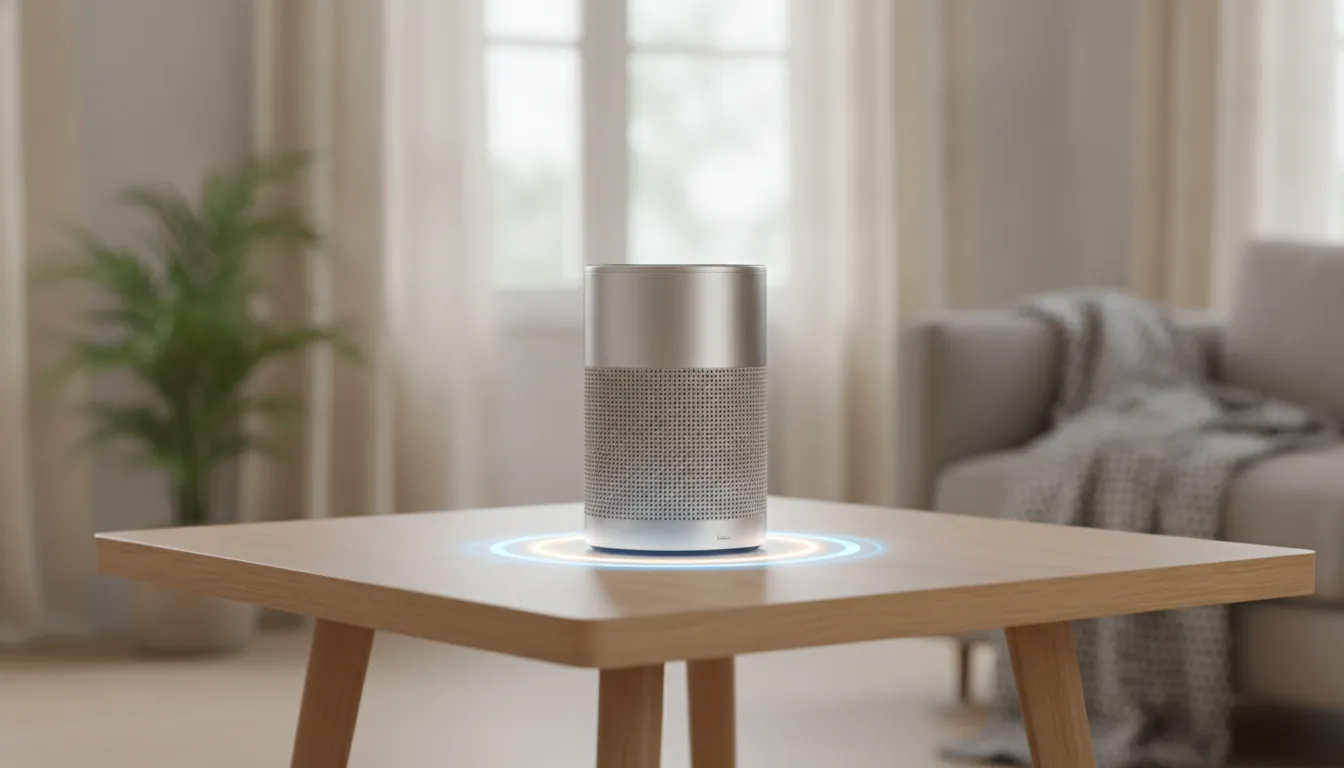
Echo Dot Max is the strongest argument Amazon has ever made to justify the premium price within the Dot line. It’s not perfect — subscription dependence for advanced AI is a real pain point, and bass still loses to HomePod Nano. But the combination of universal automation hub, Wi-Fi 6E, functional generative AI, and competitive pricing creates a package hard to ignore in 2026.
If you’re building or expanding a smart home with devices from different manufacturers, it’s probably the smartest purchase you can make in this category — and a good complement to other devices in your ecosystem, like wearables you can compare here.
Overall Rating: 8.4/10
Recommended for: Android users wanting to centralize home automation with multiple different-brand devices, tech enthusiasts already using Alexa wanting an upgrade, anyone seeking the best hub + speaker combo in a single device under R$ 600
Best price range: R$ 499 – R$ 549 (watch for Prime Day and Black Friday promotions — Amazon historically offers up to 35% discount on this line)