

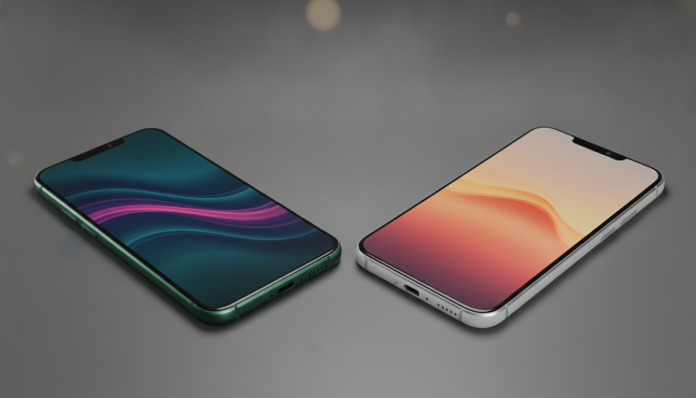

Samsung Galaxy A55 vs Motorola Edge 50: Two serious mid-range phones, one difficult choice
Brazil’s mid-range smartphone market in 2026 is more competitive than ever, and two models keep appearing in the minds of those wanting to escape basic phones without paying flagship prices: the Samsung Galaxy A55 and the Motorola Edge 50. The two arrived in Brazil with similar proposals, comparable price ranges, and technical specs that compete point by point. But they are devices with very different personalities.
The short answer: if you prioritize software reliability, long support, and a consolidated ecosystem, the Galaxy A55 delivers that generously. If what matters is a high-level display, fast charging, and versatile camera in a more sophisticated body, the Edge 50 impresses more in practice. Neither is wrong. The question is which compromise makes more sense for your use.
Specifications side by side
| Specification | Samsung Galaxy A55 | Motorola Edge 50 |
|---|---|---|
| Display | Super AMOLED, 6.6″, FHD+, 120 Hz | pOLED, 6.7″, FHD+, 144 Hz |
| Processor | Exynos 1480 (4 nm) | Snapdragon 7s Gen 2 (4 nm) |
| RAM | 8 GB | 8 GB or 12 GB |
| Storage | 128 GB or 256 GB | 256 GB |
| Main Camera | 50 MP, OIS | 50 MP, OIS |
| Ultrawide Camera | 12 MP | 13 MP |
| Front Camera | 32 MP | 32 MP |
| Battery | 5000 mAh | 5000 mAh |
| Charging | 25 W | 68 W |
| Wireless Charging | No | 15 W |
| Operating System | Android 14, One UI 6.1 (promised 4 years of updates) | Android 14, My UX (promised 3 years of updates) |
| Water Resistance | IP67 | IP68 |
| Launch Price (USA) | $449 | $399 |
| Approximate Price Range in Brazil | R$ 2,300 to R$ 2,800 | R$ 2,100 to R$ 2,600 |
Prices vary by retailer, region, and promotions. Always check current prices before purchasing.
Display: When 144 Hz makes a real difference
The difference in technology between the two displays is small on paper, but noticeable in use. Both use OLED panels (technology that produces absolute blacks, since each pixel generates its own light), but Motorola bets on the pOLED variant with a refresh rate of 144 Hz, compared to Samsung’s 120 Hz.
Refresh rate is, in practice, how many times per second the image on screen is redrawn. At 144 Hz, scrolling lists, games, and even app opening animations appear slightly more fluid than at 120 Hz. For most people, the difference between 120 and 144 Hz is subtle in daily use, but those who play competitive titles will notice.
The Galaxy A55 doesn’t lag behind in image quality: Samsung’s Super AMOLED panel has a consolidated reputation for accurate colors and adequate brightness for outdoor use. Motorola, on the other hand, delivers a slightly larger screen (6.7″ versus 6.6″) with thinner bezels. If you spend a lot of time consuming video or play frequently, the Edge 50 has an objective advantage here.
Performance: Exynos vs Snapdragon, the eternal duel
Samsung’s Exynos 1480 and Qualcomm’s Snapdragon 7s Gen 2 are chips manufactured using a 4-nanometer process (the smaller the number, the more efficient and powerful the chip tends to be). Both deliver adequate performance for any daily task: social media, streaming, multitasking, photos, browsing.
The difference appears in more demanding scenarios. The Snapdragon 7s Gen 2 has a more consistent track record in public benchmarks for GPU tasks (graphics processing, which affects games and video editing). The Exynos 1480, in turn, represents a real evolution for Samsung compared to previous generations and performs well in general use. If you want exact performance numbers for comparison, it’s worth checking independent platforms like Nanoreview or GSMArena, which publish standardized and updated tests.
A practical point: the Edge 50 already comes with the option of 12 GB of RAM in some configurations, which helps with heavy multitasking. The A55 offers up to 8 GB natively, with virtual RAM functionality that uses part of internal storage as temporary memory — it works, but doesn’t replace true physical RAM.
Camera: The details that set the two apart
On paper, the cameras are almost identical: a main 50 MP sensor with OIS (optical image stabilization, which compensates for physical movement when photographing), similar ultrawide, and 32 MP front. In practice, image processing is where each manufacturer shows its personality.
Samsung has years of refinement in photo processing with the A series, and the A55 benefits from this: natural colors, good HDR (which balances bright and dark areas in the same photo), and consistency between shots. Motorola bet on improved portrait mode and camera app integration that, according to the manufacturer, offers more accessible manual controls for those who like adjusting ISO and shutter speed.
Neither has a dedicated telephoto camera, which is a real limitation for those who photograph distant objects. The digital zoom (software-based magnification, no additional lens) of both models works well up to 2x, but loses quality in higher magnifications. If photography is your absolute priority, it’s worth noting that both fall behind models like the Galaxy A56 or Edge 50 Pro in this specific regard.
Battery and charging: Here the Edge 50 has a clear advantage
Both have 5000 mAh batteries, which is a generous size and sufficient for a full day of use in most cases. The difference lies in how you’ll recharge that tank.
The Galaxy A55 charges at 25 W, meaning approximately 1.5 to 2 hours for a full charge from zero. The Edge 50 reaches 68 W, reducing that time to around 50 to 60 minutes according to Motorola. If you have the habit of charging your phone quickly between commitments, that difference is very concrete in daily life.
The Edge 50 also offers wireless charging at 15 W, which the A55 simply doesn’t have. It’s not essential for everyone, but for those who already use a charging pad at home or work, it’s real comfort. If you want to better understand the impact of fast chargers in practice, we have an article explaining whether 65W charging really makes a difference on your phone that can help contextualize this decision.
Software and support: Samsung has the long-term advantage
The A55 comes with One UI on Android 14, with Samsung’s commitment to 4 years of operating system updates and 5 years of security patches. The Edge 50 brings Motorola’s My UX interface, closer to stock Android, with 3 years of OS updates and 4 years of security.
If you plan to use the device for 3 or 4 years, Samsung’s policy delivers more peace of mind. In 2026, with phones costing what they do, this software longevity has real weight in your decision. One UI is also richer in extra features (DeX mode to use your phone as a desktop, for example), but can feel heavier for those who prefer a clean interface.
Motorola’s interface is leaner and more responsive precisely because it interferes less with stock Android. It’s a matter of taste: those switching from iOS tend to adapt better to My UX; those who’ve used Samsung for years will miss features when switching.
Brazilian context: certification, warranty, and imports
Both models have Anatel certification and are officially sold in Brazil by their respective manufacturers. This means 1-year manufacturer legal warranty, national technical support network, and 5G bands compatible with Brazilian carriers.
Avoid imported versions from other countries: beyond losing national warranty, you may have problems with frequency bands that don’t work well in Brazil. A version purchased on sites like US Amazon or imported by third parties may not have the same 5G bands or wireless charging support depending on the sales region.
Which one to choose
- You use your phone for more than 3 years and want security of updates: Galaxy A55 is the most conservative and safe choice.
- You charge your phone multiple times a day or in short moments: Edge 50 solves the problem with 68 W.
- You play games frequently or consume a lot of video: The Edge 50’s 144 Hz display and Snapdragon deliver a slightly better experience.
- You prefer a more integrated ecosystem with other Samsung products: A55 fits better.
- You want a clean and responsive interface without many customization layers: Edge 50 with My UX is more straightforward.
- You prioritize water resistance: The Edge 50’s IP68 is superior to the A55’s IP67 (IP68 supports immersion in greater depth and for longer periods).
In terms of pure value for money, the Edge 50 tends to be found slightly cheaper in Brazil and delivers more in display and charging. The A55 justifies its price with longer software support and Samsung’s reliability in the national market.
Frequently asked questions about Galaxy A55 and Edge 50
Does the Galaxy A55 have wireless charging?
No. The A55 only supports wired charging, limited to 25 W. If wireless charging is important to you, the Edge 50 is the only option between the two.
Does the Edge 50 work with 5G in Brazil?
Yes, according to Motorola, the version sold in Brazil has support for the main 5G bands used by national operators. Confirm specific bands in the product technical sheet before buying if you depend on 5G in your city.
Which of the two takes better low-light photos?
Both have similar main sensors with OIS, and the result depends heavily on software processing. In low-light conditions, Samsung has a solid tradition of consistent delivery. Motorola has improved greatly in recent years, but Samsung is still the reference in this mid-range segment. I recommend looking for camera comparisons in video format, where the difference is more obvious than in specs.
Is it worth importing one of them to pay less?
Generally not. The price difference rarely compensates for the loss of national warranty, the risk of incompatible bands, and the difficulty of technical support. Buying from an official Brazilian retailer protects your purchase much more concretely.
Both devices are honest choices for those who want a premium mid-range phone without paying over R$ 3,000. The Galaxy A55 is the candidate for those thinking long-term and trusting Samsung. The Edge 50 is for those who want more technology at a slightly lower price and accept slightly shorter software support. Neither will disappoint you in daily use, but knowing what each one prioritizes prevents that feeling of having made the wrong choice.