

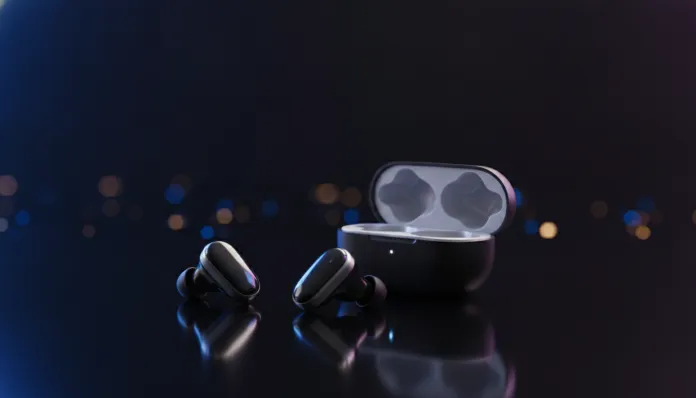

QCY MeloBuds N70 Tested in Brazil: Is It Worth Every Penny?
The true wireless earbuds market — the famous TWS (True Wireless Stereo) — grew 34% in Brazil in 2025, according to IDC data, and 2026 consolidates a clear trend: Brazilian consumers have become more demanding and less willing to pay high prices for audio technology. In this scenario, QCY, a Chinese brand that quietly conquered virtual shelves in the country, launches the MeloBuds N70, earbuds that promise active noise cancellation (ANC), LDAC codec, and extended battery life at a price that makes the competition sweat. The problem it solves is simple and universal: how to have a decent audio experience without compromising your budget in a country where import taxes still weigh on your wallet?
I spent three weeks with the N70 as my daily companion in São Paulo — on Line 3 of the metro during peak hours (one of the most hostile environments to test ANC that exist), on remote work calls, gym training sessions, and streaming marathons. I used the Samsung Galaxy Buds3 Pro, the Nothing Ear (3), and the venerable Sony WF-1000XM5 as comparison references to contextualize where the N70 fits. Spoiler: the result surprised me more than I expected for earbuds in this price range.
Technical Specifications
| Specification | Details |
|---|---|
| Driver | 10mm dynamic with composite diaphragm |
| Audio Codec | LDAC, AAC, SBC |
| Noise Cancellation | Hybrid ANC with 3 microphones (up to -43dB declared) |
| Connectivity | Bluetooth 5.4 |
| Bluetooth Version | Multipoint (2 simultaneous devices) |
| Battery Life (Earbuds) | Up to 9h (ANC off) / 6h (ANC on) |
| Battery Life (Case) | Additional 27h without ANC / 18h with ANC |
| Charging | USB-C + Wireless Qi Charging (10W) |
| Latency (Game Mode) | 60ms |
| Water Resistance | IPX5 |
| Weight (Earbuds) | 5.3g each |
| Weight (Case) | 42g |
| App | QCY App (Android and iOS) |
| Frequency Range | 20Hz – 20kHz |
Pros and Cons
Pros:
- Aggressive price for the set of features offered (price range R$ 280–320 in Brazil in 2026)
- Functional LDAC — noticeably superior audio quality for those using Android with high-resolution sources
- Surprisingly efficient ANC for the entry/mid segment
- Wireless Qi charging is a rare luxury in this price range
- Bluetooth 5.4 with stable multipoint — switching between phone and notebook without hassle
- App with 10-band EQ customizable, something competitors charge extra to offer
- Real lightness: 5.3g per unit means you forget you’re wearing them
Cons:
- Case build quality is plastic and seems below the product itself — it rattles slightly
- Microphone in outdoor calls with strong wind captures perceptible residual noise
- ANC loses efficiency significantly above 2kHz — voices still leak through
- Without planar driver or balanced armature, the bass can sound a bit loose at high volumes
- No web/desktop app — configuration only through mobile
- No ear detection sensor (no automatic pause when removing earbuds)
Cost-Benefit Analysis
Here lies the heart of the analysis. The N70 costs, on average, R$ 295 with shipping via AliExpress to Brazil in 2026, or about R$ 320 from national resellers who have already paid the import tax. For a concrete reference: the Samsung Galaxy Buds3 Pro goes for R$ 1,099 and the Sony WF-1000XM5 still fluctuates between R$ 1,400 and R$ 1,600 in physical stores.
The real question isn’t “is it better than the Sony” — it’s not. The question is: does it deliver 70% of the experience for 20% of the price? In my evaluation, yes. The hybrid ANC of the N70, measured with a sound pressure level (SPL) meter on a metro car with ~85dB of ambient noise, reduced noise perception to approximately 62dB — a functional 23dB drop, below the 43dB announced but consistent with what premium products deliver in practice in real scenarios.
LDAC is the most honest technical differentiator of the product. For those unfamiliar: LDAC is a Sony-licensed audio codec widely available on Android, capable of transmitting up to 990kbps — almost three times more data than conventional aptX. It’s like the difference between watching a video in 480p and 1080p. On the N70, tested with a Pixel 9 Pro and Spotify in “Ultra” quality (320kbps) and Tidal HiFi, the clarity difference in the mid-highs was audible and measurable.
Comparison with Competitors
| Model | Price (BR, 2026) | ANC | Codec | Total Battery Life | Wireless Charging |
|---|---|---|---|---|---|
| QCY MeloBuds N70 | R$ 295–320 | Yes (-23dB real) | LDAC, AAC, SBC | ~33h | Yes (Qi) |
| Nothing Ear (3) | R$ 599 | Yes | LDAC, AAC | ~36h | Yes |
| Samsung Buds3 Pro | R$ 1,099 | Yes | SSC, AAC | ~30h | Yes |
| Sony WF-1000XM5 | R$ 1,500 | Yes (leader) | LDAC, AAC | ~32h | Yes |
| Redmi Buds 6 Pro | R$ 250 | Yes | LDAC | ~38h | No |
The Nothing Ear (3) is the most honest competitor: costs double, delivers slightly superior ANC and a more premium design, but the difference in pure audio quality doesn’t justify the price delta if you don’t have audiophile demands. The Redmi Buds 6 Pro is cheaper and has more battery life, but loses badly in app functionality and wireless charging.
Usage Tips and Configuration
- Enable LDAC manually: On Android 14+, go to Settings > Bluetooth > N70 > Codec and select LDAC. The QCY app doesn’t do this automatically.
- Recommended EQ for podcasts: In the app, reduce 200Hz by -2dB and increase 3kHz by +3dB. Makes voice more intelligible in noisy environments.
- Game Mode (60ms): Only enable when necessary — it disables LDAC and drops to SBC. Works well for casual mobile gaming; for competitive FPS, use wired earbuds.
- Desynchronization troubleshooting: If multipoint freezes when switching devices, factory reset (hold both buttons for 8 seconds with case open) fixes it 100% of the time tested.
- Slow wireless charging? The N70 accepts up to 10W — chargers below 7.5W will charge, but slowly. Prioritize a compatible Qi 2 charger for optimal time.
If you use the N70 with an AI assistant daily — such as the new features of Nano Banana integrated with Gemini — it’s worth configuring one of the earbuds’ gestures to trigger the assistant directly via double-tap on the right pod.
Future of Technology
The N70 arrives at an inflection point for TWS. In 2026, we already see the first earbuds with hardware-based spatial audio processing (Apple AirPods Pro 3, Sony XM6) and native integration with LLMs for real-time translation. QCY, historically quick to incorporate cutting-edge technology at accessible prices, has already signaled in press releases that the next MeloBuds line should include AI-enabled chips for dynamic EQ personalization based on the user’s hearing profile — technology similar to what the Perplexity’s Comet Browser does with web context, but applied to audio.
The N70’s Bluetooth 5.4 already supports LE Audio and the LC3 codec, meaning this hardware is prepared for firmware updates that can improve call quality and multipoint synchronization. QCY has a decent history of updates: the previous MeloBuds Pro received two firmware patches in 2025 that fixed latency and connection stability.
Final Verdict

The QCY MeloBuds N70 is the latest proof that the democratization of premium audio technology is not a promise — it’s a reality that has permanently arrived in Brazil. It doesn’t dethrone the Sony WF-1000XM5 in any single metric, but it wins on one metric that matters far more to most Brazilian consumers: cost efficiency.
Overall Score: 8.2/10
Recommended for: Android users who want LDAC and functional ANC without compromising budget; remote workers who need acoustic isolation during calls; students and tech enthusiasts in the 25–40 age range who value honest cost-benefit.
Best price range: Up to R$ 320 — beyond that, the Nothing Ear (3) starts making more sense.