


Xiaomi S40C vs Roborock Q7 Max: Which robot vacuum to buy in 2026
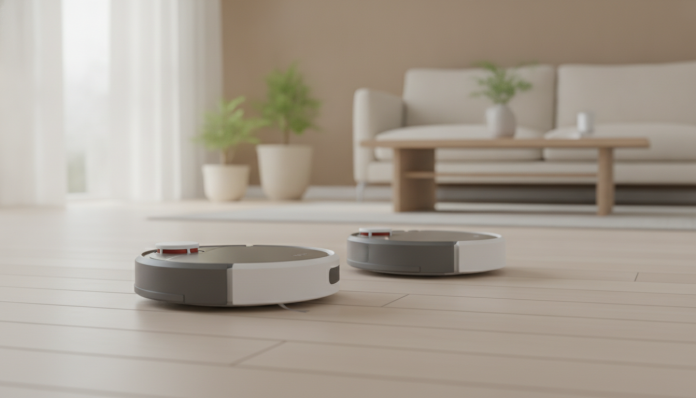
Choosing between two robot vacuums from different brands with similar proposals on paper can be frustrating. The Xiaomi S40C and the Roborock Q7 Max compete for the same budget, but with distinct product philosophies. One bets on integration with the Xiaomi ecosystem and value for money; the other carries the reputation of being a pioneer in the premium segment of LiDAR-mapped robots. The doubt about which one to choose is legitimate, and this comparison will help you decide based on real specifications, without guesswork.
The target audience for both models is those who want to truly automate cleaning with scheduled routines, multi-floor mapping, and voice assistant integration. If you’re just looking for a basic robot to sweep occasionally, both are more than you need. If you want to replace your conventional vacuum and have a medium or large apartment, they’re worth considering.
The short answer: the Roborock Q7 Max delivers more refinement in software and suction, but costs more in Brazil. The Xiaomi S40C is the more affordable option, with good performance for those already in the Mi Home ecosystem. The details below explain where each one falls short and where it excels.
Comparative technical specifications
| Specification | Xiaomi S40C | Roborock Q7 Max |
|---|---|---|
| Navigation | LiDAR (laser) | LiDAR (laser) |
| Maximum suction | 4,000 Pa | 4,200 Pa |
| Water tank | Yes (electronic) | Yes (electronic) |
| Battery autonomy | Up to 180 min (according to manufacturer) | Up to 180 min (according to manufacturer) |
| Multi-floor mapping | Multiple | Multiple |
| No-go zones | Yes | Yes |
| Voice assistant compatibility | Google, Alexa, Siri | Google, Alexa, Siri |
| Control app | Mi Home / Xiaomi Home | Roborock App |
| Noise level | Not officially disclosed | Not officially disclosed |
| Dimensions (D x H) | Check official technical sheet | 353 x 96.5 mm |
| Weight | Check official technical sheet | 3.9 kg |
| Price range in Brazil | R$ 2,000 to R$ 2,600 (varies) | R$ 2,800 to R$ 3,500 (varies) |
| Reference price USA (launch) | Check official technical sheet | US$ 349 (approximate launch) |
| Anatel approval | Check before importing | Check before importing |
> Prices gathered from Brazilian market stores in 2026 and may vary depending on the seller and exchange rate. Always check the official technical sheet before purchasing.
Navigation and mapping: where each LiDAR makes a difference
Both robots use LiDAR (Light Detection and Ranging), which is essentially a laser sensor that maps the environment in real time, like a radar but with light. This is different from cheaper models that use cameras or just infrared sensors, which make far more mistakes in dark environments or spaces with many obstacles.
The Roborock Q7 Max uses PreciSense LiDAR navigation technology, which the manufacturer describes as capable of generating more detailed maps with higher precision in detecting small obstacles. The Xiaomi S40C also delivers competent LiDAR mapping, but Xiaomi doesn’t detail the specific sensor generation with the same level of public documentation that Roborock does. In practice, both build multi-floor maps and allow you to create restricted zones (no-go zones) and personalized routines by room.
The Roborock app historically receives more software updates and has an interface considered more refined by those who use both ecosystems. The Mi Home app is functional and integrates well with other Xiaomi products, but can be more generic depending on what you expect in terms of customization.
Suction and dry cleaning: 4,000 Pa vs 4,200 Pa in the real world
The difference of 200 Pa between the two models is, in practice, imperceptible for most users. Pa (Pascal) is the unit of pressure that measures the force of suction; the higher the number, the stronger the vacuum pulls dirt. For reference, basic models range between 1,500 and 2,000 Pa. Both here are well above that.
What really distinguishes dry cleaning performance is not this 200 Pa difference, but rather the design of the brush roll and suction management by zone. The Q7 Max uses V-shaped brushes that Roborock says reduce hair tangling, which is a relevant practical point for those with pets or long hair at home. The Xiaomi S40C uses a similar configuration, but the detailed specifications of the brush vary depending on the product version, so it’s worth checking the official technical sheet of the model sold in Brazil.
Both handle pet hair well on low carpets and everyday dirt on tile floors. For higher carpets or rooms very full of low furniture, both may have reach limitations, and neither substitutes a vertical dust vacuum for occasional deep cleaning.
Mopping function: the point that separates user profiles
Here begins a more relevant difference. Both have electronic water tanks, which control the water flow to the cleaning cloth via app. This is superior to passive tanks (which only drip by gravity, without control), because you can adjust humidity depending on the floor type.
The Roborock Q7 Max offers multi-level flow control and the ability to create zones where the mop is deactivated, such as carpets, even if the robot passes over them. This feature is called no-mop zones and is very useful for those with rugs scattered around the apartment. The Xiaomi S40C also offers electronic water control, but the level of granularity in mop settings depends on the firmware version, and you should check in the app before buying if this feature meets your needs.
Neither automatically lifts the cloth when passing over carpets. If you have many high rugs, consider models with automatic mop lifting systems, which are in other price ranges.
Software, integrations, and app experience
Both Mi Home and the Roborock app are compatible with Google Assistant and Amazon Alexa, allowing voice commands like “Alexa, tell the robot to clean the living room.” Both also work with Apple HomeKit in some markets, but compatibility may vary by firmware version and region. Confirm this before buying if HomeKit automation is a priority for you.
The Roborock ecosystem has a clear advantage in support history: the company releases frequent software updates that add features, and documentation of issues and solutions in the community is more extensive. If you already use other Xiaomi products, Mi Home integrates everything into one app, which is a real convenience in daily use. For those without other Xiaomi devices, that advantage disappears.
By the way, if you like to evaluate gadgets analytically before buying, as you would when researching headphones or smartwatches, you might be interested in the Review QCY T13 ANC 2 in 2026: is it worth the investment?, which follows the same approach of comparing specifications with what the product actually delivers.
Availability in Brazil, warranty, and importing
This is a critical point for robot vacuums. Both models are sold in Brazil, but the Anatel certification situation may vary depending on the imported version or those sold by non-official resellers. Anatel certification ensures that the product has been tested and approved for use in Brazil, which directly affects warranty and post-sales support.
Roborock has a more consolidated presence in Brazilian marketplaces with national stock, and some versions have already been certified for the local market. Xiaomi also operates in Brazil with national versions of some products, but it’s essential to check whether the S40C you’re buying is the BR version or a parallel import, because this changes everything in terms of warranty and voltage.
- Always prefer to buy from stores with invoices and at least 1 year warranty
- Check the Anatel certification number on the packaging or in the product’s technical sheet
- Stores like Magazine Luiza, Americanas, and Amazon Brasil usually have versions with local warranty
- Imports via AliExpress may be cheaper, but you assume the risk of no warranty and no national technical support
Which one to choose: recommendation by profile and budget
The choice between the two depends more on your context than on a clear technical superiority of one over the other.
Choose the Xiaomi S40C if:
- You already use other Xiaomi ecosystem products and want everything integrated into Mi Home
- Your budget is tight and you want to save R$ 600 to R$ 800 compared to the competitor
- You prioritize value for money and accept slightly less refined software
- Your apartment has few rugs and the basic mop already solves the problem
Choose the Roborock Q7 Max if:
- You have rugs scattered around your apartment and need no-mop zones
- Software quality and software update history are important criteria for you
- You have pets and value the brush roll with lower hair tangling tendency
- The budget allows you to spend more on a product with greater overall refinement
If the Q7 Max price is too heavy, Roborock also has the Q5+ and Q Revo lines, which can be interesting alternatives depending on availability in Brazil in 2026. It’s worth researching the versions available in national stores before closing the purchase.
Frequently asked questions about Xiaomi S40C and Roborock Q7 Max
Do both work in small apartments?
Yes, both work well in apartments of any size, but LiDAR mapping is especially useful in larger spaces and multiple rooms. In very small apartments, simpler and cheaper models may work just as well.
Do I need to assemble the charging base with tools?
No. The bases of both models are plug-and-play: you position it on the floor near an outlet and the robot learns to find it on its own after the first mapping. There’s no technical installation.
Can the robot start cleaning on its own with the house empty?
Yes, this is one of the strong points of both. Through the app, you program cleaning schedules and routines. The robot acts autonomously, returns to the base when finished or when the battery runs low, and resumes where it left off after recharging.
Which one is quieter?
Neither manufacturer officially discloses the decibel levels of operation for the S40C or Q7 Max in a standardized way for direct comparison. In general, robots with LiDAR in this suction range operate between 60 and 70 dB in maximum mode. If noise is a deciding factor for you, look for user reports on forums like Reddit and specialized groups, where there are independent measurements.
If you’re researching other technology categories to optimize your routine beyond smart home gadgets, you might be interested in tools for digital productivity. One of them is the use of AI for everyday tasks, such as writing texts. To understand the current landscape, the comparison Which free AI writes better essays for ENEM 2026? shows how different tools perform on structured writing tasks.
In the end, both the Xiaomi S40C and the Roborock Q7 Max are competent robots that will transform your cleaning routine. The price difference between them is real and justified by the refinement of the software and the extra features of the Q7 Max. If you can afford the difference, Roborock delivers more. If budget is the deciding factor, the S40C does what it promises without disappointing.