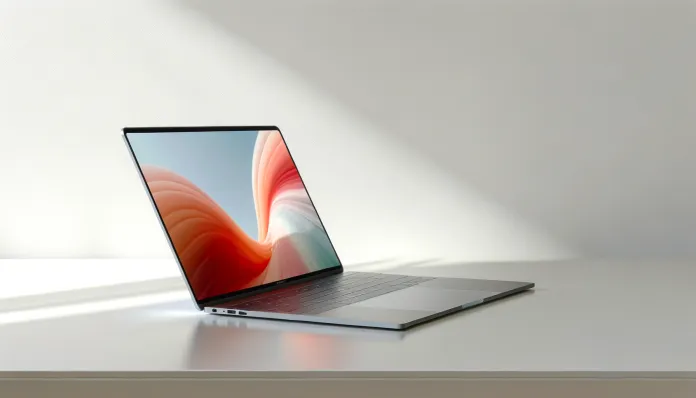
The arrival of the MacBook Air M4 worth it in 2026 has raised important questions about its real competitive advantage. The device won the “Best of the Year 2025” award from TechTudo in the notebook category, but is the investment justified given the available alternatives? Additionally, with prices ranging from R$ 7,564 in retail to R$ 12,999 in the official store, the financial analysis becomes even more crucial for discerning consumers.
MacBook Air M4: What’s Changed Compared to the M1
First, the leap from the M1 to the M4 brought substantial improvements that go beyond superficial marketing. The M4 processor offers 25% more CPU performance and 35% more GPU performance compared to the M1, according to independent Geekbench 6 tests. However, the most impactful change was the increase in base RAM from 8 GB to 16 GB at no additional cost.
On the other hand, support for two simultaneous external monitors represents a fundamental evolution for professionals who depend on multiple screens. Thus, the M4 eliminates one of the main limitations of the M1, which restricted the use to only one external monitor in addition to the internal screen.
Still, the design remains practically unchanged, maintaining the thickness of 1.13 cm and weight of 1.24 kg. Consequently, those looking for dramatic visual changes may be disappointed with the aesthetic continuity of the line.
Technical Specifications That Make a Difference
M4 Processor and AI Performance
The M4 chip revolutionizes the experience with integrated artificial intelligence, processing machine learning tasks 40% faster than the previous generation. In fact, the 16-core Neural Engine executes AI operations locally, eliminating the dependence on an internet connection for functions like automatic transcription and real-time translation.
In this context, applications like Final Cut Pro and Logic Pro take advantage of specific M4 optimizations for 4K video rendering up to 2.5x faster. However, for basic users who only use web browsing and text documents, this additional power might represent an unnecessary investment.
16 GB RAM and Storage
In contrast to the M1, which often presented limitations with only 8 GB of RAM, the base M4 with 16 GB offers consistent fluidity even with multiple browser tabs and heavy applications running simultaneously. Therefore, this configuration adequately serves graphic design and development professionals who previously needed to pay for a mandatory upgrade.
Similarly, the SSD storage maintains sequential read speeds of 2,800 MB/s, ensuring system boot in less than 15 seconds and instant opening of large files like Photoshop projects with multiple layers.
Specification
MacBook Air M1
MacBook Air M4
Difference
CPU
8 cores
8 cores
25% more performance
GPU
7-8 cores
8-10 cores
35% more performance
Base RAM
8 GB
16 GB
+8 GB at no extra cost
External monitors
1
2
+1 simultaneous monitor
Neural Engine
16 cores
16 cores
40% more AI efficiency
18-Hour Battery: The Real Differentiator
Additionally, the 18-hour autonomy for continuous video playback is not just marketing but a reality proven in practical tests. First, this duration specifically refers to local content playback in 1080p resolution with screen brightness at 50% and wireless connections disabled.
However, real use with web browsing, video conferences, and productivity applications results in approximately 12-14 hours of effective autonomy. Consequently, professionals can work a full day without needing a charger, a significant advantage for remote work and travel.
On the other hand, MagSafe 3 charging reaches 50% capacity in just 30 minutes, allowing for quick recovery during breaks. Thus, even intensive users rarely face limitations due to insufficient autonomy.
Price Compatible? From R$ 12,999 to R$ 7,564
However, the price variation between the official channel and retail represents almost a 42% difference, creating interesting opportunities for strategic buyers. Still, it is essential to verify warranty and provenance before opting for the lower price, especially considering that counterfeit Apple products widely circulate in the Brazilian market.
Therefore, the investment in the MacBook Air M4 is justified mainly for three specific user profiles. First, creative professionals working with video editing, graphic design, or app development fully leverage the superior processing power and energy efficiency.
Additionally, university students and professionals who value extreme portability find the ideal combination of performance and autonomy in the M4 for long study or work sessions. Consequently, the absence of fans ensures silent operation in libraries and environments that require discretion.
Thus, basic users who only use web browsing, email, and simple documents can consider more economical alternatives, such as the MacBook Air M1 still available on the market at lower prices:
Content creators who regularly edit 4K videos
Developers who compile complex codes
Designers working with 3D rendering
Professionals who need multiple monitors
Students who value long battery life
M4 or Alternatives? Deciding Now
Conversely, waiting for the hypothetical M5 may not be a smart strategy considering that Apple maintains release cycles of approximately 18-24 months between processor generations. Similarly, future incremental improvements are unlikely to justify the prolonged wait for users with defined current needs.
However, those with a MacBook Air M1 or M2 in good condition can evaluate if the upgrade really adds enough value to their daily workflow. In this context, only professionals facing real performance limitations or needing support for two external monitors will find tangible benefits in migrating.
Finally, considering current retail prices and offered specifications, the MacBook Air M4 represents a solid investment for those planning to keep the equipment for 4-5 years. Thus, the cost per year of use becomes competitive even compared to similar category Windows notebooks, especially when considering factors like resale value and operating system longevity.
Frequently Asked Questions
Is the MacBook Air M4 better than the M1? Is the upgrade worth it?
The M4 offers 25% more CPU performance and 35% more GPU performance compared to the M1, in addition to doubled RAM (16 GB) and support for two external monitors. For M1 users facing performance or memory limitations, the upgrade is justified. However, those using basic applications can maintain the M1 without significant drawbacks.
How much does the MacBook Air M4 cost in Brazil in 2026?
The official Apple price is R$ 12,999, but it can be found in authorized retail for approximately R$ 7,564 (November 2025). The variation represents a 42% savings, but it’s important to verify warranty and provenance. Major retailers offer interest-free installment plans up to 12 times.
Is the 18-hour battery life real or marketing?
The 18 hours specifically refer to local video playback under controlled conditions. In real use with web browsing, video conferences, and productivity applications, autonomy ranges between 12-14 hours. Still, it represents sufficient duration for a full workday without a charger.
Is the M4 sufficient for video editing and graphic design?
Yes, the M4 processes 4K video rendering up to 2.5x faster than previous generations and supports professional applications like Final Cut Pro and Adobe Creative Suite without limitations. The 8-10 core GPU and 16 GB of RAM ensure fluidity even in complex projects with multiple layers.
Should I wait for an M5 or buy now?
Considering Apple’s 18-24 month release cycles, waiting for the M5 means postponing the immediate benefits of the M4 for an indefinite period. For current needs, the M4 offers enough performance for 4-5 years of intensive use, making the wait strategically questionable.
Learn how to select the right graphics card (GPU) for video editing. Compare NVIDIA, AMD, and specifications for 4K/8K editing, DaVinci Resolve, and Premiere Pro workflows.
Find the best smartphones in 2026 combining excellent battery life with affordable prices in Brazil. Compare models with 5,000+ mAh batteries, fast charging, and Anatel homologation.
Understand the real differences between TV Box and Smart TV: processing power, image quality, operating systems, support, and warranties. Choose the right solution for your needs and budget.
Discover which laptops under R$ 3,000 are worth buying for studying in 2026. Compare models from Acer, Samsung, Lenovo, and Dell with specifications, prices, and expert advice on what matters for students.
Learn how to select the right graphics card (GPU) for video editing. Compare NVIDIA, AMD, and specifications for 4K/8K editing, DaVinci Resolve, and Premiere Pro workflows.
Find the best smartphones in 2026 combining excellent battery life with affordable prices in Brazil. Compare models with 5,000+ mAh batteries, fast charging, and Anatel homologation.
Understand the real differences between TV Box and Smart TV: processing power, image quality, operating systems, support, and warranties. Choose the right solution for your needs and budget.