

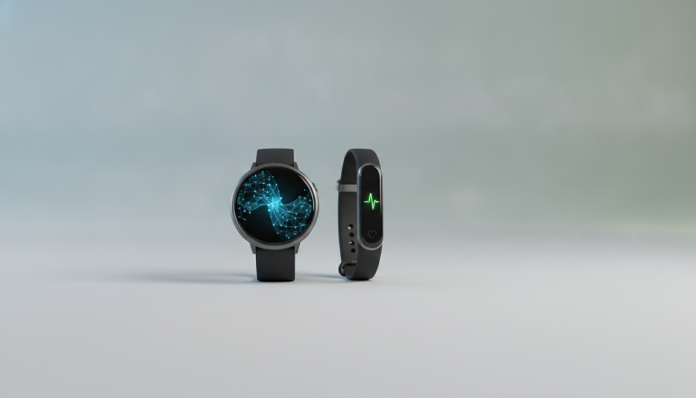

Smartwatch vs Fitness Tracker: Which Should You Choose in 2026
You want to monitor your health, receive notifications on your wrist, and maybe pay by proximity on the metro, but you’re torn between a smartwatch and a fitness tracker. The difference between the two goes far beyond size: they’re different philosophies of use, with direct implications for price, battery life, and what you can do day-to-day.
The short answer: if you want a discreet, lightweight device with a week or more of battery life and a focus on health monitoring, a fitness tracker is for you. If you need the autonomy to use apps, reply to messages, listen to music offline, or have a larger screen to glance at information, a smartwatch delivers more, but charges a higher price in dollars, in reais, and in frequent recharging.
Before deciding, it’s worth understanding what each category actually offers, because the 2026 market has scrambled the boundaries between the two formats quite a bit.
Comparison table: smartwatch vs fitness tracker
| Criteria | Smartwatch | Fitness Tracker |
|---|---|---|
| Screen size | 1.5″ to 2.0″ (typically) | 0.9″ to 1.7″ (typically) |
| Operating system | WearOS, watchOS, Tizen-derived, proprietary RTOS | Proprietary RTOS (Zepp OS, Mi Fitness OS, etc.) |
| Third-party apps | Yes (most top-tier) | Rarely |
| Average battery | 1 to 3 days (active use) | 7 to 21 days |
| Built-in GPS | Yes (mid and premium models) | Depends on model; many have GPS |
| NFC / payments | Yes (selected models) | Rare; some Xiaomi and Fitbit models |
| Health monitoring | Complete | Complete on top models; simplified on basic |
| Price in Brazil (2026 estimate) | R$ 900 to R$ 5,000+ | R$ 200 to R$ 900 |
| Average weight | 30 g to 60 g | 15 g to 30 g |
Prices vary according to exchange rate, store, and promotion. Always check the updated value before buying.
What each one actually monitors
Both formats have evolved greatly in health monitoring, but with different depths. A modern smartwatch, like the Apple Watch Series 10 (launched in 2024 and still a reference in 2026) or the Galaxy Watch 7, includes ECG sensors (electrocardiogram, which detects irregularities in heart rhythm), SpO2 (pulse oximetry, measures blood oxygen level), and in some cases, body composition analysis by bioimpedance.
Fitness trackers like the Xiaomi Smart Band 9 or Fitbit Charge 6 also bring SpO2 and continuous heart rate, but ECG usually stays out or only appears in pricier line models. For those who want detailed training data with their own GPS, both formats already deliver, but check the specific model’s spec sheet: not every tracker has built-in GPS and some depend on your phone to trace routes (this is called assisted GPS or Connected GPS).
If your focus is basic health control (sleep, steps, calories, heart rate), any mid-range fitness tracker will solve it with ease and money left over in your pocket.
Battery: the difference that changes your routine
This is the clearest divide between the two worlds. A smartwatch with a large AMOLED screen and a processor capable of running apps consumes much more energy. The Apple Watch Ultra 2, according to Apple, delivers up to 60 hours with low power mode enabled. The Galaxy Watch 7 standard, according to Samsung, lasts up to 40 hours in savings mode. In actual normal use with active notifications, GPS, and screen always on, expect one to two days.
Fitness trackers live on a different level. The Xiaomi Smart Band 9, according to Xiaomi, promises up to 21 days of typical use. The Fitbit Charge 6, according to Google/Fitbit, reaches seven days. This changes your relationship with the device: you simply forget to recharge and it keeps working.
For those who travel, do long hikes, or simply hate remembering to charge another gadget, the fitness tracker wins on technical points. If you already have the habit of plugging in your phone every night and don’t mind doing the same with your watch, the smartwatch stops being a problem at that point.
Software, apps, and phone integration
Here the smartwatch has a clear advantage. Platforms like WearOS (Google) and watchOS (Apple) allow you to install third-party apps directly on your wrist: Spotify, Maps, banking apps, simple games, and much more. You can reply to messages with voice or keyboard, make calls independently (on models with eSIM chip), and use your watch as a remote control for camera or presentations.
Fitness trackers work with a proprietary app on your phone (Xiaomi’s Mi Fitness, Google’s Fitbit, Amazfit’s Zepp) and don’t accept external apps. Interaction on the tracker is passive: you see notifications, but rarely respond; you see health data, but fine control stays on the smartphone. This isn’t necessarily bad. Closed systems tend to be more stable, consume less battery, and are easier to use for those who don’t want to learn a new interface.
An important detail for Brazilian users: check compatibility with Android or iOS before buying. Some Apple Watch functions, for example, are exclusive to iPhone. Smartwatches with WearOS work better with Android, but most have basic compatibility with both systems.
Brazilian context: price, Anatel, and where to buy
In Brazil, import costs and exchange rates make a significant difference. An Apple Watch SE (second generation, reference still valid in 2026) costs around US$ 249 in the US. In Brazil, the same model can be found between R$ 2,000 and R$ 2,800 depending on the store, according to price research in national e-commerce. Models with Anatel homologation (mandatory certification for selling radiofrequency equipment in Brazil) have official support, one-year legal warranty, and authorized technical assistance in the country.
Fitness trackers like the Xiaomi Smart Band 9 start from R$ 250 to R$ 350 in Brazilian stores, and the Amazfit Band 7 appears in similar ranges. These models already enter Brazil through official channels, with invoice and warranty. Buying from direct import can be cheaper, but you lose local warranty, support, and risk encountering problems with non-homologated radio frequencies.
If budget is a real factor in your decision (and for most people it is), it’s also worth checking our guide on the best smartphone with good battery and fair price in 2026 to understand how the wearable fits into your current smartphone ecosystem before buying.
Design and everyday use
Smartwatches look like watches. With leather, steel, or premium silicone straps, many models pass the dress code in corporate settings without drawing attention. The Samsung Galaxy Watch 7, for example, has a 40 mm case available, which makes it reasonably discreet for a man or woman with a smaller wrist. Apple offers finishes in titanium and aluminum with various strap options.
Fitness trackers are lighter and less intrusive. Anyone who does gym work, wears work gloves, or simply prefers not to feel the device on their wrist will appreciate the thin profile of a Band or Charge. On the other hand, the smaller screen limits reading long notifications and the look is clearly more sporty than sophisticated.
Frequently asked questions about smartwatches and fitness trackers
Is a fitness tracker good for weightlifting?
It works well for heart rate monitoring and calories during the workout. To record sets, reps, or specific strength variables, you’ll need an app on your phone or a smartwatch with more robust training apps. Check if the fitness tracker you want integrates with apps like Google Fit, Apple Health, or Strava.
Does a smartwatch work without a phone nearby?
It depends on the model. Smartwatches with eSIM chip (like LTE versions of Apple Watch or Galaxy Watch) work independently for calls and data. Models without eSIM need the phone close for real-time notifications, but still execute local apps and record health data normally.
Does a fitness tracker have NFC for payments?
Some models do, but it’s a minority. The Fitbit Charge 6 includes NFC compatible with Google Wallet in the US; availability in Brazil depends on integration with local banks, which in 2026 is still limited. Check the list of compatible banks before buying if contactless payment is a priority.
Is it worth buying imported to save money?
It can be worth it in terms of price, but the risks are real: without Anatel homologation, without legal warranty in Brazil, without authorized technical assistance. If the product has a defect, you pay for international shipping or lose the equipment. For those with import experience and who accept the risk, it’s an option. For carefree everyday use, prefer official channels.
Which one to choose for your profile
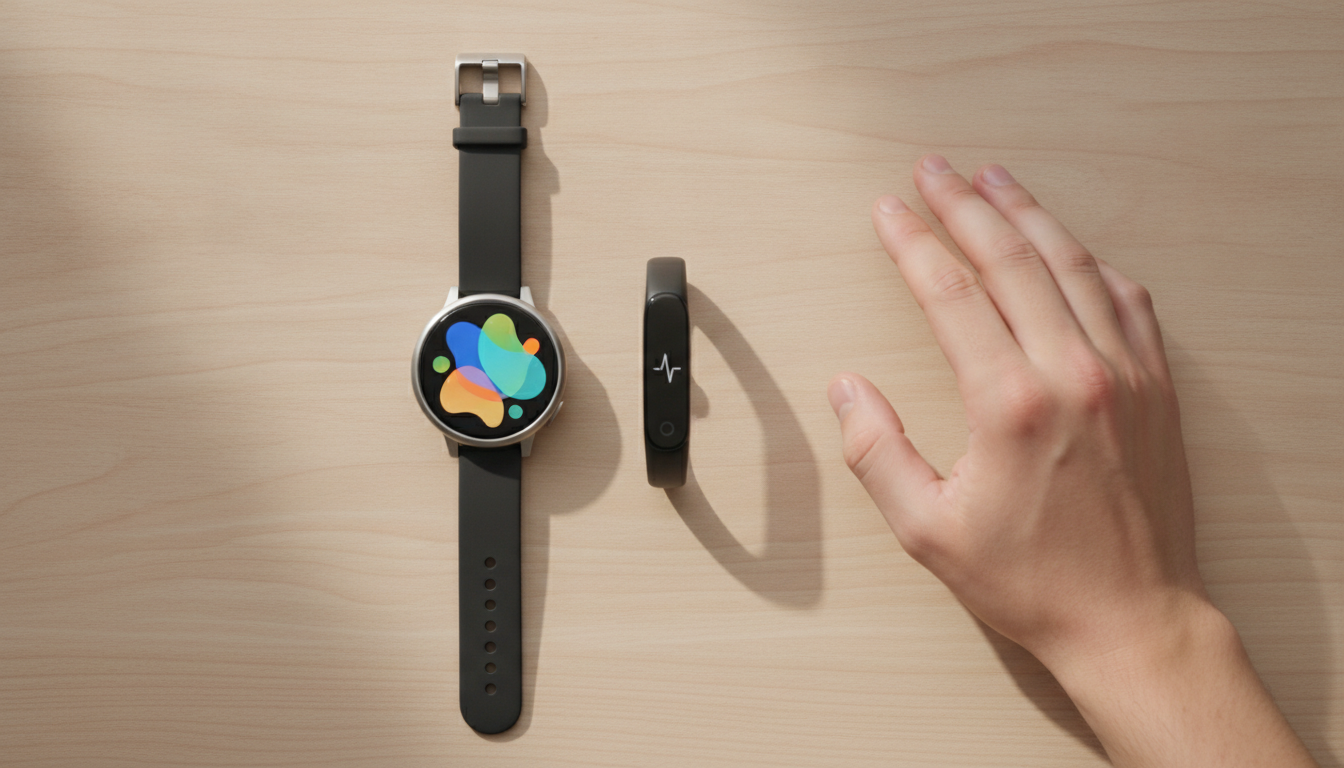
The final decision depends less on specs and more on how you use technology day-to-day.
Choose a fitness tracker if:
- Long battery life is non-negotiable for you
- Your budget goes up to R$ 600
- You want health monitoring without a learning curve
- You practice sports and want a light, durable device
- You don’t need to install apps or reply to messages from your wrist
Choose a smartwatch if:
- You want to use apps on your wrist (music, maps, banking)
- You need ECG, fall detection, or advanced health features
- You have an iPhone and want complete integration with the Apple ecosystem
- Design matters and you want something that looks like a real watch
- You don’t mind recharging daily or every two days
If you’re still assembling your gadget ecosystem and want to understand how each device fits into the bigger picture, it’s worth reading about TV Box vs Smart TV: which to buy for your home in 2026 to get a broader view of how to make buying decisions by usage profile, not just isolated specs.
The wearables market in 2026 is more competitive than ever. Fitness trackers do much more than three years ago, and cheap smartwatches disappoint less than before. But the right question isn’t which is better on paper: it’s which one solves your specific problem at the price that fits your budget.