

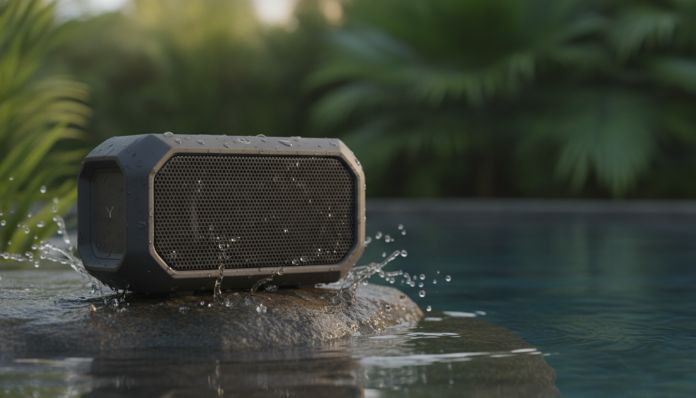

Waterproof Bluetooth speaker under R$ 300: the best options to buy in Brazil in 2026
You want a speaker to take to the beach, pool or bathroom without fear of water splashes, but you don’t want to spend a fortune. The good news is that the 2026 market offers options with real water resistance certification, decent battery and satisfactory audio quality for up to R$ 300. The bad news: not every “waterproof” speaker can handle what it promises, and understanding what’s in the technical specifications makes the difference between a product that lasts years and one that fails on the first splash.
This is a comparison designed for those who want to make a practical decision. We will analyze the most accessible and well-rated models available in Brazil, explain what certification numbers really mean, and help you choose without regret.
What “waterproof” really means: understanding IP and IPX
Before comparing any model, you need to understand the acronym IPX (or IP, followed by two digits), which appears on the technical sheet of every water-resistant speaker. IP stands for “Ingress Protection” — protection against the entry of particles and liquids. The first digit indicates protection against dust; the second, against water. When you see “X” instead of the first digit, it means that factor was not tested or certified.
See what each level of water protection represents in practice:
- IPX4: resists splashes from any direction. Good for light rain and sweat, but not for immersion.
- IPX5: withstands low-pressure water jets. Good for shower and outdoor pool.
- IPX7: supports immersion in up to 1 meter depth for up to 30 minutes. Minimum level if you want to throw the speaker in water.
- IPX8: immersion beyond 1 meter, with depth defined by manufacturer. More robust, but rare at this price point.
- IP67 / IP68: both digits combined — dust and water. Most complete for heavy outdoor use.
In the range up to R$ 300, most models fall between IPX7 and IP67. Be careful: “water-resistant” without specified certification guarantees absolutely nothing.
Comparison: best waterproof Bluetooth speakers up to R$ 300
The table below brings together the main models available in Brazil in 2026. Prices are approximate ranges and vary according to the seller, promotions and exchange rates (for imported models). Always check the current price before buying.
| Model | Certification | Battery (declared) | Power | Bluetooth | Approx. Price (BR) |
|---|---|---|---|---|---|
| JBL Clip 5 | IP67 | up to 12h | 5W | 5.3 | R$ 230 to R$ 270 |
| JBL Go 4 | IP67 | up to 7h | 3W | 5.3 | R$ 170 to R$ 220 |
| Anker Soundcore Mini 3 Pro | IPX7 | up to 15h | 5W | 5.0 | R$ 180 to R$ 240 |
| Marshall Willen II | IP67 | up to 15h | not disclosed | 5.3 | R$ 270 to R$ 310* |
| Sony SRS-XB100 | IP67 | up to 16h | not disclosed | 5.2 | R$ 230 to R$ 280 |
| Multilaser SP346 | IPX7 | up to 6h | 5W | 5.0 | R$ 90 to R$ 130 |
*The Marshall Willen II may exceed R$ 300 depending on the seller; included because it’s a relevant alternative close to the ceiling.
Audio quality at the entry price point: what to expect (and what not to)
Compact and cheap speakers have real physical limitations. With small drivers — usually between 40mm and 60mm — and tiny enclosures, deep bass simply doesn’t fit. What you’ll hear is audio with reasonable mids and treble, and a sub-bass that the manufacturer tries to compensate for with digital equalization processing.
The JBL Clip 5 and JBL Go 4 are known for brighter sound, with well-highlighted vocals. According to JBL’s official technical sheet, both use a passive radiator — an extra component that vibrates to reinforce low frequencies without its own motor, functioning as a “mechanical boost” for bass. The result is noticeable, but don’t expect the bass of an R$ 800 speaker.
The Anker Soundcore Mini 3 Pro, according to Anker’s technical sheet, uses an equalizer via app (Soundcore), which gives more control over sound. For those who like to adjust the sound profile, this flexibility is a concrete advantage. The Sony SRS-XB100, meanwhile, is part of Sony’s XB (Extra Bass) line, with dedicated processing for low frequencies as specified by the manufacturer.
For a pool party or shower soundtrack, any of these models deliver. For critical music listening or professional audio work, none of them work — and they’re not made for that.
Battery, connectivity and extra features that make a difference
Battery is one of the most important criteria in this category. The numbers declared by manufacturers are always measured under controlled conditions at moderate volume, without excessive equalization. In practice, expect about 20% to 30% less at high volume. That said:
- The Sony SRS-XB100 declares up to 16 hours of battery life, an impressive number for its size.
- The Anker Soundcore Mini 3 Pro declares up to 15 hours.
- The JBL Go 4 declares up to 7 hours — enough for a beach day, but not for a weekend without a power outlet.
Bluetooth 5.x (5.0, 5.2 or 5.3) is standard in all relevant 2026 models. In practice, the difference between versions within this range is minimal for everyday use; what matters more is operating range, which is around 10 to 30 meters in open field according to technical sheets.
Some models offer features that may or may not matter to you:
- TWS mode (True Wireless Stereo): allows pairing two speakers of the same model to create separate left and right channels. Available on JBL Clip 5 and Anker Soundcore Mini 3 Pro.
- USB-C charging: standard in 2026, but check — some older models still use micro-USB.
- Outdoor / boost mode: compresses dynamics to compensate for ambient noise. Present on Sony SRS-XB100 (called “Outdoor Mode” by the manufacturer).
Anatel approval, warranty and importing to Brazil
This point is critical for those buying in Brazil. Anatel approval is mandatory for any wireless transmission device sold legally in the country. Products without this registration cannot be sold formally, and you lose the right to legal warranty and post-sale support.
JBL (Harman), Sony and Multilaser have official operations in Brazil and sell with invoice and 1-year warranty, according to the Consumer Protection Code. Anker sells through authorized distributors in Brazil; check if the product has an invoice and the Anatel approval number printed on the packaging before closing the purchase.
Buying directly from import sites like AliExpress may seem cheaper, but it involves the risk of customs taxation (currently there is tax collection on purchases over US$ 50 for individuals), absence of local warranty and the possibility of receiving a product without Anatel approval. For speakers at this price point, the risk usually doesn’t pay off.
Which to choose: recommendation by profile and budget
There is no “best speaker” without context. What exists is the best speaker for your use.
If you want the best overall value for money up to R$ 300: the JBL Clip 5 delivers IP67, Bluetooth 5.3, balanced sound and the convenience of a carabiner to attach to backpacks. It’s the safest choice for those who don’t want to think too much.
If you want more battery life and audio flexibility: the Anker Soundcore Mini 3 Pro with app-based equalization is the best option, especially if you already have an account in the Soundcore ecosystem.
If you want a brand with strong presence in Brazil and great battery life: the Sony SRS-XB100 combines solid reputation, IP67 and 16 hours of declared battery. One caveat: it’s larger than the Clip 5, so it’s not the most practical to hang on a backpack.
If your budget is tight and you want something functional: the Multilaser SP346 delivers the basics with IPX7 for under R$ 130. Audio is modest, but works for casual use at home or short trips.
For users who also use wearables, it’s worth noting that the portable audio experience changes a lot depending on what device you use to control the music. If you’re still deciding between a smartwatch and a band to track fitness activities at the beach, this guide on smartwatch vs smart band can help with the complementary decision.
Frequently asked questions about waterproof Bluetooth speakers
Can I dive with an IPX7 speaker?
Technically, yes — IPX7 means supporting immersion in up to 1 meter for up to 30 minutes, according to the IEC 60529 standard definition. But “waterproof” doesn’t mean “built for diving”: use with care, avoid water pressure (like strong pool jets), and dry before charging.
Does a Bluetooth speaker work underwater?
Not in any useful way. Bluetooth radio signal is attenuated by water, and you lose the connection quickly if you submerge the speaker. The correct use is by the pool edge or hanging outside the water.
Is it worth buying an imported speaker without invoice?
For this price range, the answer is usually no. The risk of taxation, lack of warranty and absence of Anatel approval make initial savings illusory. Buy from authorized reseller with invoice.
Does Bluetooth pairing with Android and iPhone phones work the same?
Yes. Bluetooth is a universal standard and works with any modern smartphone, regardless of operating system. The difference comes in equalization apps: apps like Soundcore (Anker) and Sony Music Center work on both Android and iOS, but may have different features depending on app version and system.
What to check before finalizing your purchase
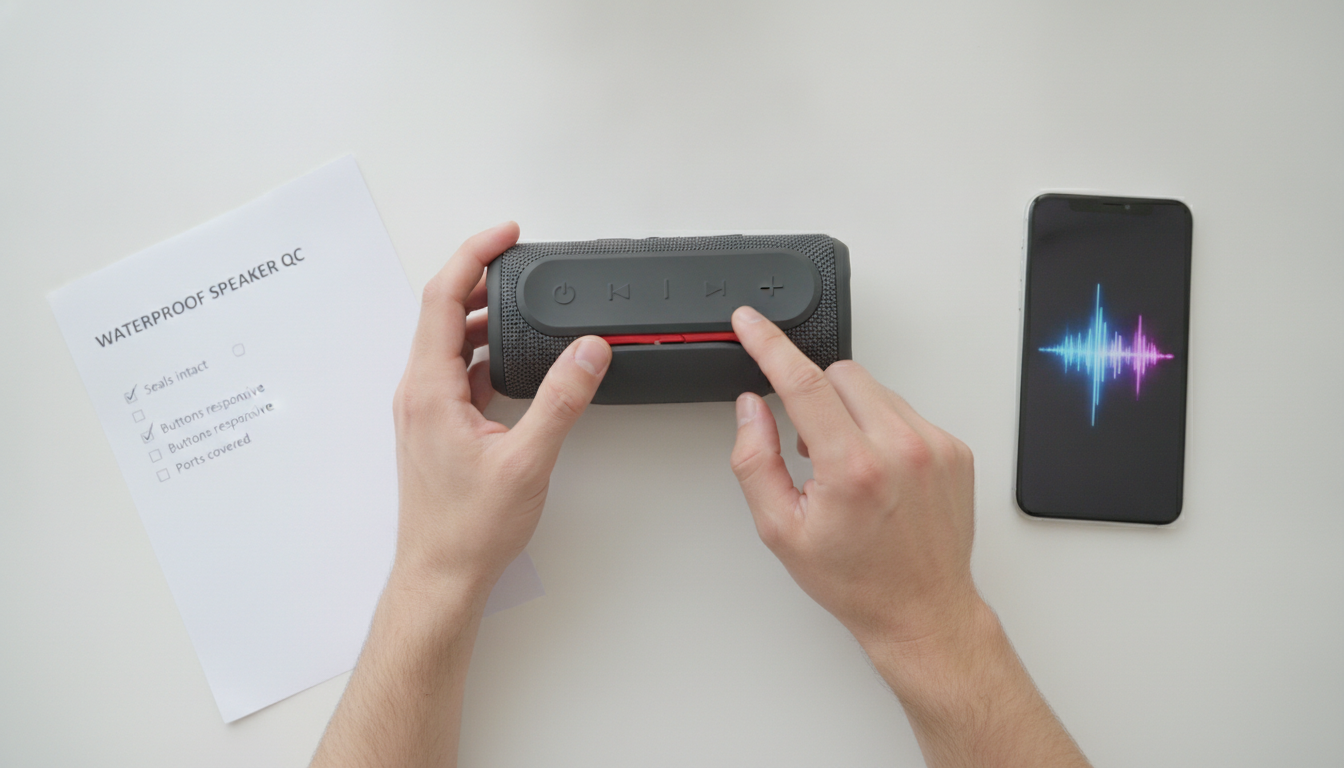
The compact speaker market renews frequently, and new models may appear throughout 2026. Before buying, check the manufacturer’s official technical sheet: exact IP certification (don’t rely just on what’s written on the box), Bluetooth version, charging time and whether the product has Anatel approval for Brazil. National price comparison sites, like Buscapé and Google Shopping, help track variations and identify reliable sellers.
With R$ 300 or less, you can already get quality sound, real water protection and enough battery for the whole day. The secret is not being fooled by vague terms on the packaging and focusing on the numbers that really matter.